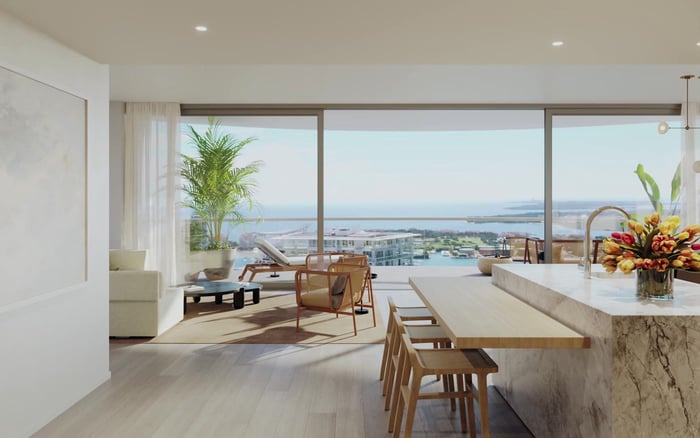
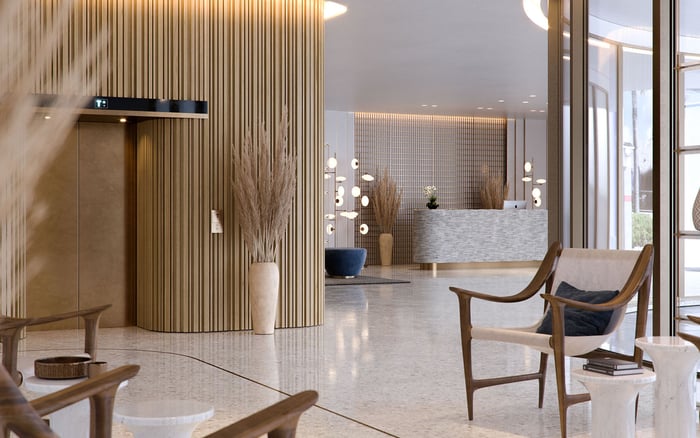
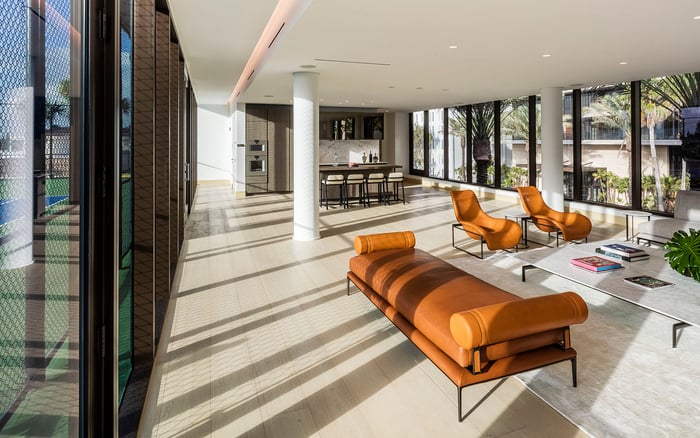
A ranked MILLION Luxury guide to five South Florida residences that pair low-density living with hotel-caliber staffing, from Surfside and Miami Beach to Fisher Island.
There is a distinct South Florida buyer who wants the calm of a smaller building without sacrificing the invisible machinery that makes luxury ownership feel effortless. In practice, that usually means choosing a residence in the roughly 40 to 150 home range rather than entering a tower with several hundred units and a more institutional rhythm.
What these purchasers are really buying is not simply a floor plan or a waterfront address. They are buying staffing density. The appeal lies in arriving at a residence where concierge, valet, security, housekeeping support, and engineering services are embedded in daily life, while common areas still feel private and neighbors remain relatively few.
That balancing act is why Miami Beach and its nearby enclaves have become the clearest concentration point for this category. The market already understands hotel-grade service, branded residences, and owner expectations around discretion. For buyers seeking a similar ethos in newer or adjacent product, projects such as Ocean House Surfside and The Delmore Surfside illustrate how the Surfside and beachfront corridor continues to favor privacy-led luxury.
In this segment, full staffing rarely means a single front-desk attendant and a valet stand. It usually refers to a layered operational model more commonly associated with hotels: concierge coverage, valet, controlled access, 24-hour security presence, housekeeping coordination, and an engineering team capable of maintaining residences and common systems without friction.
The best boutique buildings also concentrate amenities more intensely than many larger condominiums. Instead of spreading an expansive amenity package across hundreds of residences, they compress spa, fitness, dining access, wellness programming, and guest services into a much smaller ownership base. That can create a different quality of experience, one where service feels personal rather than procedural.
This is also why buyers in the category often accept premium pricing. Limited inventory matters. So does the sense that a smaller resident population can still support a highly polished service platform.
1. Arte - Surfside / Collins Avenue
With 66 residences, Arte sits at the most rarefied end of the boutique spectrum. Its scale is unusually restrained for an ultra-luxury beachfront address, and that small resident count is central to its appeal.
Just as important is its designer-led identity. Antonio Citterio’s involvement gives the building a level of authorship that sophisticated buyers tend to value when they want intimacy without compromising pedigree. For readers comparing the broader Surfside landscape, Arte Surfside remains a useful reference point for this highly edited corner of the market.
2. Continuum South Tower - Miami Beach
Continuum South Tower is presented as a 51-unit ultra-luxury option, a remarkably low count for a property with five-star concierge and 24/7 security. That combination places it squarely within the boutique-but-fully-staffed brief.
Its position in Miami Beach adds another layer of relevance. Buyers here are not choosing between service and location. They are getting a South Beach address with an operational standard that feels closer to hospitality than to a conventional condominium model. In the same broader luxury conversation, Continuum on South Beach remains part of the area’s enduring service-driven identity.
3. The Surf Club Four Seasons Residences - Surfside
At 147 residences, The Surf Club Four Seasons Residences is the largest project on this list, but it still fits the category because its service platform is unusually deep. Owners are tied to the restored Surf Club property and benefit from a genuine hotel-backed operating environment rather than a standard amenity stack.
That distinction matters. It expands daily life beyond residential staffing alone to include dining, guest services, and a broader hospitality culture. For buyers who want brand-backed service with a more private residential feel than a mega-tower, The Surf Club Four Seasons Surfside is one of South Florida’s clearest benchmark addresses.
4. Setai Residences - Miami Beach
Setai Residences offers one of the strongest examples of a hotel-residence hybrid in Miami Beach. Its residential component is described at 86 units, a scale that remains intimate enough to appeal to buyers who want fewer neighbors and a quieter cadence.
The advantage here is the Setai operating model itself: 24-hour service, spa access, and wellness-oriented amenities that make the ownership experience feel highly supported. For buyers weighing branded hospitality in Miami Beach, Setai Residences Miami Beach shows why the product type continues to resonate with second-home and service-sensitive purchasers.
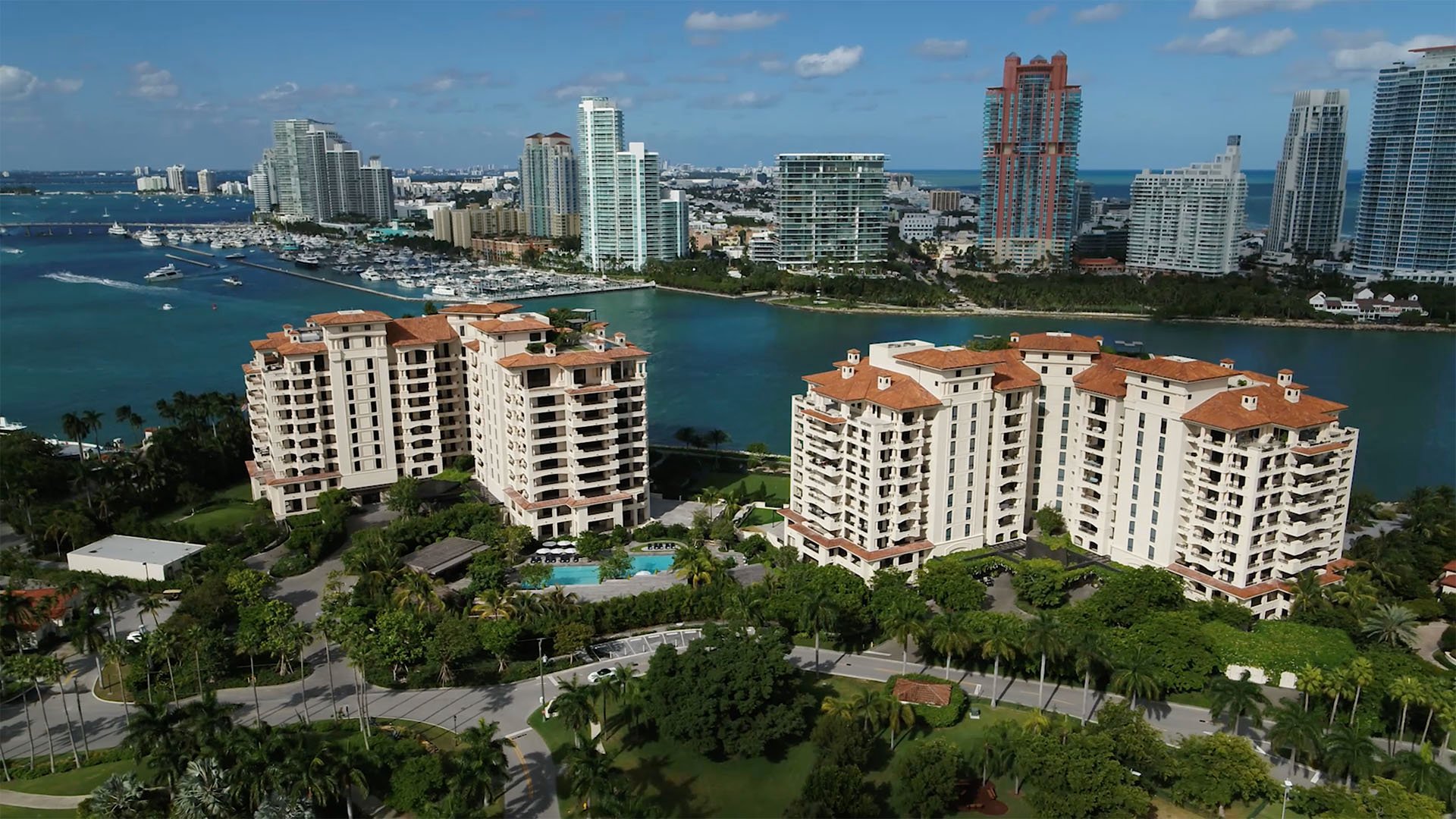
5. Palazzo della Luna - Fisher Island
Palazzo della Luna rounds out the ranking as a low-density waterfront condominium on Fisher Island. Public descriptions place the building in the mid-40s to 50 residences, and either figure supports the same conclusion: this is an exceptionally limited-inventory offering.
Its appeal is distinct from Miami Beach’s more visible trophy towers. Palazzo della Luna was conceived as a highly amenitized private-island residential environment, meaning the full-service proposition is paired with a level of separation that few mainland addresses can replicate. Buyers considering the enclave can also look at Palazzo della Luna and nearby The Links Estates at Fisher Island to understand why Fisher Island remains shorthand for privacy at the highest level.
The common thread across this ranking is geography. Miami Beach and adjacent Surfside offer the strongest ecosystem for boutique projects with true staffing depth because the market already supports concierge-heavy, hospitality-minded operations. That matters more than many buyers initially assume.
A smaller building can only feel fully serviced if the operating model is sophisticated enough to sustain it. In South Florida, that sophistication has tended to emerge most clearly in beachfront neighborhoods where branded residences, condo-hotel sensibilities, and owner expectations have long overlapped. It is one reason buyers who prioritize boutique living frequently begin their search on or near the sand, then branch into more insulated environments such as Fisher Island if privacy becomes the top variable.
The first lens is staffing depth. Some boutique buildings offer strong security and concierge basics, while others function more like residential extensions of luxury hotels. The latter group often feels more seamless for seasonal owners, international buyers, and households that expect guest services, dining adjacency, or wellness programming to be part of everyday ownership.
The second lens is resident count. A building with 50 to 80 homes can feel materially different from one closer to 150, even if both qualify as boutique by South Florida standards. Fewer residences can translate to greater privacy, but buyers should weigh whether they prefer extreme exclusivity or a slightly broader amenity and service ecosystem.
Third is setting. Surfside offers refined beachfront seclusion. South of Fifth and central Miami Beach deliver a more social, established luxury environment. Fisher Island offers separation that is difficult to duplicate anywhere else in the region.
Finally, there is the question of lifestyle intent. A primary-residence buyer may value operational consistency and discreet common spaces above all else. A second-home purchaser may place greater emphasis on turnkey service, hospitality integration, and the ease of hosting visitors without building management ever feeling overextended.
What qualifies a building as boutique in this segment? In this niche, buyers usually focus on buildings with about 40 to 150 residences rather than very large towers.
Does full staffing simply mean concierge service? No. It typically includes concierge, valet, security, housekeeping coordination, and engineering support modeled on hotel operations.
Why is Miami Beach so prominent for this category? The area has the deepest hospitality infrastructure, which makes concierge-heavy residential operations easier to sustain.
Is Surfside different from South Beach for this buyer? Yes. Surfside often feels quieter and more residential, while South Beach offers a more established social and hospitality ecosystem.
Why is Arte ranked first? Its 66-residence scale and strong design pedigree make it one of the clearest examples of intimate ultra-luxury ownership.
What makes The Surf Club Four Seasons Residences distinctive? It pairs a 147-home residential component with a true hotel-backed service platform, not just standard condo amenities.
Does Setai Residences fit second-home buyers well? Yes. Its hospitality-led environment and 24-hour service are especially appealing for owners who want turnkey ease.
Why is Palazzo della Luna attractive to Fisher Island buyers? It combines very limited inventory with a private-island setting and a highly amenitized service environment.
Do boutique full-service buildings trade at a premium? Often yes, because limited inventory and denser service levels can support stronger exclusivity.
How should buyers compare these five projects? The most useful filters are staffing depth, resident count, setting, and whether the home is intended as a primary residence or a second home.
When you're ready to tour or underwrite the options, connect with MILLION Luxury.
If branded residences are on your mind — as a home or as an allocation — we would be glad to share what we are seeing, privately.
Begin a quiet conversation