A discreet buyer’s guide to the five residence profiles that best serve Coconut Grove clients seeking waterfront calm, privacy, and long-term livability.
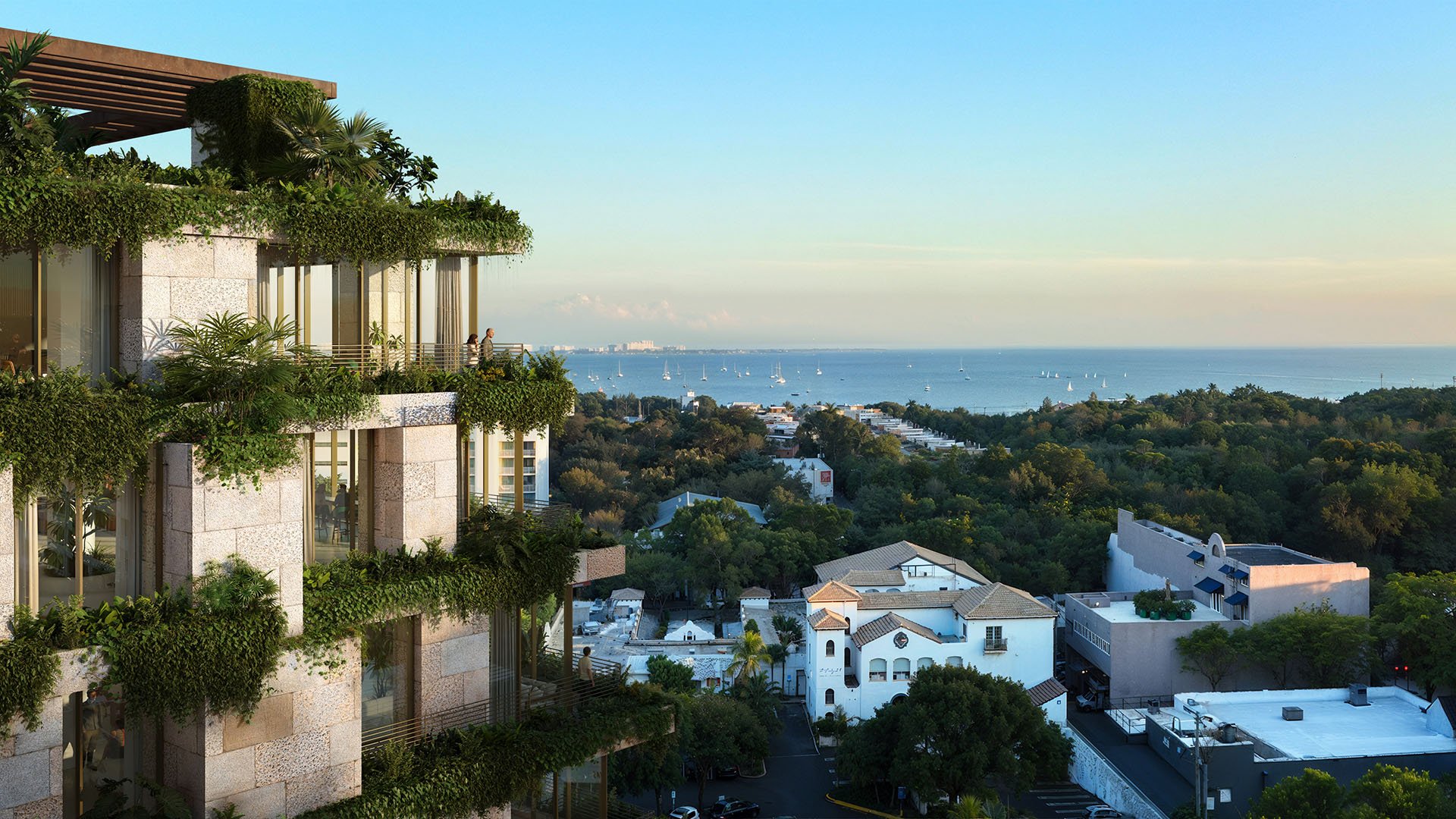
For a certain Coconut Grove buyer, the most coveted view is not the most visible one. It is the view that feels protected, composed, and apart from the rhythm of the city. In this segment of South Florida real estate, privacy is not simply a gate, a hedge, or a long driveway. It is the cumulative effect of approach, sightline, elevation, landscape, water exposure, and the way a residence allows its owner to live without performance.
The phrase oceanfront privacy requires careful interpretation in Coconut Grove. Buyers often use it as shorthand for water-facing calm, an open horizon, and the feeling of a private resort at home. The best decisions begin by separating a dramatic waterfront impression from a genuinely private daily experience. One residence may feel secluded from the terrace yet exposed at the entry. Another may appear modest from the street but become serene once inside.
For MILLION clients, the right shortlist usually favors discretion over spectacle. The following ranking is designed around residence profiles rather than promotional noise, with emphasis on the practical conditions that support a quieter waterfront life.
1. Direct-waterfront single-family residence - Maximum control
The most private option is typically the residence where one owner controls the land, the arrival sequence, the outdoor rooms, and the relationship to the water. This profile offers the greatest ability to shape landscaping, manage visibility, and create distinct zones for entertaining, family life, service access, and quiet retreat.
The buyer should look beyond the first impression of the water. The more important test is whether the home protects privacy from the street, neighboring properties, and passing activity while still preserving a meaningful water view.
2. Gated waterfront enclave residence - Layered discretion
A home within a controlled enclave can add a meaningful layer of privacy before anyone reaches the front door. For buyers who travel often or maintain staff-supported households, this profile can provide comfort without sacrificing the feel of an independent residence.
The tradeoff is architectural and association control. A gated-community environment may suit buyers who value predictability, but it should be reviewed carefully for access rules, guest flow, parking, service logistics, and waterfront use.
3. Boutique low-density waterfront condominium - Lock-and-leave privacy
A boutique building can appeal to buyers who want water exposure with less personal property management. The best version of this profile feels residential rather than institutional, with quiet circulation, restrained amenities, and layouts that separate private interiors from shared building life.
Privacy depends on the floor plan as much as the building. Elevator access, terrace placement, window alignment, and the relationship between neighboring balconies all matter. A beautiful view can lose value if daily life feels observed.
4. Elevated bay-facing residence - View without exposure
Elevation can be a powerful privacy tool. A higher residence may reduce direct sightlines from adjacent properties while expanding the sense of horizon and light. For buyers who prioritize serenity, this profile can deliver the feeling of openness without the maintenance demands of a standalone waterfront estate.
The key is to study the view corridor at different times of day. Reflections, neighboring terraces, and nighttime lighting can affect privacy in ways that are not obvious during a brief showing.
5. Waterfront residence with marine access - Lifestyle-specific privacy
For some buyers, privacy is tied to movement. A residence with convenient marine access, including a potential boat slip where appropriate, can support a lifestyle that begins and ends away from public arrival points.
This profile deserves especially disciplined diligence. Marine access, use rights, depth, exposure, insurance considerations, and maintenance obligations can determine whether the feature is a true advantage or simply an attractive phrase in a listing presentation.
The first question is not whether a residence feels private during a showing. It is whether it will remain private after furnishing, entertaining, service visits, school runs, deliveries, guest arrivals, and evening use of terraces and pools. A property that performs well under ordinary daily movement is more valuable than one that photographs beautifully from a single angle.
Arrival matters. In Coconut Grove, the most refined residences often make their statement slowly, through canopy, setback, material restraint, and a controlled transition from public street to private interior. That sense of progression is difficult to recreate after purchase if the lot, building, or entry sequence does not already support it.
Buyers should also separate acoustic privacy from visual privacy. Dense landscaping may screen a terrace, but sound can still travel. Conversely, a higher residence may feel visually protected while remaining affected by activity below. The finest private homes address both.
Waterfront value is often discussed in emotional terms, but the privacy-minded buyer should be more exacting. The premium should be tied to usability, not scenery alone. Can the principal suite enjoy the water without exposure? Are outdoor dining areas shielded from adjacent views? Does the pool feel like a resort amenity or a stage?
Oceanfront language can be seductive, yet the strongest Coconut Grove decisions are usually grounded in how the residence lives. Search terms such as oceanfront, water view, boutique, gated community, boat slip, and Coconut Grove can be useful, but they are not substitutes for physical inspection and legal review.
This is where restraint becomes a form of confidence. A private waterfront residence should not need to announce itself. Its value is felt in the quiet of the approach, the calm of the terrace, the ability to host without compromise, and the freedom to disappear inside one’s own address.
When privacy is the true objective, negotiation should focus on the elements that protect it. Buyers should understand property boundaries, easements, association rules, waterfront rights, service access, landscape restrictions, renovation limits, and the practical implications of neighboring development. These details can be as consequential as finishes.
A disciplined offer strategy also considers replacement difficulty. If a residence combines controlled entry, protected outdoor space, meaningful water orientation, and a floor plan that supports discreet living, its appeal may be broader and more durable than that of a flashier property with less control.
The best Coconut Grove waterfront purchases are not always the loudest opportunities. They are the ones that make privacy feel effortless.
What defines privacy in a Coconut Grove waterfront residence? Privacy is the combined effect of controlled access, protected sightlines, acoustic comfort, landscape design, and how the residence functions day to day.
Is a single-family waterfront home always more private than a condominium? Not always. A single-family home offers more control, but a well-designed low-density condominium can provide excellent lock-and-leave discretion.
Should buyers prioritize the water view or the arrival sequence? Both matter, but the arrival sequence often determines whether the home feels genuinely private before the view is even considered.
Why does elevation matter for privacy? Elevation can reduce direct sightlines from nearby properties while preserving light, water orientation, and a broader sense of openness.
Are gated settings important for luxury buyers? They can be valuable, especially for frequent travelers or family offices, but the rules and operating details should be reviewed carefully.
What should be checked before valuing marine access? Buyers should review use rights, access conditions, maintenance responsibilities, insurance considerations, and whether the feature suits their lifestyle.
Can landscaping solve privacy concerns after purchase? Landscaping can help, but it cannot always correct exposure caused by lot position, neighboring structures, or building orientation.
How should buyers evaluate terrace privacy? Visit at different times of day and consider neighboring balconies, lighting, reflections, and how the terrace will be used when furnished.
Is oceanfront language precise in Coconut Grove searches? It is often used broadly by buyers seeking water-facing calm, so each property should be evaluated for actual orientation and usability.
What is the best way to shortlist comparable options for touring? Start with location fit, delivery status, and daily lifestyle priorities, then compare stacks and elevations to validate views and privacy.
For a tailored shortlist and next-step guidance, connect with MILLION.
If branded residences are on your mind — as a home or as an allocation — we would be glad to share what we are seeing, privately.
Begin a quiet conversation