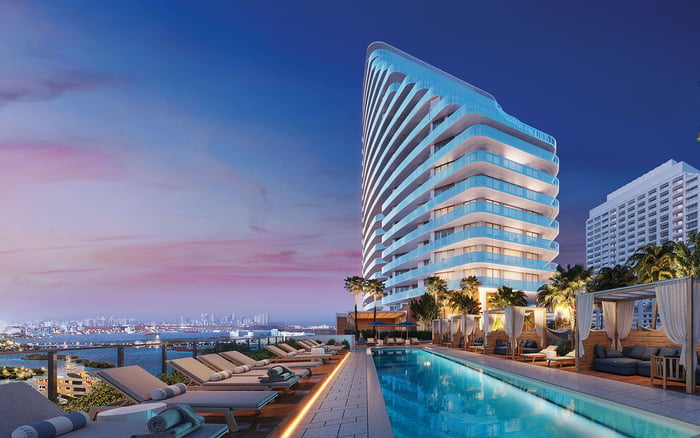
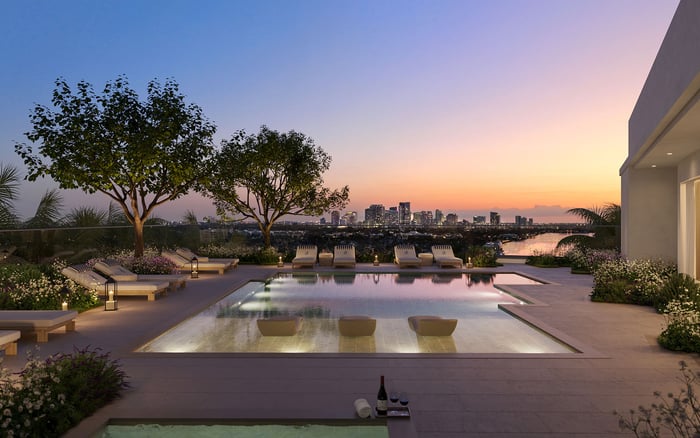
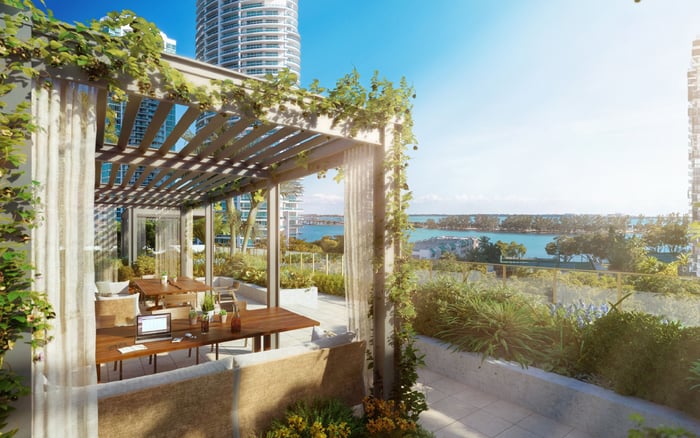
A discreet buyer’s guide to evaluating sightlines, tower adjacency, balcony exposure, and long-term privacy before purchasing a luxury residence in Las Olas.
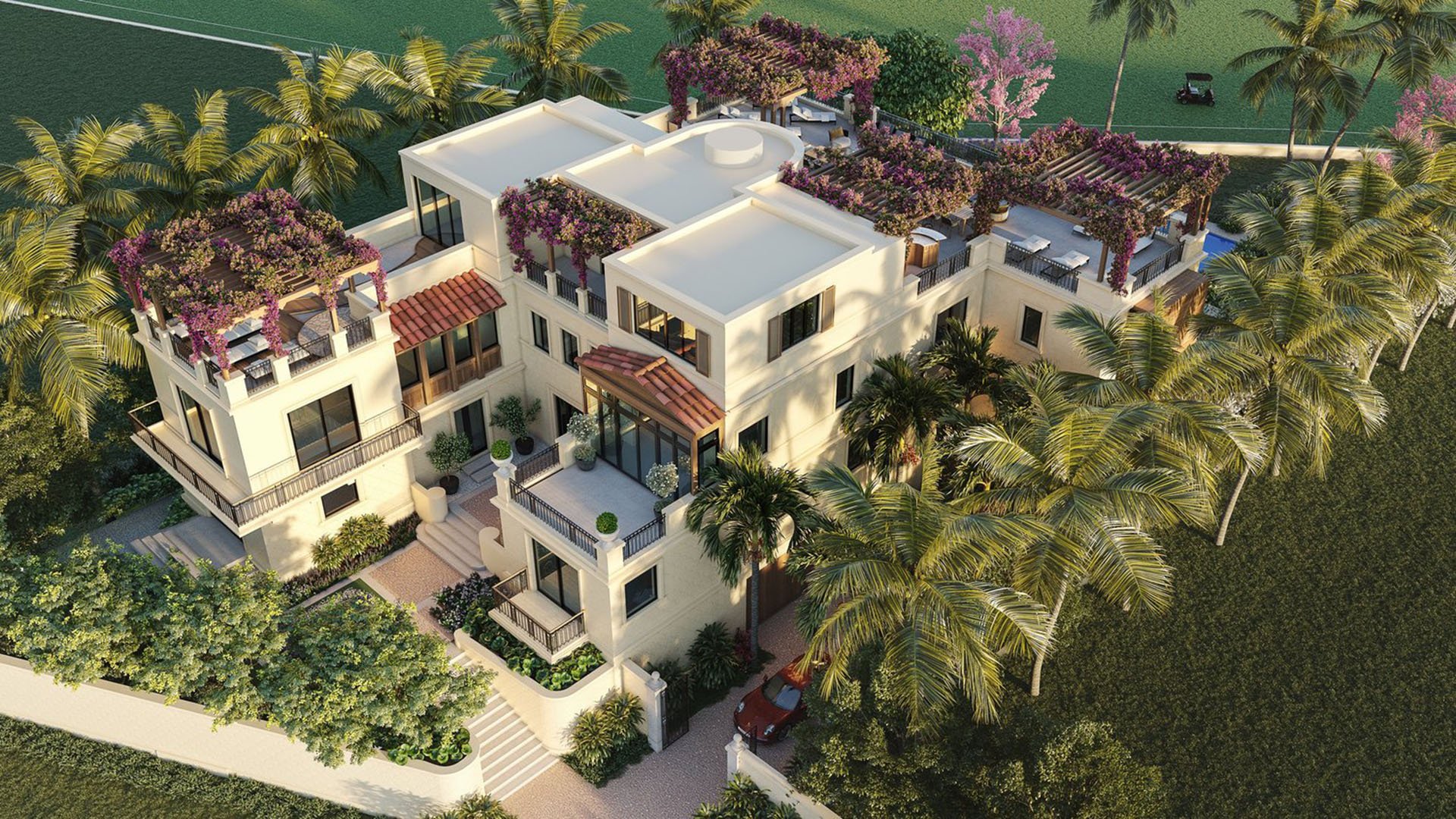
In Las Olas, privacy is rarely a simple yes-or-no condition. It is a layered question shaped by tower orientation, window placement, balcony depth, neighboring amenities, and the way a residence is lived in after dark. A home may feel perfectly discreet at noon, then become visually exposed when interior lights are on and surrounding residences are occupied.
For a luxury buyer, the first discipline is to separate the view from the sightline. A wide city or water view can still include a direct line into a neighboring living room. A residence with a more contained outlook may feel far more private if its glass faces open sky, a low-rise edge, or an oblique angle rather than another tower. This is why privacy analysis belongs early in the buying process, before finishes, furnishings, and amenity preferences begin to dominate the conversation.
Las Olas has a refined urban rhythm, with residential towers, hospitality, dining, riverfront settings, and walkable streets sharing the same highly desirable geography. That mix is central to its appeal. It also means buyers should evaluate each residence as a three-dimensional position in the skyline, not simply as an address.
The most important question is not whether another tower is nearby. It is what portion of that tower faces the residence, how close it feels from the primary rooms, and whether neighboring windows align directly with the unit’s daily living zones. Living rooms, primary bedrooms, outdoor terraces, and corner glass deserve particular attention.
Ask to see the exact stack and the neighboring stack. A small shift in line can change everything. One residence may look directly into another building’s bedroom tier, while the next stack may look across a setback, amenity deck, or angled facade. Privacy can improve dramatically when the view is diagonal rather than face-to-face.
Buyers considering Fort Lauderdale residences such as Sixth & Rio Fort Lauderdale and Riva Residenze Fort Lauderdale should bring the same discipline to any Las Olas comparison: identify the exposure, map the surrounding massing, and decide whether the residence feels calm from the rooms that matter most.
Daytime showings are useful for views and light. They are less revealing for privacy. Evening visits expose reflections, illuminated interiors, occupied balconies, and the social pattern of nearby amenity spaces. A residence that seems secluded in daylight can feel more visible at night if the glass reads like a lantern.
During a second visit, stand where life actually happens: beside the kitchen island, at the main sofa wall, near the primary bed, and on the terrace. Look outward naturally, without moving around theatrically. If your normal standing positions place you in direct view of another building, the issue will not disappear after closing.
Window treatments can help, but they should not become the entire privacy strategy. In the best luxury residences, shades are an enhancement, not a daily defense. If a buyer must keep the primary living room covered every evening to feel comfortable, the residence may not offer the desired level of discretion.
High floors often appeal to buyers seeking privacy, and height can reduce pedestrian visibility, street noise, and certain neighboring sightlines. But height alone does not guarantee seclusion. A high residence may still align with another tower’s upper floors, rooftop amenities, or illuminated common areas.
Conversely, a mid-level home can be exceptionally private if it faces a protected corridor, a lower roofline, open water, or an angled urban edge. The key is not simply to buy higher. The key is to buy the right height within the right stack.
The most valuable privacy conversations often center on trade-offs: a slightly lower floor with a softer outlook, a higher floor with a sharper view corridor, or a corner residence that offers drama but requires more careful exposure analysis. The right answer depends on how the buyer lives, entertains, sleeps, and uses the terrace.
A balcony can be a private outdoor room or a stage, depending on its relationship to nearby towers. Buyers should stand at the railing, then sit where furniture would realistically be placed. The seated view matters because luxury terraces are often used for coffee, reading, dining, and quiet conversation, not only for panoramic photographs.
Look laterally as well as straight ahead. Many privacy concerns come from side angles. A neighboring balcony stack may not affect the main view but may overlook the outdoor dining area. Similarly, amenity decks can introduce periodic activity, lighting, and movement that affect the atmosphere of a residence, even when direct window-to-window exposure is limited.
When comparing Las Olas with nearby coastal or waterfront options such as Four Seasons Hotel & Private Residences Fort Lauderdale and St. Regis® Residences Bahia Mar Fort Lauderdale, the same question applies: does the outdoor space feel like an extension of the home, or does it require constant awareness of neighboring eyes?
Privacy is not frozen at the moment of purchase. A buyer should consider adjacent parcels, underused sites, parking structures, older low-rise buildings, and any obvious development potential nearby. Even without predicting a specific project, it is prudent to ask what could reasonably change in the surrounding field of view.
This is especially important for buyers focused on resale. A residence with durable privacy can be easier to explain to the next sophisticated buyer. A unit whose privacy depends on an empty lot, an unusually low neighboring structure, or a temporary gap in the skyline may require a different risk tolerance.
The goal is not to avoid urban energy. Las Olas is desirable precisely because it balances city life, waterfront atmosphere, dining, and residential convenience. The goal is to own a residence whose privacy is resilient enough to support daily comfort and long-term confidence.
Before committing, ask for the exact floor plan, the stack diagram if available, and the orientation of neighboring buildings. Walk the residence slowly and evaluate privacy from the entry sequence, kitchen, living area, primary suite, secondary bedrooms, terrace, and any den or office. If a home will be used for remote work or extended seasonal stays, the office sightline may be as important as the view from the main salon.
Bring a measured eye to glass corners. They are beautiful, but they expose more angles. Study mirror effects at night. Confirm whether a neighboring amenity level has seating, pool activity, fitness areas, or event spaces facing the residence. Ask how privacy changes from weekdays to weekends and from season to season.
Most importantly, decide what kind of privacy you actually require. Some buyers are comfortable with urban adjacency if the main living spaces remain serene. Others want hotel-suite discretion throughout the home. Both preferences are valid. The mistake is discovering the difference after closing.
Is a higher floor always more private in Las Olas? Not always. Height can help, but stack alignment and neighboring tower orientation often matter more.
What is the biggest privacy mistake buyers make? They evaluate the view in daylight but fail to study sightlines at night, when interiors and neighboring residences are illuminated.
Should I avoid any residence facing another tower? Not necessarily. Angled views, setbacks, and thoughtful layouts can make a nearby tower feel unobtrusive.
How important is the exact stack? Extremely important. Two units on the same floor can have very different privacy depending on window alignment and exposure.
Can window treatments solve privacy concerns? They can improve comfort, but they should not be the only reason a residence feels livable.
Are corner units less private? They can be more exposed because they capture multiple angles, although they may also offer stronger light and better view corridors.
What should I check on the balcony? Sit where furniture would go and look forward and sideways to understand whether neighboring balconies overlook the space.
Does amenity deck proximity affect privacy? Yes. Pool decks, lounges, and fitness areas can introduce movement, lighting, and visibility near residential windows.
How does future development affect privacy? Nearby underused sites or low-rise parcels may change the sightline context over time, so durability should be considered.
Is privacy important for resale value? Yes. Discreet sightlines and a comfortable living experience can strengthen a residence’s appeal to future luxury buyers.
For a confidential assessment and a building-by-building shortlist, connect with MILLION.
If branded residences are on your mind — as a home or as an allocation — we would be glad to share what we are seeing, privately.
Begin a quiet conversation