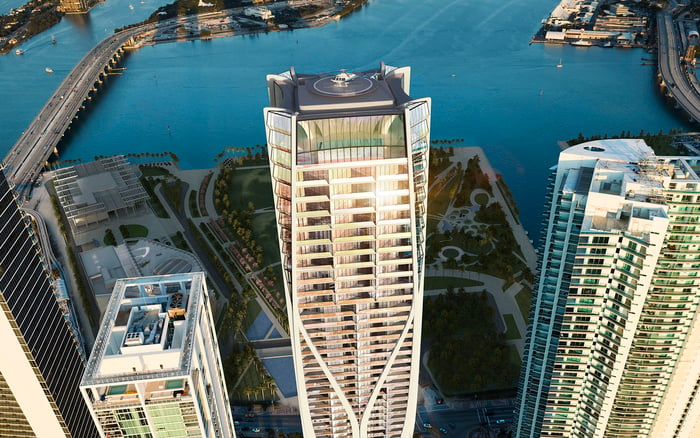
A buyer-focused look at how condominium onboarding, house rules, staffing, deposits, insurance coordination, and service culture can reshape the lived cost of a South Florida trophy penthouse.

A South Florida penthouse is rarely bought for shelter alone. It is acquired for air, privacy, water, service, architecture, and the quiet authority of arriving above the city. Yet the true cost of a trophy residence often appears after the contract is signed, when the new owner begins onboarding with the condominium association, building management, concierge team, security desk, valet operation, and approved vendor network.
For buyers comparing penthouses across Brickell, Miami Beach, Sunny Isles Beach, Fisher Island, Fort Lauderdale, and Palm Beach, onboarding is not administrative noise. It is a financial lens. The way a building receives a new resident can affect timing, cash reserves, renovation plans, staffing models, insurance coordination, and the day-to-day cost of occupying the home with the discretion expected at the top of the market.
The most sophisticated buyers now evaluate onboarding with the same seriousness they bring to floor height, view corridor, terrace depth, and finish quality. In ultra-prime condominiums, lifestyle is operational. If the operating rules do not match the way an owner actually lives, the real price of ownership can rise quickly.
New-resident onboarding begins before the first night in the residence. It can include association applications, interviews, owner orientation, move-in scheduling, elevator reservations, insurance certificates from vendors, deposits, security registration, pet documentation, vehicle procedures, staff access protocols, and a review of house rules.
None of these items necessarily changes the recorded purchase price. All of them can change the ownership experience. A buyer who plans to bring art handlers, lighting consultants, millwork teams, chefs, trainers, security professionals, yacht crew, or household staff into the property needs to understand how the building controls access. The question is not simply whether a residence is grand enough. It is whether the building’s operating culture can support the household behind it.
This is particularly important in service-rich towers and Branded Residences, where the promise of hospitality can be a material part of value. A buyer studying 888 Brickell by Dolce & Gabbana or The Residences at 1428 Brickell should look beyond amenities and ask how resident arrival, privacy, vendor flow, guest management, and everyday service requests are organized.
For an ordinary residence, a delayed move-in may be inconvenient. For a trophy penthouse, delay can be expensive. A purchaser may have private staff waiting, temporary housing arranged, art storage running, custom furniture scheduled, and contractors holding installation windows. When an association approval, elevator reservation, certificate requirement, or renovation review takes longer than expected, the cost is often measured in logistics rather than line items.
This is why onboarding should be reviewed during due diligence, not after closing. Buyers should request the resident handbook, move-in procedures, alteration rules, pet policies, vehicle rules, guest protocols, and any forms required for household employees or recurring vendors. The goal is not to challenge the building’s standards. The goal is to understand whether those standards complement the owner’s life.
In waterfront buildings, the operational details can extend beyond the residence itself. Deliveries, dock access where applicable, beach access, valet circulation, security screening, and service elevators all influence how smoothly a high-net-worth household functions. The penthouse premium is justified only when the building’s back-of-house systems perform as elegantly as the front door.
House rules are often read as etiquette. At the trophy level, they should be read as a cost document. Restrictions on construction hours can lengthen a customization project. Approved contractor requirements can narrow the vendor pool. Insurance and indemnity requirements can change who is willing to work in the building. Event rules can affect how an owner entertains. Pet policies can influence daily staffing. Rental rules can affect optionality, even when the buyer has no immediate plan to lease.
The same logic applies to parking, storage, package handling, private elevator use, and service corridor access. A penthouse with expansive terraces and gallery-like interiors may still become inefficient if deliveries are difficult, contractors are delayed, or guest arrivals cannot be handled discreetly.
In Miami Beach, where lifestyle expectations often include entertaining, wellness, beach routines, and visiting family, the onboarding discussion should be specific. A buyer considering The Perigon Miami Beach or Shore Club Private Collections Miami Beach should ask how the building balances privacy with hospitality, and how much advance planning is needed for larger deliveries, family stays, events, or seasonal occupancy.
Not every onboarding requirement is a burden. A disciplined building can reduce the true cost of ownership by preventing confusion, protecting privacy, and creating predictable systems. Clear vendor rules can avoid disputes. Strong security protocols can protect residents from unplanned access. A capable management team can coordinate move-ins, package volume, staff credentials, and maintenance requests without turning the owner into a project manager.
This is one reason Branded Residences continue to appeal to buyers who value service as much as square footage. The brand name is only the beginning. The deeper value is the operating model behind it. If the concierge team, residence management, valet, wellness staff, and building engineers communicate well, the owner buys back time. If they do not, the owner pays for friction.
For buyers comparing Bentley Residences Sunny Isles with an established resale tower or a boutique bayfront property, the central question is not which building feels more dramatic on a tour. It is which building will be easier to live in for ten years.
A serious penthouse review should include a lifestyle operating budget. That budget should look beyond association dues and taxes to the practical costs of occupying the residence. Buyers should consider household staffing, routine maintenance, terrace care, glass care, audio-visual support, smart-home servicing, art installation, insurance coordination, storage, parking, private security, pet care, and seasonal preparation.
The onboarding process tells a buyer how many of these items will be easy, controlled, slow, costly, or restricted. It also reveals the building’s personality. Some towers are highly formal. Others are warm and residential. Some prioritize privacy above flexibility. Others emphasize resort-style convenience. None is automatically superior. The right choice depends on how the owner lives.
The most successful acquisitions occur when the buyer’s advisory team treats onboarding as part of valuation. A residence with a higher asking price but smoother operations may be less costly to own than a seemingly comparable penthouse with inconsistent procedures. At the top of the market, elegance is not only what the eye sees. It is what the owner never has to think about.
What is new-resident onboarding in a luxury condominium? It is the process of introducing a new owner to the building’s approvals, rules, access systems, move-in procedures, and service protocols.
Why does onboarding affect the real cost of a penthouse? It can influence deposits, timing, vendor access, staffing, renovation logistics, and the amount of personal coordination required from the owner.
Should onboarding be reviewed before closing? Yes. Reviewing procedures early helps buyers understand whether the building can support their lifestyle without avoidable friction.
Do house rules matter if the buyer is paying cash? Yes. Cash terms do not eliminate association procedures, building rules, move-in requirements, or vendor controls.
Can a strict building be a positive? Often, yes. Clear standards can protect privacy, improve security, and make operations more predictable for residents.
What should pet owners review? They should review pet policies, elevator procedures, common-area rules, documentation requirements, and any limits affecting daily routines.
Why do renovation rules matter for a trophy penthouse? They can affect project duration, approved vendors, work hours, insurance requirements, and the feasibility of customization.
Are Branded Residences always easier to live in? Not automatically. The value depends on how well the service culture, staffing, and resident systems are executed.
How should seasonal owners think about onboarding? They should focus on access, staff credentials, maintenance coordination, deliveries, hurricane-season planning, and guest procedures.
What is the simplest way to compare two penthouses? Compare not only views and finishes, but also how each building manages people, vendors, privacy, timing, and daily service.
For a tailored shortlist and next-step guidance, connect with MILLION.
If branded residences are on your mind — as a home or as an allocation — we would be glad to share what we are seeing, privately.
Begin a quiet conversation