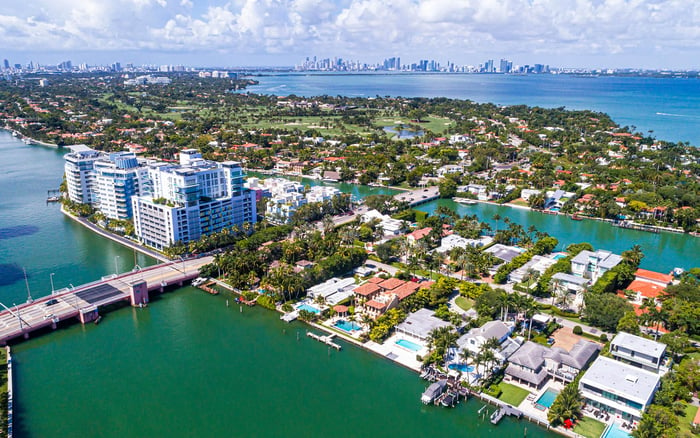
A discreet buyer’s guide to evaluating Miami Beach and nearby South Florida neighborhoods when a family office is relocating from Manhattan.

For a Manhattan family office considering Miami Beach, the residential decision is rarely about square footage, finishes, or a postcard view alone. It is about where principals will actually live, where children and guests will feel settled, where advisors can operate discreetly, and how a home fits within a broader framework of mobility, privacy, and capital preservation.
The strongest relocations begin with a candid brief. Is the residence a primary home, a seasonal base, a hospitality platform, or a long-hold legacy asset? Will the family office need proximity to professional services, private aviation routes, marina access, schools, wellness, cultural programming, or a quieter daily rhythm? Those answers often determine whether the search should focus on Miami Beach, Brickell, Fisher Island, Coconut Grove, or a more private waterfront pocket.
This is a natural subject for MILLION Buyer's Guides because the highest-value purchase is usually not the most visible one. It is the property that supports the family’s real operating life.
Miami Beach offers the emotional magnetism many New Yorkers imagine first: ocean air, architectural presence, hospitality, dining, and a social calendar that can feel both international and intimate. For buyers who want the beach as a daily ritual, a residence such as The Perigon Miami Beach may enter the conversation because it aligns with the desire for a polished coastal address rather than a purely urban substitute for Manhattan.
Yet relocation searches should not stop at the first glamorous neighborhood. Brickell can appeal to principals who prefer a vertical, financial-district rhythm, especially when business meetings, restaurants, and private banking relationships are part of the daily cadence. St. Regis® Residences Brickell speaks to that more metropolitan preference, where the residence functions as an elegant city base rather than a resort escape.
Fisher Island, by contrast, is often evaluated through a privacy lens. It may suit buyers who want separation, controlled access, and a more self-contained residential environment. A family weighing The Residences at Six Fisher Island should think carefully about how island life fits staffing, guest flow, school logistics, and spontaneous city access.
Coconut Grove brings another sensibility. It is softer, greener, and more residential in tone, appealing to buyers who want South Florida’s climate without abandoning the feeling of a neighborhood. Four Seasons Residences Coconut Grove can be part of that discussion for families looking beyond the beach for a calmer daily pattern.
Before the first showing, the family office should establish decision authority. Who can shortlist, who can negotiate, who approves legal structure, and who makes the final lifestyle call? Manhattan buyers often move quickly when the right property appears, but speed without governance can create confusion at the exact moment discretion is most valuable.
A clear purchase memo should identify intended use, ownership structure to be reviewed by counsel, privacy expectations, financing preference, renovation tolerance, insurance review, holding period, and exit flexibility. It should also state non-negotiables in plain language. For one family, that may be direct waterfront views. For another, it may be private elevator access, staff circulation, wellness amenities, or the ability to host adult children without disrupting the principal suite.
The brief should distinguish between prestige and utility. A building can be celebrated and still be wrong for a family that needs a service entrance, guest privacy, or a quieter elevator culture. Conversely, a less obvious residence can outperform if its floor plan, operations, and location reduce daily friction.
Ultra-premium buyers are naturally drawn to architecture, materials, ceiling heights, terraces, and water views. Those details matter, but family-office relocation requires a deeper reading of building operations. How does the arrival sequence feel at different hours? How visible are residents to guests, staff, vendors, and neighbors? How does the building handle deliveries, security, maintenance, valet, pet access, and private events?
A Manhattan buyer may be accustomed to a certain level of service, but South Florida buildings vary widely in culture and rhythm. Some feel like private clubs, some like resorts, some like quiet residential sanctuaries, and others like highly social vertical neighborhoods. None is universally better. The right answer depends on the family’s appetite for visibility.
This is where repeated visits help. Tour during the day, return near dinner, and observe weekend patterns. A residence that feels serene on a weekday morning may feel very different during peak social hours. For a principal who values anonymity, the invisible details can be decisive.
A family-office residence often supports more than the principals. Advisors may visit, adult children may rotate in, guests may stay for extended periods, and household staff may need practical circulation. The floor plan should be tested against those scenarios before the offer, not after closing.
Questions should be precise. Can guests be hosted without crossing private family zones? Is there room for a dedicated office that feels separate from leisure space? Can staff access service areas efficiently? Is storage adequate for seasonal living, formal entertaining, sports equipment, art, and family archives? Does the building’s culture allow the household to function quietly?
For families relocating from Manhattan, the temptation is to replicate the city residence with better weather. The stronger strategy is to design a South Florida life on its own terms. That may mean more outdoor living, more guest flexibility, a different car strategy, or a split between a primary condominium and another property elsewhere in the region.
When a residence fits, family offices are often capable of acting decisively. The best offers are not simply aggressive; they are organized. Clean diligence, counsel alignment, proof of funds or financing clarity, and a realistic closing path can matter as much as the headline number.
At the same time, discipline remains essential. Do not waive meaningful review because the property feels rare. Confirm association documents, building rules, renovation constraints, insurance obligations, service expectations, and any restrictions that could affect the way the family intends to live. A beautiful residence can become frustrating if daily use conflicts with building policy.
The most elegant acquisitions feel calm from the outside. That calm is usually the product of preparation.
Should a Manhattan family office start in Miami Beach? Miami Beach is a logical starting point for many buyers, but it should be compared with Brickell, Fisher Island, Coconut Grove, and other lifestyle fits.
Is the best residence always the most private one? Not necessarily. The best residence is the one that matches the family’s desired balance of privacy, service, access, and social energy.
Should legal and tax advisors be involved before touring? Yes. Counsel should review ownership structure, residency planning, and related matters before the purchase process becomes time-sensitive.
How important is building culture? It is critical. Two buildings with similar views and finishes can feel completely different in service style, privacy, and resident rhythm.
What should buyers prioritize besides views? Arrival sequence, elevator privacy, staff circulation, storage, guest accommodations, and operational rules deserve close attention.
Can Brickell work for a family relocation? Yes, especially for buyers who want an urban base near professional, dining, and hospitality conveniences rather than a beach-first setting.
Why consider Fisher Island? Fisher Island may appeal to families prioritizing controlled access, privacy, and a more self-contained residential environment.
Why consider Coconut Grove? Coconut Grove can suit buyers seeking a greener, more neighborhood-oriented lifestyle while remaining connected to Miami.
Should the family office buy quickly if the right property appears? Decisiveness helps, but the acquisition should still include disciplined review of structure, documents, insurance, and daily-use rules.
What is the central mistake to avoid? Avoid buying for status alone. The residence must support the family’s actual life, not just its public image.
For a confidential assessment and a building-by-building shortlist, connect with MILLION.
If branded residences are on your mind — as a home or as an allocation — we would be glad to share what we are seeing, privately.
Begin a quiet conversation