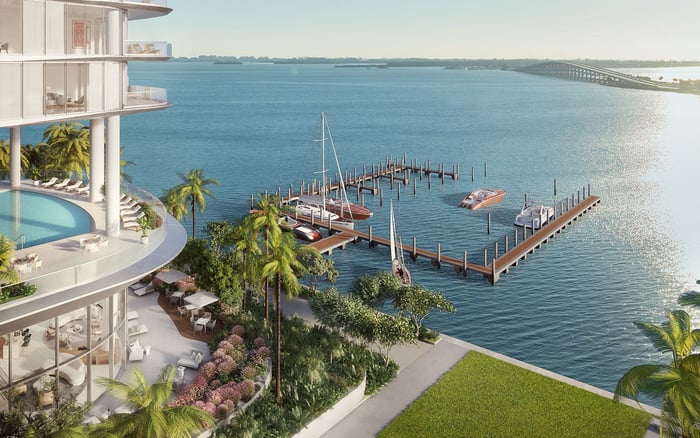
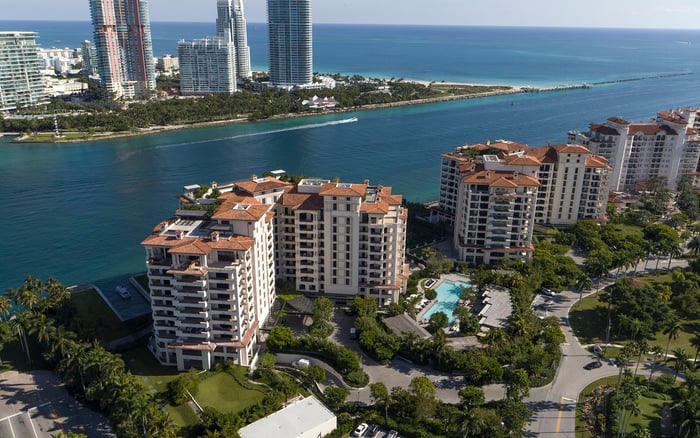
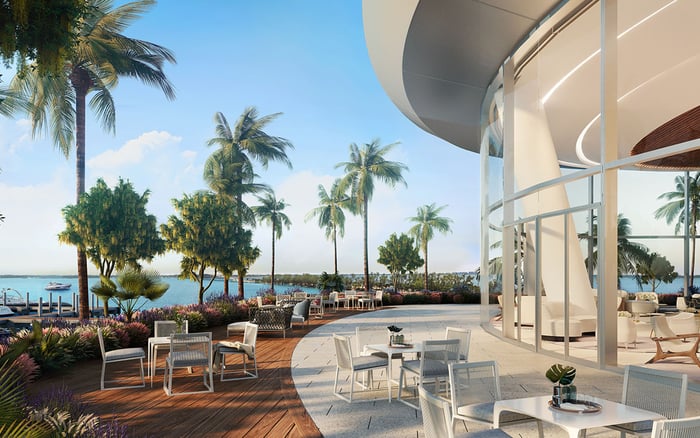
A discreet buyer guide to the bayfront residence profiles that balance walkable daily convenience with a calmer, more residential atmosphere.
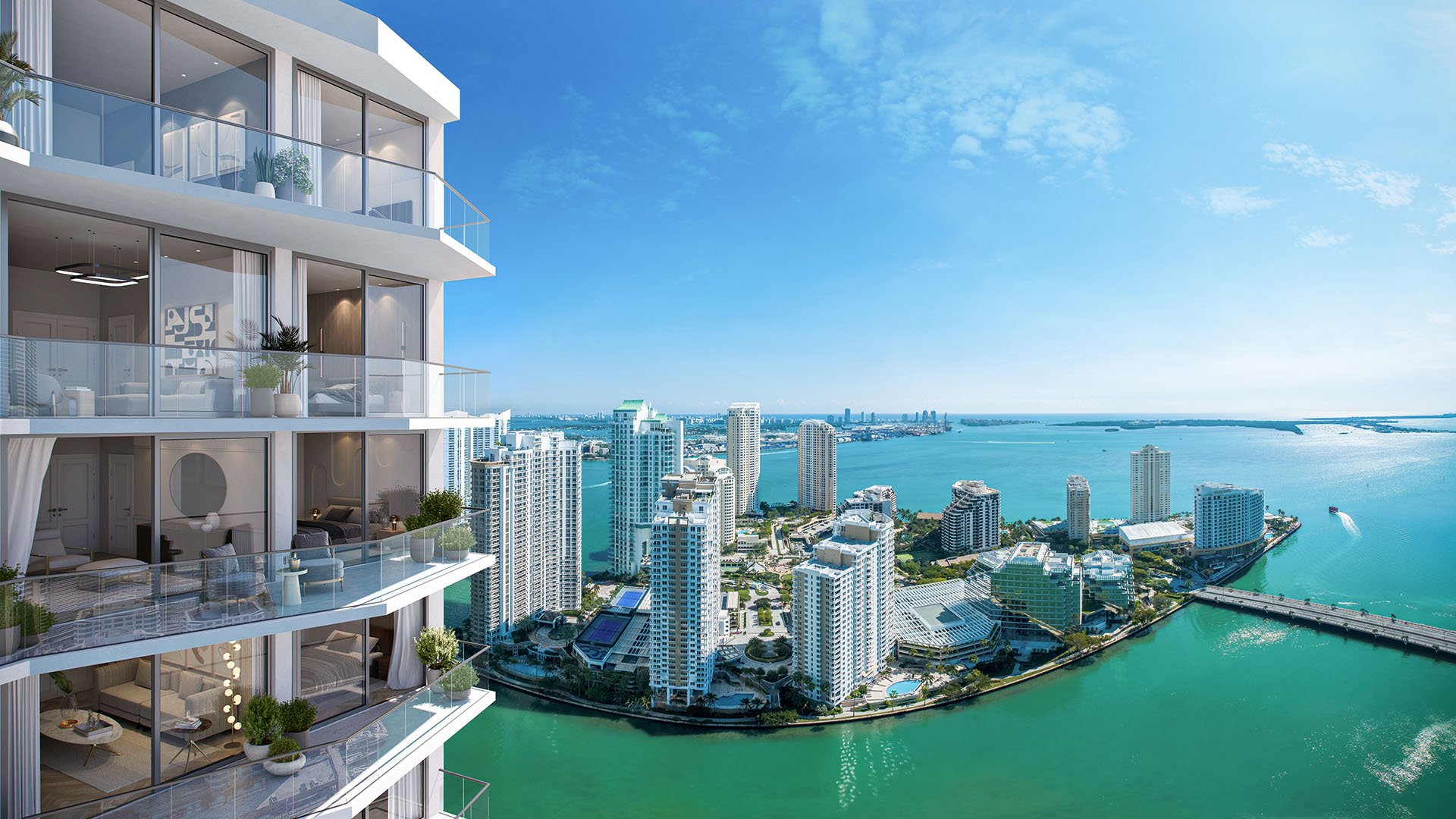
The most sophisticated South Florida buyer is not always pursuing the loudest address. For many, the real prize is a bayfront residence that supports an easy, walkable life without placing the household inside the nightly rhythm of restaurants, clubs, and late traffic. The ideal setting feels connected in the morning, convenient in the afternoon, and composed after dinner.
That preference is especially relevant for buyers who divide time between homes, work remotely, host family for extended stays, or simply value discretion. Bayfront living already carries a natural sense of release. Water softens the urban edge, expands the visual field, and gives a residence a daily ritual. Walkability adds another layer: can the owner reach coffee, groceries, wellness, a marina, a park, or dining without sacrificing privacy and quiet?
In this segment, the winning residence is not defined by spectacle. It is defined by balance. A buyer may begin with Brickell, Coconut Grove, Bay Harbor, or North Bay Village, then narrow by water-view orientation, marina access, arrival sequence, and the building’s position in relation to evening activity.
1. Bayfront residence with a residential approach - calm arrival
The strongest fit for this buyer is a residence that feels walkable but does not sit directly on the busiest hospitality corridor. Arrival matters as much as the view. A quieter curb, a more residential entry, and a sense of separation from late-night circulation can preserve the experience of home even when conveniences are nearby.
This profile works best for owners who want daily errands and dining within reach, yet prefer to return through a composed lobby and a low-friction porte cochere. The key question is not simply what is close. It is what the owner must pass through to get home.
2. Bayfront residence with water-facing living areas - view as buffer
A water-facing floor plan can create a psychological and acoustic buffer from the street. The best examples place primary rooms, terraces, and everyday seating toward the bay rather than toward active roadways. This does not eliminate urban sound, but it can shift the home’s center of gravity toward light, air, and horizon.
For buyers prioritizing calm, the most valuable balcony or terrace is not necessarily the largest. It is the one that remains usable at breakfast, after work, and late in the evening without feeling exposed to the neighborhood’s most active edge.
3. Bayfront residence near daily essentials - walkability without performance
Some walkable addresses feel designed for display. Others are quietly practical. The latter is often better for a buyer who values ease over scene. The right residence allows a simple circuit: coffee, pharmacy, fitness, dry cleaning, a casual meal, and a waterfront stroll, all without turning every outing into a social event.
This profile is particularly attractive for long-stay owners who want to live normally, not just vacation beautifully. Walkability becomes a quality-of-life feature rather than a nightlife feature.
4. Bayfront residence with controlled amenity culture - private rhythm
In luxury buildings, quiet is shaped by more than location. Building culture matters. A residence with well-managed amenities, thoughtful guest flow, and a lobby that feels residential rather than performative can be a better match than a more famous address with constant energy.
Buyers should focus on the daily rhythm of the property. When do residents use the pool? How active are common areas in the evening? Does the building feel like a private residence first, or a destination? The answer often determines whether walkability feels like a privilege or an intrusion.
5. Bayfront residence with strong vertical separation - height and orientation
High-floor living can help separate a home from street-level movement, especially when paired with the right exposure. Yet height alone is not the full answer. Orientation, balcony depth, neighboring structures, and mechanical placement can all shape the experience.
For this buyer, the best residence is one where the interior remains serene even when the neighborhood is active. A well-chosen high-floor home can offer the convenience of an urban waterfront address while keeping the emotional tone closer to a private retreat.
Walkability is too often treated as a simple distance metric. For a luxury buyer, it should be more nuanced. A five-minute walk past service alleys, valet stacking, or late-night traffic may be less desirable than a slightly longer walk through a calmer residential sequence.
The most useful test is lifestyle based. Where will the owner go on an ordinary Tuesday morning? What route will guests take when they arrive for dinner? Can a dog walk feel peaceful? Can a family member step out alone and feel comfortable? These questions reveal whether the address supports daily living or merely photographs well.
A quiet bayfront residence should also offer optionality. The buyer should be able to walk when desired, drive when necessary, and stay home without feeling cut off. The finest version of walkability is not dependency. It is freedom.
Noise is not one condition. It changes by time of day, season, wind direction, building orientation, and the character of nearby uses. A residence that feels calm at noon may have a different personality after dinner. A unit facing the water may perform differently from one facing an active arrival court.
Touring should therefore be deliberate. Visit at more than one hour. Stand quietly on the terrace. Pause in the primary bedroom. Listen near the glazing, not only from the center of the living room. Consider elevator proximity, amenity adjacency, loading areas, garage ramps, bridge approaches, and nearby gathering points.
Buyers should also pay attention to interior planning. Bedrooms placed away from corridors and entertainment spaces can materially improve the private experience. Secondary bedrooms, dens, and staff areas should be evaluated for sound as carefully as the main living room.
South Florida’s waterfront has many personalities. Some addresses celebrate movement, glamour, and social energy. Others offer a softer proposition: privacy, light, water, and the ability to step into the neighborhood without living inside its peak-hour pulse.
For the buyer in this category, restraint is not a compromise. It is the luxury. The right home allows a morning walk, a quiet swim, an easy dinner, and a return to a residence that feels emotionally separate from the city around it.
That is why the most compelling bayfront purchase is often not the one with the loudest marketing language. It is the one that can pass the owner’s most personal test: does the home still feel calm when everything outside is awake?
What defines a quiet walkable bayfront residence? It combines convenient access to daily needs with a setting, orientation, and building culture that support privacy and calm.
Is a bayfront home always quieter than an inland urban home? Not always. Orientation, street activity, amenities, and nearby traffic patterns can matter as much as the presence of water.
Should buyers prioritize high floors for less noise? Higher floors can help, but exposure, glazing, terrace placement, and neighboring uses should be evaluated together.
Can a very walkable address still feel residential? Yes, especially when the building approach is set apart from the most active dining, valet, and nightlife corridors.
What should I listen for during a showing? Listen for traffic, music, mechanical systems, elevator movement, amenity activity, and sounds from arrival or loading areas.
Is terrace size the main factor for outdoor comfort? No. Orientation, privacy, wind, sun, and sound often matter more than total terrace depth or square footage.
How can building culture affect quiet living? Guest policies, amenity programming, staff flow, and resident habits can all influence how peaceful a property feels.
Are bayfront residences better for second-home owners? They can be, particularly when the home offers easy daily services and a serene atmosphere between visits.
Should I tour at night before making an offer? Yes. Evening conditions can reveal restaurant traffic, music, valet patterns, and other factors not obvious during the day.
What is the ideal buyer mindset for this search? Prioritize how the residence lives over how the address performs socially, then confirm comfort through careful touring.
If you'd like a private walkthrough and a curated shortlist, connect with MILLION.
If branded residences are on your mind — as a home or as an allocation — we would be glad to share what we are seeing, privately.
Begin a quiet conversation