A discreet buyer’s guide to South Florida bayfront residences where privacy depends on orientation, setbacks, floor height, terrace design, and neighborhood context rather than views alone.
For many South Florida buyers, a bay view is no longer enough. The more refined question is whether that view comes with unwanted exposure from a neighboring tower, an adjacent amenity deck, or a parallel line of balconies across the water. Privacy has become one of the rarest forms of luxury in dense waterfront markets because it depends on something subtler than square footage: the choreography of sightlines.
The best bayfront residences for privacy are not necessarily the tallest, newest, or most conspicuous. They are the homes where architecture, site planning, glass placement, terrace depth, and building orientation work in concert. A residence can feel expansive and open while still protecting the daily rituals of family life, from breakfast on the terrace to evening entertaining with the skyline in the distance.
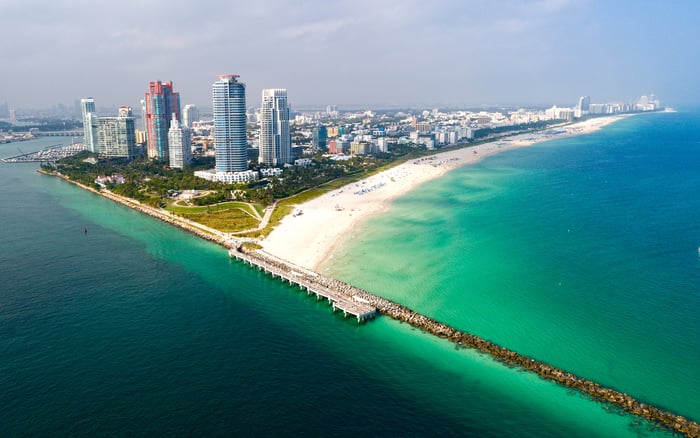
For buyers moving between Miami Beach, Brickell, Coconut Grove, Bay Harbor Islands, Fisher Island, and the northern waterfront, the privacy conversation should begin before the floor plan. A beautiful residence can be compromised if its main living room faces directly into another tower. Conversely, a more restrained building can offer superior discretion when its exposures are angled toward open water, protected green space, or a low-rise residential edge.
Privacy begins with orientation. The most desirable bayfront lines are often those that look across water rather than across a narrow urban canyon. A broad, oblique view can feel more private than a straight-on panorama if the residence avoids direct alignment with neighboring homes. Buyers should stand where daily life will actually happen: at the kitchen island, the primary bedroom window, the bathtub, and the main outdoor seating area.
Setbacks also matter. A building pulled away from its property lines can create breathing room, especially when landscaping and podium design soften the transition from public to private space. On bayfront sites, generous separation from the seawall or neighboring parcel can make the entire residence feel calmer.
Floor height is useful, but it is not a universal answer. A high floor may rise above nearby rooftops yet still look directly into another tower of similar height. A lower floor can sometimes feel more private if it is shielded by mature landscaping, positioned over a wide bay, or oriented away from adjacent glass. Buyers should treat higher floors as one tool, not the only solution.
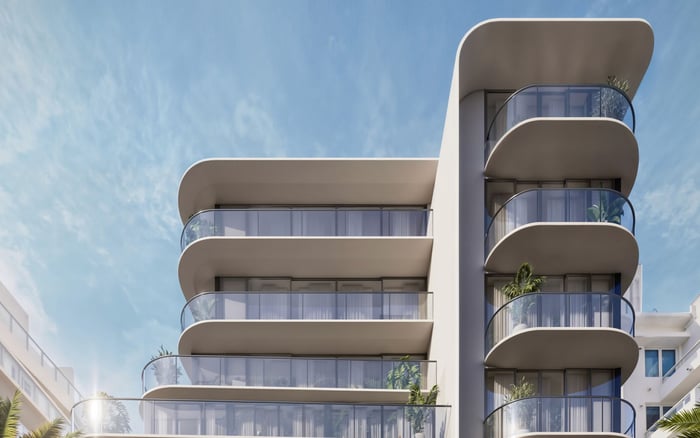
Terrace design is equally important. Deep outdoor rooms, side walls, recessed balconies, and corner exposures can preserve openness without putting residents on display. A shallow balcony that projects toward another building may offer water-view appeal, but it can also create the feeling of being observed.
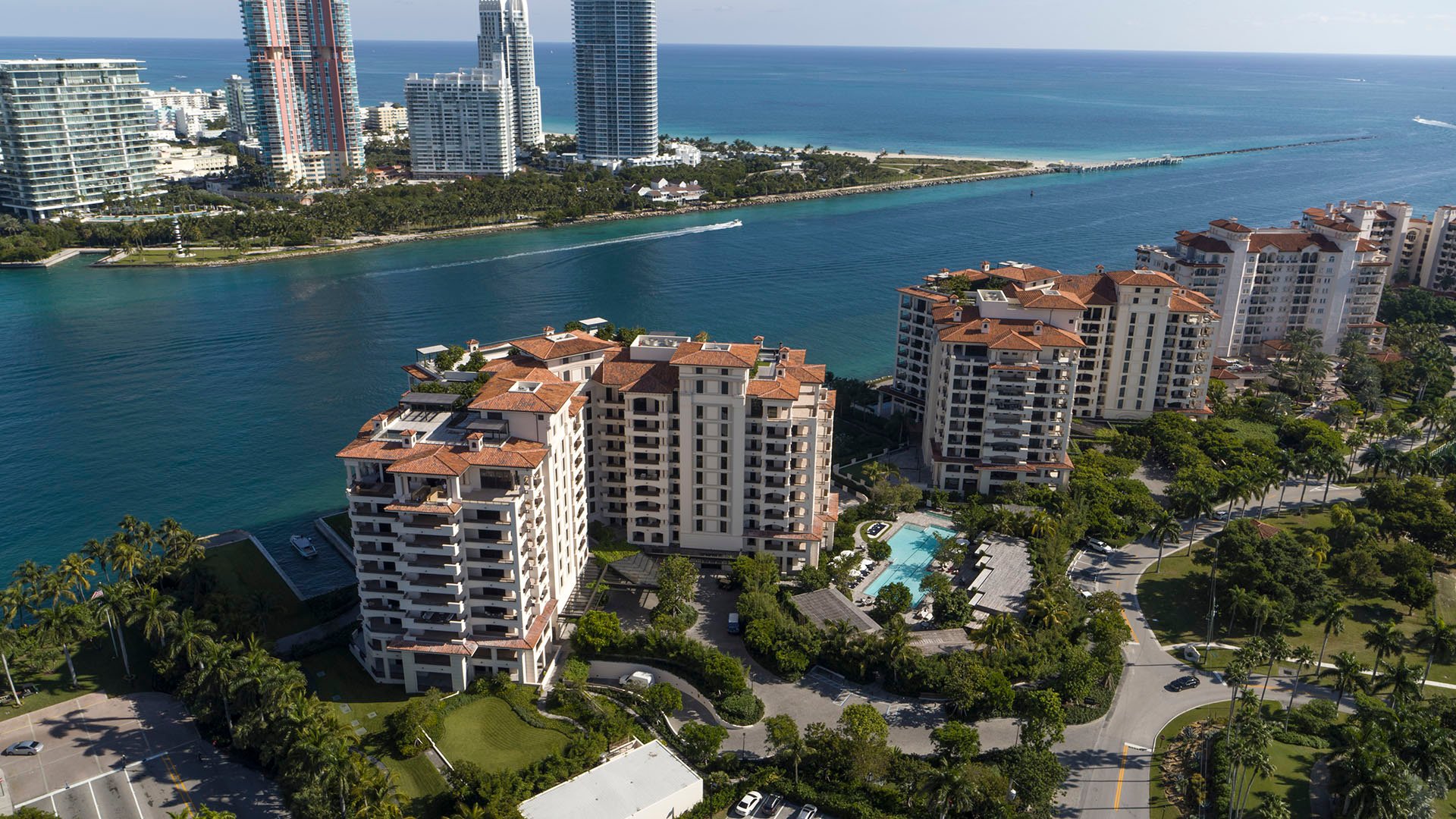
The first profile is the island or near-island residence, where water, limited access, and a more residential rhythm create natural discretion. This does not automatically mean seclusion, but it often reduces the intensity of tower-to-tower exposure. Buyers considering Fisher Island often prioritize separation, controlled access, and a quieter waterfront setting; The Residences at Six Fisher Island belongs in that conversation for those seeking a private-island frame of reference.
The second profile is the boutique bayfront building. Smaller buildings can offer fewer shared corridors, fewer elevator encounters, and a more intimate sense of arrival. In Bay Harbor Islands, buyers often look closely at how a residence faces the water and how nearby buildings sit across the canal or bay. Onda Bay Harbor and La Baia North Bay Harbor Islands are examples of projects buyers may study when comparing waterfront scale, neighborhood character, and the feeling of a quieter bayfront address.
The third profile is the protected enclave within a larger urban district. Brickell can be visually intense, yet some buyers still prefer its access, restaurants, offices, and service culture. In that setting, privacy is rarely about escaping the city completely. It is about choosing the correct exposure, floor height, and line within the building. A project such as Una Residences Brickell may be evaluated by privacy-minded buyers through the lens of bay orientation, separation, and how the residence handles glass, terraces, and arrival.
The fourth profile is the garden-waterfront residence, especially in areas where tree canopy and lower-scale surroundings soften the experience. Coconut Grove offers a different language from the high-rise bayfront corridors: more landscape, more shade, and a stronger relationship to neighborhood quiet. Vita at Grove Isle is the kind of address buyers may consider when they want the bay close at hand without the feeling of living inside a vertical canyon.
A serious privacy review should happen at multiple times of day. Morning glare, afternoon reflection, and evening interior lighting all change how a residence is perceived. At night, neighboring towers can become more visible, and a room that felt private in daylight may feel exposed after sunset.
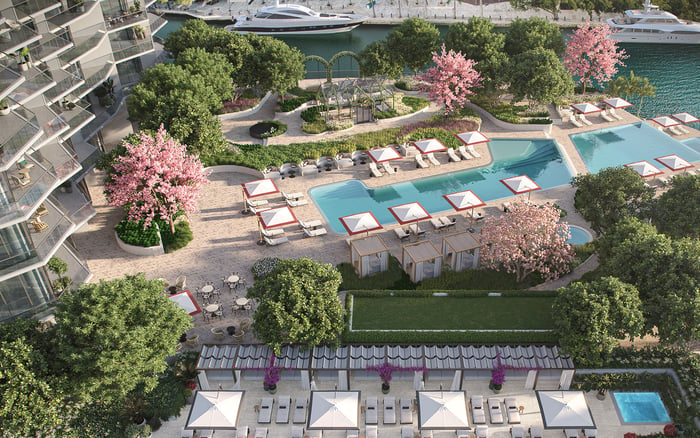
Buyers should also study amenity placement. Pool decks, fitness centers, lounges, and restaurant terraces can create sightlines into private residences, especially when they sit on podium levels or across narrow setbacks. A residence facing a quiet bay may still be compromised if its bedrooms align with a heavily used amenity space next door.
The shape of the floor plan matters as much as the building exterior. Split bedrooms can help separate guest and family zones. Corner living rooms can expand views while reducing direct exposure. Service entries and private elevator foyers can improve discretion before one even reaches the residence.
Window treatments should be treated as a design layer, not a cure. Automated shades and sheer systems are valuable, but a truly private residence should not require the owner to live behind closed fabric all day. The goal is architectural privacy first, technological privacy second.
In Bay Harbor settings, the scale of the waterway, the width of the view corridor, and the mix of boutique buildings can create a more measured waterfront experience. Buyers should pay attention to whether the opposite shoreline is low-rise, residential, or increasingly vertical.
In Brickell, privacy is more selective. The neighborhood offers energy, service, and immediacy, but buyers must be exacting about exposure. The best lines often feel carved away from the city, opening toward water rather than into neighboring towers.
In Coconut Grove, the luxury is often atmospheric. Tree canopy, bay breezes, and a more residential pace can make privacy feel less defensive and more natural. Here, the buyer is often seeking softness as much as spectacle.
On Fisher Island, separation itself becomes part of the value proposition. The buyer is not only evaluating a residence, but also the controlled rhythm of arrival, circulation, and waterfront life.
Before committing, ask three practical questions. First, who can see into the primary living spaces, and from where? Second, does the terrace feel like an outdoor room or a display platform? Third, will nearby development, changing light, or nighttime activity alter the sense of privacy?
A bayfront residence should feel generous without feeling exposed. The most successful homes allow owners to open the doors, use the terrace, entertain elegantly, and move through daily life without constant adjustment. That is the difference between a view and a sanctuary.
For South Florida’s most discerning buyers, privacy is not the absence of neighbors. It is the careful management of distance, angle, access, and design. The right bayfront residence turns the water into a buffer, the terrace into a retreat, and the skyline into scenery rather than intrusion.
Is a higher floor always more private in a bayfront condo? Not always. A high floor can still face directly into another tower, while a lower floor may benefit from water width, landscaping, or better orientation.
What is the most important privacy factor for bayfront buyers? Sightline control is usually the most important factor. Buyers should study what each room faces, not just the view description.
Are boutique buildings usually more private than large towers? They can be, especially when they have fewer residences and quieter circulation. The actual site plan and neighboring buildings still matter.
Can Brickell offer privacy for bayfront buyers? Yes, but selection must be precise. The best choices prioritize bay-facing exposures, thoughtful elevation, and separation from adjacent towers.
Why do terraces matter so much for privacy? Terraces are where exposure is most noticeable. Depth, side walls, recesses, and orientation can make outdoor living feel far more discreet.
Should buyers visit a residence at night before purchasing? Yes. Evening lighting can reveal sightlines that are not obvious during the day, particularly in dense waterfront settings.
Do window treatments solve privacy issues? They help, but they should not be the primary solution. The best residences provide privacy through architecture and orientation first.
Is a water view always better than a city view for privacy? Often, but not automatically. A broad water view may be private, while a narrow water corridor can still align with neighboring windows.
What should second-home buyers prioritize? They should prioritize secure arrival, low-friction service, protected views, and a residence that feels private even when used intermittently.
How can a buyer compare privacy between two similar residences? Stand in the same daily-use areas in each home and compare what is visible from living spaces, bedrooms, baths, and terraces.
If you'd like a private walkthrough and a curated shortlist, connect with MILLION.
If branded residences are on your mind — as a home or as an allocation — we would be glad to share what we are seeing, privately.
Begin a quiet conversation