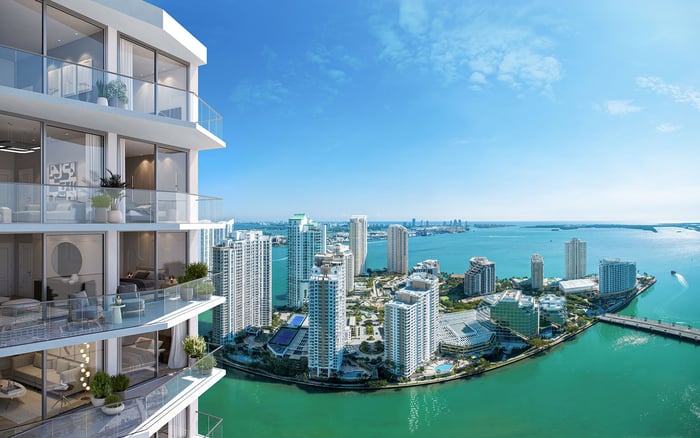
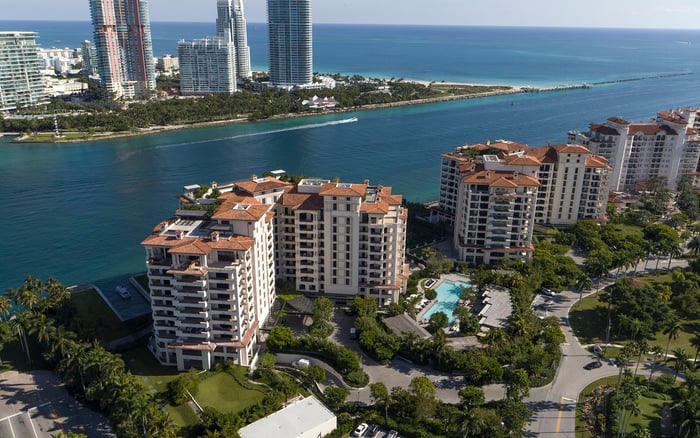
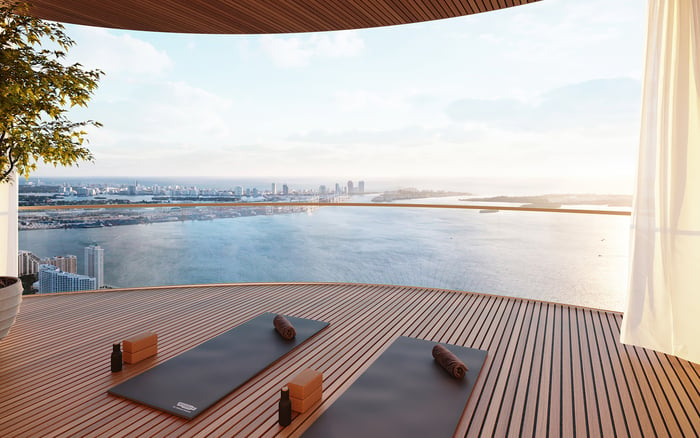
Bayfront living often trades overt status cues for something more difficult to market and more valuable to many buyers: a quieter, more controlled waterfront experience. In South Florida, sheltered water, lower wave energy, reduced public activity, and gentler day-to-day maintenance demands can make bayfront residences feel distinctly calmer than their oceanfront counterparts.
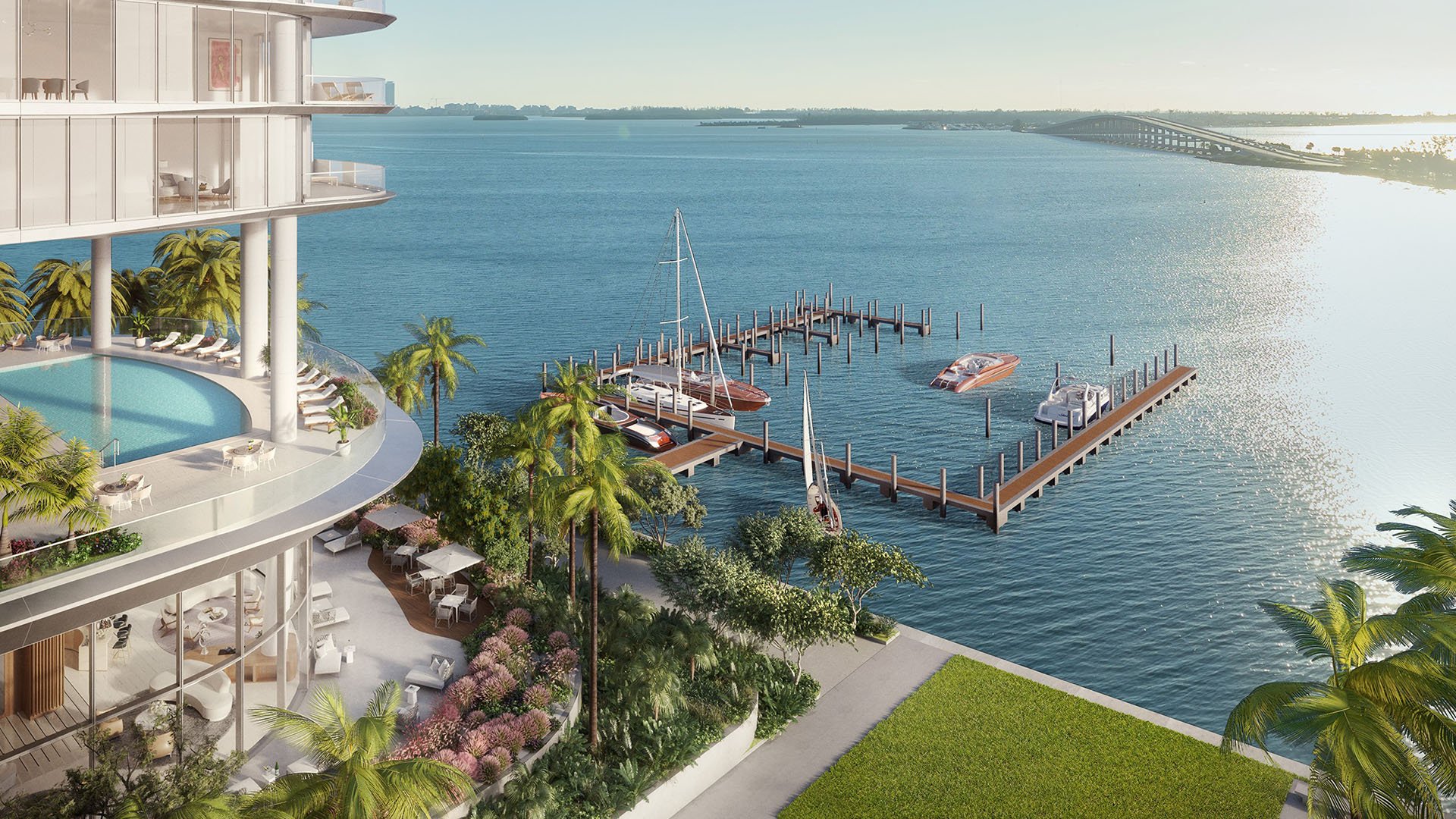
In South Florida, oceanfront property still carries the more immediately legible bragging rights. The address is instantly understood. The horizon reads as dramatic. The surf announces itself. Yet for a certain buyer, especially one already familiar with the realities of waterfront ownership, bayfront living can feel more refined precisely because it is less theatrical.
The distinction is not merely aesthetic. It is environmental, sensory, and operational. Oceanfront residences are defined by direct exposure to surf, wind, salt, public beachfront activity, and stronger wave action. Bayfront residences, particularly along Biscayne Bay and in protected enclaves such as Bay Harbor and North Bay Village, often offer a more moderated version of waterfront life. The result is a setting that can feel less like a stage set and more like a private retreat.
This is one reason certain buyers gravitate toward addresses like Onda Bay Harbor and The Well Bay Harbor Islands. The appeal is not just the water view. It is the quality of that view, and the quieter pace that comes with it.
Ocean waves generate persistent low-frequency acoustic energy. In practical terms, that means many oceanfront homes are never entirely still. Some residents love that ever-present surf sound. Others find that what feels romantic on a weekend can become a subtle strain over time, especially when paired with wind noise, beachfront traffic, and the activity public shorelines naturally attract.
By contrast, protected bay water is typically quieter. Biscayne Bay’s geography, separated from the Atlantic by barrier islands, helps create calmer conditions across many South Florida bayfront settings. That quieter edge can shape daily life more than buyers expect. Morning coffee on the terrace feels different. Evening entertaining feels softer. Bedrooms facing the water may experience less ambient disruption.
That matters because environmental noise can affect day-to-day comfort. For many affluent buyers, tranquility is no longer a vague lifestyle aspiration. It is part of the brief. In places such as Coconut Grove and Edgewater, residences like Vita at Grove Isle and Villa Miami speak to that preference for waterfront living that feels composed rather than constantly stimulated.
Oceanfront prestige comes with a public edge. Beaches are social landscapes, and that creates a different relationship between a private residence and the outside world. Even at the ultra-luxury end, oceanfront owners are often closer to joggers, beachgoers, service traffic, and the visual movement that gathers along the shore.
Bayfront homes often feel more discreet because the water itself functions differently. The edge is less recreational in a public sense and more residential in character. Views tend to include boats, mangroves, skyline reflections, and protected channels rather than a constantly active beachfront. For buyers who define luxury as control, that can be more compelling than visibility.
This helps explain the ongoing appeal of boutique bayfront product in places that do not necessarily advertise themselves with the same force as Miami Beach or Sunny Isles. In certain enclaves, the privilege is not about being seen on the water. It is about being buffered from commotion while still remaining deeply connected to it.
The emotional experience of a residence is shaped by more than what the eye sees from the living room. It also reflects what ownership asks of you in the background.
Open-ocean frontage generally faces harsher conditions. Salt spray can accelerate corrosion. Wind-driven exposure can be harder on windows, railings, HVAC systems, and exterior finishes. Stronger wave energy contributes to shoreline wear and to the broader sense that an oceanfront asset must be defended, maintained, and monitored more aggressively.
Bayfront residences are not immune to coastal wear, of course. But sheltered water typically reduces the intensity of those forces. The difference may register not in dramatic moments, but in the ongoing mental load of ownership. Fewer concerns about constant exposure can make the home itself feel easier to inhabit.
That distinction increasingly matters to buyers balancing prestige with practicality. In Brickell, for example, waterfront towers such as Una Residences Brickell present a version of luxury that is deeply tied to the bay rather than the beach. It is a compelling proposition for a second-home owner who values marina access, serenity, and a more controlled waterfront experience without forfeiting centrality.
South Floridians understand that all waterfront living comes with exposure. Still, not every shoreline absorbs risk in the same way. Open coasts generally face more direct wave attack and more severe surge dynamics than sheltered bay environments protected by barrier geography.
That does not mean bayfront ownership is carefree. It means the stress profile can feel different. A buyer choosing between oceanfront and bayfront may be comparing not just views, but the emotional rhythm of living through hurricane season. One frontage often feels more exposed, both physically and psychologically.
Insurance, flood-zone distinctions, and resilience planning all feed into that perception. Sophisticated buyers increasingly weigh livability alongside status. The question is no longer simply which address looks more impressive on paper. It is which one allows the owner to feel more at ease for the other eleven months of the year.
The modern luxury buyer is often less interested in obvious grandeur than in environments that support restoration. That shift has strengthened the appeal of calm-water living. Not all waterfront experiences feel the same in daily life. High-energy coastlines and sheltered waters can produce very different psychological effects.
This is where bayfront property has become especially competitive. It offers visual openness without the full sensory intensity of the ocean. It often supports lower-speed rituals that affluent owners genuinely use, including boating, fishing, paddleboarding, and sunset entertaining from a private dock or boat slip. The lifestyle is less about spectacle and more about ease.
In that sense, bayfront addresses can feel more aligned with contemporary luxury values: privacy, wellness, control, and time. They may have less instant bragging power at a dinner table, but they can deliver more satisfaction in the lived experience of the home.
South Florida demand is increasingly segmented by lifestyle. Some buyers will always want the direct drama of surf and sand. Others, particularly repeat waterfront owners, recognize that calm has its own market power. A residence does not need crashing waves to feel exceptional. Sometimes the greater luxury is a protected edge, a quieter soundscape, and a home that asks less of its owner.
That is why bayfront product continues to resonate across Bay Harbor, Coconut Grove, Brickell, and North Bay Village. The value proposition is nuanced, but unmistakable. These homes can feel calmer because, in many cases, they truly are: quieter in sound, gentler in exposure, more private in daily use, and more conducive to the kind of wellness-oriented living sophisticated buyers increasingly seek.
Do bayfront homes usually feel quieter than oceanfront homes? Often, yes. Protected water typically produces less surf noise and less public beachfront activity than direct ocean exposure.
Why can bayfront residences feel more private? Many bayfront edges are less tied to public beach circulation, which can mean fewer pedestrians and less day-to-day movement outside the residence.
Are maintenance demands different on the bay? They can be. Oceanfront exposure generally brings heavier salt, wind, and wave-related wear on exterior systems and finishes.
Is bayfront living risk-free during storm season? No. All coastal property carries exposure, but sheltered bay settings can feel different from open-ocean frontage during severe weather.
Do calmer waters change the day-to-day experience of a home? Often they do. A quieter shoreline can make terraces, bedrooms, and entertaining spaces feel more restful and controlled.
Why do some buyers choose bayfront over oceanfront even without the same bragging rights? Many prioritize ease, privacy, and comfort over a more theatrical waterfront setting.
Does Biscayne Bay play a role in this calmer feeling? Yes. Its protected geography helps create more moderated waterfront conditions than the open Atlantic shoreline.
Are bayfront homes still considered prestigious in South Florida? Absolutely. For many buyers, discretion and livability are part of what makes a waterfront address feel truly elevated.
Do bayfront properties appeal to wellness-focused buyers? Yes. Buyers drawn to restoration, quiet, and slower rituals often find calm-water settings especially compelling.
Can bayfront living still support boating-oriented lifestyles? In many cases, yes. Sheltered water can pair well with marina access, private docks, and everyday use on the bay.
For a confidential assessment and a building-by-building shortlist, connect with MILLION.
If branded residences are on your mind — as a home or as an allocation — we would be glad to share what we are seeing, privately.
Begin a quiet conversation