A discreet, practical guide for internationally minded buyers comparing South Florida full-service towers, with emphasis on service culture, privacy, location, governance, and long-term fit.
For a Singapore-based buyer, the appeal of a South Florida full-service tower is rarely spectacle alone. It is order, privacy, continuity, and the confidence that every transition, from airport arrival to elevator entry, has been considered. Bal Harbour, with its quiet luxury vocabulary, sits at the refined end of that conversation.
The right tower may not be the most visible name in the market. It may be the building where staff remember a preferred arrival protocol, where the porte cochère remains calm at peak hours, where a residence can be secured for months between visits, and where the neighborhood supports a polished life without demanding attention. This is where a true Buyer's Guides mindset matters: look past the renderings and evaluate the building as an operating environment.
Full-service is not a single amenity. It is a coordinated residential system. At the ultra-premium level, buyers should ask how the building manages arrival, privacy, maintenance, guest access, packages, valet rhythm, wellness reservations, pet protocols, service elevators, and owner communications. A tower can look exquisite in a presentation and still feel strained if daily operations are not intuitive.
For buyers comparing Bal Harbour, Surfside, Sunny Isles Beach, Miami Beach, and Brickell, the first decision is lifestyle tempo. Bal Harbour generally appeals to those who value discretion and low-friction access to a polished coastal routine. Brickell speaks to buyers who want a more urban vertical experience. Sunny Isles Beach often enters the conversation for those who prioritize a direct coastal setting with a taller-tower sensibility. The right answer depends on how the residence will be used: primary home, seasonal base, family gathering point, or investment-adjacent second home.
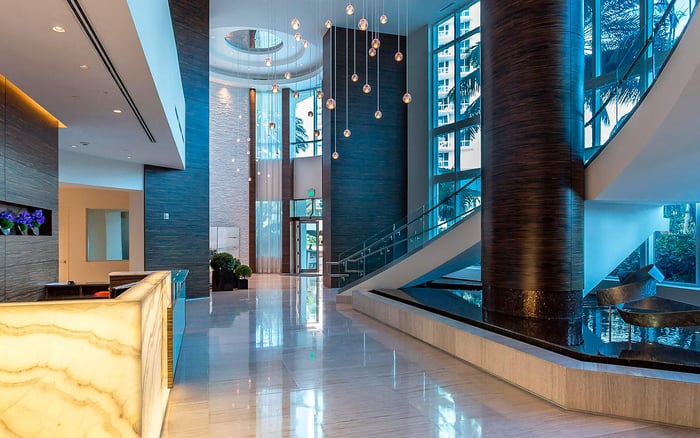
A full-service tower begins at the curb. Before considering views or finishes, study how the building receives you. Is the drop-off gracious or congested? Does the lobby allow privacy, or does every guest pass through the same social funnel? Are valet, security, concierge, and elevators choreographed, or do they feel like separate departments?
This matters especially for long-haul owners. A buyer arriving from Singapore may land after an extended flight and want certainty more than ceremony. The best buildings make that transition nearly invisible. A calm arrival sequence can be worth as much as a decorative finish because it shapes every return home.
In Bal Harbour, buyers may use project comparisons such as Rivage Bal Harbour and Oceana Bal Harbour to frame the discussion around privacy, scale, coastal positioning, and overall residential tone. The point is not to collect names, but to understand which building culture fits how you live.
The most valuable amenity is consistency. A staffed residence should feel competent on a quiet Tuesday morning, not only during a sales presentation. Ask how requests are logged, who coordinates owner preferences, how recurring maintenance is managed, and how the building communicates during storms, holidays, and high-occupancy periods.
Service culture also includes boundaries. Some buyers want a highly social club atmosphere. Others want their residence to feel almost private-house quiet, with staff present but never intrusive. The distinction is subtle and important. In a true luxury tower, service should be anticipatory without becoming theatrical.
Branded Residences can be especially appealing to global buyers because they suggest a recognizable service language. Still, the brand name should be only one part of the analysis. The on-site team, governance structure, resident profile, and building rhythm will ultimately define the lived experience.
Privacy in a tower is architectural, operational, and social. It includes elevator configuration, corridor length, staffing discipline, parking access, guest screening, package handling, and whether amenity spaces feel residential or public. Buyers should be candid about their privacy requirements before shortlisting.
For some, a private or semi-private elevator experience is essential. For others, the priority is discreet guest access or a building culture that does not feel transient. The question is not whether a tower is secure in an abstract sense. The sharper question is how privacy is preserved during ordinary life: a dinner guest arriving, a driver waiting, a family member using the spa, or a contractor entering while the owner is abroad.
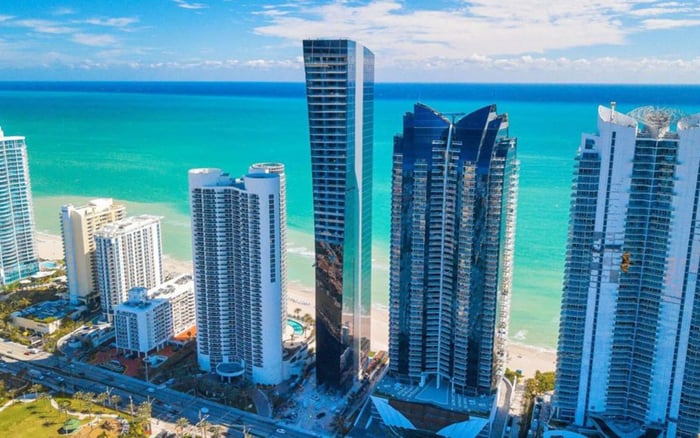
In Sunny Isles Beach, a project such as St. Regis® Residences Sunny Isles may be part of a buyer’s comparison when the brief includes recognizable hospitality cues, coastal living, and a full-service expectation. The same buyer may still prefer Bal Harbour if the desired mood is quieter and more village-like.
South Florida buyers often begin with the water view. Sophisticated buyers go further. They consider drive patterns, school proximity if relevant, airport routes, marina access, dining habits, retail preferences, medical access, staff logistics, and how the neighborhood behaves in season. Oceanfront beauty is powerful, but the best purchase supports the entire week.
Bal Harbour is compelling for buyers who want a composed coastal address with proximity to high-end shopping and a restrained residential tone. Brickell offers a denser, more metropolitan setting, useful for buyers who want finance, dining, and city energy close at hand. Coconut Grove, Coral Gables, Fisher Island, Surfside, and Fort Lauderdale each solve a different version of the luxury-life equation.
A Singapore buyer may instinctively appreciate efficiency. In South Florida, efficiency is often geographic. Ten minutes saved in a daily pattern can be more valuable than a rarely used amenity. The tower should reduce friction, not simply impress guests.
Amenity packages can be difficult to evaluate because they are designed to dazzle. A better approach is to divide them into daily, weekly, occasional, and symbolic categories. Daily amenities might include fitness, lobby service, parking, dog walking logistics, and package handling. Weekly amenities may include spa, dining, pool, and private rooms. Occasional amenities could include guest suites, event spaces, and treatment rooms.
Symbolic amenities can still matter. They influence identity and resale perception. But they should not drive the purchase if they do not support actual use. A buyer who spends only part of the year in Florida may value lock-and-leave confidence, maintenance coordination, and arrival ease more than a long list of social spaces.
In Brickell, Cipriani Residences Brickell may appeal to buyers studying a more urban, service-forward lifestyle. The comparison against Bal Harbour is not better or worse. It is city energy versus coastal discretion.
Every full-service tower is also a shared institution. Before committing, buyers should review association governance, rules, leasing restrictions, pet policies, renovation protocols, insurance considerations, reserve planning, and procedures for extended absences. These details are not glamorous, but they protect the experience.
International buyers should also coordinate legal, tax, banking, and estate planning advice before contract execution. The real estate decision is only one part of ownership. Structure, timing, currency strategy, and family use should be addressed early, particularly when the residence may become a multigenerational asset.
The strongest shortlist usually includes one aspirational choice, one practical choice, and one surprise. Tour each at different times if possible. Listen for noise, watch the lobby, observe the valet rhythm, and ask how the building handles ordinary requests. Luxury reveals itself in small repetitions.
For buyers considering Miami’s broader service landscape, The Residences at Mandarin Oriental, Miami may help frame the appeal of hospitality-informed residential living in another context. That comparison can sharpen the Bal Harbour decision by clarifying whether the desired experience is resort-like, urban, coastal, or quietly residential.
A full-service tower should not merely photograph well. It should make life calmer. For a buyer moving between Singapore and South Florida, that calm may be the ultimate luxury.
What should a Singapore-based buyer evaluate first in a full-service tower? Start with how the building operates day to day: arrival, privacy, staffing, maintenance, security, and communication.
Is Bal Harbour better than Brickell for a second home? Bal Harbour suits buyers seeking coastal discretion, while Brickell suits those who prefer a denser urban rhythm.
Why does arrival sequence matter so much? It defines the first and last impression of every visit, especially after long-haul travel or during high-season traffic.
Are Branded Residences always the safest choice? A brand can signal service expectations, but the building’s staff, governance, and resident culture matter just as much.
How should buyers compare amenities? Separate daily-use amenities from occasional and symbolic features, then prioritize what will genuinely improve life.
What does Oceanfront living add to the decision? It adds beauty and a strong sense of place, but buyers should still evaluate access, operations, and neighborhood fit.
Is Sunny Isles Beach a direct alternative to Bal Harbour? It can be for buyers wanting a coastal tower lifestyle, though the atmosphere and scale may feel different.
What documents should be reviewed before purchase? Buyers should review association rules, budgets, insurance context, leasing policies, and renovation procedures with advisors.
Should international buyers plan ownership structure early? Yes. Legal, tax, estate, banking, and currency considerations should be coordinated before signing binding documents.
What is the simplest test of a full-service tower? Ask whether the building will make ordinary life easier, quieter, and more secure when no one is trying to impress you.
To compare the best-fit options with clarity, connect with MILLION.
If branded residences are on your mind — as a home or as an allocation — we would be glad to share what we are seeing, privately.
Begin a quiet conversation