A practical 2026 checklist for Andare Residences Fort Lauderdale buyers assessing high-value contents coverage, custom interiors, coastal exposures and private-client insurance coordination before closing.
For buyers considering Andare Residences Fort Lauderdale, high-value contents coverage belongs in the acquisition file, not in a drawer after move-in. The most expensive losses in a luxury condominium are rarely confined to ordinary furniture. They may involve art, jewelry, wine, designer furnishings, bespoke interiors, rare materials, embedded technology and the many categories of portable wealth that define a fully realized residence.
The 2026 due-diligence standard should be straightforward: understand what will be owned, where it will sit, how it will be installed, who may access it and which policy is expected to respond if something goes wrong. That review should begin before closing, continue through interior installation and remain active at renewal.
Andare Residences Fort Lauderdale sits within a Broward luxury market where buyers often manage multiple homes, family-office oversight and complex collections. A seasonal pied-à-terre with limited contents presents a different insurance profile than a primary display residence holding fine art, jewelry, wine and custom design assets. The policy conversation should reflect that distinction early.
The first checklist item is classification. Movable personal property and built-in improvements may be insured under different coverage sections, and the distinction is not always intuitive. A freestanding sculpture, a dining table and a watch collection are usually treated differently from custom millwork, imported stone, integrated appliances, built-in wine walls, wall treatments and embedded technology.
Luxury interior build-outs can exceed standard condominium policy assumptions if they are not separately valued and declared. A buyer planning significant design work should create a schedule of the elements that will become part of the residence, including designer specifications, invoices, installation records and photographs. Replacement-cost realism matters because rare materials, custom fabrication and specialized labor can be difficult or expensive to replicate after a loss.
This is also where a penthouse buyer, or any owner with a more ambitious interior program, should avoid broad assumptions. The more tailored the residence becomes, the more precise the insurance file should be.
Before closing, buyers should review the condominium association’s master insurance policies alongside the unit-owner policy obligations. The goal is to identify where association coverage ends and where owner coverage begins for interiors, contents, fixtures, deductibles and loss assessments.
This review should not rely on a generic summary. Buyers should understand how the documents treat original construction, upgraded finishes, owner-installed improvements, shared systems, casualty deductibles and any assessment that could follow a building-wide event. If a high-value loss touches both common elements and private property, clarity before the loss is far better than negotiation afterward.
For an investment-minded buyer, this review is also part of capital preservation. The same residence that is architecturally compelling can carry uninsured or underinsured exposures if the coverage architecture does not match the ownership structure.
Fort Lauderdale’s coastal setting is central to the lifestyle proposition, but it also belongs in the contents analysis. Hurricane, wind-driven rain, storm surge and water intrusion risks should be considered even in a high-rise context. Contents losses can arise from façade, window, balcony-door, roof or water-intrusion failures, and the most fragile assets are often the least forgiving.
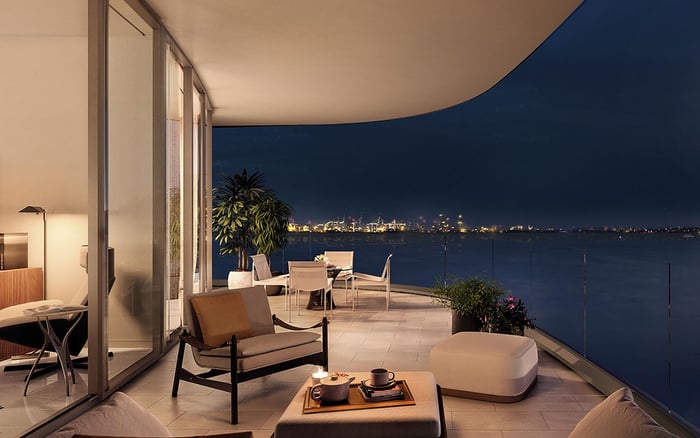
Floor-to-ceiling glass, terraces and design-forward openings are part of the appeal, but they are also pathways that should be reviewed. Balcony and terrace use can change how outdoor furnishings, indoor art placement and electronic systems are evaluated. Buyers should ask whether high-value items near glass, doors, wet bars or wine installations need special placement protocols or separate schedules.
Coverage coordination may involve private-client homeowners coverage, flood, windstorm, excess coverage, umbrella liability, fine-art coverage, jewelry schedules and wine insurance where applicable. The point is not to buy every possible endorsement. It is to make sure each meaningful exposure has a deliberate answer.
A serious contents file begins with documentation. Before policy binding, the buyer should assemble appraisals, inventories, photographs, invoices, designer specifications, installation records and schedules for valuable items. This should include portable property and high-value built-in elements.
For art, jewelry and wine, the inventory should show what will actually be kept at Andare Residences Fort Lauderdale versus another residence, a storage facility or a yacht. For designer furnishings and bespoke interiors, the file should show provenance, purchase documentation and replacement assumptions. For embedded technology, it should identify integrated systems that may not be obvious in a room-by-room walkthrough.
A strong inventory is not only a claims tool. It is a planning tool that forces the buyer, advisor and insurer to agree on the value of the lifestyle being created.
High-service living introduces custody questions. Concierge, valet, package handling, housekeeping access, storage areas and shared facilities can all intersect with theft, damage or misplacement scenarios. These are not reasons to avoid service-rich living. They are reasons to define access protocols and insurance expectations.
Buyers should consider who may enter the residence, how deliveries are received, where valuable items are staged during installation and how storage areas are secured. If jewelry, art or wine is moved between properties, the transit exposure should also be addressed. A contents program that only contemplates items once they are perfectly placed misses the most active risk period, which often occurs during delivery, installation and early occupancy.
Before contract, identify the likely use pattern: seasonal, primary, family-office managed or collection-heavy. Before closing, review association coverage, unit-owner responsibilities, deductibles and loss-assessment exposure. Before interior installation, separate movable property from improvements and betterments, then value both realistically.
During installation, photograph rooms, retain invoices, document designer specifications and update schedules as items arrive. At move-in, confirm that fine art, jewelry, wine, flood, windstorm, umbrella and excess coverage align with the final asset map. At annual renewal, revisit appraisals, new acquisitions, disposed items, renovated spaces and any change in occupancy.
The best insurance work is quiet, detailed and done early. For a residence at this level, coverage is not merely a back-office formality. It is part of the stewardship of design, privacy and wealth.
When should an Andare buyer begin contents insurance planning? Before closing. The review should begin early enough to inform policy structure before interior installation and move-in.
Why separate contents from improvements and betterments? Movable property and built-in upgrades may fall under different coverage sections. Clear classification reduces ambiguity after a loss.
What high-value items should be scheduled or documented? Art, jewelry, wine, designer furnishings, bespoke interiors, custom millwork, imported stone and embedded technology should be reviewed.
Does a high-rise residence still face coastal contents risk? Yes. Wind-driven rain, storm surge and water intrusion can affect contents through glass, façade, roof or door failures.
Should buyers review the association’s master policy? Yes. Buyers should understand where association coverage ends and where unit-owner responsibility begins.
How should multi-home owners approach the inventory? They should map which assets will remain at Andare, which will be kept elsewhere and which may move between properties.
Are service areas part of the insurance review? Yes. Concierge, valet, package handling, housekeeping access, storage and shared facilities can create custody and damage scenarios.
Why does replacement cost matter for luxury interiors? Rare materials, designer work and custom fabrication may cost more to replicate than standard policy assumptions anticipate.
What should be updated after move-in? Appraisals, schedules, photographs, invoices and coverage limits should be revisited as acquisitions and interiors change.
What is the best way to shortlist comparable options for touring? Start with location fit, delivery status, and daily lifestyle priorities, then compare stacks and elevations to validate views and privacy.
For a tailored shortlist and next-step guidance, connect with MILLION.
If branded residences are on your mind — as a home or as an allocation — we would be glad to share what we are seeing, privately.
Begin a quiet conversation