A buyer-oriented look at why lobbies matter in ultra-premium residential living, with a ranked, design-first perspective on the Piet Boon and Tara Bernerd aesthetic and what to ask for when touring South Florida properties.
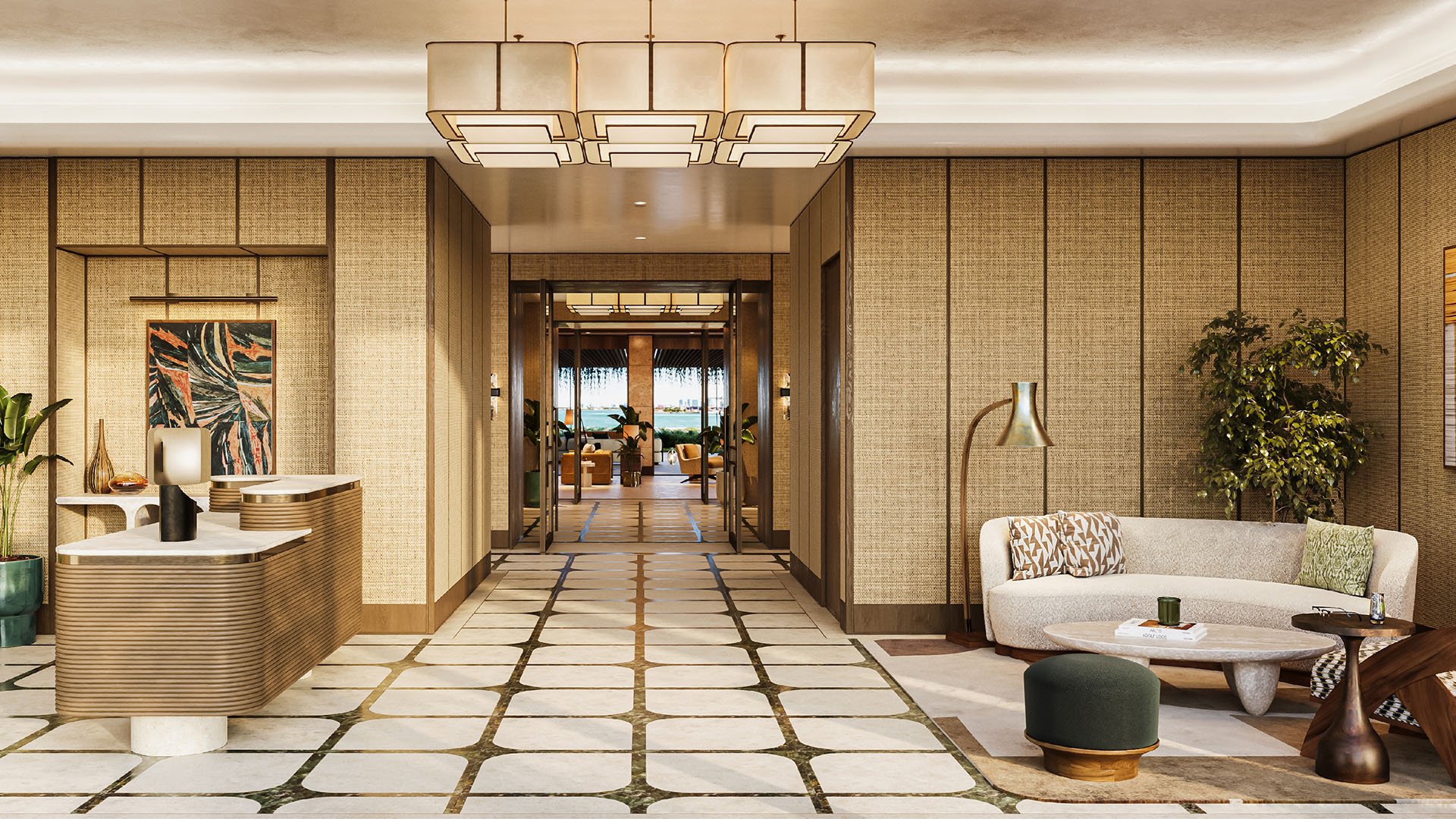
In South Florida’s ultra-premium market, the lobby is not an accessory. It’s the building’s handshake, security perimeter, and social signal-compressed into a single, intentional sequence. The most architecturally significant lobbies accomplish three things at once: they choreograph arrival, protect privacy, and establish an emotional register that remains consistent from curb to elevator.
Designers like Piet Boon and Tara Bernerd have become shorthand for a particular kind of luxury: calibrated rather than performative. At their best, the work prioritizes proportion, tactility, and controlled drama. For buyers, that matters because the lobby is one of the few daily touchpoints you experience regardless of unit size, floor height, or view corridor.
South Florida adds its own constraints and advantages. Sunlight is abundant, materials must endure humidity and salt air, and residents expect hotel-grade service without feeling like they live in a hotel. A truly great lobby resolves that tension with ease: you feel welcomed, yet never exposed.
Both studios are known for environments that photograph beautifully, but the lived experience is where the distinction becomes clear.
Piet Boon spaces typically project quiet authority: natural stone, warm woods, restrained palettes, and furniture that feels substantial without becoming bulky. The effect is architectural calm-a lobby that lowers your pulse.
Tara Bernerd’s work tends to read more layered and residentially glamorous. You often sense a hospitality mindset: intimate seating clusters, jewelry-like lighting moments, and tactile richness that encourages you to linger. In the strongest examples, it never feels busy-only deliberately composed.
For a buyer, the question isn’t which is “better.” It’s which approach matches the life you want in the building. Do you want the lobby to function like a serene gallery, or like a private members’ salon?
Below is a design-forward ranking focused on what makes a lobby architecturally significant-not simply expensive. Each entry uses the same buyer lens: arrival, privacy, material integrity, and how the space will feel on an ordinary Tuesday night.
1. The Threshold Lobby - framed sightlines and controlled reveal
The best lobbies don’t show you everything at once. A threshold lobby uses partial walls, softened corners, and calibrated sightlines to create a reveal that feels cinematic, yet discreet.
Architecturally, this is sequencing. You move from exterior brightness to interior calm, with light levels and ceiling heights subtly shifting to signal that you’ve entered a protected domain.
2. The Gallery Lobby - monolithic materials, minimal gestures
This archetype leans Piet Boon in spirit: fewer moves, better moves. Large-format stone, continuous wood planes, and quiet joinery allow the architecture to carry the luxury.
Buyers should look for discipline. If you strip away the styling, does the space still feel resolved? True gallery lobbies remain convincing even when the floral arrangements are gone.
3. The Salon Lobby - layered seating, residential scale
A Tara Bernerd-leaning lobby often behaves like a living room for residents-one with impeccable boundaries. Seating is arranged into conversational pockets rather than a single waiting zone.
The architectural significance is scale control. Even a large volume can feel intimate when furniture, lighting, and partitions create micro-environments that support privacy.
4. The Courtyard Arrival - indoor-outdoor continuity that actually works
South Florida invites indoor-outdoor living, but lobbies often fail at the handoff. The most significant examples treat landscape as architecture: thresholds align with planted courts, water, or shaded terraces.
When done well, the building feels breathable without compromising security. You sense nature, but you never feel like you’re walking through a public garden.
5. The Concierge Spine - service embedded, not displayed
In the best lobbies, service is omnipresent but never theatrical. The concierge is positioned to assist, yet the desk doesn’t dominate the room.
Architecturally, this is integration of back-of-house circulation. Package handling, resident-only access, and staff movement should be efficient-and effectively invisible. If you see clutter, the plan is failing.
6. The Double-Height Room - drama with acoustic control
Double-height volumes are common; acoustically comfortable ones are rare. Architectural significance here means the drama is matched with absorption, texture, and softening strategies.
Listen during a tour. If voices ricochet, the space will feel less luxurious over time-no matter how impressive the ceiling looks.
7. The Private Arrival Lobby - discreteness as design
Some of the most compelling lobbies prioritize privacy over spectacle: separate resident entry, discreet waiting niches, and elevator banks that aren’t exposed to the street.
This is architecture as protection. The mood stays calm because circulation is controlled, and the building feels like it knows who belongs there.
8. The Material Integrity Lobby - surfaces that age well
Luxury lobbies are tested daily by luggage wheels, wet umbrellas, and constant cleaning. Architecturally significant lobbies specify materials that patina gracefully rather than degrade.
Buyers should inspect corners, base details, and transitions. If edges already feel vulnerable in a new building, the lobby won’t hold its composure.
9. The Lighting Composition Lobby - layered, warm, and flattering
Great lobbies are designed for human faces, not only for photos. Layered lighting is essential: ambient glow, task light at the concierge, and accent moments that sculpt walls and art.
A well-lit lobby feels welcoming at night and never harsh at noon. If you look better in the mirror near the entry, the lighting plan is doing its job.
10. The Elevator Moment Lobby - the final frame before home
The elevator bank is the last impression before you disappear upstairs. In significant lobbies, this zone isn’t an afterthought. It’s composed with the same material language, proportion, and lighting.
The best examples create a small pause-a moment that signals transition from public to private, from city to residence.
When you walk into a building, resist judging only the styling. Instead, audit the fundamentals.
First, track your path: where do you slow down, where do you feel exposed, where do you naturally want to sit? A well-designed lobby guides you without signage.
Second, test comfort. Is the air-conditioning balanced or aggressively cold? Can you hear the street? Do the doors thud quietly or slam? These are architectural tells.
Third, look for operational design. Package areas should be efficient and discreet. Security should feel integrated, not improvised. Staff should be able to assist without crossing the entire room.
In Brickell, where density and arrivals are constant, the most successful towers treat the lobby as an all-day organism rather than a decorative chamber. If you’re evaluating the neighborhood, consider how a building’s arrival experience compares with peers like 2200 Brickell or the hospitality-minded ambience some buyers seek near Baccarat Residences Brickell.
In Miami Beach and Surfside, salt air and bright sun punish glossy finishes and overly delicate materials. A lobby that leans into tactile stone, matte metals, and carefully detailed wood will feel more timeless-and demand less cosmetic refresh.
Privacy is also part of the local etiquette. Residents expect exclusivity without fuss, and a lobby can deliver that through planning alone: screened seating, controlled elevator access, and a vestibule that buffers you from the street.
If your lifestyle is ocean-adjacent, notice how the lobby anticipates beach realities: towel wraps, sandy feet, humidity, and the desire to move from car to elevator without a production. In Miami Beach, buyers cross-shop for this kind of ease alongside residences such as 57 Ocean Miami Beach, where the arrival experience is part of the daily ritual.
Farther north, Sunny Isles and Hallandale often deliver resort-scale amenities, which can push the lobby toward either grand or impersonal. The strongest examples maintain a residential tone even at large scale. In Hallandale, that balance is part of the appeal for buyers looking at 2000 Ocean Hallandale Beach.
Architectural significance isn’t a guarantee of future value, but it tends to correlate with three qualities buyers reward: coherence, durability, and emotional consistency.
Coherence means the lobby doesn’t fight the rest of the building. Materials and proportions should echo through corridors, elevators, and amenity entries. Durability means the space still looks composed after years of heavy use. Emotional consistency means the building feels like itself every time you arrive-not like a set that requires constant styling to remain convincing.
For buyers, this translates to a simple reality: a strong lobby reduces friction. Guests feel oriented. Residents feel protected. Staff can operate efficiently. And the building communicates that standards are enforced.
In Bal Harbour and Bay Harbor, where discretion is often prized over spectacle, lobbies that prioritize quiet luxury can feel especially aligned with the lifestyle. If wellness and calm are central to your decision-making, you may also find yourself comparing how a lobby sets the tone for the rest of the building experience at places like The Well Bay Harbor Islands.
What should a luxury condo lobby do beyond looking beautiful? It should manage privacy, guide circulation, and signal service standards in a calm, intuitive way.
How can I tell if a lobby’s materials are truly high quality? Look at edges, seams, and wear points; the best materials and detailing stay composed up close.
Does a double-height lobby always mean better design? No; without acoustic control and proportion, a tall lobby can feel loud and impersonal.
Which matters more: the lobby or the amenities? The lobby shapes daily life more often because you experience it every time you come and go.
How do Piet Boon-style lobbies typically feel? They often read as quiet, tactile, and minimal, with luxury expressed through restraint.
How do Tara Bernerd-style lobbies typically feel? They tend to feel layered and residentially glamorous, with intimate seating and hospitality cues.
What is the biggest red flag during a lobby tour? Visible operational clutter or awkward circulation usually indicates planning and management issues.
Can a strong lobby improve resale appeal? It can, because it reinforces brand perception and signals that the building is well maintained.
Should I prioritize privacy features in the arrival sequence? Yes; discreet entry, controlled access, and screened seating often age better than overt drama.
What’s one simple thing to do when touring a lobby? Pause and listen; a truly luxurious lobby is comfortable acoustically, not just visually striking.
To compare the best-fit options with clarity, connect with MILLION Luxury.
If branded residences are on your mind — as a home or as an allocation — we would be glad to share what we are seeing, privately.
Begin a quiet conversation