A buyer-oriented, discreet comparison of two wellness-forward Miami residential concepts, focusing on what “clinical-grade” air purification can mean in daily living, how recovery amenities translate into lifestyle value, and how to evaluate specifications before purchasing.

South Florida luxury has always been defined by light, views, and a certain ease of living. Recently, that definition has expanded: buyers increasingly treat indoor air as a core utility-closer to water quality than an optional “smart home” upgrade. The phrase “clinical-grade air purification” now appears across marketing, but its real value lives in the engineering: how air is filtered, how much outdoor air is introduced, how humidity is managed, and how the building limits cross-contamination between spaces.
In that context, comparing House of Wellness Brickell and The Well Coconut Grove is less about which one is “healthier” in the abstract and more about how each makes wellness livable-day to day, not just on a spa day. For an ultra-premium buyer, the question isn’t whether either project has a wellness narrative. It’s whether the building’s systems and operations make that narrative effortless on a Tuesday afternoon.
Wellness real estate is often discussed as if it belongs outside the city-somewhere quiet, removed, and restorative by default. In Miami, two of the most compelling wellness-forward conversations happen in decidedly urban contexts.
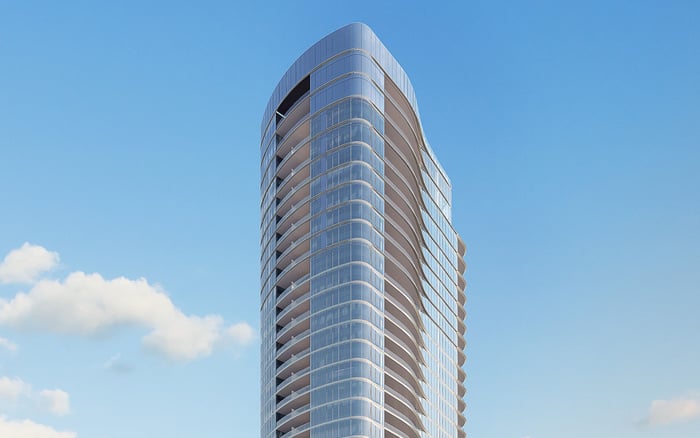
Brickell is built for velocity. Residents often optimize schedules: early meetings, late returns, frequent travel. In that rhythm, “recovery” becomes a performance tool. A building that reduces friction-from elevator waits to gym access-can make wellness feel operational rather than aspirational. If you’re already choosing Brickell, you likely value proximity, walkability, and the ability to do more with less transit.
Coconut Grove, by contrast, is luxury with a softer cadence. It’s still central, yet it feels buffered by tree canopy, water, and a lower-slung urban fabric. Wellness reads as a baseline lifestyle condition: more daylight, more time outdoors, and a stronger emphasis on calm. Buyers drawn to the Grove often want a home that starts decompressing them the moment they arrive.
This is why the comparison matters: even the best air purification lands differently when paired with a neighborhood’s noise profile, commuting patterns, and social tempo.
Without a specification sheet, “clinical-grade” can be a placeholder. For buyer decision-making, focus on a short list of questions you can validate during due diligence.
First, filtration standard. Ask what filter rating is used at the unit level and at the central system level-and how often filters are replaced. The difference between excellent filtration and merely adequate filtration is often maintenance discipline.
Second, fresh-air strategy. Real air quality isn’t only about filtering recirculated air. It’s also about controlled outdoor-air introduction and how that air is tempered and dehumidified for Miami’s climate. In South Florida, humidity management isn’t a comfort detail; it’s an air-quality and materials-preservation issue.
Third, pressure and compartmentalization. In a high-rise, corridors, elevator lobbies, and shared amenity spaces can become pathways for odors, particulates, and microbes. Ask how the building reduces transfer between common areas and residences, and whether systems are designed to limit drift between units.
Fourth, monitoring and transparency. The most sophisticated systems are increasingly paired with sensors and dashboards. Whether that data is resident-facing or operator-facing, measurement matters. If you can’t measure it, you can’t manage it.
Finally, construction materials and finishes. Air purification can’t compensate for poor material choices. Low-odor, low-emission finishes-and a disciplined approach to cleaning products-can materially change how a home feels, especially for owners with allergies or sensitivities.
“Recovery” can be a buzzword. It becomes real when a building supports consistent, repeatable routines. Evaluate recovery systems on three levels.
1) Private recovery at home.
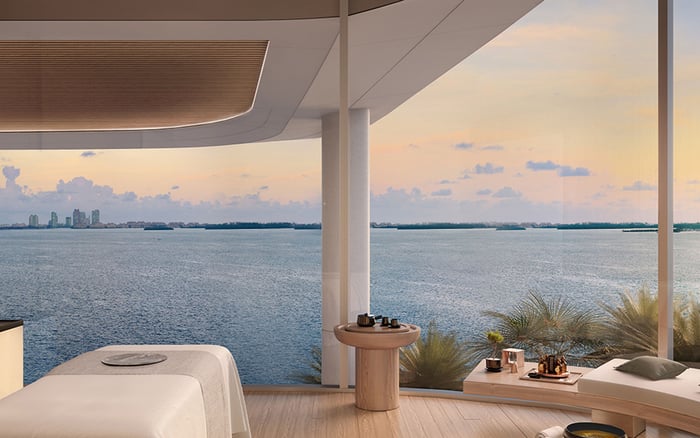
The ultimate luxury is privacy: the ability to recover without scheduling or sharing. For buyers, that can mean sufficient bathroom volume for steam, ventilation designed so humidity doesn’t linger, and quiet mechanical systems that protect sleep.
2) Building-level recovery that you will actually use.
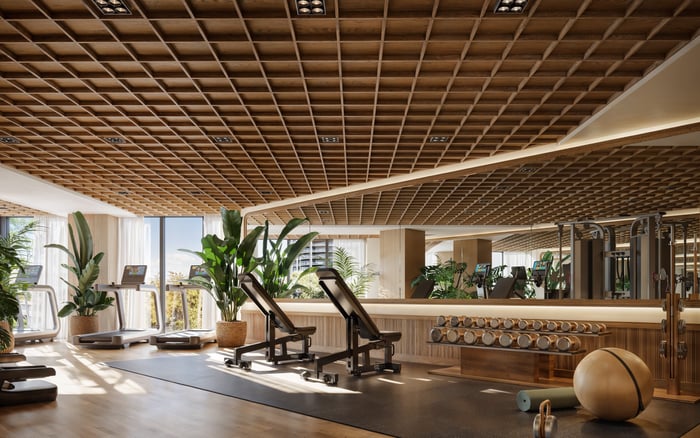
Many amenity decks photograph beautifully yet function poorly in real life. The question is proximity and ease: Is it two elevator stops away or effectively next door? Does the layout support quick, habitual use? A wellness amenity that requires “planning” tends to be used less.
3) Operational policies that protect the experience.
Quiet hours, cleaning protocols, and traffic patterns determine whether a recovery space feels restorative-or like another crowded gym. In luxury, operations are part of the product.
In Brickell, the highest-value wellness feature is often the one that quietly removes daily friction. Buyers who prioritize control and consistency typically want systems that deliver results without requiring lifestyle change.
If your life is schedule-driven, a wellness-forward building can operate like a private reset button between external demands. Look closely at how the residence supports sleep quality, temperature stability, and air that feels “neutral”-not perfumed or over-conditioned. When you tour, pay attention to corridor odors, elevator lobbies, and how quickly you transition from public energy to private calm.
Brickell also attracts buyers who already treat wellness as a discipline. For them, recovery amenities aren’t indulgences; they’re training tools. The best outcome isn’t that a building offers everything-it’s that what it offers is engineered and positioned to be used frequently and comfortably.
For context in the neighborhood’s broader premium market, it can be useful to compare the overall lifestyle positioning of nearby high-end inventory such as 2200 Brickell and Una Residences Brickell. Even when projects have different design priorities, the baseline expectation in Brickell is increasingly “high performance” living: privacy, efficiency, and a curated amenity experience.
Coconut Grove’s luxury buyer often wants wellness to feel ambient. The aim isn’t to optimize every minute; it’s to create an environment that nudges better choices almost automatically.
In practice, air quality is experienced as part of a broader sensory profile: quieter streets, softer light, and more immediate access to outdoor movement. A wellness-focused residence in the Grove tends to resonate with owners who prefer a calmer social tempo, who work from home more often, or who travel frequently and want their return to feel like a reset.
When evaluating a wellness concept here, think beyond the amenity deck. Consider how the building engages with the neighborhood: walkability, shade, and the ease of integrating daily movement. The best wellness real estate in Coconut Grove makes the “default day” healthier without effort.
In the Grove ecosystem, you may also cross-shop other lifestyle-led residences such as Four Seasons Residences Coconut Grove. This isn’t about sameness; it’s about understanding the service culture and residential ease you prefer when wellness is part of the brief.
Wellness is persuasive; contracts are unforgiving. Before committing, treat air purification and recovery the way you would structural, financial, or legal due diligence.
Ask for written details on:
Filtration and ventilation: Filter rating, replacement cadence, outdoor-air approach, and humidity control.
Unit-level vs. building-level scope: What is inside the residence, what is in common areas, and what is aspirational branding.
Noise and vibration: Mechanical systems that promise air quality but compromise sleep are a false trade.
Operational plan: Cleaning protocols, filter maintenance responsibility, and how amenity use is managed.
Materials: Finishes, sealants, and cleaning standards that affect real-world indoor air.
During a tour, treat your senses as data. Notice whether the air feels overly scented, whether spaces feel clammy, and whether a “clean” smell is masking something rather than reflecting true filtration and ventilation.
For most ultra-premium buyers, the right decision surfaces through one primary question: do you want wellness to function like a performance system-or like an atmospheric baseline?
Choose a Brickell-forward wellness concept if you want your residence to support a high-output life: faster resets, tighter routines, and a city-first address where recovery is integrated into efficiency.
Choose a Grove-forward wellness concept if you want your residence to act as a decompression chamber: calmer days, more organic movement, and the sense that the neighborhood itself is part of the wellness program.
In both cases, resist the temptation to buy the story alone. Buy the plan, the specifications, and the operational discipline that will still matter after the new-build sheen fades.
Is “clinical-grade” air purification a regulated term in luxury real estate? Not typically; treat it as a marketing phrase and verify the actual filtration, ventilation, and maintenance specifications.
What matters more in Miami: filtration or humidity control? Both matter, but humidity control is foundational in South Florida because it affects comfort, air quality, and materials over time.
Should I prioritize unit-level systems or building-wide systems? Ideally both; unit-level control improves personalization, while building-wide design can reduce transfer from common areas.
Can an air system eliminate odors from neighbors or corridors? It can reduce intrusion, but outcomes depend on pressure balance, compartmentalization, and how corridors are ventilated.
Do recovery amenities actually impact resale value? They can, especially when they feel authentic and well-operated; buyers increasingly price in lifestyle infrastructure.
How can I assess whether amenities will be used, not just photographed? Look for adjacency, intuitive circulation, and rules that keep spaces calm and clean during peak hours.
What questions should I ask about filter maintenance? Ask who is responsible, the replacement schedule, and whether there is a documented operations plan that persists over time.
Is air monitoring important for a residence? Yes; sensors and transparent metrics help validate performance and support consistent building operations.
Does neighborhood choice affect perceived wellness as much as building features? Often yes; noise, walkability, shade, and daily movement patterns can amplify or blunt any in-building wellness program.
What is the simplest way to compare two wellness projects during tours? Compare how quickly you feel calm in the arrival sequence and how easy it would be to maintain your routine daily.
For a discreet conversation and a curated building-by-building shortlist, connect with MILLION Luxury.
If branded residences are on your mind — as a home or as an allocation — we would be glad to share what we are seeing, privately.
Begin a quiet conversation