A discreet buyer’s guide to evaluating bilingual service culture in South Florida luxury real estate without mistaking language access for total lifestyle fit.
.jpg)
In South Florida luxury real estate, bilingual service culture is often treated as a quiet advantage. For many buyers, it creates immediate ease: a concierge who understands nuance, a property manager who can clarify policies without friction, and a service team that helps visiting family feel at home. In a region where international ownership, seasonal living, and multigenerational households often converge, that comfort can matter.
Yet language should not become a shortcut for due diligence. A polished bilingual welcome is not the same as a fully coordinated service culture. Buyers should distinguish conversational fluency from operational consistency, documentation quality, privacy awareness, and the deeper question of whether a building or neighborhood truly supports the way they intend to live.
The appeal is not simply translation. It is emotional ease. A buyer who can discuss maintenance, guest access, vendor timing, association matters, and lifestyle preferences in a familiar language often feels more in control. That matters when a residence is used seasonally, managed from abroad, or shared across family members who may not all communicate in the same way.
In ultra-premium settings, service is expected to be invisible, accurate, and composed. Bilingual capability can strengthen that standard by removing hesitation from daily interactions. It can also reduce misinterpretation around hospitality requests, household staffing, deliveries, pet policies, marina routines, and arrival protocols. The value is practical as much as personal.
Still, buyers should ask whether bilingual access is a building-wide discipline or a personality-driven benefit. If it depends on one excellent concierge, one sales associate, or one favored manager, the experience may change. The stronger signal is a service culture in which language access is embedded across communication channels, not performed only at the moment of sale.
The first test is consistency. Ask how routine communications are handled, including notices, emergency updates, invoices, reservation confirmations, and building policies. If verbal help is strong but written follow-through is uneven, the buyer may still face avoidable friction after closing.
The second test is escalation. A bilingual front desk is helpful, but ownership issues often move beyond the front desk. Buyers should understand whether management, accounting, security, maintenance coordination, and lifestyle teams can provide the same level of clarity when matters become time-sensitive.
The third test is discretion. Language familiarity can create warmth, but luxury service also requires boundaries. The best teams know how to be personal without becoming informal, attentive without being intrusive, and helpful without circulating household preferences unnecessarily.
The fourth test is household depth. A buyer may be fluent in English while parents, children, guests, chefs, drivers, or private assistants prefer another language. The relevant question is not only what the principal buyer needs, but how the entire household will experience the property.
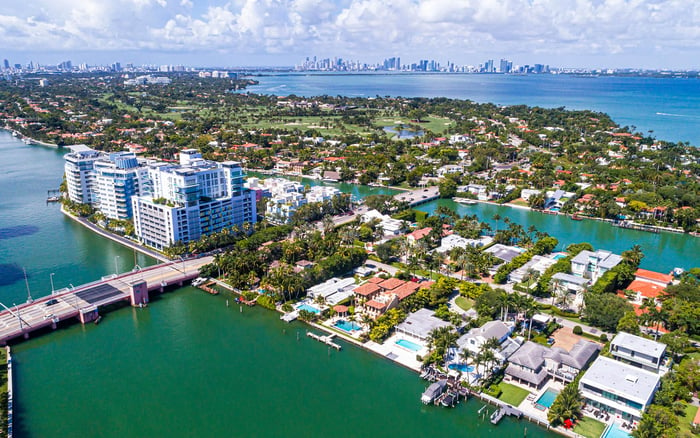
Bilingual service culture should be evaluated within the larger lifestyle map. A buyer comparing Brickell, Miami Beach, Sunny Isles, Bal Harbour, Coconut Grove, and Palm Beach is not simply choosing a language environment. They are choosing pace, access, privacy, formality, school and club routines, waterfront character, dining habits, and the rhythm of arrival and departure.
Different South Florida locations can support different ownership styles, from more urban routines to quieter residential rhythms. A buyer should therefore avoid saying, “This building has bilingual service, so it is the right fit.” A better question is, “Does the language comfort reinforce a lifestyle I already know is right?” The order matters. Service should confirm the decision, not manufacture it.
Luxury buyers often meet the most polished version of a property first. Sales galleries, private tours, and hosted visits are designed to feel seamless. Bilingual service in that setting can be impressive, but ownership depends on governance as much as hospitality.
Before treating language as decisive, review how rules are communicated and enforced. Consider guest registration, renovation procedures, vendor insurance, short visit protocols, amenity reservations, package handling, valet expectations, and private event policies. If a building is elegant but rigid, language access may make the rules easier to understand, but it will not change the rules themselves.
The same applies to staffing expectations. A buyer accustomed to a high-touch residential culture may expect proactive follow-up, while a building may operate with a more limited service model. Bilingual communication can soften that gap, but it cannot replace staffing depth, management responsiveness, or a resident culture aligned with the buyer’s standards.
For international buyers, bilingual support can be especially useful before, during, and after the purchase. It can help coordinate advisors, clarify timelines, and reduce the anxiety of managing a residence from another city or country. But international ownership also brings practical questions around payments, access permissions, insurance coordination, estate planning, and the role of local representatives.
The most resilient ownership experience usually begins with a clear operating structure. Who receives notices? Who can approve repairs? Who manages guests when the owner is away? Who communicates with the association or building team? Language access is valuable, but it works best when paired with defined authority and documented procedures.
Buyers should also be careful not to over-index on cultural familiarity. A building that feels socially familiar may not be the best architectural, financial, or logistical match. Conversely, a building with a less obvious bilingual personality may still deliver excellent support through professional systems and disciplined management.
Walk the property more than once and at different times if possible. Observe how staff greet residents, not only prospects. Notice whether the service tone remains calm when the lobby is busy, cars are arriving, or guests need help.
Ask for examples of resident communications. The goal is not to audit style, but to understand clarity. Policies that are easy to read, easy to retrieve, and consistently applied will matter long after the first impression fades.
Discuss real-life scenarios. Ask how the team handles a late guest arrival, a vendor who speaks limited English, a package requiring special handling, a maintenance issue while the owner is away, or a family member requesting assistance. Specific examples reveal more than general assurances.
Finally, separate preference from necessity. For some households, bilingual service is essential. For others, it is a graceful enhancement. Knowing which category applies will help prevent a single appealing feature from outweighing privacy, layout, building financials, location, and long-term resale appeal.
Bilingual service culture can be a genuine marker of sophistication in South Florida luxury real estate. At its best, it signals hospitality, global awareness, and an understanding of how affluent households actually live. It can make a residence feel easier to own and more natural to share with family and guests.
But it should remain one part of a broader ownership thesis. The strongest purchase decisions align language comfort with location, governance, architecture, privacy, staff depth, and the intangible feel of the resident community. When those elements work together, bilingual service becomes more than a convenience. It becomes part of a well-composed life.
Should bilingual service be a deciding factor in a luxury condo purchase? It can be important, but it should not be the only deciding factor. Treat it as part of a wider review of service quality, governance, privacy, and location.
What is the difference between bilingual staff and bilingual service culture? Bilingual staff may mean certain individuals can assist in another language. Bilingual service culture means communication support is consistent across teams and situations.
Why does written communication matter so much? Ownership depends on notices, policies, confirmations, and follow-up. Verbal fluency is helpful, but written clarity reduces misunderstandings over time.
Can bilingual service improve resale appeal? It may broaden comfort for certain buyer pools, especially in international markets. Resale appeal still depends on location, condition, amenities, pricing, and building reputation.
How can buyers test service quality during a tour? Watch how staff interact with residents, guests, and vendors. Calm, consistent behavior is often more revealing than a scripted presentation.
Is bilingual service more important for seasonal owners? It can be, especially when owners manage access, repairs, and guests from afar. Clear authority and documented procedures remain essential.
Should family needs influence the decision? Yes. If parents, children, guests, or household staff prefer another language, their daily experience should be considered.
Can a building feel culturally familiar but still be the wrong fit? Yes. Familiarity should not outweigh layout, privacy, rules, neighborhood rhythm, or long-term ownership goals.
What should buyers ask management directly? Ask who can assist in different languages across concierge, security, accounting, maintenance, and management. Also ask how urgent communications are handled.
What is the safest way to weigh this factor? Decide whether bilingual support is essential or simply preferred. Then evaluate it beside the fundamentals that shape daily life and long-term value.
For a tailored shortlist and next-step guidance, connect with MILLION.
If branded residences are on your mind — as a home or as an allocation — we would be glad to share what we are seeing, privately.
Begin a quiet conversation