A buyer-focused look at Mr. C Tigertail Coconut Grove through the lens of dedicated home-office discipline, privacy, circulation, and the challenge of keeping work space separate from family and entertaining zones.
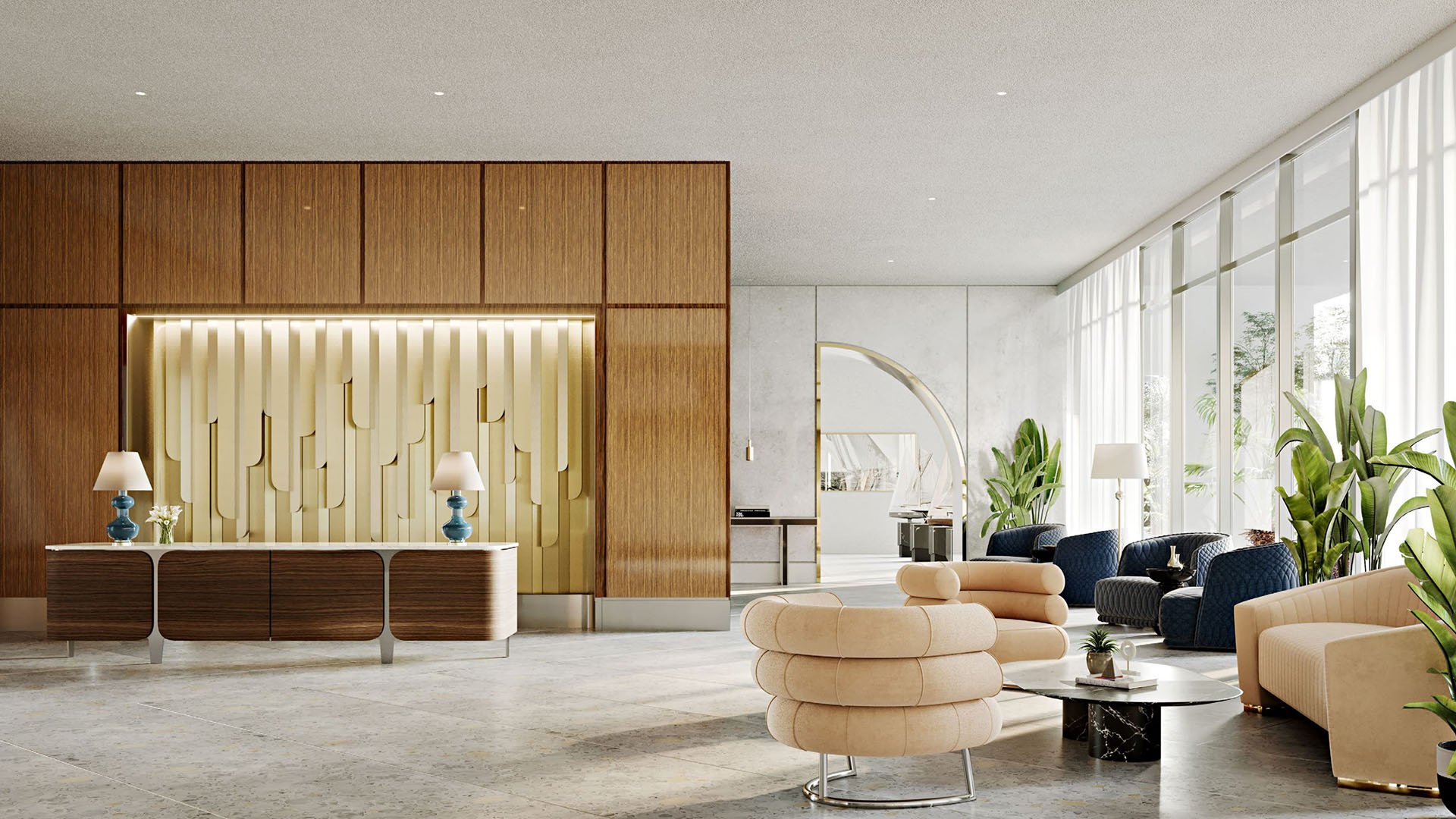
For a certain South Florida buyer, the most important room in a residence is no longer the formal living room, the media lounge, or even the view-facing terrace. It is the room where confidential calls remain confidential, where a full workday can unfold without negotiation, and where a door can close without turning the household into a compromise.
That is the lens through which Mr. C Tigertail Coconut Grove deserves to be considered. For buyers who work remotely or on a hybrid schedule, the question is not simply whether a plan includes a den. The better question is whether the residence can support a true professional office that does not become the place where children watch a movie, guests drop bags, or the household stores everything with no better address.
In luxury real estate, the word “flex” can be seductive. It implies optionality. Yet for a primary-residence buyer, optionality can become erosion. A room that serves everyone eventually serves no one especially well. A real office needs boundaries.
The distinction begins with control. A den is usually designed to absorb changing needs. It can become a playroom, television room, reading room, overflow guest space, or casual lounge. A true office has a narrower, more disciplined purpose.
For buyers evaluating Mr. C Tigertail Coconut Grove, the office test should begin with a real door. Not a decorative threshold, not an alcove, not a desk wall off the kitchen, but a room that can be closed during a call, a board meeting, or deep work. The second test is whether the office has acoustic and visual privacy. If someone passing through the residence can see the screen, overhear the conversation, or interrupt the sightline, the room may be elegant, but it is not truly professional.
Storage also matters. A legitimate office needs wall space for files, equipment, printers, books, supplies, or concealed cabinetry. Without that discipline, the room slowly becomes cluttered or, worse, spills into the main living areas. Natural light is valuable, but so is glare control. A beautiful window becomes a liability if every video call is backlit or every afternoon brings screen fatigue.
The strongest home-office configuration is not always the largest room. It is the room with separation, a door, controlled circulation, and enough distance from the home’s social center to preserve concentration.
Many buyers focus on finishes first. For a work-from-home buyer, circulation may matter more. The office should not sit in the household’s main traffic path between bedrooms, kitchen, living room, guest entry, and terrace. If every person in the residence must pass the office to get to something else, interruption is built into the plan.
This is especially important for primary-residence use. A second-home owner may only need a place for occasional email. A primary buyer may need eight or nine hours of repeatable function. That changes the standard. The room must handle weekday rhythm, school schedules, deliveries, visiting family, and evening entertaining without collapsing into shared use.
A practical buyer should walk any potential plan and ask: Who passes this room in the morning? Can the door remain closed without blocking access to another area? Is the office near the front entry, making it vulnerable to guests? Is it too close to the kitchen, where the sound of daily life will be constant? Does it sit beside the media area, where the den identity may eventually win?
This is where the difference between architecture and lifestyle becomes visible. A plan can look gracious on paper and still fail the workday.
Coconut Grove’s appeal is not only aesthetic. Its more residential character gives it a different tempo from denser Miami high-rise districts such as Brickell or Edgewater. For professionals who want access to the city without feeling embedded in its most vertical daily rhythm, the Grove can offer a softer residential frame.
That does not mean isolation. Coconut Grove can still be part of a wider Miami routine, especially for buyers who want a residential setting while remaining connected to work, dining, family, and culture across the city.
In practical terms, that neighborhood calm can reinforce the office decision. If the home is meant to be a serious working base, the surrounding environment should not feel like a constant extension of business intensity. Coconut Grove, as shorthand for this buyer psychology, is less about retreating from Miami and more about choosing a refined residential register within it.
Buyers comparing Coral Gables, Brickell, Edgewater, and Coconut Grove should be clear about what they want from each location. Brickell and Edgewater can offer urban immediacy, but the Grove’s residential texture may be more compatible with a daily office that feels protected rather than improvised.
Hospitality branding matters when it changes how a residence is used. For the home-office buyer, that context is not merely decorative. It can help solve a real spatial problem.
When a building offers social and communal environments, owners may feel less pressure to turn the in-unit office into a hangout room. Lounges, dining-oriented spaces, pool environments, and service-forward common areas can give residents places to gather, host, or decompress without sacrificing the one room intended for work. The office survives when the rest of the lifestyle has somewhere to go.
This is an underappreciated point. A family does not usually invade the office because it lacks respect for the owner’s work. It happens because the residence needs another place to absorb daily living. If the building and the neighborhood support social life elsewhere, the office has a better chance of remaining intact.
For new-construction buyers, this is part of the due diligence. Evaluate not only the room itself, but the ecosystem around it. A strong residence gives the kitchen, living room, bedrooms, terraces, amenities, and office each a clear job. The more each zone performs its role, the less likely the office becomes the household’s catchall.
A serious buyer should tour as if a workday has already begun. Stand where the desk would go. Imagine the monitor, camera angle, task lighting, storage, and chair clearance. Then imagine someone cooking, someone entering with guests, someone watching a film, and someone moving from the bedrooms to the living area.
The office should pass three simple tests. First, can it close off physically? Second, can it remain visually composed on video calls? Third, can it resist other household uses because the plan offers better alternatives elsewhere?
Also consider the background. Luxury buyers often think about views from the desk, but the camera sees what is behind the desk. A true office provides a polished backdrop, not a hallway, bed, kitchen counter, or open family zone. If the only logical desk placement points toward domestic clutter, the room may not perform at the level a professional buyer needs.
Finally, review the relationship between the office and entertaining areas. Mr. C Tigertail Coconut Grove is naturally connected to a social Grove lifestyle. That is part of its attraction. But if a dinner guest can wander into the office during an evening gathering, or if the office doubles as a drinks station, the boundary has already been lost.
This buyer is not asking for a token desk niche. They may run a company, manage investments, take confidential client calls, or balance a demanding executive calendar from home. For them, the home office belongs in the same tier of decision-making as the kitchen, primary suite, views, and entertaining space.
That does not mean the residence must become austere. The ideal outcome is the opposite: a refined Coconut Grove home that supports both focus and sociability without allowing one to cannibalize the other. The office should be calm, private, and disciplined. The rest of the residence should still live beautifully.
Mr. C Tigertail Coconut Grove is best evaluated through that dual expectation. Can it deliver the social, service-forward Grove lifestyle while also protecting the professional room that must remain off-limits to casual household migration? For the right buyer, that may be the defining purchase question.
Is a den the same thing as a home office? No. A den is flexible by nature, while a true office needs privacy, storage discipline, and the ability to close off from household activity.
What should buyers look for first in an office layout? Start with a real door, limited pass-through circulation, acoustic privacy, and a desk position that works for video calls.
Why does circulation matter so much? If the office sits in the main path between bedrooms, kitchen, entry, and living areas, interruptions become part of daily use.
Is natural light always a positive for a home office? Natural light is valuable, but buyers should also consider screen glare, camera angles, and the ability to control brightness.
Why is this issue more important for primary-residence buyers? Daily use places much greater pressure on a floor plan than occasional second-home work or casual email checking.
How can building amenities help protect the office? Social, dining, lounge, and pool environments can give residents other places to gather, reducing pressure on the office to become a hangout room.
Why is Coconut Grove relevant to the home-office buyer? Its more residential character can feel calmer than denser high-rise districts while still offering access to a broader Miami lifestyle.
Should buyers prioritize the office as much as the kitchen or primary suite? For remote or hybrid professionals, yes. The office can shape daily quality of life as much as the most visible luxury rooms.
Can a beautiful room still fail as an office? Yes. If it lacks privacy, storage, glare control, or separation from social zones, it may not function well for professional use.
What is the central question for Mr. C Tigertail buyers? The key question is whether the residence can protect a private workspace while still supporting a polished Coconut Grove lifestyle.
For a discreet conversation and a curated building-by-building shortlist, connect with MILLION.
If branded residences are on your mind — as a home or as an allocation — we would be glad to share what we are seeing, privately.
Begin a quiet conversation