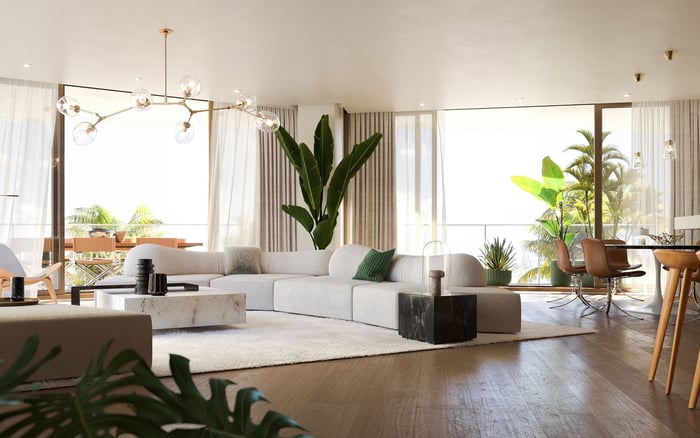
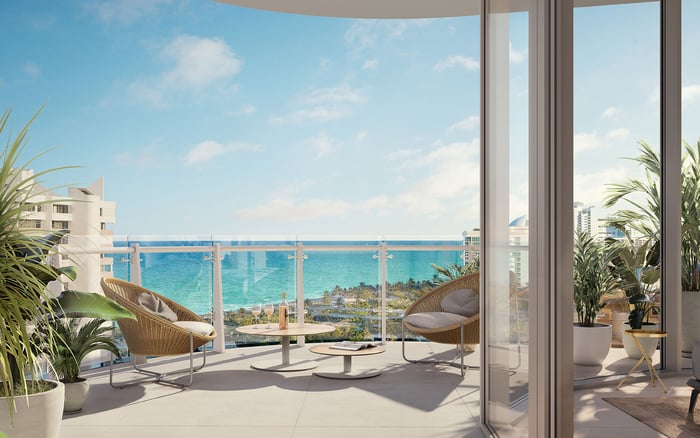
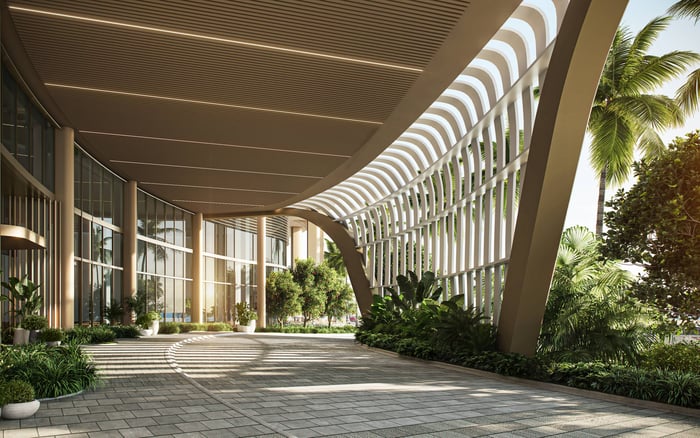
A buyer-focused comparison of The Well Bay Harbor Islands and Armani Casa Residences Pompano Beach, centered on how each ownership model treats service depth, elevator privacy, and owner-only amenity control.
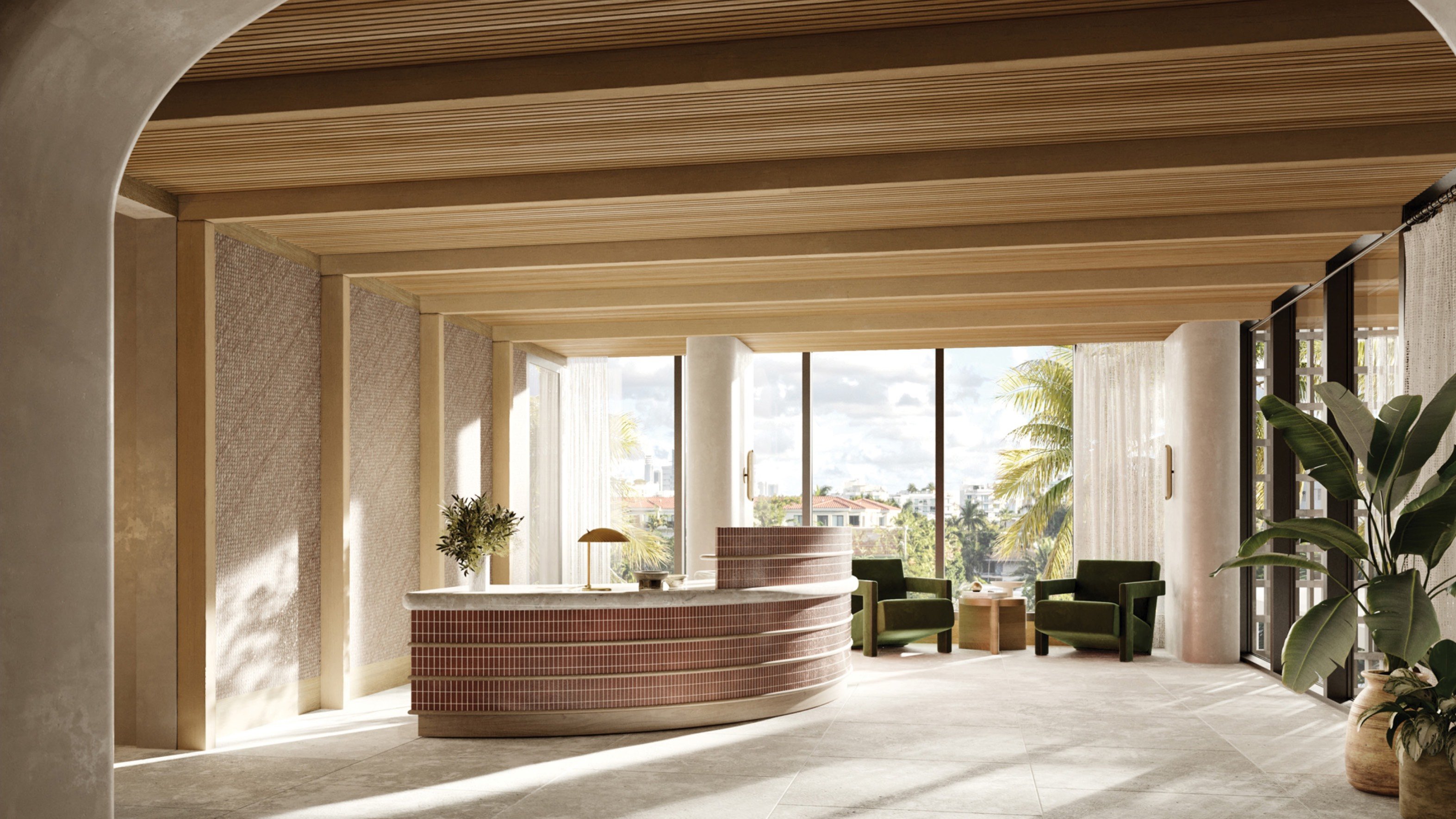
For the upper tier of South Florida condominium buyers, the amenity list is less revealing than the operating model behind it. A spa, fitness suite, pool deck, lobby, and concierge desk can exist in almost any new luxury residence. The more discerning question is how those elements are controlled, staffed, accessed, and protected for owners over time.
That is the lens for comparing The Well Bay Harbor Islands and Armani Casa Residences Pompano Beach. This is not a ranking. It is a study in two distinct ownership ideas: one centered on wellness hospitality and service integration, the other on branded design, beach-resort living, and the aura of a fashion house translated into a residential setting.
The Well Bay Harbor Islands belongs to the Bay Harbor conversation, where privacy, boutique scale, and a quieter waterfront rhythm often matter as much as visual drama. Armani Casa Residences Pompano Beach belongs to the Pompano Beach and oceanfront conversation, where the appeal is tied to coastal presence, branded interiors, and resort-like daily ease. Both sit within South Florida’s new-construction luxury market, but they ask buyers to value different forms of control.
The Well Bay Harbor Islands is best understood as the wellness-oriented ownership model in this comparison. Its appeal is not simply the presence of wellness amenities. The deeper question is whether wellness functions as a programmed residential service, with meaningful continuity between spa, fitness, lifestyle, and owner support.
For a buyer who views a residence as part of a health routine, that distinction is essential. A conventional condominium may offer beautiful rooms for exercise or recovery. A wellness-hospitality model asks whether those rooms are connected to a more deliberate resident experience: scheduling, access rules, service standards, lifestyle programming, and the governance structure that determines how owners use the offering in daily life.
The central diligence point is owner control. Buyers should ask which spa, wellness, and lifestyle spaces are reserved for residents, which may be shared, and whether any element is externally accessible. The answer affects privacy, convenience, atmosphere, and long-term value. A serene wellness environment can feel very different when access is tightly owner-oriented versus more broadly operated.
For The Well Bay Harbor Islands, elevator privacy also deserves document-level review. Marketing language can imply discretion, but the true test is found in current floor plans, elevator-core layouts, and condominium documents. Buyers should confirm how elevators serve each residence, how corridors are arranged, and whether any technical layouts remain subject to evolution.
Armani Casa Residences Pompano Beach represents the design-led branded-residence model. Its identity is tied to fashion, interiors, and a beach-resort ethos rather than a wellness-first operating concept. For many buyers, that is precisely the appeal. The residence is expected to feel composed, polished, and globally legible, with design value serving as a central part of the ownership proposition.
The decision here is less about wellness programming and more about the relationship between brand, lifestyle, and day-to-day service. Armani Casa Residences Pompano Beach is positioned around elevated luxury residential service with a more traditional resort-residence orientation. That can be highly attractive to buyers who want beachfront living supported by refined common spaces, brand prestige, and a hospitality-influenced residential environment.
Yet brand recognition should not replace operational diligence. Buyers should separate three ideas that are often blended in sales conversations: branded design value, beachfront lifestyle, and actual resident service depth. A residence can be beautifully designed and still vary in how services are staffed, governed, and delivered from morning to evening.
Elevator privacy requires the same practical discipline. Final elevator-core details, staffing ratios, and operating procedures should be verified through current sales documents rather than inferred from the brand or renderings. The highest-confidence buyer will want to understand how arrival, vertical circulation, service access, and amenity access work in real use.
Service depth is where these two ownership models diverge most clearly. The Well Bay Harbor Islands asks whether wellness services are embedded deeply enough to shape everyday life. Armani Casa Residences Pompano Beach asks whether branded luxury and beach-resort service create a sufficiently polished, convenient ownership experience.
Neither model is inherently superior. The right fit depends on the buyer’s private hierarchy. If a household prioritizes health routines, spa access, restorative environments, and programmed lifestyle support, The Well Bay Harbor Islands may align more naturally. If the priority is design language, an ocean-adjacent resort feeling, and a branded residence with fashion-world cachet, Armani Casa Residences Pompano Beach may be the more intuitive match.
The sophisticated buyer should move beyond the word “service” and request specifics. What is included in ownership? What is arranged à la carte? Which services are managed by the condominium, which are operated by third parties, and which are subject to change? How are costs allocated? What rights do owners have if programming or access policies shift?
These questions are not adversarial. They are the normal vocabulary of premium ownership.
Private elevator language is common in South Florida luxury real estate, but not all privacy is equal. Some residences may have elevator access that feels direct and discreet. Others may share elevator banks, corridors, service routes, or amenity paths in ways that matter to certain buyers.
For The Well Bay Harbor Islands, buyers should review the latest floor plans and condominium documents to understand the elevator-core configuration. The same is true for Armani Casa Residences Pompano Beach, where current sales documents are the appropriate place to verify how elevator privacy is actually structured.
The practical questions are straightforward. Does the elevator open directly into the residence or into a shared vestibule? How many residences does an elevator serve? How do staff, deliveries, guests, and service providers move through the building? Are there separate service routes? Are there any shared thresholds that could affect discretion?
In ultra-premium ownership, privacy is not only the absence of crowds. It is the choreography of arrival, movement, and service.
Amenity control may be the most important issue for buyers comparing these projects. A beautifully programmed building can lose some of its residential intimacy if owners do not understand who else may access its most valuable spaces.
At The Well Bay Harbor Islands, the owner-only question is especially significant because the wellness proposition is central to the model. Buyers should verify which wellness, spa, and lifestyle facilities are exclusive to residents and which may operate with broader access rights. That distinction can shape the feel of the building every day.
At Armani Casa Residences Pompano Beach, the same logic applies through a different lens. The branded design and beach-resort setting may create strong emotional appeal, but owner-only amenity rules determine how private that lifestyle feels. A resort atmosphere can be glamorous, but luxury condominium ownership often depends on balance: energy without intrusion, service without exposure, and shared spaces without dilution.
The documents matter because they govern the experience after closing. Bylaws, rules, access policies, and management agreements can be more revealing than amenity renderings.
The Well Bay Harbor Islands is likely to resonate with the buyer who wants the residence to support a curated wellness life. This buyer may ask about treatment access, wellness programming, resident-only scheduling, lifestyle services, and the consistency of the operating platform. The home is not merely a place of retreat, but part of a broader health and hospitality routine.
Armani Casa Residences Pompano Beach is likely to resonate with the buyer who places greater emphasis on design identity, coastal resort living, and the prestige of a branded residential environment. This buyer may care deeply about interiors, arrival sequence, service polish, and the emotional clarity of living in a fashion-led beach residence.
Both buyers should be equally rigorous. The most important details are not always visible in a sales gallery. They live in the current offering documents, the operating plan, the access rules, and the building’s service architecture.
Is this comparison a ranking? No. It contrasts two ownership models rather than declaring one project better than the other.
What is The Well Bay Harbor Islands best known for in this comparison? It is framed as the wellness-oriented model, with attention on spa, health, lifestyle programming, and service integration.
What is Armani Casa Residences Pompano Beach best known for here? It is framed as the design-led branded-residence model with a beach-resort orientation.
Why does owner-only amenity access matter? It determines how private and residential the building feels after ownership begins.
Should buyers assume all wellness amenities at The Well are resident-only? No. Buyers should verify which facilities are owner-only, shared, or externally accessible.
Should buyers assume Armani Casa has a wellness-first operating model? No. Its positioning is more closely tied to branded design, fashion influence, and resort-residence living.
How should elevator privacy be evaluated? Buyers should review current floor plans, elevator-core layouts, and condominium documents.
Are staffing ratios confirmed for either project? They should be verified in current sales and operating documents before a buyer relies on them.
Which project is better for a wellness-focused buyer? The Well Bay Harbor Islands may be the more natural fit if the wellness platform is the primary priority.
Which project is better for a design-focused beachfront buyer? Armani Casa Residences Pompano Beach may be the more intuitive fit for buyers prioritizing brand, design, and coastal resort living.
If you'd like a private walkthrough and a curated shortlist, connect with MILLION.
If branded residences are on your mind — as a home or as an allocation — we would be glad to share what we are seeing, privately.
Begin a quiet conversation