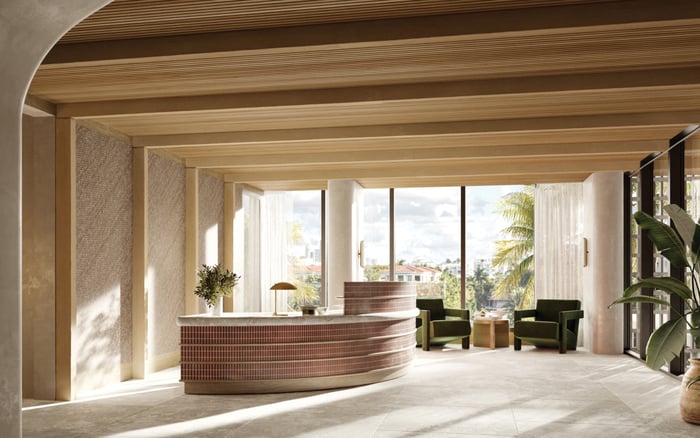
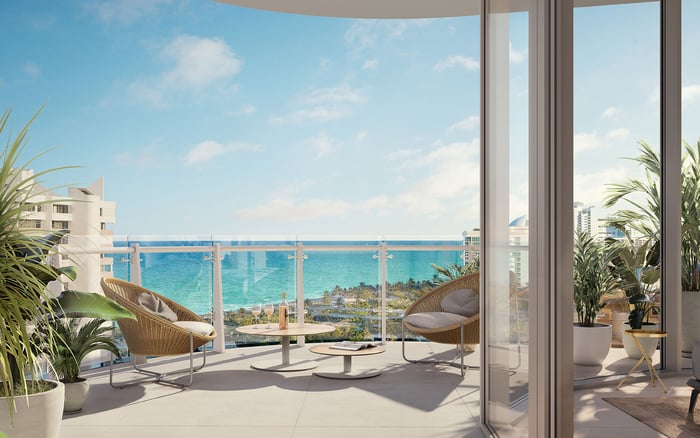
A buyer-focused comparison of Armani Casa Residences Pompano Beach and Onda Bay Harbor, centered on floor-plan flexibility, secondary bedroom utility, and the real value of staff-room space before finishes and presentation take over the decision.
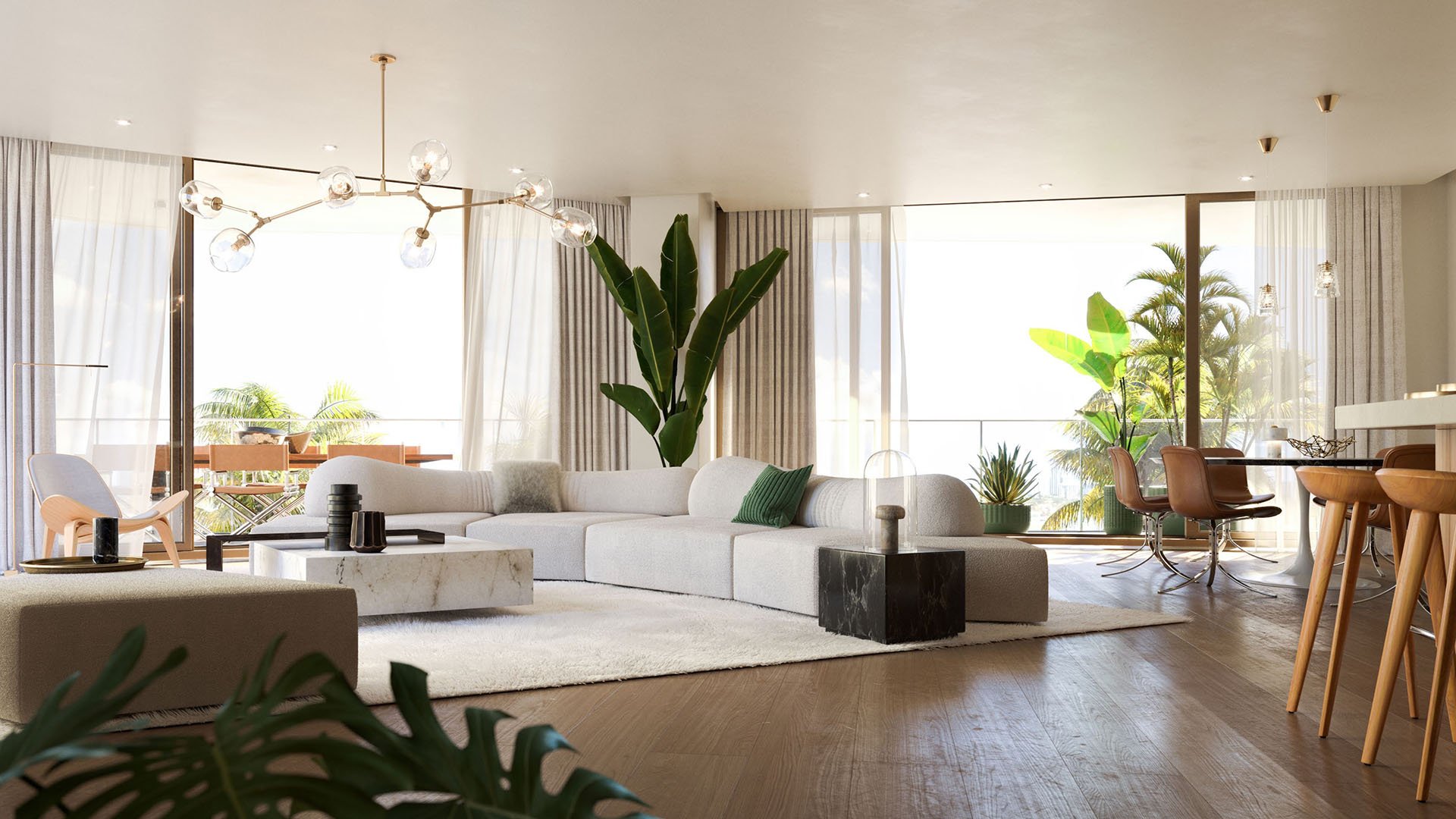
South Florida’s most persuasive sales galleries know how to make a residence feel inevitable. Stone, lighting, scent, scale models, and a perfectly dressed kitchen can turn complex decisions into atmosphere. Yet for buyers comparing Armani Casa Residences Pompano Beach with Onda Bay Harbor, the more durable question is not which environment feels more seductive in preview. It is which floor plan will still work after the first season of ownership.
The Pompano Beach decision is often tied to a coastal Broward lifestyle and a design-forward residential mood. The Bay Harbor Islands decision often starts with a quieter island context in Miami-Dade and a different daily rhythm. Those settings matter, but they should not distract from the real work: a line-by-line review of bedrooms, dens, staff rooms, circulation, storage, and wet-wall constraints.
For a serious buyer, the comparison should begin with how the residence will be occupied. A couple with visiting adult children, a family with a nanny, an owner who works privately from home, and a household that entertains frequently may all read the same floor plan differently.
Bedroom labels are useful, but they are not enough. A secondary bedroom on paper is not always a secondary bedroom in practice. The room should be tested for bed placement, closet depth, access to a full bath, separation from the primary suite, and daylight. If a nightstand, desk, crib, or luggage rack makes the room feel compromised, the plan may be better suited to occasional guests than daily family life.
This is where the Armani Casa and Onda comparison becomes more practical than promotional. Buyers should separate true everyday bedrooms from rooms that function better as offices, guest rooms, wellness rooms, or media spaces. The difference may not be obvious in a rendering, but it becomes obvious when real furniture is placed on a scaled plan.
The better plan is not always the one with the most labeled rooms. It is the one where the secondary rooms can absorb real household use without creating privacy, storage, or circulation problems.
The phrase floor-plan flexibility is often used too casually in new-construction sales. Buyers should ask whether flexibility means genuine architectural optionality or simply furniture staging. Moving a non-structural partition is different from relocating a kitchen wall, expanding a suite, or converting a den into a legal bedroom.
For Armani Casa Residences Pompano Beach, buyers should not assume a particular plan can be reconfigured until they review current sales-gallery materials, column locations, wet walls, mechanical chases, and developer-approved alternatives.
The same caution applies to Onda Bay Harbor. Without plan-specific evidence, it would be premature to say Onda is more or less flexible than Armani. The correct comparison is not brand versus island address. It is specific line versus specific line.
The most revealing question is simple: what changes are permitted before contract, what changes are permitted after contract, and what changes will never be approved because of structure, plumbing, life safety, or building systems? The answer will often matter more than the finish package.
Luxury buyers often scrutinize the primary suite with great care, then accept secondary bedrooms at face value. That is a mistake. In a high-value South Florida residence, secondary rooms carry much of the real utility: children, parents, guests, assistants, wellness equipment, homework, luggage, and occasional remote work.
At Armani Casa Residences Pompano Beach, every line still needs individual study. A true family plan should give secondary bedrooms privacy without burying them in a service corridor. It should also avoid forcing every guest or child through the main entertaining zone at night.
At Onda Bay Harbor, buyers should apply the same discipline. A plan may live beautifully for a couple, but not necessarily for a family that needs two equally functional secondary rooms. Buyers should not let a room label substitute for a furniture plan.
Ask for scaled plans and place real furniture on them. A queen bed, two nightstands, a dresser, and a suitcase tell the truth quickly. If the closet door collides with the bed path or the bathroom access feels public, the room’s usefulness is diminished.
In the ultra-premium market, staff rooms can be misunderstood. A staff room is not automatically a live-in help suite, a nanny room, an office, or an overflow guest room simply because it carries that label. Its value depends on size, ventilation, bathroom access, privacy, service adjacency, and whether the space feels humane in daily use.
For Armani Casa Residences Pompano Beach, staff-room usefulness should be confirmed by the exact residence line rather than assumed from the project’s presentation. The same standard applies to Onda Bay Harbor. If a staff room exists in a particular plan, buyers should check whether it has a window, whether a full bath is convenient, whether laundry and service functions are nearby, and whether the person using the room can come and go without crossing the principal entertaining spaces.
A well-planned staff room may also become a private office, luggage room, wellness support room, or short-term overflow space. A poorly planned one becomes expensive storage. The difference is not semantic. It is architectural.
The Armani Casa decision begins with Pompano Beach and the buyer’s preference for that coastal Broward setting. Buyers drawn to that lifestyle may find the project’s premise compelling, especially if a chosen line delivers the right balance of view orientation, privacy, and secondary-room depth.
Onda Bay Harbor begins with Bay Harbor Islands’ quieter residential context and a different sense of access within Miami-Dade. It may suit buyers who want island living and proximity to surrounding urban conveniences, but the exact plan still needs to match the household rather than simply the location.
Neither project should win because the sales gallery is more polished. The better choice is the one whose plan absorbs real life with less friction: school mornings, overnight guests, live-in help, aging parents, remote work, entertaining, storage, and the private routines that never appear in renderings.
Before choosing between Armani Casa Residences Pompano Beach and Onda Bay Harbor, request every relevant line plan, not just the one presented first. Compare column placement, terrace access, wet-wall limits, closet depth, laundry location, service circulation, staff-room access, and whether dens can legally function as bedrooms.
Ask for a marked plan showing structural elements and non-movable walls. Ask which customizations are cosmetic and which are architectural. Ask whether any bedroom lacks the proportions, closet, window, or bath relationship required for your intended use.
For resale-minded buyers, also consider how future purchasers may read the plan. A beautifully finished residence with awkward secondary bedrooms may face a narrower audience than a quieter plan with exceptional utility. In this segment, elegance is expected. Function is what protects value.
This is not a contest where Armani Casa Residences Pompano Beach automatically prevails because of brand, or Onda Bay Harbor automatically prevails because of island intimacy. The stronger purchase is the residence that fits the household before it flatters the eye.
If the buyer’s life is oriented around Pompano Beach, design identity, and a larger-home feel, Armani deserves close study. If the buyer values Bay Harbor Islands, a protected residential setting, and a plan that matches island living, Onda deserves equal attention. In both cases, the final decision should be made at the plan table, not under gallery lighting.
Which project has the better floor-plan flexibility? That cannot be responsibly determined without reviewing current line plans, option sheets, structural elements, and wet-wall limits for specific residences.
Should buyers compare project names or individual lines? Individual lines matter more because room proportions, circulation, storage, and service areas can vary materially within the same building.
What makes a secondary bedroom genuinely functional? A strong secondary bedroom should have practical bed placement, adequate closet depth, privacy, daylight, and convenient bathroom access.
Are staff rooms automatically useful? No. Usefulness should be confirmed by the specific plan, including window status, bath access, room size, laundry proximity, and service circulation.
Should a den be treated as a bedroom? Only if the plan and applicable requirements support that use; buyers should verify window, closet, access, and legal classification before assuming it.
How should buyers compare Pompano Beach with Bay Harbor Islands? Pompano Beach and Bay Harbor Islands offer different South Florida living patterns, so the location choice should follow the household’s daily routine.
Is a branded residence always more functional? No. Branding can elevate design identity, but the plan still needs to work for bedrooms, storage, circulation, and service use.
What should buyers request before signing? Buyers should request all relevant line plans, structural notes, customization options, staff-room details, and clarification on what can actually be changed.
Why does furniture placement matter so much? Scaled furniture quickly reveals whether a room can handle real use or only looks functional in a simplified drawing.
What is the best way to shortlist comparable options for touring? Start with location fit, delivery status, and daily lifestyle priorities, then compare stacks and elevations to validate views and privacy.
To compare the best-fit options with clarity, connect with MILLION.
If branded residences are on your mind — as a home or as an allocation — we would be glad to share what we are seeing, privately.
Begin a quiet conversation