A practical luxury buyer’s guide to assessing whether a shorter private-aviation routine truly supports a Pompano Beach purchase, from door-to-door testing to arrival privacy, luggage flow, building operations and second-home cadence.

For the private-aviation buyer, the most valuable address is not always the one with the most dramatic view or the grandest lobby. It is often the home that makes departure and return feel frictionless after the tenth, twentieth or fiftieth trip of the season. A shorter routine before purchasing in Pompano Beach should therefore be tested as a pattern, not accepted as a promise.
That distinction matters. A buyer may hear that a residence is convenient for private aviation and assume the advantage is settled. In practice, convenience lives in small details: how luggage leaves the residence, how a driver reaches the building, how valet performs during peak hours, how security handles recurring guests and how quickly the household resets after arrival. The strongest purchase decision weighs the full movement from residence to aircraft and back again.
Pompano Beach can appeal to buyers who want a coastal base with a calmer daily rhythm than denser urban cores. But the aviation case should be personal. A family that flies every other week has different needs from an owner who uses the residence for long weekends, school holidays or seasonal escapes. The goal is not to chase the shortest theoretical route. The goal is to identify the routine you will actually repeat.
Before contract, buyers should physically rehearse the journey. Begin at the exact residence or sales gallery, not a nearby intersection. Use the same vehicle type you expect to use after closing, whether a private driver, family SUV or chauffeured car with luggage. Make the test at the time of day you are most likely to depart, then repeat it at a less convenient hour.
During that test, notice where friction appears. Is the pickup area intuitive? Can a driver wait discreetly? Does the building staff manage luggage without turning it into a production? Is the route comfortable enough for a senior family member, a child or a guest who has just arrived after a long flight? A shorter routine is only meaningful if it remains graceful under real conditions.
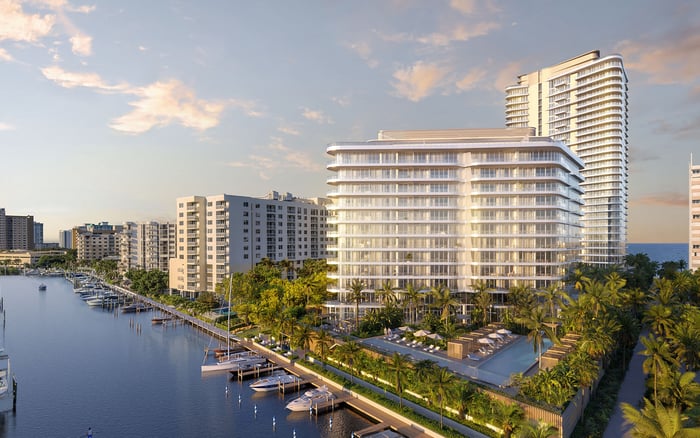
This is where the character of the building becomes as important as the map. At Armani Casa Residences Pompano Beach, for example, buyers considering a polished coastal lifestyle should still test the operational sequence that surrounds each departure. The question is not only whether the residence feels refined at rest, but whether it performs when the household is in motion.
Private-aviation routines differ. Some owners fly with minimal luggage and a single driver. Others travel with pets, staff, sports equipment, garment bags, work materials or extended family. A building that feels effortless for a couple may feel constrained for a multigenerational household. The right evaluation begins with a written travel profile.
List the number of annual trips you expect to take from the residence. Separate business flights from leisure flights. Note whether departures tend to be early morning, late evening or weekend based. Identify the people who travel most often and the belongings that must move with them. Then compare that profile against the building’s arrival court, elevator flow, storage solutions and staff procedures.
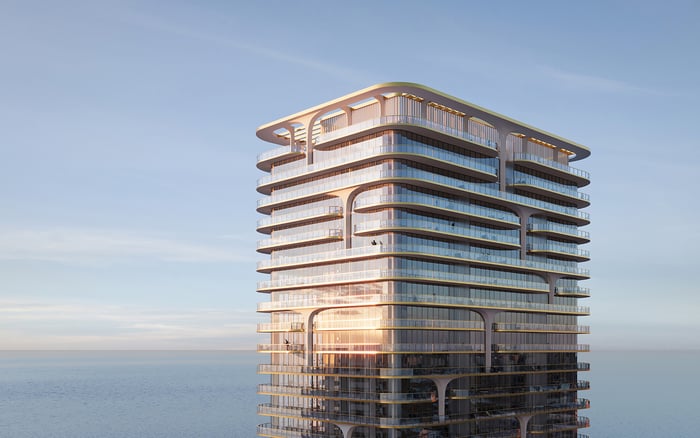
Oceanfront living can be especially compelling after a flight, because the reward is immediate: light, air, water and privacy. Yet oceanfront should not be evaluated only as a view category. It should be evaluated as a recovery experience. If a buyer returns from a demanding itinerary, the first hour inside the residence can define the value of the entire ownership experience.
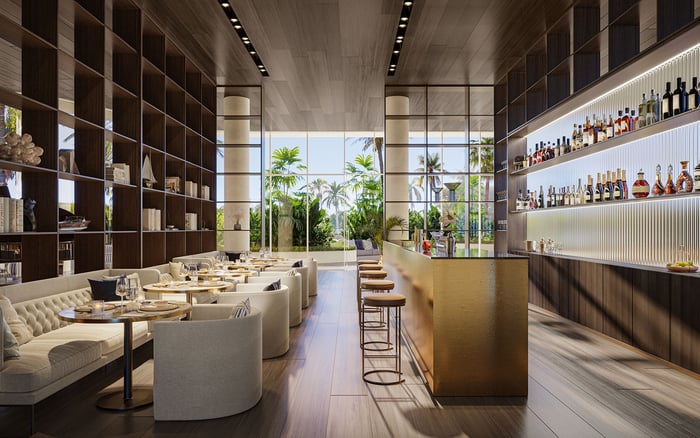
Luxury residential marketing often emphasizes design, amenities and service. The aviation buyer should translate those same features into use cases. A private dining room may matter because it allows a quiet dinner after a late arrival. A spa program may matter because recovery is part of the owner’s travel rhythm. A well-managed lobby may matter because discretion is central to repeat departures.
At The Ritz-Carlton Residences® Pompano Beach, the service proposition may naturally attract buyers who value hospitality language. The due diligence question is how that hospitality supports the practical sequence of coming and going: guest handling, owner recognition, luggage coordination and calm transitions from car to residence.
Similarly, buyers considering W Pompano Beach Hotel & Residences may be drawn to a more social, resort-driven rhythm. For the aviation user, that rhythm should be weighed against privacy preferences. Some owners want energy on arrival; others want silence, direct access and minimal visibility. Neither is universally superior. The right answer depends on how the owner lives between flights.
For a second-home buyer, the aviation routine is part of the emotional value of ownership. The residence must be easy to enter after time away and equally easy to leave when the next commitment calls. That means the building should simplify not only transportation, but also housekeeping, maintenance, deliveries, pet logistics and the return of personal items to their proper place.
A shorter routine can also influence how often the home is used. If arrival feels easy, owners are more likely to choose a spontaneous weekend, a brief midweek stay or an extra family gathering. If the trip feels cumbersome, even a beautiful residence can become underused. The most expensive inefficiency in luxury real estate is not always cost. Sometimes it is hesitation.
New-construction buyers should be especially disciplined. Renderings and finish schedules may convey the future atmosphere, but they cannot fully demonstrate the lived travel sequence. Ask how the completed property is expected to handle owner arrivals, valet coordination, service access and guest screening. In a Pompano Beach purchase, aviation convenience should be integrated into the ownership plan rather than treated as a side note.
Aviation convenience can support a premium, but only when the buyer can articulate why it matters. A vague claim of access is not enough. The stronger case is specific: the residence shortens repeated travel days, reduces household stress, supports privacy and improves usage. That is the language a buyer can rely on when deciding between Pompano Beach, Fort Lauderdale, Boca Raton, Palm Beach or Miami alternatives.
Broward buyers in particular often compare coastal addresses across a relatively tight luxury map. That makes qualitative differences more important. If two residences offer similar interiors, the better aviation routine may become the deciding factor. But if the shorter route requires awkward building flow, difficult luggage movement or inconsistent staffing, the advantage may fade quickly.
At Ocean 580 Pompano Beach, as with any boutique or coastal residence, the buyer should ask how scale affects the arrival experience. Smaller environments can feel intimate and controlled, while larger hospitality-led residences may offer broader service infrastructure. The best choice is the one aligned with the owner’s travel behavior.
A well-evaluated purchase is therefore not about believing in convenience. It is about proving it in advance. Test the route. Interview the building team. Walk the luggage path. Time the elevator sequence. Consider guest privacy. Imagine a delayed arrival, a rainy morning, a holiday weekend and a last-minute departure. The residence that still feels composed in those scenarios has earned its place on the shortlist.
Should private-aviation buyers focus only on distance to the airport? No. Distance matters, but the better measure is the full door-to-door experience from residence to aircraft and back.
How many times should a buyer test the routine before purchasing? More than once. A weekday, weekend and peak-hour test can reveal different points of friction.
What should buyers bring on a test run? Bring the type of luggage or personal items you typically travel with. The goal is to evaluate the routine under realistic conditions.
Why does building staff matter to aviation convenience? Staff can influence luggage handling, driver coordination, guest privacy and the calmness of arrival and departure.
Is an oceanfront residence automatically better for private flyers? Not automatically. Oceanfront living may improve recovery after travel, but operations and access still need to perform.
Can a shorter routine increase use of a second home? Yes. If arrival and departure feel easy, owners are more likely to use the residence spontaneously and frequently.
What should new-construction buyers ask before completion? Ask how arrivals, valet, service access, deliveries and guest screening are expected to work once the building is operating.
Should buyers compare Pompano Beach with nearby luxury markets? Yes. Comparing the full travel routine across nearby coastal markets can clarify whether Pompano Beach offers the better fit.
How does privacy factor into the aviation routine? Privacy shapes the quality of repeated travel. Buyers should assess visibility at pickup, lobby flow and guest handling.
What is the clearest sign that the routine supports the purchase? The clearest sign is consistency. The residence should feel composed during ordinary trips and imperfect travel days alike.
For a discreet conversation and a curated building-by-building shortlist, connect with MILLION.
If branded residences are on your mind — as a home or as an allocation — we would be glad to share what we are seeing, privately.
Begin a quiet conversation