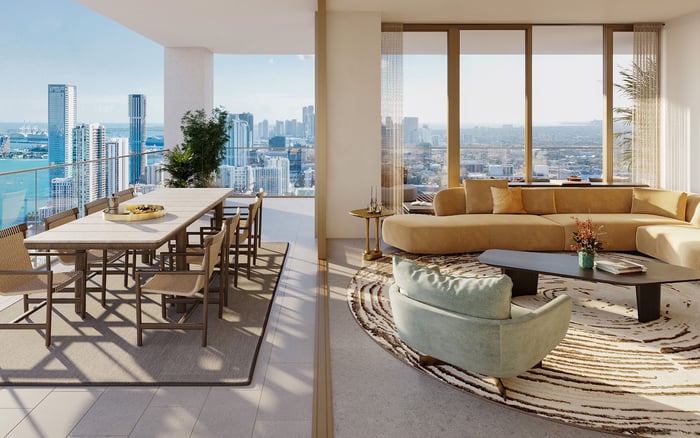
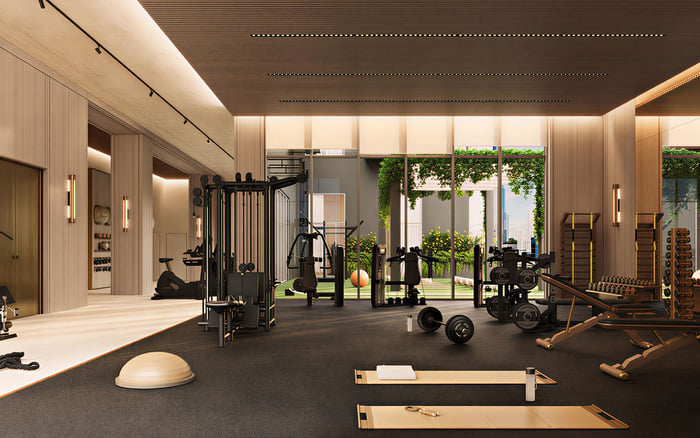
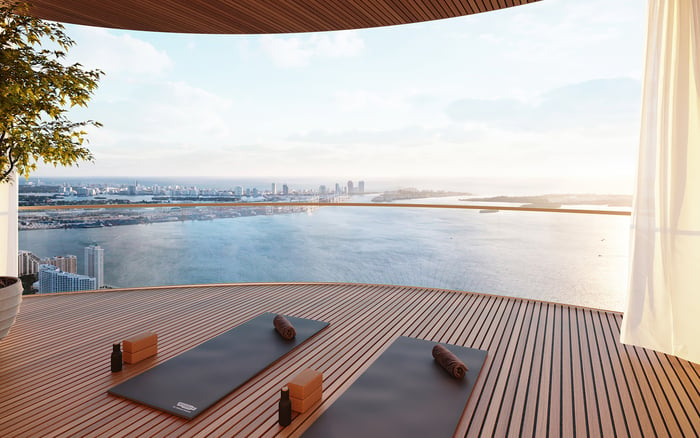
A buyer-focused look at how recovery-led residential concepts in Brickell should be evaluated before reservation, from privacy and operations to long-term amenity value.
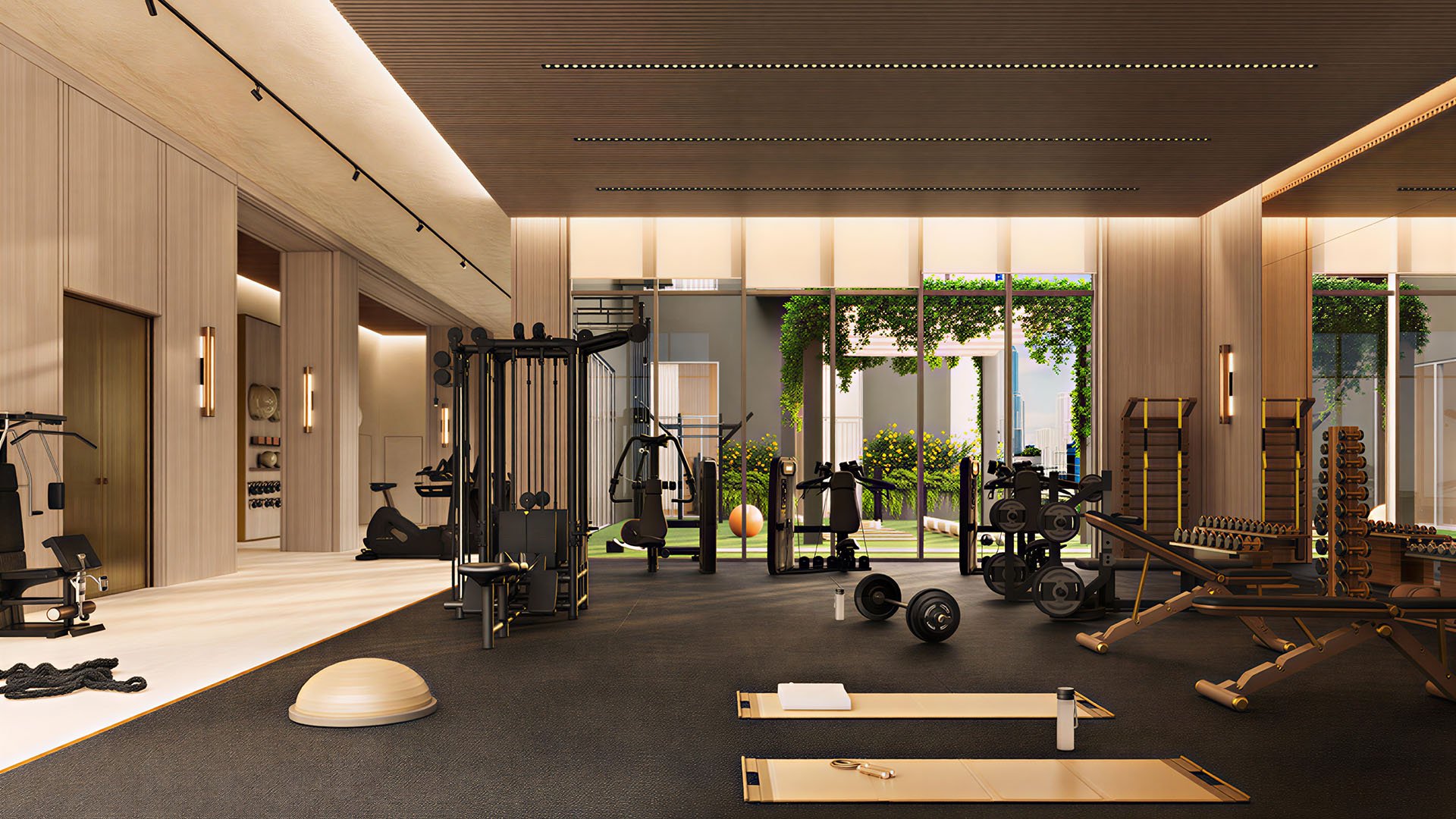
For a recovery-focused buyer, the essential question is not whether a residence speaks the language of wellness. It is whether the building can make recovery feel effortless, private, repeatable, and intelligently governed long after the initial sales moment has passed. That is the lens through which buyers should examine House of Wellness Brickell before reserving.
Brickell is a natural setting for this conversation. Its buyers often live at high velocity, moving between finance, hospitality, travel, family obligations, and social calendars. In that context, recovery is not ornamental. It is a form of time management, physical preservation, and personal discretion. The best residences understand that a cold plunge, treatment room, meditation space, or training studio matters only if it is accessible, quiet, well maintained, and protected from the friction of overuse.
This buyer’s guide is written for a market where Lifestyle is increasingly embedded in the real estate decision. The prudent buyer should separate atmosphere from infrastructure, and vision from verifiable day-to-day performance.
Wellness language can be broad. Recovery is more precise. Buyers should ask what the building is designed to help them recover from: intensive training, travel fatigue, work stress, sleep debt, social overstimulation, or simple urban compression. Each goal requires a different operating logic.
A serious recovery program should be assessed through flow. Can a resident move from workout to sauna, treatment, hydration, rest, and home without crossing high-traffic social areas? Are spaces designed for quiet use, or are they staged primarily for presentation? Is the experience appointment-based, open access, or a hybrid? Each answer changes the value of the amenity.
Reservation-stage buyers should also ask whether recovery areas are structured as resident privileges or revenue-generating spaces. A room that feels serene in a rendering may feel very different if its schedule, staffing, and guest policy are not tightly managed. Privacy is not a design note. It is an operational discipline.
Pre-Construction decisions often happen before every operational detail is fully visible, so the reservation review should be unusually deliberate. Buyers should request clarity on what is included in ownership, what may be billed separately, and which services depend on third-party providers. They should also understand whether the wellness offering is part of the condominium association, a separately managed amenity platform, or a branded service arrangement.
The maintenance question is equally important. Recovery amenities can be equipment-intensive and staff-dependent. Saunas, pools, therapy rooms, fitness equipment, and specialty spaces require replacement cycles, cleaning protocols, scheduling systems, and trained personnel. A buyer should not treat those details as secondary. They affect monthly carrying costs, service consistency, and long-term desirability.
In Brickell, where vertical living places many residents inside one building ecosystem, reservation documents should be read for control. Who sets access rules? Who may change hours? How are guests handled? What happens if demand exceeds capacity? These are not minor questions for a buyer who intends to use wellness spaces several times a week.
Brickell buyers rarely evaluate one building in isolation. They compare the tone of an address, the convenience of its location, the depth of its amenities, and the way a property fits the rhythms of city-center life. A buyer considering House of Wellness Brickell may also be watching how adjacent luxury concepts define their own priorities.
For example, The Residences at 1428 Brickell speaks to buyers who want a highly considered Brickell address, while 2200 Brickell offers another point of comparison for the neighborhood’s evolving residential language. The exercise is not to declare one approach superior. It is to identify which building’s daily life aligns with the buyer’s private habits.
New-construction in Brickell increasingly asks buyers to choose between different expressions of luxury: design intensity, hospitality polish, wellness specificity, privacy, views, services, or brand identity. Recovery-focused buyers should be especially careful not to be seduced by breadth alone. A smaller, calmer, better governed amenity may be more valuable than a larger program that is crowded or loosely managed.
Recovery is deeply personal. A resident seeking restoration after a long flight, an intense workout, or a demanding workday does not want the atmosphere of a social club unless that is explicitly the intention. Buyers should ask how the building protects silence, limits visual exposure, and controls circulation around wellness spaces.
Acoustics matter. So do lighting, scent, temperature, elevator proximity, corridor width, and the distance between active and passive amenities. The best recovery environments are not merely beautiful. They reduce decision fatigue. They make it easy to arrive, decompress, and leave without interruption.
This is also where branded and lifestyle-adjacent residences can provide useful comparison points. St. Regis® Residences Brickell may appeal to buyers attentive to service culture, while The Well Coconut Grove offers a broader wellness-oriented reference outside Brickell. A disciplined buyer studies these alternatives not for imitation, but for standards: staffing, discretion, touchpoints, and the emotional temperature of the building.
A recovery-led residence succeeds only if governance protects the promise. Buyers should examine association documents, rules, projected budgets, staffing assumptions, amenity policies, and any language that may affect access. The sales gallery may communicate intention, but the governing documents shape reality.
Particular attention should be paid to guest privileges and peak demand. If a recovery suite is central to the value proposition, residents should understand whether guests, renters, outside practitioners, or vendors can use it, and under what terms. The wrong access policy can quickly change the character of a quiet amenity.
Buyers should also consider resale. A future purchaser will not only ask whether wellness amenities exist. They will ask whether they are still desirable, clean, relevant, and financially sustainable. A thoughtful reservation today anticipates that future conversation.
Before reserving, the strongest posture is calm skepticism. A buyer can admire the concept while still pressing for precision. What is finished, what is proposed, what is subject to change, and what is contractual? Which elements are central to the building, and which are aspirational or service-dependent?
The right residence should feel less like a promise to become healthier and more like a framework that supports habits already valued by the buyer. In that sense, House of Wellness Brickell should be evaluated as both real estate and personal infrastructure. The question is not whether wellness is fashionable. The question is whether the building can protect recovery as a private daily ritual in the middle of Brickell.
What should recovery-focused buyers examine first at House of Wellness Brickell? Start with access, privacy, staffing, maintenance responsibilities, and whether the wellness program is clearly defined in ownership documents.
Is a wellness-focused residence different from a building with a gym? Yes. A true recovery-oriented concept should address rest, treatment flow, quiet spaces, scheduling, and daily usability beyond standard fitness access.
Why is governance so important for wellness amenities? Governance determines who can use the spaces, how rules change, and whether the experience remains private and consistent over time.
Should buyers compare House of Wellness Brickell with other Brickell projects? Yes. Comparisons help clarify whether a buyer prioritizes recovery, service, location, design, brand identity, or broader amenity depth.
What questions should be asked before a Pre-Construction reservation? Ask what is contractual, what may change, which services cost extra, and who operates the recovery-related amenities.
Can wellness amenities affect resale value? They can, especially if they remain well maintained, relevant, and properly governed. Poorly managed amenities can weaken the original appeal.
How should buyers think about privacy in recovery spaces? Privacy should be evaluated through layout, acoustics, guest rules, appointment systems, and separation from high-traffic social areas.
Are recovery amenities mainly about luxury? For many buyers, they are about performance, restoration, time efficiency, and the ability to sustain demanding urban routines.
What is the biggest reservation-stage risk? The biggest risk is assuming that elegant wellness language automatically translates into durable operations, staffing, and resident access.
When should a buyer seek advisory support? Advisory support is useful before reserving, when document review, comparable context, and lifestyle fit can still shape the decision.
For a discreet conversation and a curated building-by-building shortlist, connect with MILLION.
If branded residences are on your mind — as a home or as an allocation — we would be glad to share what we are seeing, privately.
Begin a quiet conversation