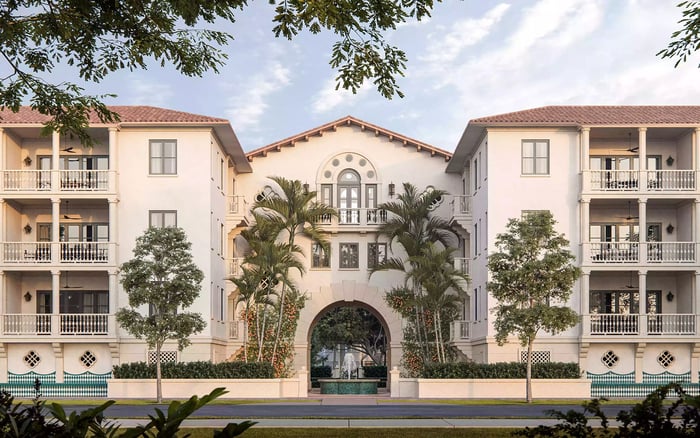
A buyer-focused look at The Village at Coral Gables and how wellness-retail proximity shapes daily routines, privacy, resilience, and long-term livability for luxury households.

For buyers considering The Village at Coral Gables, wellness-retail proximity should not be reduced to a convenience line item. In South Florida’s upper tier, the question has moved beyond whether a residence is near places to shop or dine. The more valuable test is whether the surrounding neighborhood supports how a household actually lives, recovers, socializes, hosts, ages, and manages its time.
That standard is more exacting than walkability alone. A district can be walkable and still lack the right constellation of services, wellness options, dining, leisure, and daily support. Conversely, a home can sit within a refined residential setting while benefiting from nearby amenities that make daily life feel easier and more complete. For The Village at Coral Gables, this is the lens that matters: not merely what is nearby, but whether the surrounding mix improves the household’s weekly rhythm.
Luxury buyers already scrutinize architecture, finishes, privacy, parking, outdoor space, and interior proportion. Wellness-retail proximity belongs in the same tier of consideration because it affects lived experience after closing. It shapes how often the household needs to drive, how easily residents maintain health routines, how spontaneous dining or errands can feel, and whether a neighborhood remains useful across many seasons of ownership.
Walkability is a physical condition. Meaningful wellness proximity is a lifestyle condition. The first asks whether one can move through the neighborhood on foot with relative ease. The second asks whether the places within reach are the ones the household will use regularly and comfortably.
For a luxury household, the difference is significant. A pleasant walk to an occasional restaurant has value, but it is not the same as a setting that supports a weekly cadence of fitness, grooming, wellness appointments, errands, informal meetings, and dining without constant logistical friction. The stronger the alignment between nearby amenities and actual household behavior, the more valuable proximity becomes.
This is especially relevant in Coral Gables, where discretion and neighborhood character are central to the appeal. A buyer may want access, but not exposure. The best form of proximity feels calm, legible, and elegant. It allows residents to use the neighborhood without feeling that the neighborhood presses too closely against the residence.
For buyers comparing South Florida options, this discussion often sits beside new construction, boutique scale, townhouse-style living, and long-term ownership considerations. Those labels are less important than the underlying question: does the home’s surrounding environment support a refined, repeatable lifestyle?
A practical evaluation should begin with recurring use. Buyers should list the activities that define a normal week rather than an idealized weekend: morning exercise, coffee, school or work transitions, wellness appointments, groceries, dry cleaning, casual dining, entertaining, and quiet evening walks. The more closely the neighborhood aligns with these patterns, the more proximity becomes a daily asset.
The next question is category balance. Retail alone is not enough. Dining alone is not enough. Wellness alone is not enough. The most resilient neighborhood experience usually comes from a layered mix of shops, services, dining, wellness options, and leisure uses. Each category serves a different household function. Services save time. Dining supports social life. Wellness reinforces routine. Leisure adds texture and spontaneity.
For The Village at Coral Gables, buyers should also consider how these uses interact with privacy. A lively dining corridor can be an advantage if it is close enough to enjoy and far enough away not to dominate the home environment. A concentration of services can be highly useful if access routes feel comfortable and parking or drop-off patterns do not create everyday irritation. Proximity should make life smoother, not more exposed.
Medical access and health-related services deserve a separate line of analysis. They are not interchangeable with ordinary retail convenience because they affect preparedness, aging-in-place, and household resilience. A nearby boutique or café may enhance lifestyle; access to health-oriented services can influence how confidently a household plans for the long term.
For multigenerational families, seasonal residents, and buyers thinking beyond the next few years, this distinction matters. Wellness is not only spa culture or fitness programming. It can include the ability to keep appointments manageable, respond to health needs without excessive disruption, and maintain routines that support longevity. The value is often quiet, but it can be deeply felt.
This is where affluent buyers should resist superficial amenity scoring. The relevant question is not simply whether health-related services exist somewhere nearby. It is whether access feels practical, discreet, and compatible with the household’s daily life. If the answer is yes, proximity becomes part of the residence’s long-term livability profile.
Dining and leisure proximity are among the most compelling elements of urban luxury living. They create spontaneity. They reduce planning. They make it easier to host, meet friends, step out for a quiet dinner, or give visiting family a fuller neighborhood experience. In a market where time is a luxury asset, that convenience carries emotional weight.
Buyers should also evaluate the tradeoffs. Dining and leisure uses can bring traffic, evening activity, noise, valet movement, and a higher level of public visibility. None of those factors is automatically disqualifying. In the right setting, they are part of the charm. The question is whether the balance supports the household’s desired level of privacy.
A polished buyer framework should test different times of day. Morning conditions may feel serene, while evening conditions may reveal a different pattern. Weekday service activity may differ from weekend leisure energy. Households should ask whether the approach to the residence remains pleasant, whether arrivals feel discreet, and whether the surrounding activity enhances or interrupts the home’s intended mood.
The most reliable measure of proximity is frequency. An amenity used twice a year may be enjoyable, but it should not dominate a purchase decision. An amenity used twice a week can change the household’s relationship to place.
This is why buyers should map the ordinary week. If nearby services reduce errands, if wellness options make routines more consistent, if dining supports both casual nights and hosting, and if leisure amenities encourage movement and social connection, the neighborhood begins to function as an extension of the home. The result is not simply convenience. It is a reduction in household friction.
At the luxury level, that reduction has value. It gives time back. It softens transitions. It allows the residence to feel connected without sacrificing the comfort of retreat. For The Village at Coral Gables, this is the deeper appeal of wellness-retail proximity: the possibility that the surrounding environment supports ease without demanding compromise.
Amenity proximity can also influence how a residence performs as a long-term asset. Desirable daily infrastructure can support residential demand because it makes a neighborhood useful across different life stages and household types. A setting that serves young professionals, established families, downsizers, seasonal residents, and multigenerational owners may have broader durability than one defined by aesthetics alone.
This does not mean buyers should treat every nearby café or service as an investment thesis. It means they should recognize that residential value is increasingly tied to lifestyle infrastructure. In South Florida, affluent households often compare design quality with neighborhood utility. The most compelling properties tend to offer both.
The Village at Coral Gables belongs in that broader conversation. Its relevance is not only architectural or residential. It gives buyers a reason to examine how a home’s context can support wellness, social life, privacy, preparedness, and routine. That is where modern luxury is becoming more exacting.
Households should ask four practical questions before assigning value to nearby amenities. First, what is nearby, and does the mix include more than dining or shopping? Second, how often will the household realistically use each category? Third, does access feel private, pleasant, and consistent at different times of day? Fourth, does the environment support long-term livability, including health behaviors and household resilience?
The answers should be specific to the household. A buyer who entertains often may place more weight on dining and leisure. A family with aging relatives may prioritize health-related services and ease of access. A frequent traveler may value frictionless errands and reliable neighborhood services. A privacy-first buyer may prefer a quieter balance, with amenities close but not immediately intrusive.
The best decisions come from matching the property to the pattern of life it must support. For The Village at Coral Gables, wellness-retail proximity is not a decorative amenity story. It is a disciplined way to evaluate whether a luxury residence will feel as good in daily use as it appears in presentation.
Why does wellness-retail proximity matter for The Village at Coral Gables? It helps buyers understand how nearby amenities may support daily routines, privacy, wellness habits, and long-term livability.
Is walkability the same as wellness proximity? No. Walkability describes access on foot, while wellness proximity asks whether the nearby mix supports health, services, dining, and lifestyle needs.
Should dining nearby always be considered a positive? Dining access can be valuable, but buyers should also evaluate traffic, noise, evening activity, and privacy exposure.
How should a household measure whether nearby amenities are useful? Focus on weekly routines rather than occasional outings, because recurring use is what turns proximity into a daily lifestyle asset.
Why are health-related services different from retail convenience? They affect preparedness, aging-in-place, and household resilience in ways that ordinary shopping access may not.
Can proximity influence long-term residential demand? Desirable daily infrastructure can support demand because it makes a neighborhood more useful across household types and life stages.
What should privacy-focused buyers consider? They should test whether amenity access feels discreet and pleasant without bringing unwanted activity too close to the residence.
How does this apply to South Florida luxury buyers? Many affluent households weigh lifestyle infrastructure alongside design, finishes, and privacy when comparing premium residences.
What is the simplest buyer framework? Ask what is nearby, how often it will be used, whether access feels comfortable, and whether the mix supports long-term life.
Is wellness-retail proximity only about convenience? No. At the luxury level, it can shape time, health behaviors, social rhythm, household resilience, and the everyday feeling of home.
For a tailored shortlist and next-step guidance, connect with MILLION.
If branded residences are on your mind — as a home or as an allocation — we would be glad to share what we are seeing, privately.
Begin a quiet conversation