A discreet buyer’s guide to evaluating pet relief areas in Coral Gables luxury residences, from location and privacy to maintenance, rules, and long-term livability.
For a luxury buyer with pets, the most revealing amenity is not always the most photographed. A pet relief area rarely leads the marketing, yet it can shape daily comfort, building etiquette, staff workload, and the ease of moving through a residence with discretion. In Coral Gables, where buyers often evaluate property through a long-term lifestyle lens, the question is not simply whether pets are allowed. The sharper question is how gracefully the property accommodates them.
Pet ownership at the high end is rarely an afterthought. Dogs may move with owners among primary homes, second homes, boats, private aviation, and seasonal stays. Some buyers have elderly pets. Others have large breeds, multiple animals, or household staff who manage daily walks. A well-considered relief area can make those routines seamless. A poorly considered one can turn an otherwise polished residence into a daily compromise.
This buyer lens intersects pet policy, dog-friendly amenities, balcony and terrace use, and new-construction planning. More importantly, it belongs in the first round of due diligence, not at the end of a showing.
Location is the first issue. A buyer should ask whether the relief area is indoors, outdoors, partially covered, tucked into a service zone, placed near parking, or integrated into landscaped space. The answer affects convenience, privacy, odors, noise, and the way residents and guests encounter the amenity.
A discreet location can be a virtue, but hidden should not mean neglected. Buyers should understand the route from the residence to the relief area. Does it require passing through the lobby? Is there a service elevator alternative? Can household staff access it easily? If the property has valet, concierge, or security layers, how does the pet route work in real life, not just in theory?
For large residences, the distance from the unit to the pet area can matter as much as the pet policy itself. A beautiful amenity that feels inconvenient at midnight or in poor weather may not serve the household well.
The second question is operational. Luxury buyers should ask how often the area is cleaned, what materials are used underfoot, how drainage is handled, and whether the association or management team follows a defined maintenance schedule. These details may sound utilitarian, but they determine whether the amenity remains dignified over time.
A pet relief area should not create uncertainty for nearby residences, terraces, parking levels, or amenity spaces. Buyers should ask whether cleaning responsibilities fall to staff, residents, or a combination of both. They should also ask how the property handles misuse, repeat violations, or guests who may not understand the rules.
The best question is direct: if there is a complaint about odor, sanitation, or access, who resolves it, and how quickly? A polished answer suggests a building that has thought beyond marketing language.
Pet relief areas cannot be evaluated separately from the governing documents and house rules. Before making a serious move, buyers should review restrictions on breed, size, number of pets, guest pets, service animals, elevator use, leash requirements, and approved access routes.
Even pet-friendly buildings can have rules that shape daily life. A household with two large dogs will experience a residence differently than a household with one small companion animal. Buyers should also ask whether rules have changed recently or are likely to be revisited. In a condominium or managed community, policy stability can be as important as the policy itself.
For buyers considering a resale, ask how the building has handled pet-related issues in practice. For buyers considering new construction, ask how the developer, association, or future management structure intends to operate the amenity after turnover or occupancy. The language in the documents should align with the lifestyle being promised.
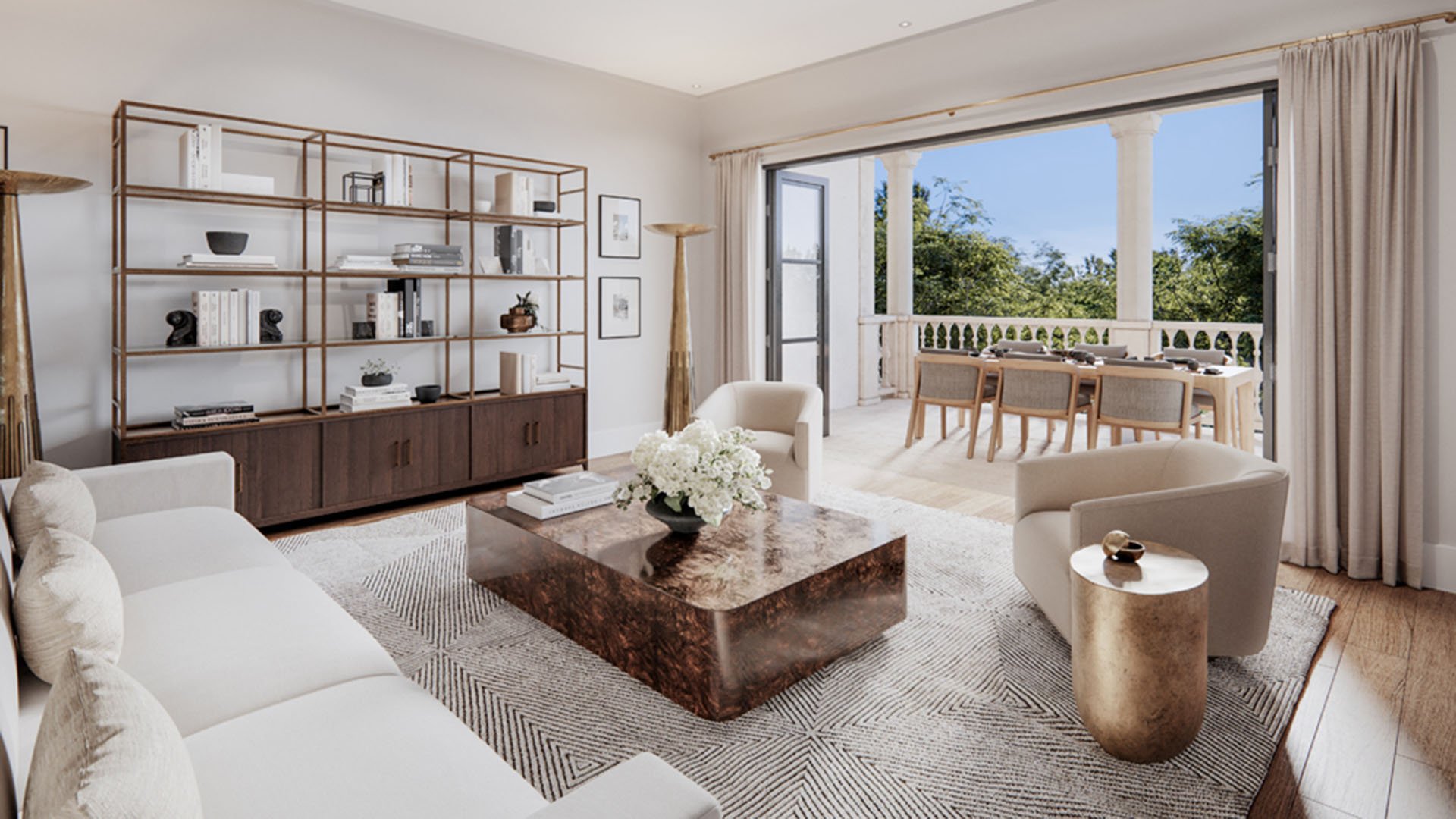
A balcony or terrace can make pet ownership easier, especially for fresh air, waiting time before walks, or a calm outdoor pause. Yet private outdoor space is not a substitute for clear building rules. Buyers should ask whether any pet-related use of private outdoor areas is restricted, discouraged, or subject to nuisance provisions.
The question is not whether a pet can step outside. The question is whether the household’s routine will remain appropriate, respectful, and compliant over time. In luxury living, the goal is to avoid friction before it begins.
Private outdoor space can also change how a buyer evaluates floor height, exposure, elevator access, and proximity to landscaped areas. A pet-conscious buyer may prefer a residence that balances privacy with practical movement through the property. The most glamorous plan is not always the most livable plan for a household with animals.
Many luxury households operate with assistants, dog walkers, drivers, house managers, or visiting family. Buyers should ask whether third parties may escort pets through the property, whether they need advance authorization, and how access is controlled. A pet policy that works only when the owner is present may not suit the way the home is actually used.
Guest pets are another overlooked issue. If adult children, extended family, or seasonal guests arrive with animals, the rules may differ. A buyer should know whether a visiting dog is treated the same as a resident dog, and whether registration is required.
This is also where the idea of a dog park should be clarified. Some buyers use that phrase to mean a dedicated landscaped exercise area, while others mean a smaller relief zone. The distinction matters. A relief area may be designed for quick use, not play. Buyers should ask for precise language rather than rely on casual amenity descriptions.
For many luxury buyers, pet accommodation is part of long-term value protection. A residence that works gracefully for pets may appeal to a broader future audience, particularly if the rules are clear and the amenity is maintained with discipline. Conversely, ambiguity can become a negotiation point later.
When touring, buyers should look for signs of thoughtful management. Is signage discreet but clear? Are materials durable? Is the route intuitive? Does the amenity feel integrated into the property, or improvised? These observations do not require technical expertise. They require attention to how a building lives after the presentation ends.
The most sophisticated buyers ask practical questions early because they understand that luxury is not only what is seen. It is what happens every day without inconvenience.
Before submitting an offer or signing a contract, a pet-owning buyer should ask a focused set of questions: Where is the pet relief area? Who cleans it? How often? What is the access route? Are there separate service routes? What pet restrictions apply? Are guest pets allowed? Can staff or dog walkers access the area? What happens if residents do not follow the rules? Are private outdoor spaces subject to pet-use limitations?
A buyer should also ask to see the area in person whenever possible. If the residence is not complete, request the clearest available plan, operational description, and rule language. The right answer is not necessarily the most elaborate amenity. It is the amenity that fits the household’s routines with clarity and discretion.
In Coral Gables, the most successful purchase is often the one that feels effortless months after closing. For pet owners, that ease begins with asking unglamorous questions before they become daily inconveniences.
Should luxury buyers ask about pet relief areas before making an offer? Yes. The location, rules, and maintenance of a pet relief area can affect daily comfort and should be reviewed early.
Is a pet relief area the same as a dog park? Not always. A relief area may be intended for quick use, while a dog park may imply a larger space for activity.
What is the first question to ask about a pet relief area? Ask where it is located and how residents reach it from the residence, parking, and common areas.
Why does cleaning protocol matter? Cleaning protocol affects comfort, hygiene, and the way the amenity is experienced by residents and guests.
Should buyers review pet rules in the building documents? Yes. Rules may address size, number of pets, access routes, guest pets, and other daily-use details.
Can a balcony replace a building pet relief area? Buyers should not assume that. Private outdoor space may still be subject to building rules.
Does a terrace make a residence more pet-friendly? It can help with lifestyle flexibility, but it should be evaluated together with access, rules, and maintenance.
What should buyers ask about household staff and dog walkers? Ask whether authorized staff may escort pets and whether the building requires registration or access approval.
Are pet policies important in new-construction purchases? Yes. Buyers should understand the intended rules and management approach before committing.
Why is this especially relevant for Coral Gables buyers? Pet routines are part of daily livability, and a polished residence should support them with clarity.
If you'd like a private walkthrough and a curated shortlist, connect with MILLION.
If branded residences are on your mind — as a home or as an allocation — we would be glad to share what we are seeing, privately.
Begin a quiet conversation