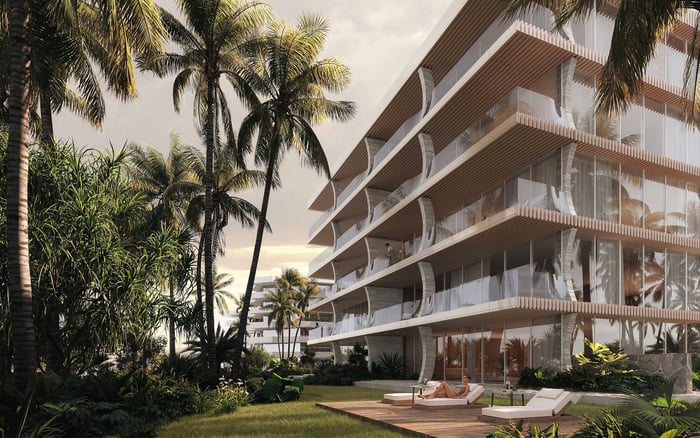
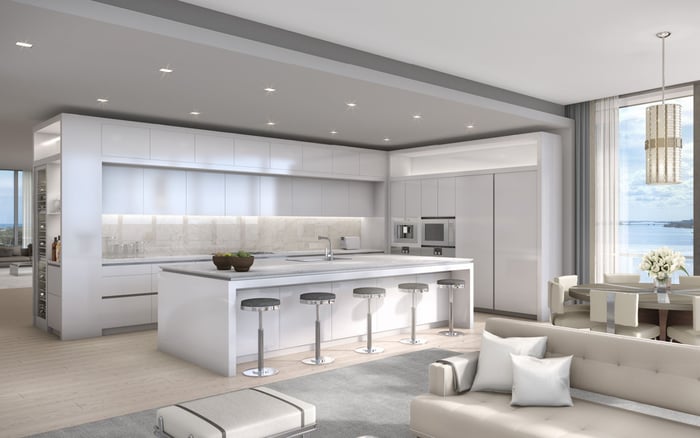
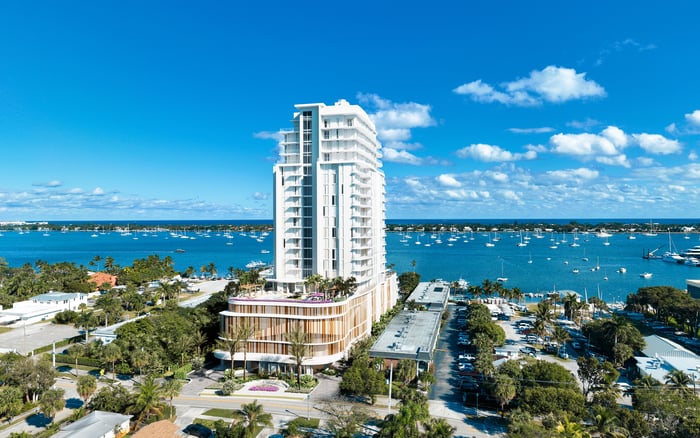
A buyer-focused guide to evaluating view-corridor risk at The Bristol Palm Beach, with practical questions on exposure, adjacent parcels, valuation, resale, and long-term enjoyment.
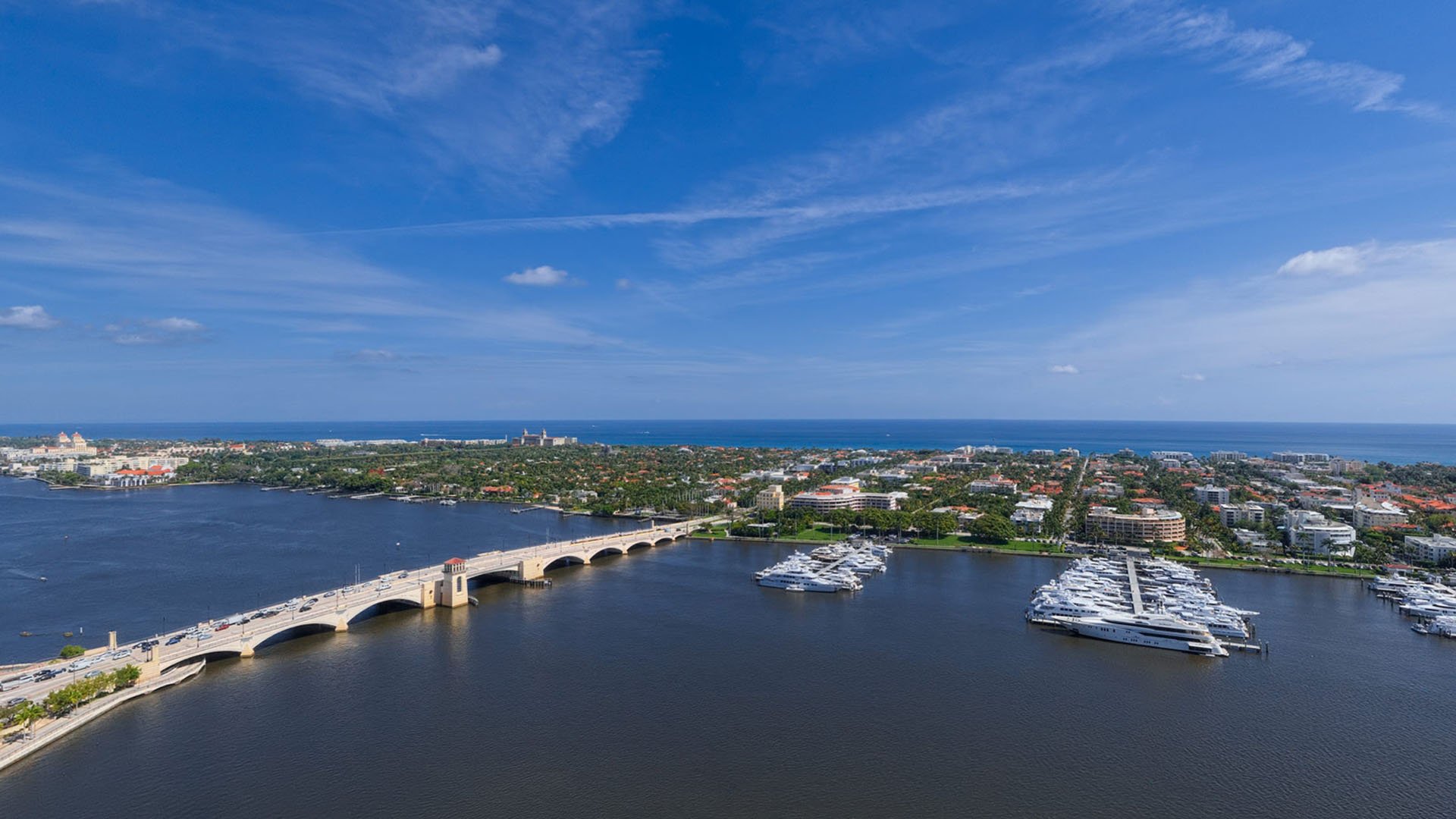
At The Bristol Palm Beach, view-corridor diligence is not a secondary aesthetic question. It is central to the purchase thesis. For many buyers evaluating a waterfront residence in the Palm Beach and West Palm Beach market, eastward exposure across the Intracoastal toward Palm Beach island is a principal visual asset.
That distinction matters because a luxury waterfront residence is valued not only by finishes, scale, service, and address, but by what the main rooms and terraces actually frame each morning and evening. A residence that captures water, island, and horizon impressions may feel entirely different from another residence in the same building with a more angled or partial outlook.
The first question is therefore simple: what does this specific unit see from the rooms where you will live most? Stand in the primary suite, the great room, the dining area, and the principal terrace. Then repeat the exercise at different times of day if access allows. Floor height, stack, and angle can materially alter exposure, so marketing imagery should never substitute for standing inside the actual residence.
The most important view-corridor question at The Bristol is whether anything east, north, south, or west of the building could materially alter current sightlines. East-facing water views are often the least replaceable view asset, precisely because the waterfront position gives those exposures their emotional and financial weight.
Buyers should avoid assuming that a view is protected simply because it exists today. Unless a view is supported by specific legal protections, easements, title matters, zoning constraints, or counsel-reviewed documents, treat it as a condition to investigate rather than a promise to rely on. The right question is not only “What do I see?” but “What could occupy the visual field later?”
For east-facing residences, the inquiry should focus on the water, Palm Beach island, and the horizon composition. For northeast-facing or north-facing units, nearby bridge and roadway corridors may shape how the eye reads movement, infrastructure, and urban context. For south-facing residences, buyers should look carefully at the surrounding residential and institutional context. For west-facing or partial-west exposures, the diligence shifts toward inland parcels and city-side context.
This is where an experienced buyer turns a view into a checklist. Ask the broker, the seller, the association, and land-use counsel what nearby parcels could be redeveloped or upzoned. Ask whether there are available view studies, survey materials, site plans, or visual simulations that clarify existing and future sightlines. If none are available, the absence itself becomes part of the risk discussion.
In South Florida’s luxury market, especially in Palm Beach and West Palm Beach, a water view can be a decisive component of value. But not all water views function the same way. A broad, centered Intracoastal panorama from principal rooms may carry a different resale profile than a narrower glimpse from a secondary terrace.
That is why view-corridor risk belongs in valuation, not just design preference. If two residences have similar interior quality but different exposure durability, the more compelling and less vulnerable view may support stronger long-term liquidity. Conversely, a buyer who pays for a view without testing its future risk may find that the premium is harder to defend during resale.
This same discipline applies when comparing The Bristol with nearby and broader West Palm Beach options such as Alba West Palm Beach, Forté on Flagler West Palm Beach, and Shorecrest Flagler Drive West Palm Beach. The purpose is not to rank one address against another in the abstract. It is to understand how each specific residence converts location, height, orientation, and view permanence into livability and price resilience.
A disciplined showing at The Bristol should feel more like a private evaluation than a tour. Begin with the main living spaces. Which rooms receive the best eastward exposure? Does the terrace extend the sightline, or does it merely create outdoor square footage? Are the water, Palm Beach island, and horizon views visible when seated, or only when standing at the glass?
Next, separate current beauty from future certainty. What lies directly in the key view corridor? Are there parcels nearby that could change in use, height, or intensity? Has anyone reviewed the zoning and development context around the relevant street, bridge, inland, and rail-adjacent areas? The buyer’s team should be comfortable asking these questions before contract, not after enthusiasm has hardened into commitment.
Then ask for materials. View studies, surveys, site plans, visual simulations, and association information can help translate impressions into evidence. They may not answer every question, but they can reveal whether the view has been evaluated with the seriousness the price point requires.
Finally, consider enjoyment. A waterfront residence is not only an asset class. It is a daily ritual, a light condition, and a sense of place. The right buyer will know whether the view feels quiet, cinematic, urban, open, or transitional. The best diligence protects both capital and lifestyle.
The preferred approach is calm precision: identify the view you are paying for, evaluate what could change it, and decide whether the price reflects both the beauty and the risk. The Bristol’s waterfront context gives many residences a compelling foundation, but the final judgment should be unit-specific.
A buyer should be especially careful with any phrase that sounds absolute. “Protected,” “forever,” and “unobstructed” should be supported by documents and counsel, not conversation. If the support is not there, the better language is probability, exposure, and risk tolerance.
The strongest acquisition case is usually the one where the residence’s main rooms and terraces deliver the desired view today, the surrounding context has been reviewed from multiple directions, and the buyer understands how view quality may influence future liquidity. In the ultra-premium market, certainty is rare. Clarity, however, can be achieved.
Why is view-corridor risk so important at The Bristol Palm Beach? View quality can be a major part of the value proposition because many buyers prize waterfront exposure and sightlines toward Palm Beach island.
Should I rely on listing photos or renderings? No. Evaluate the actual unit because floor height, stack, and angle can materially change the view experience.
What is the most important question to ask first? Ask whether anything east, north, south, or west of the building could materially alter the current sightlines.
Are east-facing views the safest to value? They may be among the least replaceable view assets because they look toward the water, but they should still be verified with appropriate diligence.
What should north-facing buyers review? North and northeast exposures should be evaluated for how nearby infrastructure and city context affect the view experience.
What should south-facing buyers consider? South-facing residences should be reviewed against the surrounding residential, institutional, and street-level context.
Do west-facing exposures carry different risks? Yes. West or partial-west views should be assessed for city-context risk from inland parcels, street corridors, and rail-adjacent areas.
Who should answer redevelopment questions? Ask the broker, seller, association, and land-use counsel about nearby parcels that could be redeveloped or upzoned.
What documents should I request? Request any available view studies, survey materials, site plans, or visual simulations that clarify current and potential sightlines.
How should view risk affect my offer? Treat view risk as part of valuation, resale liquidity, and long-term enjoyment rather than as a purely decorative preference.
For a confidential assessment and a building-by-building shortlist, connect with MILLION.
If branded residences are on your mind — as a home or as an allocation — we would be glad to share what we are seeing, privately.
Begin a quiet conversation