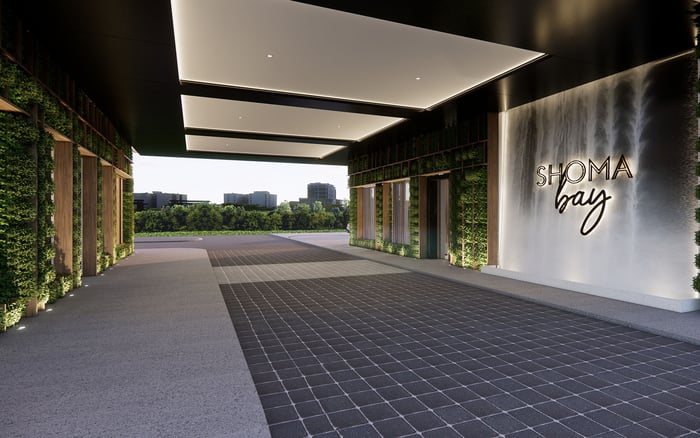
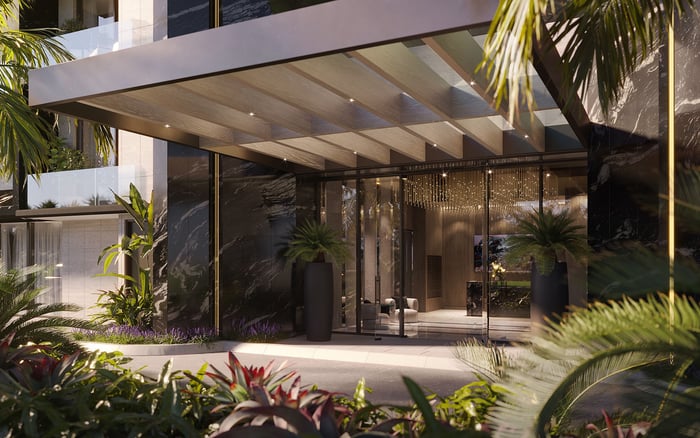
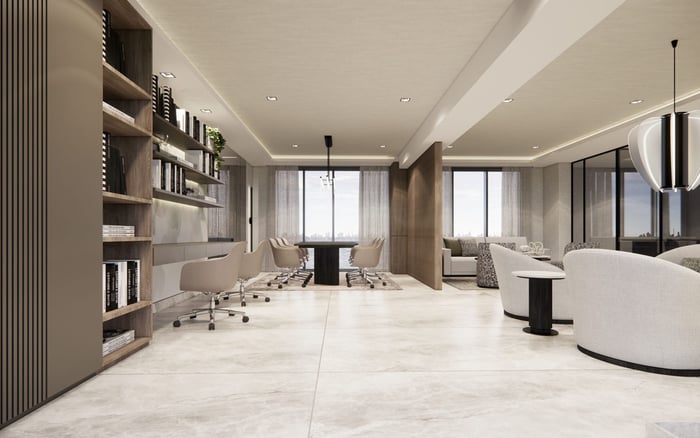
A buyer-focused comparison of Shoma Bay in North Bay Village and Mila in Bay Harbor Islands, centered on dining access, social atmosphere, privacy, and the daily rhythm of ownership.
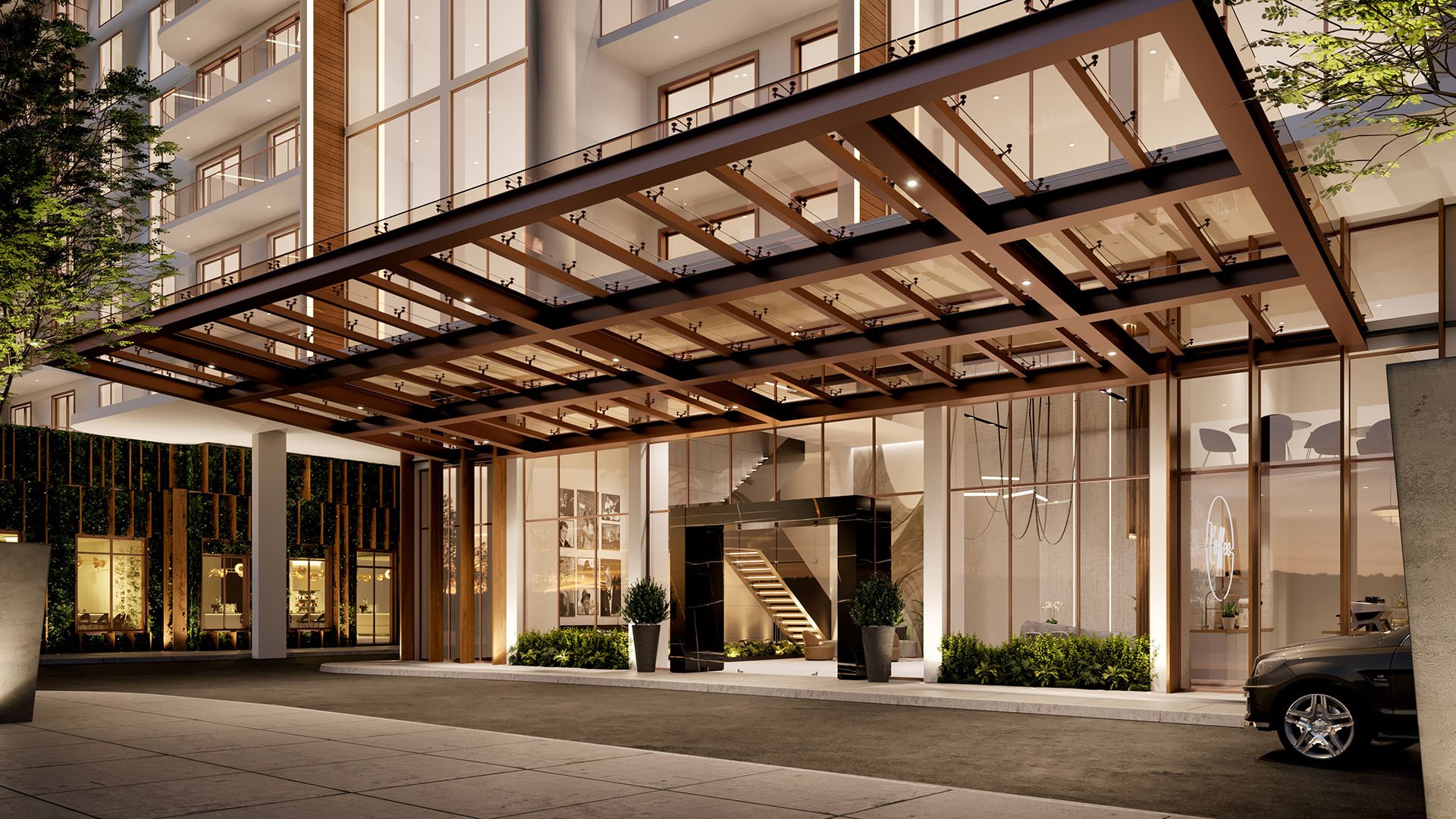
For affluent buyers comparing Shoma Bay North Bay Village with Mila Bay Harbor Islands, the decision is not simply about finishes, views, or floor plan efficiency. It is about how much public energy one wants near private life. In South Florida’s island markets, dining access, social programming, lobby activity, guest flow, and acoustic comfort can shape ownership as meaningfully as the residence itself.
Shoma Bay belongs to the North Bay Village conversation, where a waterfront setting and a more activated bay-island lifestyle are central to the appeal. Mila belongs to the Bay Harbor Islands conversation, where ownership feels more composed, residential, and measured, while still retaining proximity to upscale dining and services. The better choice depends less on which address sounds more glamorous and more on how the building feels at 8 p.m., on weekends, and during peak social hours.
In practical search language, this is a North Bay Village and Bay Harbor decision, often filtered through second-home, investment, and new-construction priorities. Those labels matter because different buyers are not purchasing the same experience, even when they are considering similar price points or similar island geography.
Shoma Bay North Bay Village is best understood through convenience and social proximity. For buyers who like the idea of dining, hospitality, and neighborhood energy close to home, its North Bay Village context can feel intuitive. The appeal is not only that restaurants may be nearby, but that the building environment can feel connected to a broader rhythm of arrival, gathering, and evening movement.
That level of activation can be valuable for owners who do not want their residence to feel isolated. A primary resident may appreciate folding dinner plans into daily life without turning every outing into a logistical production. A pied-à-terre owner may find that restaurant adjacency makes short stays feel more immediate, serviced, and emotionally complete. For guests, the experience can feel more like arriving at a social address than retreating into a quiet residential enclave.
The tradeoff is equally important. More activity can mean more foot traffic, more evening movement, and a greater need to understand how the building separates private residential areas from hospitality or social zones. Buyers should study the path from arrival to elevator, the relationship between residential entries and public-facing spaces, and how terraces, amenity decks, and gathering areas are positioned relative to homes.
Mila Bay Harbor Islands is better framed for buyers who prioritize a quieter daily atmosphere while still wanting access to the dining ecosystem and services associated with Bay Harbor Islands and its surrounding luxury markets. The advantage is not an absence of lifestyle. It is the sense that lifestyle remains nearby without dominating the residential threshold.
For many luxury buyers, that distinction is decisive. A calmer building environment can make a residence feel more like a true home, especially for those who work from the property, spend extended seasons in South Florida, or value a predictable nighttime atmosphere. The social energy may be more restrained, but that restraint can be part of the luxury.
Mila’s likely strength is its balance of access and discretion. Buyers who enjoy restaurants but do not want the building to feel like an extension of a dining venue may find Bay Harbor Islands more naturally aligned with their temperament. The ownership experience may feel less activated at the front door, yet more private once inside.
Restaurant proximity is often described as a convenience, but in ownership terms it is also a design and lifestyle variable. It affects how residents arrive home, how guests interact with the property, and the degree to which a building feels residential rather than semi-public.
At Shoma Bay, restaurant access and nearby social activity can enhance the sense of immediacy. This is especially appealing for buyers who want a waterfront island address with an energetic daily pulse. The building may feel more connected to evening plans, spontaneous dining, and a broader hospitality atmosphere.
At Mila, dining access remains relevant, but the ownership proposition is more about keeping that energy at a measured distance. The result may be a softer transition between public life and private residence. For some buyers, that separation is worth more than the ability to step directly into a lively scene.
Neither model is inherently superior. The key is recognizing that restaurant adjacency does not simply add amenities. It changes the social temperature of the address.
Noise management should be treated as part of the purchase decision, not as an afterthought. Restaurant activity, social programming, and evening foot traffic can alter how a residence feels during the hours when owners most expect privacy.
For Shoma Bay buyers, the central question is how the benefits of stronger activity are balanced by acoustic separation, crowd flow, and the choreography of public and private movement. A buyer should consider where the residence sits relative to active areas, how outdoor spaces might carry sound, and whether the building’s circulation plan supports a graceful separation between residents and visitors.
For Mila buyers, the question is different. The quieter day-to-day profile may reduce the intensity of this concern, but it does not eliminate it. Even in more residential-feeling settings, buyers should evaluate elevator proximity, amenity placement, terrace exposure, and the way neighboring social areas may affect the private experience.
In the ultra-premium segment, silence is not merely the absence of sound. It is the confidence that the residence will perform as a refuge when the surrounding market is at its most animated.
A primary-home buyer should begin with a simple test: will the building’s dining and social energy support daily convenience without compromising privacy? If the answer is yes, Shoma Bay’s activated North Bay Village profile may be compelling. If the buyer wants a more residential rhythm, Mila’s Bay Harbor Islands positioning may feel more appropriate.
For a pied-à-terre buyer, social energy can be a positive. Short stays often benefit from convenience, dining proximity, and a sense of immediate access. In that scenario, Shoma Bay’s more activated atmosphere may make ownership feel turnkey. Mila can also serve a second-home buyer well, particularly if the goal is retreat rather than constant stimulation.
For an investment-oriented buyer, the balance between lifestyle branding and livability matters. A building that feels exciting but insufficiently private may narrow its long-term audience. Conversely, a building that is too restrained may appeal strongly to privacy-driven residents but less to buyers who want a more animated hospitality feel. The best asset is the one whose social identity matches the expectations of its likely future audience.
Choose Shoma Bay if you want the energy of North Bay Village to feel close, convenient, and woven into daily ownership. Its appeal is strongest for buyers who value restaurant access, waterfront atmosphere, and a more social building personality, provided they are comfortable evaluating how privacy and sound are managed.
Choose Mila if your priority is a more composed Bay Harbor Islands lifestyle. Its appeal is strongest for buyers who want residential calm, proximity to upscale dining and services, and a quieter threshold between the outside world and home.
The most sophisticated buyers will not ask which project is more luxurious in the abstract. They will ask which one matches their preferred ratio of public energy to private life. That is where the ownership experience becomes clear.
Is Shoma Bay better for buyers who want a more social lifestyle? Shoma Bay is better suited to buyers who prefer a more activated North Bay Village experience, with dining and social convenience close to home.
Is Mila better for buyers who want quieter ownership? Mila is positioned for buyers who want a more residential-feeling Bay Harbor Islands setting while still remaining near dining and services.
Why does restaurant proximity matter in a luxury condo purchase? It can affect convenience, guest flow, evening activity, and the balance between public energy and private residential life.
Should buyers worry about noise near restaurants or social spaces? Buyers should evaluate acoustic separation, terrace exposure, amenity placement, and the path between public areas and residences.
Which project is better for a primary residence? The better fit depends on whether daily convenience and social energy feel supportive or intrusive to the buyer’s home life.
Which project is better for a pied-à-terre? Shoma Bay may appeal to owners who want short stays to feel lively and turnkey, while Mila may suit those seeking a calmer retreat.
Does a quieter building mean less luxury? No. For many buyers, restraint, privacy, and predictability are central parts of the luxury experience.
Can more social energy help long-term desirability? It can, if the building preserves privacy and livability while offering a clear lifestyle identity.
What should buyers compare beyond floor plans? They should compare arrival sequence, crowd flow, noise exposure, dining proximity, and the building’s day-to-day atmosphere.
What is the simplest way to frame the decision? Shoma Bay is the more activated North Bay Village choice, while Mila is the more composed Bay Harbor Islands choice.
If you'd like a private walkthrough and a curated shortlist, connect with MILLION.
If branded residences are on your mind — as a home or as an allocation — we would be glad to share what we are seeing, privately.
Begin a quiet conversation