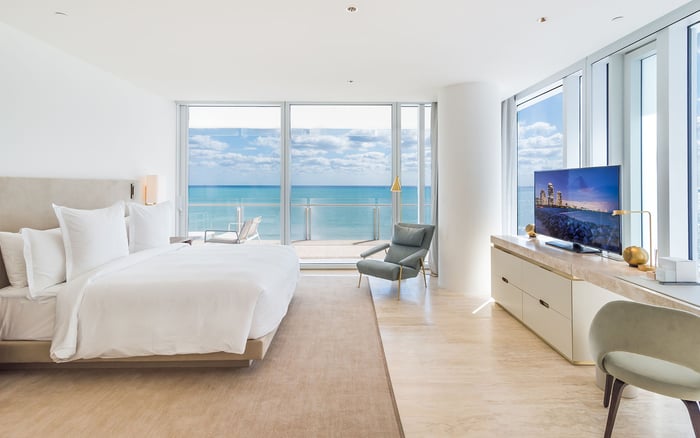
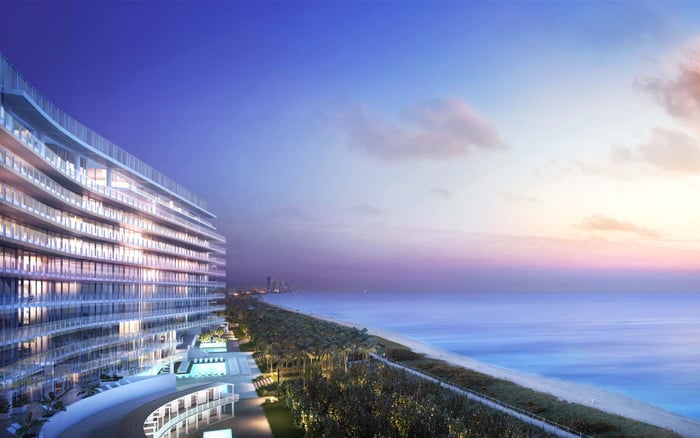
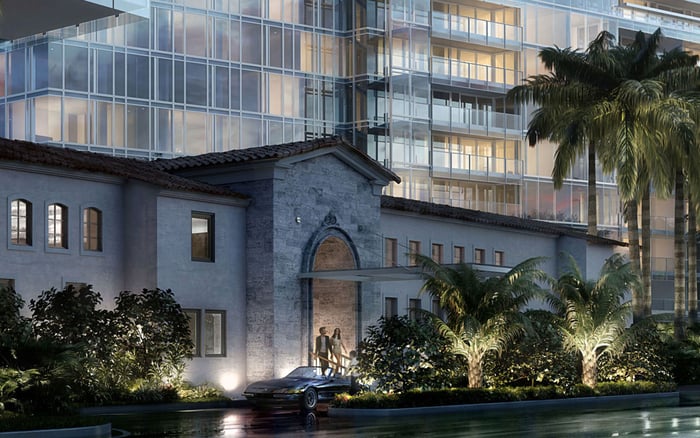
A buyer-focused comparison of Surfside’s two distinct luxury propositions: hospitality-backed living at The Surf Club Four Seasons and residential-only discretion at Fendi Château Residences.
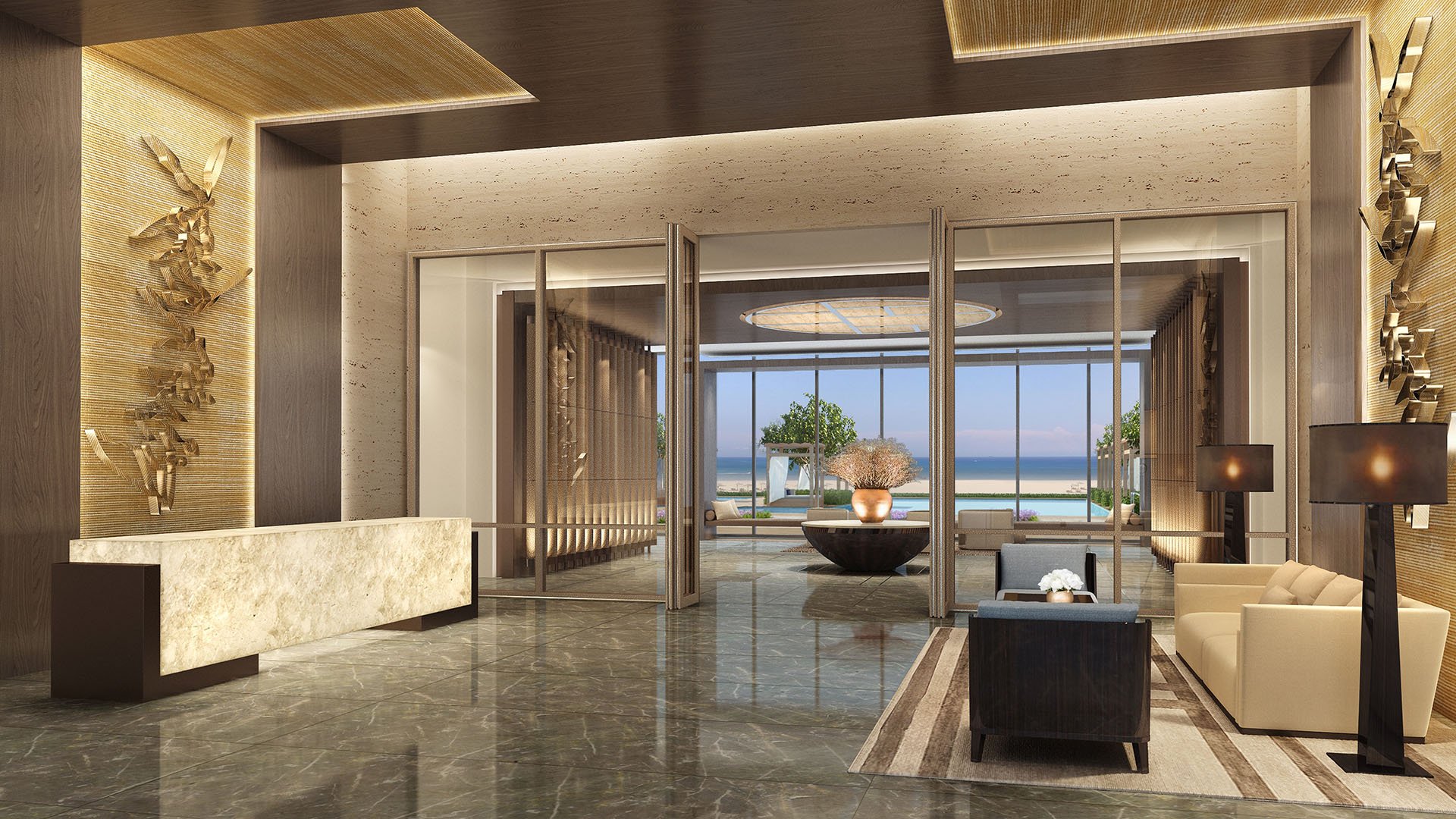
In Surfside, two of the most compelling oceanfront addresses appeal to very different instincts. The Surf Club Four Seasons Surfside is centered on a hospitality-backed environment where residential ownership exists within a broader Four Seasons campus. Fendi Château Residences Surfside, by contrast, is conceived as a residential-only property, shaped less by hotel choreography and more by a quiet, limited-inventory approach to oceanfront living.
For buyers in the South Florida ultra-luxury market, that distinction shapes arrival, beach use, the frequency of non-resident activity, and ultimately how ownership feels on an ordinary day in season. This comparison is less about which building is better and more about which definition of privilege feels more natural to the owner.
Privacy is the first point at which the contrast becomes clear. At The Surf Club, the residential component is positioned distinctly within the property, with its own private lobby and private elevator access described as part of the residential experience. That creates meaningful separation for owners, even though the broader campus includes a Four Seasons hotel. In practical terms, the privacy model is controlled and curated rather than absolute.
For many buyers, that formula is more than sufficient. They want their home life protected, but they also value the infrastructure that comes with a celebrated hospitality flag. The result is a layered environment: private upon return, yet still animated by a world-class hotel ecosystem nearby.
Fendi Château takes a more uncompromising posture. As a residential-only property, it avoids hotel operations and the transient guest flow that inevitably accompanies them. That alone creates a different kind of calm. The atmosphere is cleaner, quieter, and more insulated, particularly for owners who place a premium on discretion and predictability.
In the language of buyer priorities, The Surf Club offers separation from activity. Fendi Château offers the absence of that activity. Neither approach is inherently superior, but each attracts a different sensibility. Buyers also considering Ocean House Surfside or The Delmore Surfside will recognize the same fundamental question in Surfside: do you want service-rich adjacency, or a more self-contained residential sanctuary?
On the beach, both properties deliver a polished experience, but with different emotional tones. The Surf Club benefits from Four Seasons beach service and the broader rhythm of resort-style hospitality. At this tier of ownership, beach service reflects operational confidence, staffing culture, and the consistency of a globally recognized service model.
Owners who enjoy a fully supported day by the water often respond strongly to this kind of setup. The beach experience feels integrated into a larger hospitality system that can extend into concierge assistance, spa access, fitness offerings, and dining-related conveniences associated with branded residence living. For a buyer who wants the home to function almost like a finely managed private club, The Surf Club holds a persuasive advantage.
Fendi Château approaches beachfront living from the opposite direction. Its direct private beach access and resident-focused beach club service are framed around exclusivity rather than resort scale. The appeal is less about operating within a hotel-caliber machine and more about knowing that the beachfront experience is designed for owners, not a mix of owners and transient guests.
That distinction is subtle but important. Some owners prefer the visible depth and polish of a hospitality brand. Others prefer a quieter beachfront cadence where the service is highly refined but unmistakably residential in character. Buyers comparing broader branded ownership experiences in South Florida may also look at Four Seasons Residences Coconut Grove.
The Surf Club belongs to the branded residences universe in a very explicit way. Its value proposition is not merely architecture or address, but the management culture and service expectation associated with Four Seasons. That kind of recognition matters to globally mobile buyers who value the reassurance of a known operator and a hospitality standard that travels well across markets.
Fendi Château is branded differently. Its identity is anchored in Fendi’s design language rather than a hotel operator’s service platform. The overall proposition reads as edited, fashion-conscious, and intentionally less dependent on hospitality theater. For some buyers, that is precisely the point. They do not want their residence to borrow prestige from hotel programming. They want the residence itself to stand alone.
This is where the comparison becomes especially nuanced. The Surf Club expresses luxury through service integration. Fendi Château expresses luxury through control, exclusivity, and aesthetic clarity. In Surfside, both are credible forms of status, but they communicate different owner values.
The most practical way to evaluate these properties is to imagine the owner behind the purchase.
The Surf Club tends to align with affluent buyers who value branded luxury, operational ease, and international name recognition. This buyer often wants a residence that can be locked, left, and returned to with confidence. There is comfort in knowing that hospitality infrastructure is embedded into the ownership experience. For second-home owners, frequent travelers, and buyers who prioritize service consistency, that is often a decisive factor.
Fendi Château tends to fit the buyer who wants maximum discretion. The profile is often privacy-focused and less interested in the social visibility that can accompany a famous hotel campus. Residents who prefer a lower-volume residential environment are likely to find its proposition more intuitive.
There is also a cultural difference in how each building is likely to be used. The Surf Club can suit owners who appreciate the convenience of integrated lifestyle offerings. Fendi Château can suit owners who want the home itself to be the retreat, with amenities that remain residential-exclusive and free of hotel-affiliated guest use.
For the serious Surfside buyer, this comparison is less about amenities on paper and more about the quality of daily life. If you want your residence supported by one of the most established service ecosystems in luxury hospitality, The Surf Club makes a compelling case. Its privacy is real, but it is privacy within a mixed hotel-residential campus. That model works best for owners who see service as a primary luxury good.
If, however, the highest form of luxury is insulation from non-resident traffic, Fendi Château stands out. Its residential-only structure creates a more singular sense of retreat, and that simplicity is powerful in a market where discretion can matter as much as finish and frontage.
In other words, the choice becomes clearer once the buyer asks the right question: do you want the advantages of a hotel-backed lifestyle, or do you want a residence that keeps the world at a greater distance?
Which property offers more privacy overall? Fendi Château generally presents the purer privacy model because it is residential-only and does not include hotel guest traffic.
Is The Surf Club Four Seasons Surfside a hotel-residence hybrid? Yes. Its residences sit within a broader Four Seasons campus that includes a hotel, while remaining distinct as a residential component.
Does The Surf Club still provide private access for residents? Yes. The residential experience is described with private lobby and private elevator access for owners.
Which building has the stronger beach service identity? The Surf Club may appeal more to buyers who value the depth and recognition associated with Four Seasons beach service.
Which project is better for buyers who dislike transient traffic? Fendi Château is typically the stronger fit because its residential-only structure avoids hotel operations.
Is Fendi Château a hospitality-branded residence? No. Its branding is tied to Fendi’s design identity rather than a hotel operator.
Who is The Surf Club best suited to? Buyers who want branded luxury, service integration, and a highly managed ownership experience are often the best match.
Who is Fendi Château best suited to? Buyers seeking discretion, limited-inventory appeal, and a quieter residential atmosphere are usually better aligned with Fendi Château.
Are both properties considered oceanfront Surfside addresses? Yes. Both are part of Surfside’s top oceanfront luxury conversation.
What is the best way to shortlist comparable options for touring? Start with location fit, delivery status, and daily lifestyle priorities, then compare stacks and elevations to validate views and privacy.
For a confidential assessment and a building-by-building shortlist, connect with MILLION Luxury.
If branded residences are on your mind — as a home or as an allocation — we would be glad to share what we are seeing, privately.
Begin a quiet conversation