A discreet, buyer-focused comparison of privacy-oriented residential ownership and hotel-residence complexity through the lens of amenity density, elevators, and governance.

For ultra-prime buyers, the decision between 57 Ocean Miami Beach and Delano Residences & Hotel Miami is less a simple choice between beachfront calm and hotel energy than an operational question: how many people use the building, when they use it, who controls the experience, and how much of that daily rhythm an owner can reasonably predict.
57 Ocean Miami Beach
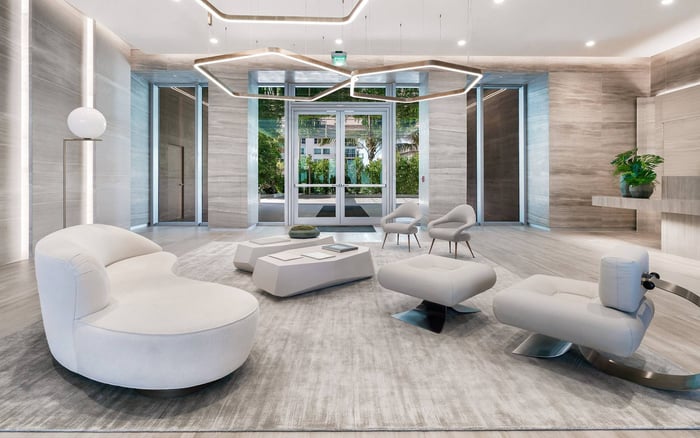
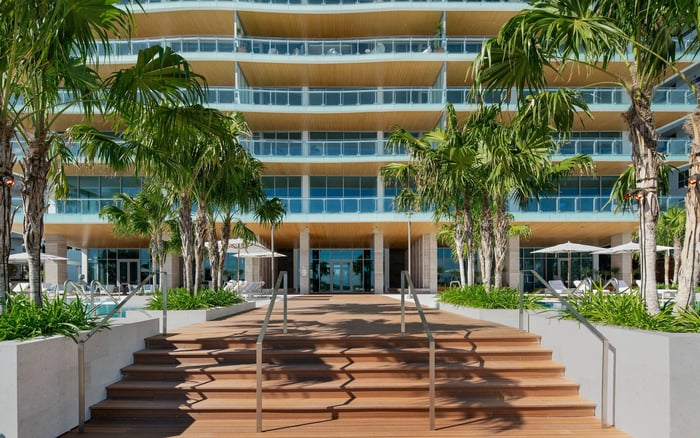
sits on the residential-condominium side of that discussion. It is best understood as an oceanfront, boutique reference point for buyers who want Miami Beach privacy, a more residential pace, and an ownership model not primarily shaped by hotel traffic. In this context, “quiet” does not mean under-amenitized. It means the building’s social patterns, service cadence, and vertical circulation are shaped principally by residents and their guests.
By contrast, any residence attached to, adjacent to, or meaningfully integrated with a hotel platform deserves a wider operating lens. Hotel energy can be seductive: more activity, more services, more culinary or wellness programming, and an arrival sequence that feels animated throughout the day. Yet that same intensity can influence elevator demand, lobby cadence, amenity availability, and the degree of owner control over the building’s daily feel.
In South Florida luxury real estate, amenity density has become a visual language. Buyers are shown layered pools, lounges, treatment rooms, fitness zones, private dining, coworking areas, beach services, children’s rooms, screening spaces, and wellness circuits. The instinct is to count. The more sophisticated move is to ask who has access, when demand peaks, and whether the amenity program feels residential or transactional.
A residential condominium such as 57 Ocean is defined by predictability. Its appeal is not the maximal hospitality stack, but the daily availability of spaces that feel proportionate to the owner base. If fewer nonresident users are moving through the building, the experience of a pool deck, gym, arrival court, or elevator lobby can feel calmer and more personal. That is the core of the privacy premium.
A hotel-residence model can offer a different kind of pleasure. It may feel more programmed, more connected to the city, and more useful for an owner who wants staff depth and an active social environment. But amenity density must be underwritten as a shared-use ecosystem. The question is not whether the amenities are impressive. It is whether the owner experience remains protected when visitors, hotel guests, residents, service staff, vendors, and event traffic converge.
This is why comparisons across Miami Beach projects require nuance. A buyer touring The Perigon Miami Beach or Shore Club Private Collections Miami Beach may see different interpretations of privacy, service, and arrival ritual, but the same core question applies: does the amenity program serve ownership first, or does ownership sit inside a broader hospitality machine?
Elevators rarely receive the attention they deserve during a glamorous sales presentation. Yet in a high-end building, vertical circulation is where the promise of privacy either holds or frays. A beautiful residence loses some of its serenity if departures feel crowded, service movements are visible at the wrong moments, or owners routinely share transitional spaces with a larger nonresident population.
For a residential building, the elevator experience is generally easier for buyers to conceptualize. The resident population is the primary demand base. Service patterns, guest arrivals, deliveries, staff movements, and peak times still matter, but the building is not also absorbing hotel check-ins, restaurant traffic, events, or short-stay turnover unless those uses are part of the structure.
For a hotel-integrated residence, diligence should be more exacting. Buyers should ask how elevator banks are separated, whether residential and hotel users share any vertical pathways, where service elevators are placed, how amenities are accessed, and how staff, housekeeping, catering, valet, and maintenance circulate. The goal is not to avoid hospitality. The goal is to understand whether hospitality has been architecturally disciplined.
Elevator wait times are not merely a convenience issue. They affect the psychological distance between public and private life. In the best buildings, the journey from porte cochere to residence feels composed, legible, and protected. In weaker operating models, the elevator becomes a daily reminder that one’s private home is also part of someone else’s destination.
Control is often less photogenic than a spa, but it can matter more over a decade of ownership. A conventional residential condominium structure typically gives owners a clearer governance path over budgets, rules, maintenance priorities, reserves, access policies, and the tone of the building. That is central to the 57 Ocean side of the trade-off: lower operating complexity and a more residential governance framework.
In a mixed-use or hotel-residence environment, control can be more layered. Certain operational decisions may be shaped by hotel standards, shared facilities, branding agreements, management structures, or commercial imperatives. None of this is automatically negative. For many owners, the value of hospitality is precisely that professionals handle complexity. But buyers should understand which decisions are owner-controlled, which are manager-controlled, and which are structurally shared.
The deeper issue is alignment. A permanent resident, a seasonal owner, a hotel guest, and a hospitality operator may all value the same property differently. One wants discretion. One wants convenience. One wants activity. One wants revenue and brand consistency. The best projects reconcile these interests elegantly. Less refined models allow them to collide in lobbies, elevators, pool decks, and board discussions.
For the second-home buyer, this distinction is especially important. A pied-a-terre owner may tolerate more activity if services are excellent and arrival feels effortless. A family using the residence for longer seasonal stays may prize consistency, quiet, and owner influence. A buyer intending to make Miami Beach a primary base may rank governance almost as highly as exposure, layout, and finish quality.
The appeal of 57 Ocean is its clarity. In this comparison, it functions as the privacy-oriented benchmark: an oceanfront condominium asset where the operating thesis is residential predictability rather than hotel-branded intensity. In plain terms, it is for the buyer who values fewer unknowns.
That does not make it universally superior. It makes it specific. The buyer who wants a highly animated destination may find a hotel-residence model more compelling. The buyer who wants daily operations to remain primarily residential may find 57 Ocean more aligned with long-term enjoyment.
This is where Miami Beach buyers should resist category shortcuts. Branded does not always mean busy. Boutique does not always mean quiet. Oceanfront does not automatically mean private. Condo-hotel does not automatically mean compromised. Each term must be tested against the actual operating documents, circulation plan, amenity access rules, and governance structure.
The broader Miami Beach market gives buyers many versions of this balance. Setai Residences Miami Beach speaks to a different sensibility than a quieter residential beachfront building, while The Ritz-Carlton Residences® Miami Beach invites its own analysis of service culture, privacy, and daily rhythm. The point is not to rank them generically. It is to identify which operating model matches the way an owner actually lives.
Before choosing between a privacy-oriented condominium and a hotel-residence environment, buyers should request clarity on several practical points. First, elevator separation: which banks serve residences, which serve hotel or public areas, and which serve staff and service functions? Second, amenity access: are residential amenities exclusive, shared, reservable, or subject to hotel demand? Third, arrival sequence: does an owner pass through a residential domain or a hospitality lobby?
Fourth, governance: what does the association control, what does management control, and what expenses are shared? Fifth, peak use: what happens during holidays, events, weekends, and high season? Sixth, privacy: how are guests, vendors, deliveries, valet, housekeeping, and beach services routed?
The right answer depends on temperament. Some buyers want the soft electricity of a hotel environment. Others want the hush of a private residential address. The mistake is assuming both experiences can be purchased in full without trade-offs. In prime South Florida, the rarest luxury is not always another amenity. Sometimes it is the absence of friction.
Is 57 Ocean Miami Beach better for privacy-oriented buyers? It is positioned as the residential-condominium side of the comparison, with a privacy and predictability thesis rather than a hotel-driven operating model.
Does a hotel-residence model always mean longer elevator waits? Not necessarily. The key is whether residential, hotel, service, and amenity circulation are separated and managed with discipline.
Why does amenity density matter to owners? More amenities can be valuable, but shared demand can affect availability, atmosphere, staffing pressure, and the feeling of exclusivity.
What should buyers ask about elevators before purchasing? Buyers should ask which users share each elevator bank, how service circulation works, and how peak periods are handled.
Is owner control usually clearer in a conventional condominium? A residential condominium structure generally offers a more direct governance path than a layered hotel-residence or mixed-use model.
Can a hotel-residence still feel private? Yes, if the design, access rules, staffing, and governance protect residential areas from broader hospitality traffic.
Who is best suited to a quieter residential building? Buyers seeking calm arrival sequences, predictable amenities, and a primarily owner-focused daily rhythm may prefer that model.
Who may prefer a hotel-residence environment? Buyers who value programming, service depth, and a more animated address may find the trade-off worthwhile.
Should second-home buyers weigh governance heavily? Yes. Even occasional owners benefit from clear rules, stable operations, and confidence that the building experience will remain consistent.
What is the main lesson of this comparison? The decisive luxury variable is not just the number of amenities, but how privacy, circulation, and owner control work together.
If you'd like a private walkthrough and a curated shortlist, connect with MILLION.
If branded residences are on your mind — as a home or as an allocation — we would be glad to share what we are seeing, privately.
Begin a quiet conversation