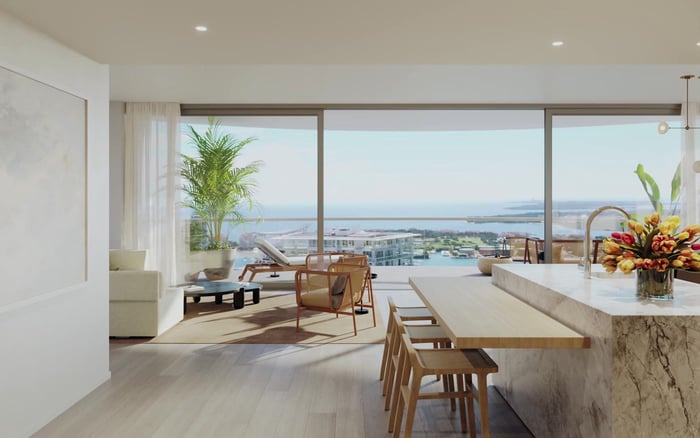
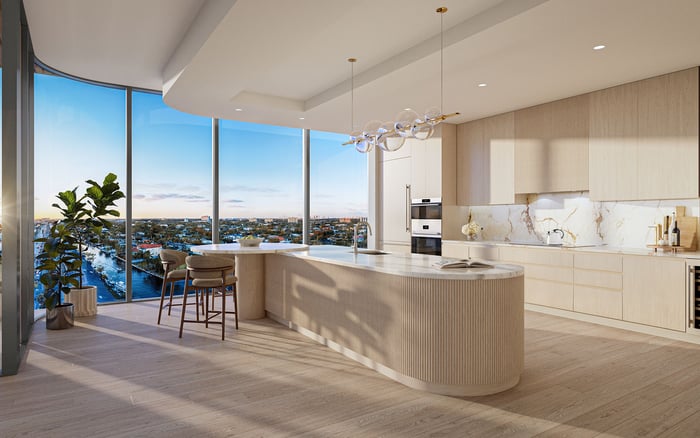
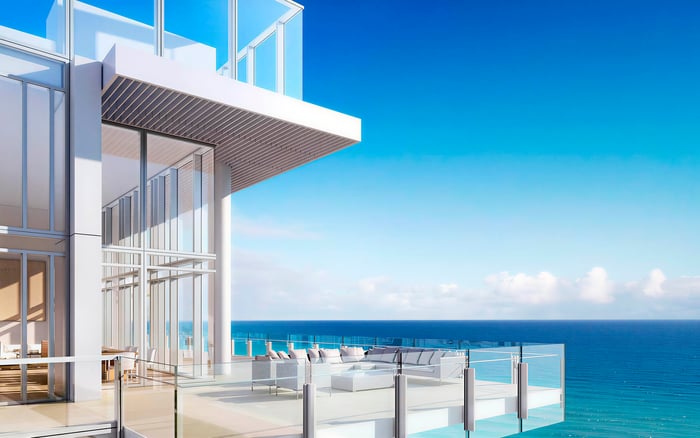
A buyer-oriented design comparison of raw concrete and polished plaster, using two oceanfront-minded references: 57 Ocean Miami Beach and Arte Surfside. The focus is not on specs or sales figures, but on how each finish reads in South Florida light, how it ages in salt air, and what it signals about taste, privacy, and daily living. Along the way, we connect the conversation to Surfside and Miami Beach’s broader design landscape, including nearby ultra-luxury benchmarks.
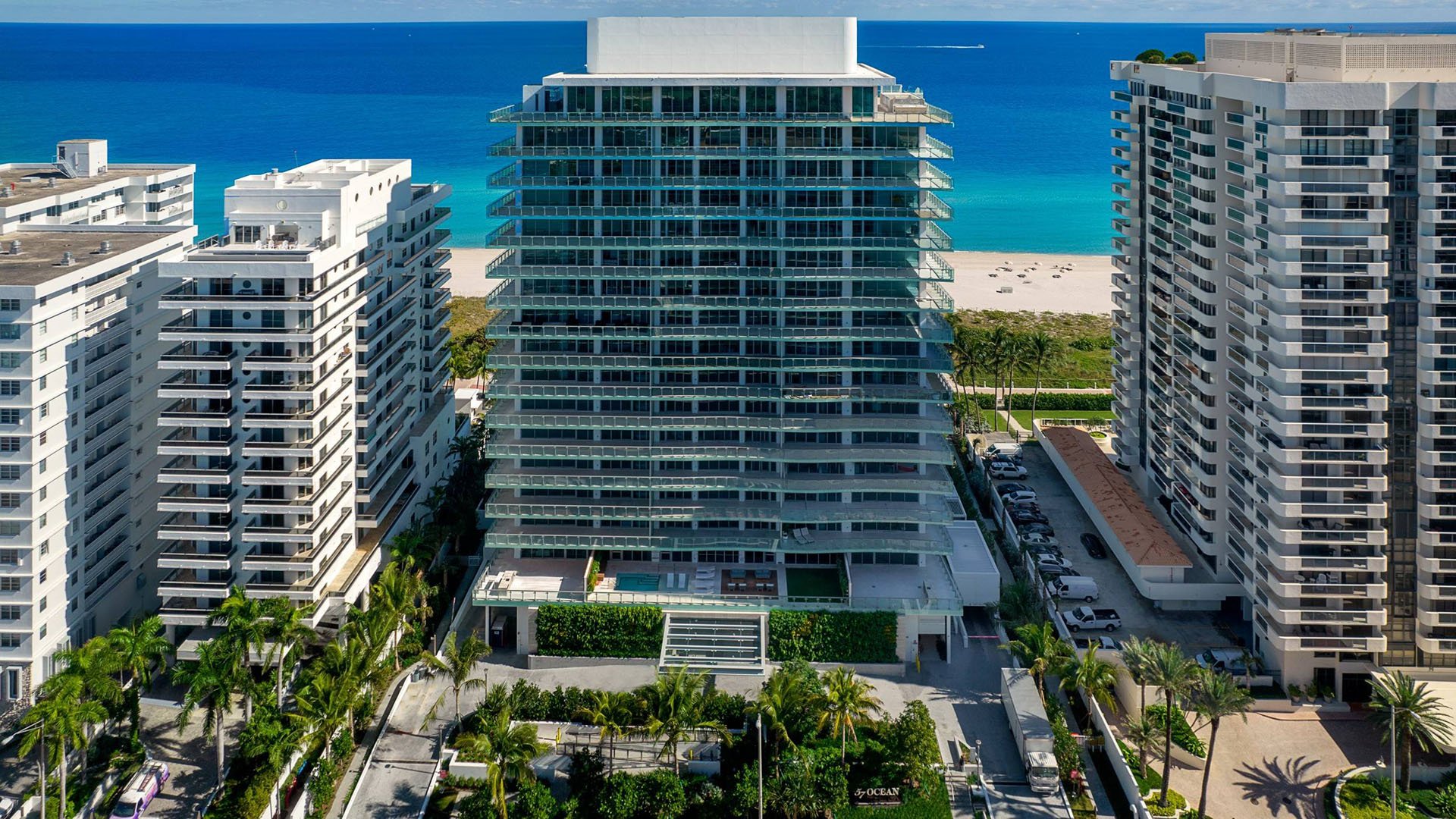
In South Florida, “finish” isn’t decoration-it’s architecture’s point of contact with intense daylight, reflective water, and a marine atmosphere that rewards certain materials and exposes others. In a luxury residence, the difference between raw concrete and polished plaster can define how a lobby feels at noon, how a corridor reads at dusk, and whether a living room lands in quiet restraint or leans into a sharper, more editorial edge.
That’s what makes the contrast between 57 Ocean Miami Beach and Arte Surfside such a useful lens. Without reducing either building to a single material, the pairing captures two distinct-and highly current-design impulses: the frank, structural confidence of exposed concrete, and the refined, light-catching softness of plastered surfaces.
For buyers weighing Miami Beach and Surfside towers, this isn’t merely a matter of taste. It’s a decision about how you want your home to photograph, to age, to host art, and to feel once the novelty wears off.
Raw concrete speaks the language of precision. It reads as built, not applied-an especially persuasive quality in oceanfront settings where wind and weather make permanence feel like a luxury in its own right. When concrete is left exposed and properly detailed, it signals confidence that the structure is strong enough-and beautiful enough-to be the finish.
Concrete’s power comes from shadow. In bright coastal sun, its subtle porosity and microtexture catch gradients that flatter curved forms, deep reveals, and recessed lighting. In the right hands, concrete can feel quieter than stone and more dimensional than paint. It also makes glazing and views read even clearer by contrast-like a matte frame around a high-definition horizon.
In an ultra-premium context, exposed concrete often implies an edited life: fewer decorative gestures, stronger objects, and a willingness to let negative space do the work. It can feel modernist, but it also carries coastal practicality. Concrete visually tolerates sand, humidity, and the rhythm of real living better than precious, high-sheen finishes that demand constant perfection.
Concrete is unforgiving. Misalignment, patching, and inconsistent sheen don’t disappear-they become part of the composition. In a residence, it can also read colder if it isn’t balanced with warm woods, textiles, and carefully tuned lighting temperatures. For some buyers, the hesitation is emotional: concrete can feel too urban, especially for those drawn to Miami Beach for softness and ease.
Polished plaster sits on the other end of the sensorial spectrum. It can be just as minimal, but where concrete is about honesty, plaster is about refinement. In certain light, it can look almost liquid-turning walls into gentle reflectors that feel both contemporary and timeless.
The best plaster finishes aren’t flat; they have depth that shifts across the day: a faint shimmer in morning light, a velvety calm at night, and a softening effect on hard edges. In high-rise living-where glass, metal, and stone dominate-plaster can be the material that brings back human scale.
Plaster signals composure. It’s associated with gallery-like interiors and discreet spaces where the most expensive object in the room may be silence. It’s also notably art-friendly: smoother, less visually loud, and less competitive with paintings and sculpture.
Because plaster trades on perfection, it can become maintenance-sensitive. A scuff that disappears into concrete’s texture can register on a luminous plaster wall. Repairs can also require a skilled hand to avoid telegraphing a patch-especially under raking light.
Rather than approaching these buildings as a checklist, consider them mood boards for how you want to live.
With 57 Ocean Miami Beach as a reference point, the “raw” side of the spectrum tends to favor architecture that feels sculpted and structural-where material honesty is part of the luxury message. The home becomes a backdrop for ocean and sky, with surfaces that feel grounded and intentionally minimal.
With Arte Surfside as a reference point, the “polished” side of the spectrum leans toward crafted calm. The experience is less about the building asserting itself and more about interiors holding light in a controlled way. The finish becomes a quiet instrument: it doesn’t demand attention, but it consistently improves the room.
For buyers choosing between Miami Beach energy and Surfside discretion, the distinction often parallels lifestyle. Raw concrete pairs naturally with bolder, more graphic furnishings and an urban cadence. Polished plaster pairs with softer palettes, collectible design, and an atmosphere that feels deliberately insulated from the street.
Aesthetics only matter if they keep working after you move in. These quick, on-site checks help you gauge whether a finish will continue to feel luxurious in daily life.
Stand at the window and look back into the room. In a glass-heavy residence, the interior is judged by what it looks like from the view. Concrete reads as a matte anchor; plaster reads as a glow. Choose the effect you want your home to project.
Look for raking light. Walk the wall at an angle. Plaster can be stunning, but it will also reveal imperfections. Concrete will reveal formwork rhythms and seams. Decide which “truth” you prefer living with.
Touch the surface. Concrete invites a more utilitarian relationship. Plaster invites care. There’s no right answer-only the right match for how you live.
Ask yourself what happens when the room is empty. Luxury homes spend time unoccupied. Concrete can hold presence with fewer objects. Plaster often looks best once the space is composed with art, rugs, and layered lighting.
In Miami Beach and Surfside, time becomes a design collaborator. The marine environment, HVAC use, and cleaning routines all shape how surfaces look after a few seasons.
Raw concrete’s advantage is visual forgiveness: minor wear can feel consistent with the material’s character. Its risk is that stains or discoloration can be difficult to erase without shifting the overall tone.
Polished plaster’s advantage is its ability to stay visually elevated when cared for, maintaining that boutique-hotel calm. Its risk is that it can reveal contact points-corners, switch areas, and frequently used corridors.
The most sophisticated interiors often blend both philosophies: harder, more architectural materials in high-traffic or high-humidity zones, and softer plastered surfaces where you want light to settle. Even if a building’s language leans one direction, furnishings and art can supply the counterpoint.
A simple guideline: concrete tends to amplify object silhouettes; plaster tends to amplify color and atmosphere.
If your collection includes sculptural furniture, large-format photography, or modern bronzes, concrete can function like a museum plinth-making edges and forms feel deliberate. If your taste runs toward textiles, nuanced neutrals, and painting, plaster can make the room feel tuned, as if the light has been calibrated.
This is also where location matters. In Surfside, many buyers seek a quieter residential tempo and may gravitate toward finishes that read soft and composed. In Miami Beach contexts, some buyers prefer a sharper, more architectural posture-especially when the view is dramatic and the skyline is part of the story.
For additional context on how high-end coastal design can skew toward serene, resort-level polish, note how the neighborhood conversation often includes benchmarks like The Surf Club Four Seasons Surfside. And for a Miami Beach counterpoint that underscores how modern coastal luxury can embrace bold form and crisp materiality, Five Park Miami Beach is often part of the same design-era dialogue.
Buyers rarely shop one building in isolation. They shop a design worldview.
In Surfside, the luxury narrative often favors privacy, controlled aesthetics, and residences that read as sanctuaries. That positioning aligns naturally with plaster’s soft glow and its hospitality-level finish standards. Arte Surfside fits comfortably in that mental map.
In Miami Beach, the narrative can be more extroverted: architecture as identity, a stronger relationship to skyline and street life, and interiors that can carry a higher-contrast, more editorial palette. Within that frame, the appeal of raw concrete isn’t austerity-it’s confidence.
If your search expands beyond the coastline into Brickell, the same material debate shows up in a different register, often with a more metropolitan sensibility. For example, 2200 Brickell illustrates how refined minimalism can shift when the view is bay, skyline, and city lights rather than open ocean.
Choose a raw-concrete leaning aesthetic if you value architectural clarity, sculptural shadow, and a home that feels intentionally minimal even when it isn’t styled. It tends to reward decisive taste, bold objects, and a preference for structure as beauty.
Choose a polished-plaster leaning aesthetic if you value calm, luminosity, and the sense that the room itself is curated. It tends to reward art-forward living, subtle palettes, and an environment designed to feel restorative.
The highest form of coastal luxury isn’t choosing the trend. It’s choosing the material truth that will still feel like you five years from now.
Is raw concrete considered “unfinished” in luxury residences? Not when it’s detailed well; it’s a deliberate architectural choice.
Does polished plaster look too delicate for everyday living? It can be perfectly livable, but it rewards mindful care and consistent maintenance.
Which finish makes a room feel larger? Polished plaster often expands a room visually by reflecting light more evenly.
Which finish is better for displaying art? Plaster is typically the calmer backdrop; concrete can compete unless the art is bold.
Will concrete make an interior feel cold? It can, but warm lighting, wood, and textiles usually balance it effectively.
Do these aesthetics affect resale appeal in Miami-beach and Surfside? Yes; plaster tends to read broadly as “finished,” while concrete appeals to a more specific taste.
What should I look for during a showing? Study walls under angled light to see how seams, sheen, and repairs will read.
Can owners blend the two looks inside one residence? Yes; mixing textured architectural moments with softer plaster walls can feel highly refined.
Which finish photographs better for interiors? Plaster delivers a soft glow; concrete delivers dramatic contrast and shadow.
How do I choose between 57 Ocean Miami Beach and Arte Surfside on design alone? Decide whether you want sculptural structure (concrete) or luminous calm (plaster).
To compare the best-fit options with clarity, connect with MILLION Luxury.
If branded residences are on your mind — as a home or as an allocation — we would be glad to share what we are seeing, privately.
Begin a quiet conversation