A buyer-focused examination of how South Florida’s high-service condominium culture reframes luxury ownership around privacy, governance, convenience, and long-term lifestyle fit.

In South Florida, the most sophisticated condominium buyers are no longer asking only what a residence includes. They are asking how ownership will feel after closing. That distinction matters. A high-service building can simplify life, protect time, and create continuity between home, travel, wellness, dining, and entertaining. It also introduces a distinct ownership culture, shaped by shared standards, staffing, house rules, and the daily choreography of hospitality.
This is the quiet question behind the region’s most polished towers: does the buyer want a private home that behaves like a staffed estate, or a more autonomous residence with fewer layers between owner and environment? Neither answer is inherently better. The right choice depends on how one lives, how often the residence is occupied, who uses it, and how much value the owner places on frictionless service.
For buyers comparing Brickell, Miami Beach, Sunny Isles, Bal Harbour, Coconut Grove, Boca Raton, Fort Lauderdale, and Palm Beach, the decision is increasingly cultural as much as architectural. In buyer shorthand, the search may be described as Brickell, Miami Beach, Sunny Isles, Bal Harbour, new construction, or second-home ownership, but the deeper issue is whether the building’s service identity aligns with the owner’s private rhythm.
Luxury condominium ownership in South Florida has moved beyond impressive lobbies and resort-style amenity decks. The more meaningful value is operational: how arrivals are handled, how guests are received, how maintenance is anticipated, how privacy is protected, and whether the building can support a lock-and-leave lifestyle without making the owner feel managed.
For frequent travelers, second-home owners, and families who divide time among multiple residences, service can be a practical asset. A well-run building allows life to resume quickly after an absence. The residence is not merely vacant while the owner is away; it remains part of a managed environment. That can be especially appealing in a region where seasonal patterns, international ownership, and multi-city lifestyles are common.
At the same time, service must remain discreet. The highest expression of condominium hospitality is not theatrical attention. It is quiet competence. Owners should feel known, but not watched. Assisted, but not interrupted. Protected, but not processed.
The rise of hospitality and design-driven residences has given buyers more ways to define ownership. A project such as St. Regis® Residences Brickell naturally attracts buyers who are comfortable with a strong service language and a recognizable standard. For some, that creates confidence. For others, it may feel more prescribed than personal.
The same question appears across coastal markets. Buyers considering Shore Club Private Collections Miami Beach may be drawn to the idea of a residence connected to an established hospitality sensibility, while still wanting the privacy and permanence of ownership. The balance is delicate. The best branded residences do not turn a home into a hotel. They translate service discipline into a residential setting.
Independent or boutique buildings can offer a different appeal: a quieter social profile, fewer assumptions about lifestyle, and a stronger sense of resident authorship. This can be powerful for buyers who prefer privacy over programming. In these buildings, luxury is often measured less by the brand name and more by the tone of daily life.
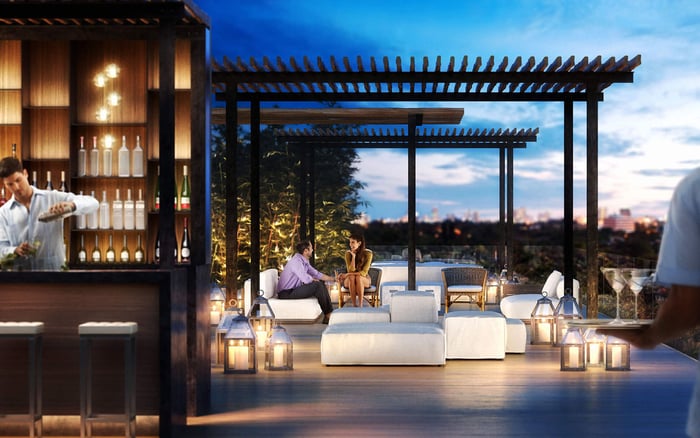
High-service culture is most successful when it treats privacy as the core amenity. In South Florida, many owners are public in business and intensely private at home. They may want attentive staff, but not a social stage. They may value wellness spaces, dining rooms, lounges, and pools, yet have little interest in a building that feels performative.
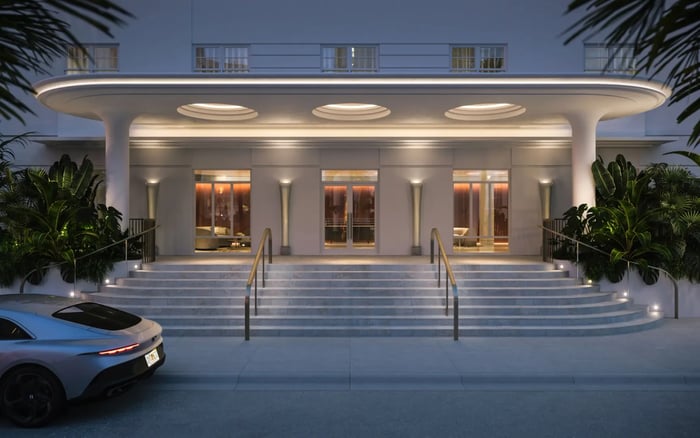
This is where governance, staffing ratios, circulation, elevator experience, arrival sequence, and amenity placement become part of the ownership decision. Buyers should study how residents move through the building. Is there separation between private and shared areas? Are service interactions efficient? Does the building feel serene during peak seasonal use? Does the amenity culture encourage discretion, or does it create constant visibility?
Projects such as Rivage Bal Harbour sit within a market where privacy and coastal refinement often carry as much weight as amenity volume. In that context, the question is not whether the building offers service. It is whether the service protects the atmosphere owners are buying into.
High-service living usually carries a broader ownership structure than a simpler condominium. Buyers expect common charges, reserves, staffing, insurance considerations, maintenance standards, and long-term governance to matter. The important point is not to minimize those obligations. It is to understand what they support.
Convenience has a cost, but it also has a yield. If a building reduces the need for outside coordination, supports an owner’s travel schedule, improves day-to-day comfort, and preserves the quality of the property experience, the value may be significant. For some buyers, time is the rarest luxury. A building that returns time can be more valuable than one that simply offers more square footage.
Still, buyers should be alert to mismatch. A highly programmed building may frustrate an owner who wants quiet autonomy. A minimal-service building may disappoint an owner who expects seamless support. The wisest purchase is not the most elaborate service package. It is the one that matches the household’s habits.
Brickell tends to attract buyers who appreciate connectivity, business access, and a more vertical urban lifestyle. In that setting, service often functions as an efficiency tool. The building becomes a private base within a fast-moving district.
Miami Beach and Surfside buyers may prioritize atmosphere, design, water, wellness, and a resort-adjacent cadence. Here, service must feel graceful rather than corporate. The residence should maintain the ease of a coastal retreat without sacrificing permanence.
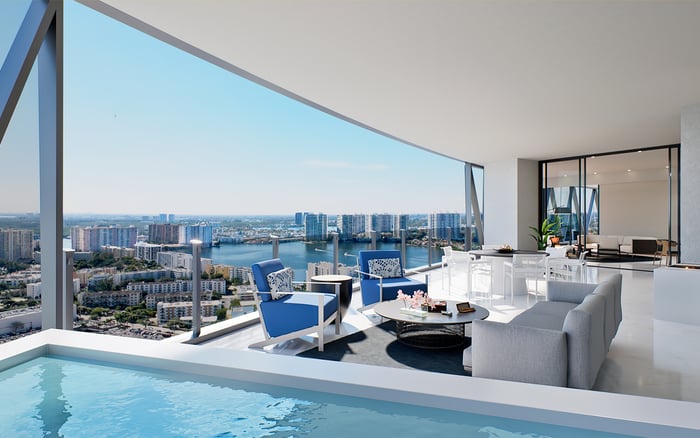
Sunny Isles and Bal Harbour often appeal to buyers who want water-oriented living with a heightened sense of privacy. A project such as Bentley Residences Sunny Isles may be considered by owners who view the residence as an expression of both lifestyle and identity, while still needing the practical support of a high-service building.
In Coconut Grove, Coral Gables, and Boca Raton, the question can be more residential in tone. Buyers may be comparing condominium convenience against the independence of a single-family home. The decision is often less about spectacle and more about whether a building can deliver ease without erasing neighborhood intimacy.
The most important due diligence is experiential. Visit at different times of day. Observe how the lobby feels when residents are arriving, how staff communicate, how amenity spaces are used, and whether the building’s culture feels calm or crowded. Ask how the building handles guests, deliveries, maintenance access, seasonal occupancy, and owner preferences.
Governance deserves equal attention. A high-service condominium depends on shared expectations. Buyers should understand how decisions are made, how standards are maintained, and whether the resident culture supports long-term quality. Even the most elegant building can lose its appeal if the ownership culture is misaligned.
Finally, buyers should be honest about use. A full-time resident may judge service differently from a seasonal owner. A family with staff, guests, pets, and frequent entertaining may need a different building than a couple seeking quiet weekends by the water. The right residence is not the one with the longest amenity menu. It is the one that makes ownership feel effortless without compromising privacy.
South Florida’s high-service condominium culture reflects a larger shift in luxury. Space remains essential, but it is no longer enough. Buyers want confidence, continuity, and a sense that the building knows how to protect the life being lived inside the residence.
The ownership question, then, is not whether service is desirable. It is how much service, what kind of service, and at what level of visibility. The best buildings answer with restraint. They make daily life easier without making the owner feel like a guest in someone else’s idea of luxury.
For the ultra-premium buyer, that is the difference between a beautiful condominium and a truly livable one.
What does high-service condominium culture mean? It refers to residential buildings where staffing, hospitality, maintenance, and amenities are central to the ownership experience.
Is a branded residence always more service-oriented? Not always, but branded residences often place greater emphasis on consistent standards, hospitality language, and a curated daily experience.
Who benefits most from high-service condominium ownership? Frequent travelers, seasonal owners, busy executives, and households that value privacy with support often benefit the most.
Can high-service living still feel private? Yes, when the building is designed and operated with discretion, controlled circulation, and a restrained service culture.
What should buyers study beyond amenities? Buyers should evaluate governance, staffing style, arrival experience, resident culture, maintenance standards, and long-term operating expectations.
Is a larger amenity package always better? No. The better measure is whether the amenities are useful, well managed, and aligned with the way the owner actually lives.
How does a second-home owner evaluate service? A second-home owner should focus on lock-and-leave support, maintenance coordination, guest handling, and ease of reentry after time away.
Why does building culture matter in luxury condos? Culture shapes privacy, noise, guest behavior, amenity use, and the overall tone of ownership over time.
Should buyers compare condos to single-family homes? Yes, especially when deciding between autonomy and convenience. Each format offers a different balance of control, privacy, and support.
What is the best way to choose the right high-service building? Match the building’s service model to your daily rhythm, travel patterns, privacy expectations, and preferred level of social engagement.
For a tailored shortlist and next-step guidance, connect with MILLION.
If branded residences are on your mind — as a home or as an allocation — we would be glad to share what we are seeing, privately.
Begin a quiet conversation