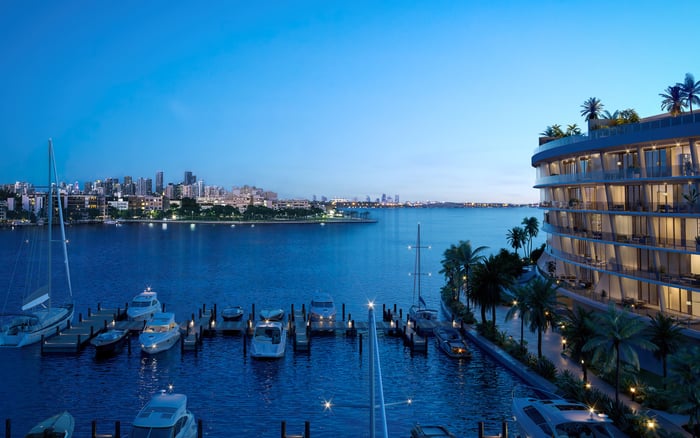
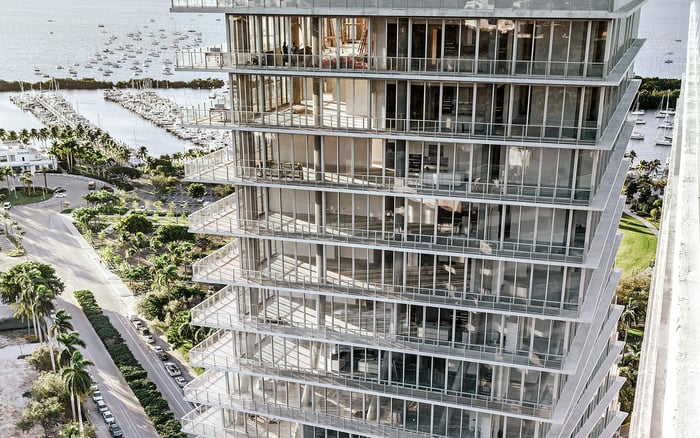
A buyer-focused comparison of Mr. C Tigertail Coconut Grove and Vita at Grove Isle, framed around scarcity, operating costs, resale depth, and the type of luxury owner each address is most likely to serve.
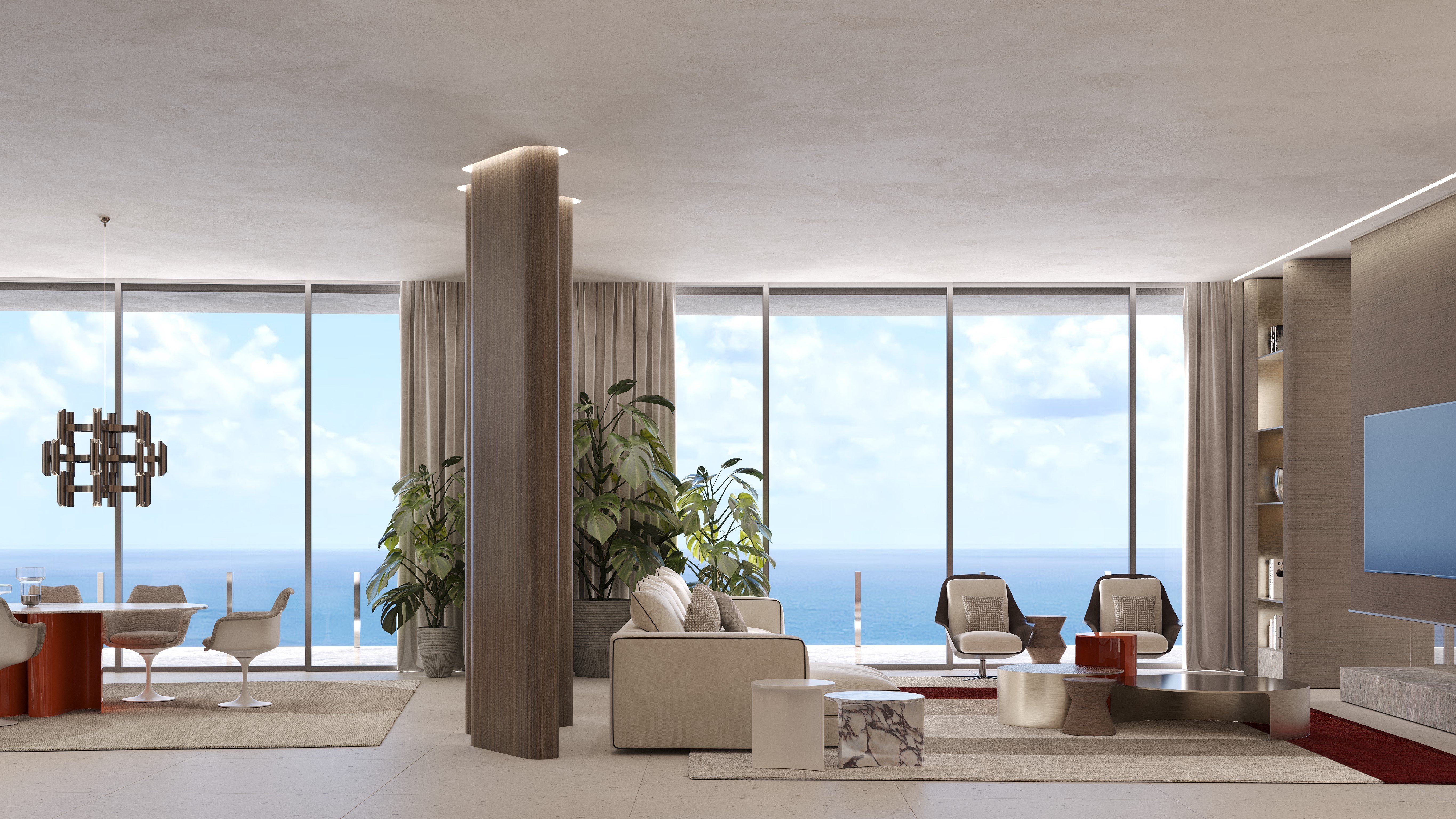
For a serious Coconut Grove buyer, the comparison between Mr. C Tigertail Coconut Grove and Vita at Grove Isle should be treated less as a beauty contest and more as a portfolio decision. Both speak to an owner who wants privacy, design, and a Grove address. The distinction is how each residence may perform over time across three issues that matter deeply at the top of the market: trophy scarcity, operating costs, and future buyer depth.
Mr. C Residences Miami has the clearer public-facing brand architecture. Its identity is tied to a hospitality name, a Coconut Grove lifestyle proposition, and a sales narrative that a broad luxury audience can understand quickly. Vita at Grove Isle, by contrast, is best evaluated through the lens of island-style scarcity and the emotional appeal of being removed from the mainland rhythm. The former may read as more liquid. The latter may read as more singular.
That is the essential fork in the road. If a buyer wants a branded, hospitality-inflected Grove condominium that can be explained to a future purchaser in one sentence, Mr. C has an obvious language. If a buyer is drawn to the psychological premium of a more secluded setting, Vita may deserve a closer look, provided the buyer verifies the building economics and product details before committing.
Scarcity in South Florida luxury real estate is not one thing. It can mean a limited number of comparable residences, a waterfront or island condition, a famous architect, a hotel brand, a private-club atmosphere, or a location where replacement supply is difficult. The mistake is assuming every form of scarcity produces the same resale outcome.
Mr. C offers a kind of scarcity that is immediately legible. A buyer can understand the appeal of Coconut Grove, branded service, and a new luxury residence without needing a long explanation. That matters because future buyers often come from outside Miami. They may know the Grove as a village-like alternative to Brickell and Miami Beach, but they still need confidence that the product will be easy to own, easy to service, and easy to resell.
Vita at Grove Isle suggests a different scarcity profile. Its strongest conceptual appeal is the island-style residential experience: quieter, more removed, and more emotionally private. That can be powerful for a buyer who prizes discretion over visibility. It can also narrow the audience, since some purchasers prefer the convenience and social energy of being more directly woven into the Grove’s daily fabric.
The question is not which form of scarcity is more glamorous. It is which one a future buyer pool will pay for when the residence returns to market.
At the ultra-premium level, carrying cost is not merely a line item. It shapes liquidity. A residence can be beautiful, rare, and well located, but if its monthly ownership profile feels heavy relative to comparable alternatives, the resale audience may become more selective.
This is where buyers should be disciplined. Operating costs should be reviewed through current condominium budgets, maintenance estimates, insurance assumptions, reserve obligations, service levels, and any special-use components that could affect the long-term cost of ownership. A branded residence can justify certain costs if the services are meaningful and consistently delivered. A more private, island-style building can also justify a premium if the physical environment, staffing, and amenities feel irreplaceable.
The key is to avoid treating fees as abstract. A buyer comparing Mr. C and Vita should ask what the monthly cost buys in practical daily life. Does it buy staff responsiveness, arrival experience, amenity quality, privacy, security, waterfront atmosphere, or brand service? Does it preserve the property’s appeal for the next buyer, or does it create friction at resale?
This is also where nearby Grove comparables matter. Projects such as Four Seasons Residences Coconut Grove and Park Grove Coconut Grove help shape buyer expectations for service, design, and carrying cost in the neighborhood. They do not answer the Mr. C versus Vita question by themselves, but they underscore that Coconut Grove has become a sophisticated condominium market where monthly economics are scrutinized closely.
Future buyer depth is the invisible amenity. It is not photographed in a sales gallery, but it can determine whether a residence trades smoothly or sits while a smaller universe of buyers catches up to the story.
Mr. C may benefit from a broader recognition pattern. Brand clarity can reduce explanation risk. The buyer who wants Coconut Grove, hospitality polish, and a stylish lock-and-leave residence may understand the proposition quickly. For second-home owners, international buyers, and Miami residents moving from larger homes, that simplicity can be valuable.
Vita may depend more heavily on a buyer who already understands the appeal of Grove Isle. That is not a weakness. In fact, some of the strongest trophy assets in South Florida appeal to a narrower group that will not compromise on privacy or setting. But narrow depth requires conviction. The buyer should be convinced that the residence is not just special to them, but special enough to resonate with the next owner as well.
Investment logic in this segment is not about chasing yield. It is about protecting optionality. A residence with deep future demand gives its owner more choices: to hold, to lease if permitted and appropriate, to trade up, or to sell into a larger audience. A residence with more particular appeal may deliver greater personal satisfaction, but it should be purchased with a longer emotional horizon.
Waterview value in Coconut Grove is nuanced. Some buyers want the drama of open bay exposure. Others prefer filtered views, lush canopy, yacht-club proximity, or a quieter sense of water nearby. The premium is not simply visual. It is experiential: how the residence feels in the morning, how guests arrive, how private the terrace lives, and how the building transitions from city to sanctuary.
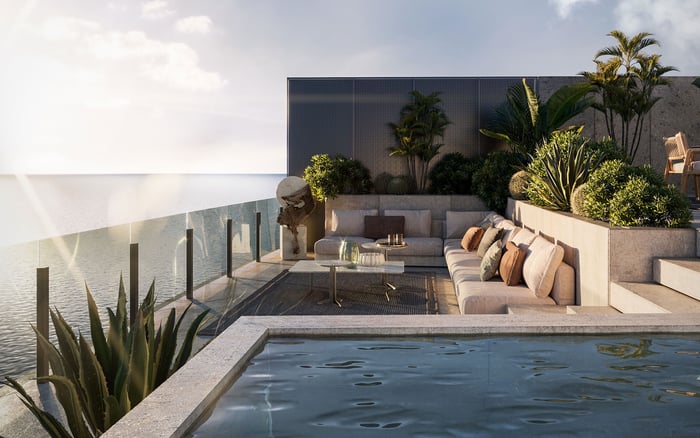
Terrace usability deserves special attention. In Miami, outdoor space can be a true room if it is deep, shaded, and connected naturally to the main living areas. It can also be more symbolic than functional if wind, exposure, or layout makes it less usable. Buyers comparing Mr. C and Vita should study floor plans with real-life routines in mind: breakfast outside, evening entertaining, pets, children, staff flow, and the amount of furniture the outdoor area can truly support.
The broader Coconut Grove market rewards authenticity. Buyers are increasingly sensitive to whether a building feels rooted in the Grove or merely located there. That is why smaller-scale offerings such as The Well Coconut Grove can be useful reference points, even when the product type differs. The strongest Grove residences tend to combine privacy, greenery, walkability, and a sense of calm that feels distinct from Miami’s more vertical districts.
Mr. C Tigertail Coconut Grove is likely the more natural fit for a buyer who values brand fluency, a hospitality sensibility, and an address that can speak to a wider resale audience. It may suit the owner who wants a polished Miami base without the intensity of Brickell or the beachfront maintenance culture of Miami Beach.
It also fits the buyer who wants the Grove lifestyle but does not want the purchase story to become overly specialized. For some owners, that matters. A branded residence can provide a framework for service expectations, design language, and future marketability. The appeal is not just the home itself, but the ease with which the home can be understood.
Vita at Grove Isle is more compelling for the buyer who leads with privacy, setting, and the romance of separation. The ideal Vita buyer is not simply shopping Coconut Grove. They are shopping for a more secluded residential mood within reach of the Grove’s amenities and Miami’s larger cultural life.
That buyer should be especially attentive to operating costs and resale audience depth. If the budget, service model, and ownership structure align with expectations, Vita’s scarcity thesis may be attractive. If those items feel uncertain or disproportionate, the emotional premium should be weighed carefully.
Is Mr. C Tigertail Coconut Grove the safer resale choice? It may offer broader recognition because of its brand-led identity, but resale depends on pricing, condition, carrying costs, and market timing.
Is Vita at Grove Isle more private? Vita is best considered through an island-style privacy lens, but buyers should evaluate the specific residence, access, staffing, and building operations.
Which is better for investment purposes? The stronger investment case is the one with the clearest future buyer pool, disciplined carrying costs, and a purchase price that leaves room for resale flexibility.
Should operating costs influence the decision? Yes. In luxury condominiums, monthly costs can affect both ownership satisfaction and the size of the future resale audience.
Does a branded residence always command better liquidity? Not always, but a clear brand can make the value proposition easier for future buyers to understand quickly.
Does trophy scarcity always mean stronger appreciation? No. Scarcity helps only when enough buyers recognize and value that scarcity at the time of resale.
How should a buyer compare terraces? Study depth, exposure, privacy, furniture capacity, and how naturally the terrace connects to daily living spaces.
Is waterview the most important feature in Coconut Grove? Waterview matters, but privacy, greenery, layout, service quality, and carrying cost can be equally important.
What does Coconut Grove imply for this comparison? Coconut Grove signals a village-like Miami luxury lifestyle where privacy, canopy, walkability, and bay proximity all influence value.
Can both properties be right for different buyers? Yes. Mr. C may suit the buyer seeking brand clarity, while Vita may suit the buyer prioritizing secluded trophy character.
If you'd like a private walkthrough and a curated shortlist, connect with MILLION.
If branded residences are on your mind — as a home or as an allocation — we would be glad to share what we are seeing, privately.
Begin a quiet conversation