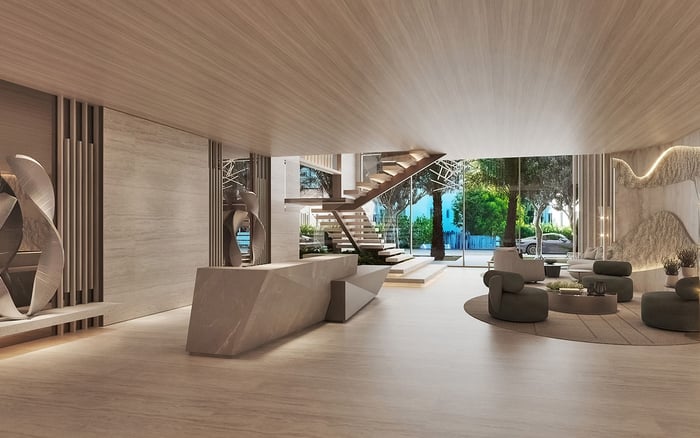
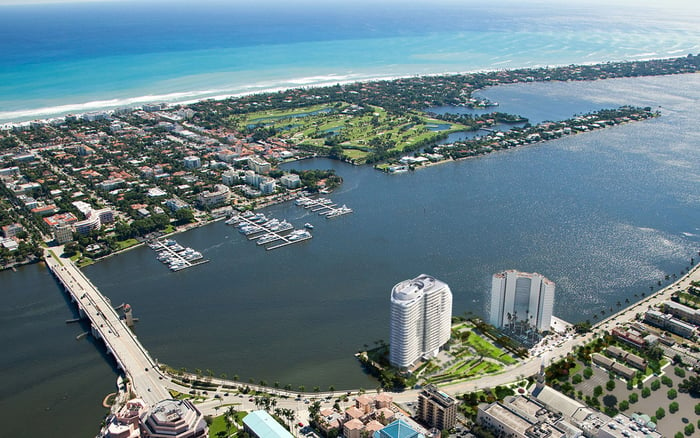
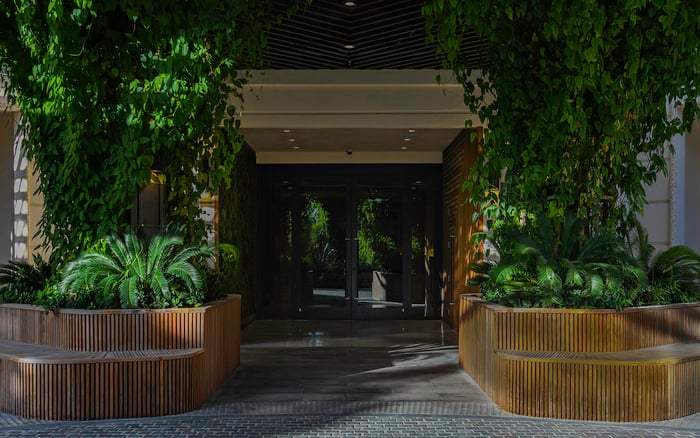
A buyer-focused framework for assessing Palazzo della Luna through district momentum, privacy durability, service continuity, and resale liquidity without relying on unsupported market statistics.
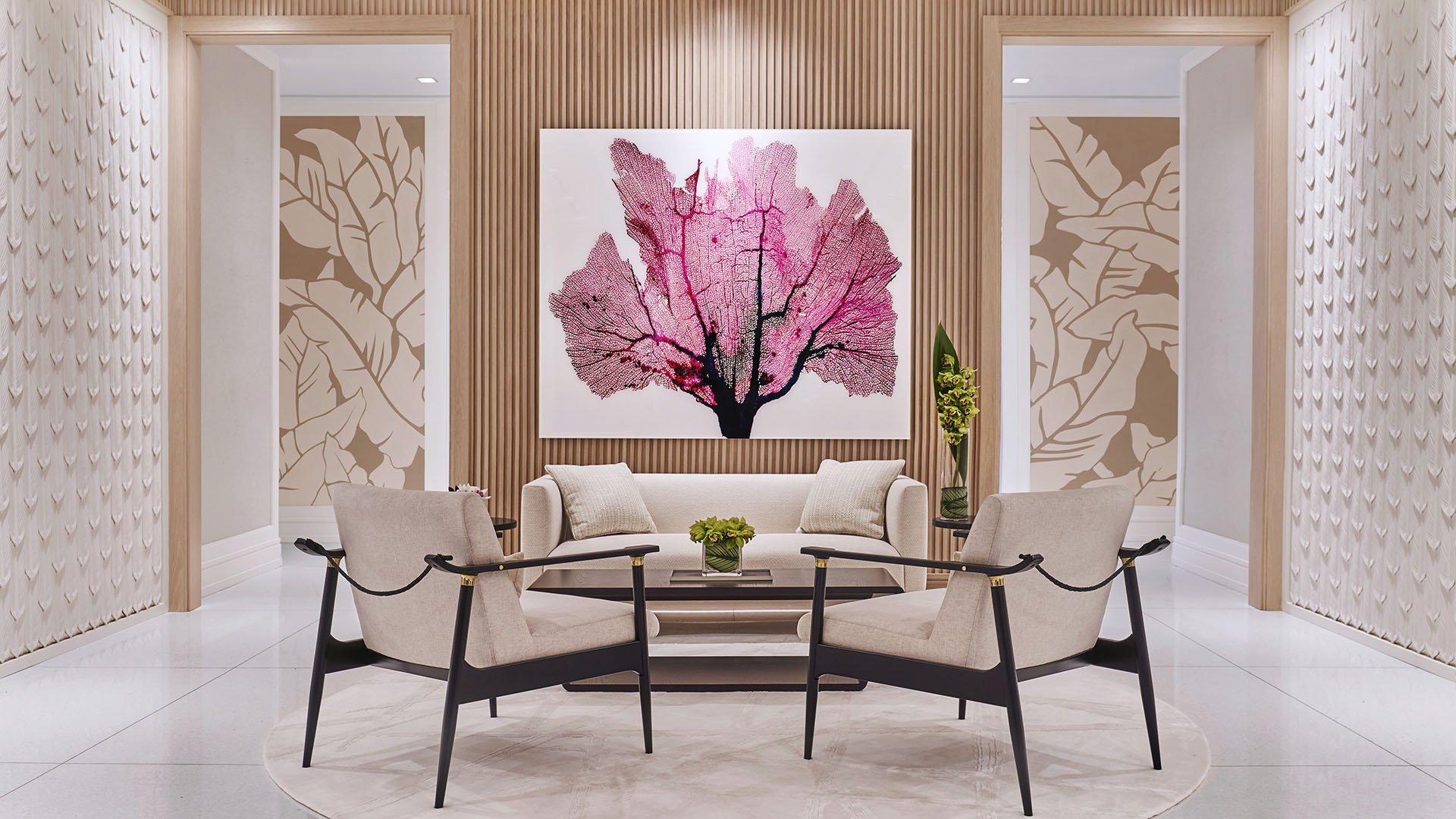
At the ultra-prime end of South Florida real estate, timing is not only a question of price. It is a question of whether a district is still gaining cultural and capital momentum, whether its privacy advantage can endure, and whether the next buyer pool will remain deep enough when an owner eventually exits. That is the sharper lens for evaluating Palazzo della Luna Fisher Island.
For buyers considering Palazzo della Luna, the question is not simply whether the residence feels rare today. It is whether the broader district can continue to protect the qualities that make rarity valuable: discretion, service, controlled exposure, and liquidity. In practical terms, district-momentum timing asks whether an enclave is still rising in desirability, settling into stability, or facing saturation from too much comparable inventory.
This is where a disciplined buyer separates presentation from performance. Finishes, views, and amenity programming matter, but the more durable analysis considers how the property lives across market cycles. Privacy must be structural, service must be repeatable, and resale must be supported by qualified demand rather than a single moment of enthusiasm.
In the highest tier of the market, privacy is not a decorative feature. It is an operating condition. The first evaluation is physical separation: how much distance exists between daily life and the public realm, how controlled the arrival sequence feels, and whether residents can move through the property without unnecessary visibility.
The next test is access control. A gated-community promise is strongest when it extends beyond the entrance and into the daily rhythm of the building. Buyers should examine how visitors, vendors, staff, deliveries, and service providers are managed. A private address can lose its character if operational access is loose or if circulation patterns create constant exposure.
Noise is equally important. Oceanfront or waterfront prestige does not automatically mean quiet living. A serious privacy review considers exterior sound, neighboring activity, service-area placement, elevator flow, and whether outdoor spaces feel serene during peak use. The best privacy is often felt in small moments: a calm arrival, a terrace that does not feel observed, and common areas that never seem overrun.
For a Fisher Island buyer, privacy is part of the core thesis. The mistake is assuming the district alone solves it. The building must also perform. Comparing Palazzo della Luna with nearby references such as Palazzo del Sol can help a buyer understand how privacy is expressed through arrival, staffing, building scale, and resident experience.
Luxury service is often described through amenities, but amenities are not the same as operating standards. A fitness room, pool, lounge, or spa space may support daily life, yet the long-term value of service comes from staffing, maintenance discipline, security culture, and management consistency.
The practical question is simple: will the property feel equally polished on a quiet weekday, during a holiday week, and after years of ownership? Buyers should ask how service requests are handled, how maintenance is prioritized, how common areas are preserved, and whether the experience depends on a few exceptional individuals or on a durable management system.
This matters because service continuity affects both enjoyment and resale. A residence can have exceptional architecture and still disappoint if the building’s operating rhythm feels uneven. Conversely, a well-managed property can reinforce confidence for owners, guests, and future buyers. In ultra-premium markets, service is part of the asset.
It is useful to compare different residential models without assuming they compete directly. The Residences at Six Fisher Island may prompt one set of questions about new residential programming, while The Links Estates at Fisher Island may prompt another about estate-style living and control. The point is not to rank them here. It is to understand which operating model best supports the owner’s expectations.
Resale analysis should begin before acquisition. A buyer should ask who the next buyer is likely to be, how many qualified buyers exist for a similar residence, and whether comparable properties tend to retain pricing power when inventory increases. Desire is important, but depth is what creates liquidity.
The core variables are straightforward: comparable sales, days on market, asking-price discipline, HOA costs, inventory competition, and the breadth of demand at the relevant price point. None should be considered in isolation. A low-inventory moment can flatter pricing, while a wave of similar listings can test the market’s true appetite.
Resale also depends on whether the district’s momentum remains compelling. If buyers perceive the enclave as gaining prestige, scarce, and operationally strong, pricing tends to have more support. If they perceive the district as fully priced or crowded with alternatives, negotiation power can shift. The distinction is not always visible in brochures. It emerges in buyer behavior.
For owners focused on resale and investment, the most useful exercise is scenario planning. What happens if a comparable residence lists at the same time? What if HOA expectations rise? What if buyers become more selective about service standards? A resilient purchase should still make sense under those conditions.
South Florida’s luxury map offers different kinds of discretion. Fisher Island, Miami Beach, Surfside, Bal Harbour, Coconut Grove, Brickell, and Palm Beach do not deliver privacy in the same way. Some rely on physical separation, some on boutique scale, some on service culture, and some on branded hospitality.
A buyer comparing Palazzo della Luna with an urban waterfront address such as Apogee South Beach should not ask which is universally better. The stronger question is which district protects the buyer’s daily routine. An owner who values social proximity may accept a more visible setting. An owner who values insulation may prioritize controlled access and lower public exposure.
This is the essence of district-momentum timing. Momentum is not merely construction activity or media attention. It is the alignment of scarcity, resident profile, service reliability, and resale demand. A district with slower turnover may still be highly attractive if the buyer pool is patient and well capitalized. A district with intense visibility may be attractive for a different reason, but it must be judged on its own terms.
Before moving from interest to offer, a buyer should reduce the decision to three core questions. First, does the district protect privacy in a way that will remain meaningful over time? Second, does the property deliver service as a consistent operating standard rather than a collection of amenities? Third, does the resale market have enough qualified demand to support an exit when timing matters?
From there, due diligence should become concrete. Review comparable sales, current competing inventory, days on market, ownership costs, building operations, staff structure, maintenance standards, access policies, and the lived feel of the property at different times of day. The goal is not to chase certainty. It is to avoid confusing atmosphere with evidence.
Palazzo della Luna belongs in the conversation for buyers who value discretion and long-term positioning. The strongest purchase case is not based on unsupported appreciation figures or generic prestige language. It is built on a careful reading of privacy, service continuity, and resale depth.
What is district-momentum timing? It is a way to judge whether a luxury district is still gaining desirability, stabilizing, or becoming crowded with comparable options.
Why does privacy matter so much at Palazzo della Luna? At this level, privacy protects both lifestyle and perceived scarcity. Buyers should study separation, access control, visibility, and noise.
Is service quality the same as having strong amenities? No. Amenities are physical offerings, while service quality depends on staffing, maintenance, security, and management consistency.
How should a buyer think about resale before purchasing? Resale should be evaluated through buyer depth, comparable activity, days on market, HOA costs, and competing inventory.
Can district momentum be measured with one statistic? No. It is better understood through a combination of demand, scarcity, pricing discipline, and the quality of available alternatives.
Does a private enclave automatically guarantee privacy? Not entirely. The district may help, but the building’s access policies, circulation, and daily operations must also support discretion.
What should investors avoid when evaluating Palazzo della Luna? They should avoid relying on unsupported appreciation claims or broad market assumptions without testing resale fundamentals.
Why compare Palazzo della Luna with other Fisher Island properties? Nearby comparisons can clarify differences in operating model, privacy expression, service expectations, and buyer audience.
Is oceanfront positioning enough to support long-term value? Oceanfront appeal can be important, but long-term value also depends on service, privacy, costs, and resale liquidity.
What is the simplest buyer test? Ask whether the district protects privacy, the property delivers consistent service, and the future buyer pool remains deep enough.
If you'd like a private walkthrough and a curated shortlist, connect with MILLION.
If branded residences are on your mind — as a home or as an allocation — we would be glad to share what we are seeing, privately.
Begin a quiet conversation