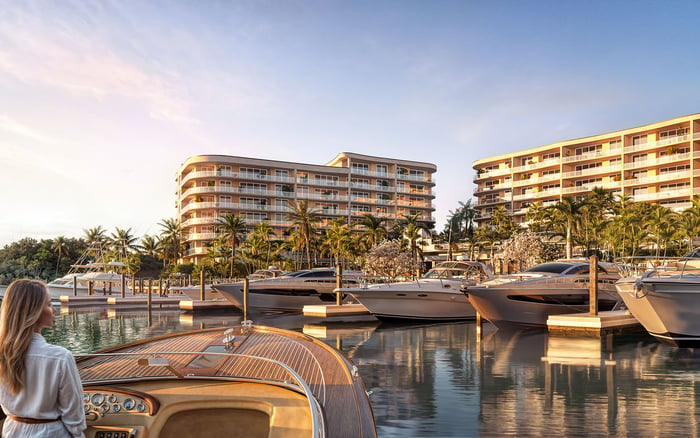
A buyer-focused look at EV-charging diligence at The Ritz-Carlton Residences® Palm Beach Gardens, where branded service expectations meet seasonal ownership, parking operations, marina living, and long-term resale assumptions.

At The Ritz-Carlton Residences® Palm Beach Gardens, the lock-and-leave question is no longer limited to shutters, security, housekeeping, or whether the refrigerator is empty before a seasonal owner departs. Increasingly, it reaches the garage. For a buyer arriving with an electric vehicle, or planning to own one during the life of the residence, EV charging is not a casual amenity line. It is part of the practical architecture of branded condominium living.
The property is positioned around the expectations of luxury South Florida ownership, with a waterfront lifestyle on the Intracoastal Waterway and a private marina shaping the daily rhythm. That is materially different from a conventional urban condominium tower where the car may be secondary to walking, ride service, or office proximity. Here, parking, vehicular access, security, and marina connectivity sit much closer to the center of the ownership experience.
That makes the charging question more serious. A buyer should not stop at phrases such as EV-ready garages or resident charging stations. Those words may describe physical infrastructure, common-area convenience, future capability, or a managed amenity. They do not automatically answer the more valuable question: what, precisely, does an owner have the right to use, reserve, install, maintain, or rely upon over time?
The affluent seasonal owner wants frictionless arrival. The car should be on-site, secure, compliant with association rules, and ready for the drive to the club, the marina, the airport, or dinner. That is the simple promise. The underlying diligence is more intricate.
A lock-and-leave EV may remain on-site for extended periods. The owner may want battery maintenance, access to charging during an absence, and assurance that the vehicle will not create an operational issue for management. The association may have rules around parking duration, charger use, billing, fire and safety protocols, valet access, and who may connect or disconnect a vehicle. None of those items are abstract for a second-home buyer who expects a branded residence to operate with hotel-level polish.
For this reason, EV charging should be treated as an ownership systems question, not merely a green-living feature. The best diligence separates four categories: what is physically installed, what is legally granted, what is operationally supported, and what the association can later modify.
The central distinction is whether charging is a durable ownership right, an assigned-use feature, or a revocable amenity controlled by association policy. Each structure feels different in daily life and may read differently in resale.
A durable right is the strongest concept for the buyer because it is tied to documents rather than simply current practice. Assigned use can be attractive if the space or charger access is clearly identified, but it still requires careful review of the association documents. A shared charging amenity may be convenient, yet it may also be subject to scheduling, wait times, operational rules, usage fees, and future board decisions.
The buyer should ask whether an owner may install a charger in or near the assigned parking area, whether electrical capacity exists for that installation, who pays for equipment, whether submetering applies, who maintains the charger, and whether access can be restricted during maintenance or capacity events. The language matters because luxury convenience depends on certainty.
This is especially true in a new-construction environment, where marketing language may precede the lived operating history of the building. Early buyers should understand not only the intended standard, but also the document framework that will govern the residence after turnover and during future board control.
At a resort-style waterfront condominium, the garage is not merely vehicle storage. It is part of a wider arrival sequence that may include security, valet, elevators, marina access, and the privacy expectations of a branded residence. For a marina-oriented owner, the day may move from car to residence to boat with very little tolerance for operational friction.
That is why the EV question belongs beside discussions of parking allocation, guest access, service circulation, and security. If the private marina is part of the lifestyle proposition, the resident may use the property less like a city apartment and more like a private waterfront base. The car matters because it supports the entire pattern of use.
Within the broader Palm Beach luxury corridor, buyers increasingly evaluate residences by whether the experience feels complete. Pool decks, wellness spaces, waterfront views, and concierge service are visible. Charging capacity is less visible, but it can become one of the first deficiencies an owner notices if expectations and documents do not align.
Before treating EV charging as part of the luxury package, the buyer should request the condominium documents, parking exhibits, rules and regulations, charger policies, insurance requirements, technical capacity information, and any written procedures for long-term vehicle storage. The goal is not to turn a lifestyle purchase into an engineering exercise. The goal is to make sure the lifestyle works after closing.
Key questions include whether charging stations are common elements, limited common elements, assigned features, or separately licensed amenities. Buyers should understand whether the association can change the number of chargers, alter fees, impose reservations, or limit charging duration. They should also review whether charger installation requires approval and what standards apply to contractor access, equipment type, metering, maintenance, and insurance.
Insurance deserves specific attention. EV charging touches electrical systems, common property, liability, and sometimes valet or management procedures. If an owner expects staff assistance during an extended absence, that expectation should be reconciled with the building’s actual operating policy.
The most refined buyers do not view these questions as inconveniences. They view them as the normal precision of high-value ownership. A residence that promises ease should withstand detailed review.
For seasonal luxury buyers, EV charging can influence more than personal convenience. It can affect how a future buyer interprets the residence. A next owner may assume that reliable EV support is simply part of a contemporary branded residential package, especially in a building associated with hotel-level service standards.
That assumption creates a quiet resale issue. If charging is abundant, well-managed, and supported by clear rights, it may reinforce the sense of the property as current and effortless. If access is uncertain, limited, or dependent on revocable rules, the buyer may discount the convenience factor or request additional clarity before proceeding.
The diligence lens also travels across South Florida branded residences, including The Ritz-Carlton Residences® West Palm Beach and The Ritz-Carlton Residences® Miami Beach, where discerning purchasers may ask similar questions about how service, parking, and long-term ownership expectations intersect. The point is not that every property should handle charging identically. The point is that the buyer should know which model applies.
The promise of The Ritz-Carlton Residences® Palm Beach Gardens is not simply a beautiful residence near the water. It is the expectation that ownership will feel composed, serviced, secure, and ready when the owner arrives. EV charging fits squarely within that promise because it affects arrival, departure, absence, and resale.
The right question is not only, “Can I charge my car?” It is, “What will my rights and obligations be if I need to charge this car over many seasons, through association changes, and under real operating conditions?” That question is more durable, and it is the one sophisticated buyers should ask before treating EV readiness as settled.
For the lock-and-leave owner, the best outcome is clarity. Physical infrastructure, legal rights, technical capacity, association rules, and operating protocols should point in the same direction. When they do, EV charging becomes exactly what it should be in a luxury waterfront residence: quiet, reliable, and almost invisible.
Does The Ritz-Carlton Residences® Palm Beach Gardens guarantee private EV charging? Buyers should not assume a guarantee unless it is confirmed in the condominium documents, parking materials, or written materials governing the offering.
Why is EV charging important for lock-and-leave owners? Seasonal owners may leave a vehicle on-site for extended periods and need clarity on charge maintenance, safety, access, and building rules.
What is the difference between EV infrastructure and EV rights? Infrastructure means equipment or capacity may exist, while rights define who may use, install, reserve, maintain, or rely on that charging access.
Should buyers review the condominium documents for EV language? Yes. The documents can clarify whether charging is tied to ownership, assigned use, common amenities, association approval, or changeable policy.
Can an association later modify charging rules? It may be able to modify certain rules depending on the governing documents, which is why buyers should review amendment and policy authority.
Are shared resident charging stations the same as assigned chargers? No. Shared stations may be subject to scheduling, fees, duration limits, and availability, while assigned charging may provide more predictable access.
What technical issues should be reviewed? Buyers should ask about electrical capacity, metering, installation standards, maintenance responsibility, and whether future demand can be supported.
Does EV charging affect resale value? It can influence buyer expectations, particularly when future purchasers assume reliable EV access is part of a modern luxury residence.
Is this primarily a legal issue or a lifestyle issue? It is both. Legal rights shape the practical lifestyle experience, especially for owners who expect frictionless seasonal use.
What should a buyer ask before relying on EV-ready language? Ask what is installed, what is legally granted, what operations support, and what the association may later change.
If you'd like a private walkthrough and a curated shortlist, connect with MILLION.
If branded residences are on your mind — as a home or as an allocation — we would be glad to share what we are seeing, privately.
Begin a quiet conversation