Family-office conference season sharpens how sophisticated buyers evaluate Palm Beach Gardens residences, from privacy and service to liquidity, access, and long-term family use.
Family-office conference season is more than a calendar of private dinners, investment panels, and discreet introductions. For South Florida real estate, it becomes a stress test for how affluent families decide where capital should live when it is not sitting on a portfolio statement. The questions that surface in those rooms are rarely about spectacle. They are about durability, optionality, privacy, governance, and whether a residence can support a family’s rhythms across generations.
That is why Palm Beach Gardens warrants close attention. The area occupies a category that is neither purely resort nor purely urban. It appeals to buyers who want a calm residential base with access to the broader Palm Beach orbit, without making every aspect of ownership feel performative. In family-office language, the better-positioned residence is not necessarily the loudest acquisition. It is the one that reduces friction.
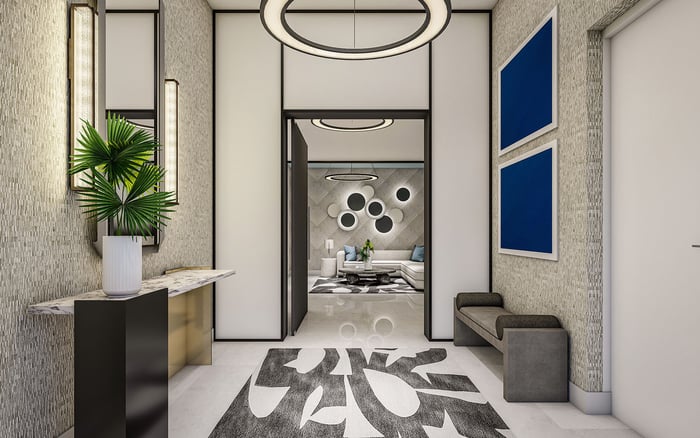
A better-positioned residence begins with daily life. The most sophisticated buyers ask whether a home supports how they actually move, host, work, recover, and gather. They evaluate arrival sequences, staff circulation, privacy from neighboring sightlines, guest accommodation, storage, outdoor comfort, and whether amenities will remain relevant beyond the first season of ownership.
In Palm Beach Gardens, that often translates into refined ease rather than excess. Golf, wellness routines, boating interests, family visits, and private entertaining can all shape the brief, but the objective is not to check every box. It is to select a residence whose setting and design make the household feel composed. A family that discusses risk-adjusted return in an investment setting may, quite naturally, apply the same discipline to a terrace, a club environment, or a lock-and-leave residence.
In a Palm Beach context, that discipline matters. The region rewards patience, but it also rewards clarity. Buyers who understand the difference between a trophy purchase and an intelligent base tend to make better decisions.
The family-office buyer rarely evaluates a residence in isolation. The home is compared with other uses of capital, other geographies, other tax and estate considerations, and other lifestyle obligations. That does not make the purchase colder. It makes it more exacting.
A Palm Beach Gardens residence may be attractive because it can serve multiple functions without feeling compromised: a seasonal retreat, a family gathering place, a wellness-oriented base, or a quieter alternative to more publicly watched enclaves. The calculus is not only what the home costs. It is what it solves.
This is where branded and service-led residential offerings enter the conversation. The Ritz-Carlton Residences® Palm Beach Gardens gives buyers a local reference point for ownership shaped around recognizable hospitality expectations. For some families, that matters because the residence must function even when principals are elsewhere. Service, consistency, and ease become part of the investment thesis.
Palm Beach Gardens benefits from being close enough to the energy of Palm Beach and West Palm Beach while retaining its own residential tempo. That balance becomes especially meaningful during conference season, when owners may move between private meetings, family commitments, clubs, airports, waterfront lunches, and quiet evenings at home. A well-positioned residence shortens the distance between public obligation and private recovery.
The comparison set can extend south when families want to understand the broader luxury residential market. The Ritz-Carlton Residences® West Palm Beach and Forté on Flagler West Palm Beach may enter conversations for buyers weighing a more urban or waterfront-oriented West Palm Beach lifestyle against the quieter cadence of Palm Beach Gardens. The right answer depends less on prestige than on use case.
That distinction is crucial. Family-office principals tend to respect assets that know what they are. A residence that excels at daily privacy does not need to behave like a hotel lobby. A residence designed for more visible social access does not need to pretend it is secluded. The premium belongs to precision.
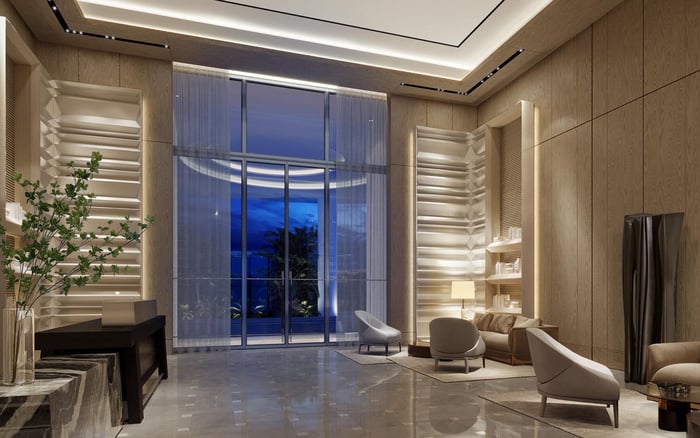
Amenities are no longer evaluated by volume alone. Buyers want to know whether they will actually use them, whether they are maintained at the expected level, and whether they support wellness, hospitality, and family logistics. Pool settings, fitness environments, lounges, private dining areas, and outdoor spaces are strongest when they create continuity between private residence and club-like convenience.
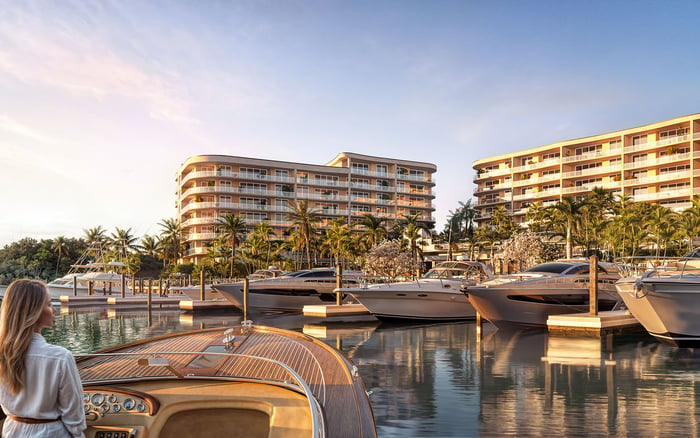
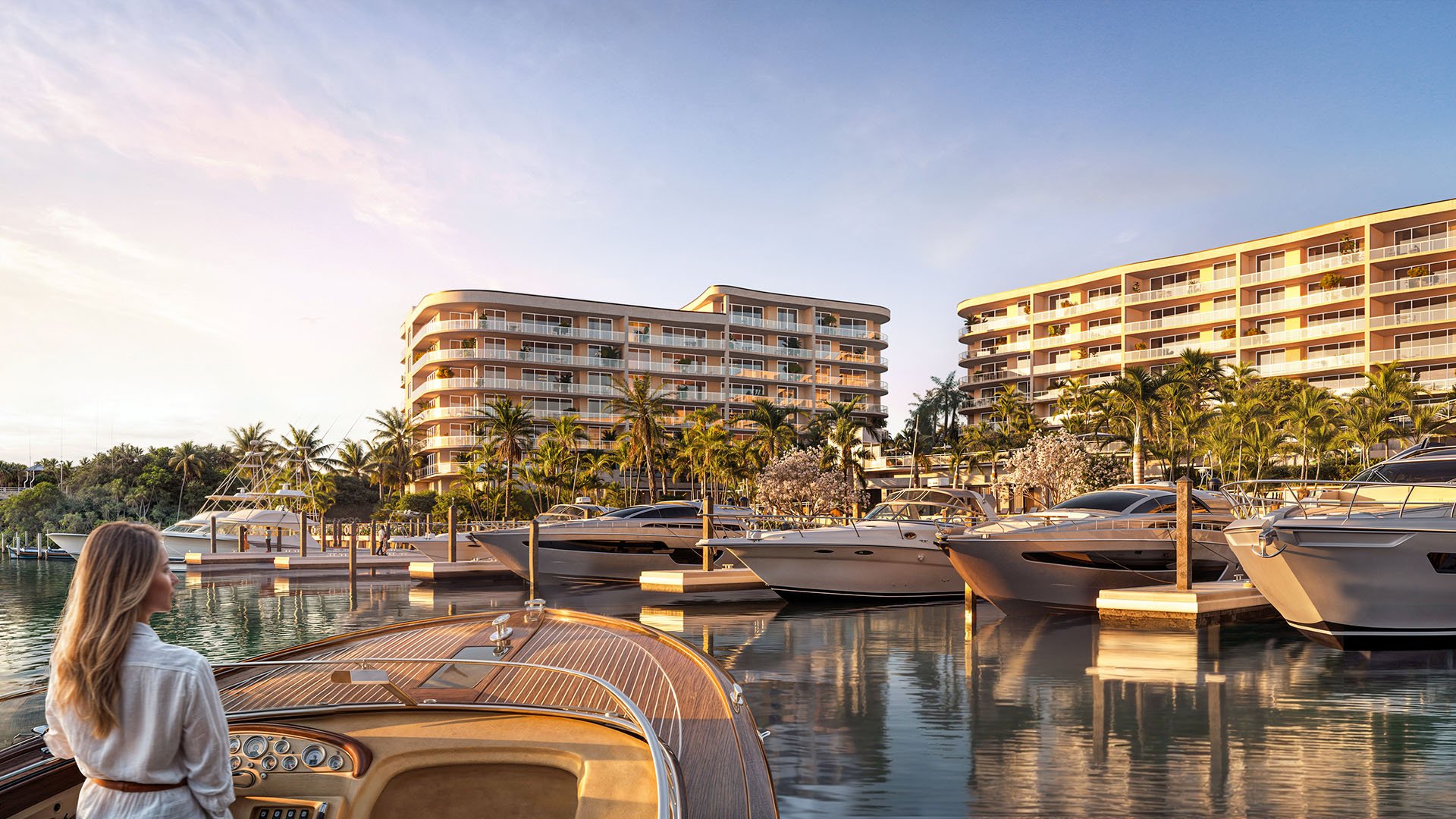
Marina access, when relevant to the buyer’s lifestyle, belongs in the same conversation. It is not merely a boating detail. It can shape how a family experiences weekends, guests, and spontaneous time together. A terrace, likewise, is not just outdoor square footage. It is a social instrument: a place for breakfast calls, sunset conversations, and decompressing after a day of meetings.
New construction can be appealing because it may align more closely with current expectations for layouts, technology, wellness, and service. Still, the best buyers do not assume new is automatically better. They ask whether the design is intelligent, whether the building culture will feel appropriate, and whether the residence can age gracefully.
The most thoughtful Palm Beach Gardens buyers often examine nearby alternatives before committing. That process is not indecision. It is calibration. Looking at West Palm Beach, Boca Raton, and other South Florida nodes helps define what Palm Beach Gardens uniquely offers.
For example, Alba West Palm Beach may be considered by buyers who want a West Palm Beach address within the broader northern luxury corridor, while The Residences at Mandarin Oriental Boca Raton can be part of the conversation for families comparing branded residential experiences farther south. These references do not diminish Palm Beach Gardens. They clarify it.
For many families, the Palm Beach Gardens proposition is a more settled form of luxury. It is less about being seen and more about being properly placed. That can make it compelling for a second-home strategy, especially when the residence must support both immediate enjoyment and long-term family planning.
Conference season reveals that the most sophisticated real estate decisions are rarely impulsive. They emerge from repeated conversations about values, mobility, privacy, succession, and the quality of time. Palm Beach Gardens fits into that dialogue because it can offer a refined base without forcing a family into a single lifestyle identity.
The better-positioned residence is the one that makes life easier in ways that are not always visible in marketing language. It is where arrivals feel natural, guests are accommodated without disruption, service is dependable, and the surrounding environment matches the owner’s pace. For buyers who think like stewards, not just consumers, that is the difference between acquiring a beautiful property and owning the right one.
Why does family-office conference season matter for Palm Beach Gardens buyers? It concentrates conversations around allocation, privacy, lifestyle, and long-term planning, which are the same filters used in luxury residence selection.
What makes a Palm Beach Gardens residence better-positioned? A better-positioned residence aligns privacy, access, service, design, and daily usability rather than relying on status alone.
Is Palm Beach Gardens mainly a seasonal market? Many buyers view it through a seasonal lens, but the strongest residences are planned for flexible use across family visits, work, wellness, and extended stays.
How should buyers compare Palm Beach Gardens with West Palm Beach? Palm Beach Gardens often appeals to those seeking a calmer residential cadence, while West Palm Beach may suit buyers wanting a more urban rhythm.
Do branded residences matter to family-office buyers? They can, especially when service consistency, ease of ownership, and recognizable operating standards are central to the decision.
Are amenities still important at the top of the market? Yes, but buyers increasingly judge amenities by usefulness, maintenance quality, and how well they support actual daily life.
Should a buyer prioritize new construction? New construction can offer contemporary layouts and systems, but the better question is whether the residence fits the family’s real use pattern.
How does privacy influence value? Privacy supports comfort, security, and long-term satisfaction, which are especially important for families balancing public and private lives.
Can a Palm Beach Gardens residence be part of an estate plan? It can be considered within broader family planning, particularly when multiple generations may use or inherit the property.
What is the best way to shortlist comparable options for touring? Start with location fit, delivery status, and daily lifestyle priorities, then compare stacks and elevations to validate views and privacy.
For a discreet conversation and a curated building-by-building shortlist, connect with MILLION.
If branded residences are on your mind — as a home or as an allocation — we would be glad to share what we are seeing, privately.
Begin a quiet conversation