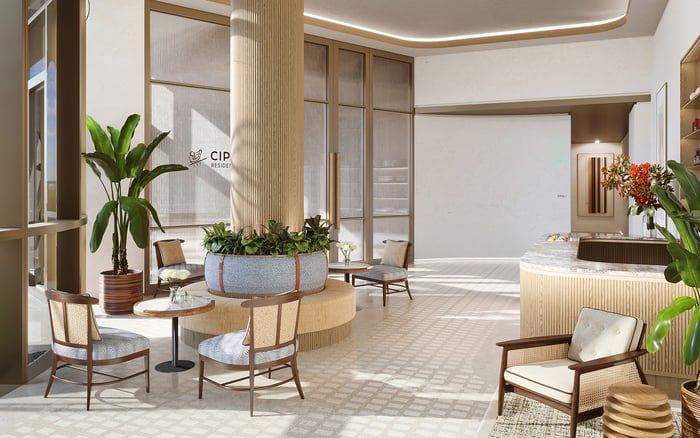
A discreet, operations-first comparison of The Residences at Mandarin Oriental Boca Raton and Cipriani Residences Brickell for buyers managing art, wine, staff, and high-value deliveries.

For ultra-high-net-worth buyers, the true test of a branded residence often begins after the amenity tour. The question is not only whether a property offers a polished arrival, a compelling brand, or a beautiful home. It is whether the building can quietly absorb the daily complexity of a serious household: art handlers arriving with a crated canvas, wine merchants managing temperature-sensitive cases, private staff coordinating schedules, and luxury logistics providers moving valuable goods without turning private life into a lobby performance.
That is the lens for comparing The Residences at Mandarin Oriental Boca Raton and Cipriani Residences Brickell. Both belong in South Florida’s branded residential conversation, and both speak to buyers who expect service to be precise, discreet, and fluent in the habits of affluent households. Yet the most important operational questions are rarely answered by adjectives. They are answered by circulation, receiving protocols, vendor controls, package handling, and the ability of a residential team to serve as a quiet interface between the owner, household staff, and outside specialists.
This is not a declaration that one property is superior for art, wine, or high-value deliveries. It is a buyer’s framework for asking sharper questions before choosing between a Boca Raton lifestyle and a Brickell address.
The Residences at Mandarin Oriental Boca Raton belongs in a conversation about buyers who may want the emotional feel of a refined private residence with the services of a branded environment. In Boca Raton, the household rhythm is often different from an urban financial-core setting. Owners may be managing second-home patterns, private drivers, visiting family, estate staff, club schedules, and a quieter cadence of entertaining.
For this buyer, the operational inquiry should begin with separation. How do residents, guests, staff, vendors, and specialty handlers move through the property? Are there protocols that allow service arrivals to remain discreet? How are high-value packages received, logged, secured, and released? What happens when a wine shipment arrives outside the owner’s preferred schedule? How does the team handle a luxury delivery that requires signature, identity verification, or coordination with household staff?
The most sophisticated version of service is not simply responsiveness. It is choreography. A strong residential operating team can anticipate the difference between an ordinary parcel and a shipment that should never sit in view. It can distinguish among a florist, a stylist, a private chef, an art installer, a wine merchant, and an insured logistics crew. For a new-construction buyer, these details deserve the same scrutiny as ceiling heights, views, and finishes.
Cipriani Residences Brickell raises a different set of operational questions because Brickell itself has a distinct intensity. It is vertical, urban, globally connected, and accustomed to residents who may move between offices, airports, restaurants, private clubs, and international travel. In that context, discreet household service is not a luxury accessory. It is part of the living infrastructure.
A Brickell buyer should examine how the residence manages the daily compression of people and parcels. In an urban tower environment, the movement of residents, guests, private staff, delivery personnel, and specialty vendors must feel controlled without feeling theatrical. The best experience is one in which complexity disappears. A wine delivery is routed properly. A luxury fashion shipment is held securely. An art handler is expected, verified, and directed without unnecessary exposure. A household manager can communicate with the property team without repeatedly re-explaining the owner’s standards.
For Cipriani Residences Brickell, the buyer’s questions should be exacting. What is the vendor check-in process? How are specialty shipments separated from ordinary packages? How is after-hours coordination handled? How does the team communicate with owners who travel frequently? In a pre-construction decision, these questions can be as relevant as brand cachet because they define the resident’s daily privacy.
Blue-chip art changes the real estate conversation. The issue is not only whether a building feels secure. The issue is how a large, valuable, or delicate work moves from arrival to the residence with minimal friction and minimal visibility.
Buyers comparing The Residences at Mandarin Oriental Boca Raton and Cipriani Residences Brickell should ask about the full path: vehicle arrival, vendor verification, staging, elevator access, corridor protection, scheduling, insurance documentation, and communication with the owner’s representatives. It is not enough to ask whether art handlers are permitted. A serious collection requires operational fluency.
The ideal staff posture is discreet but firm. A handler should be expected, identified, and routed according to a protocol that protects both the resident and the building. If a work requires multiple handlers, special equipment, or precise timing, the property’s ability to coordinate becomes a meaningful quality-of-life factor. For collectors, privacy is not merely about keeping names confidential. It is about avoiding unnecessary attention at every transfer point.
Collectible wine introduces a different set of sensitivities. A case of fine wine is often less conspicuous than a major artwork, but it may be more vulnerable to time, temperature, and handling. The correct question is not whether packages are accepted. The correct question is how specialty shipments are identified and prioritized.
A wine-focused household should ask whether the property team has a process for recognizing wine deliveries, coordinating with a household manager, and reducing the risk of unnecessary delay. If an owner maintains off-site storage, receives allocations, or entertains frequently, wine logistics can become a recurring household function rather than an occasional event.
Neither project should be assumed to have a particular wine-storage or refrigerated package-room feature without direct verification. The more useful buyer posture is to ask how the team handles exceptions. What if a shipment arrives early? What if the owner is traveling? What if a vendor needs confirmation before release? Luxury service is most visible when plans change.
At the upper end of the market, a residence often interacts with a household the way a private office might. There may be assistants, estate managers, security advisers, chauffeurs, designers, stylists, private chefs, and trusted vendors. The building’s role is not to intrude into that network. It is to interface with it intelligently.
This is where both The Residences at Mandarin Oriental Boca Raton and Cipriani Residences Brickell should be evaluated beyond amenities. Can the property team receive instructions from a designated representative? Can it maintain discretion around recurring vendors? Can it distinguish routine deliveries from sensitive ones? Can it protect an owner’s name, schedule, and purchasing patterns?
For an investment-minded buyer, operational competence can influence long-term satisfaction. Luxury residences are not judged only by what they provide on day one. They are judged by whether service remains elegant under repetition: weekly deliveries, seasonal moves, traveling owners, rotating guests, and the constant choreography of an affluent life.
The most practical distinction may be lifestyle rhythm. Boca Raton can appeal to buyers who want branded service in a setting that may feel more residential, composed, and retreat-oriented. Brickell appeals to buyers who want branded service embedded in a dense urban environment with rapid access to the city’s business and dining energy.
That difference should shape the operational interview. In Boca Raton, ask how the property supports a household that values calm, privacy, and estate-like coordination. In Brickell, ask how the property controls movement within a more vertical, high-velocity urban context. Both questions matter. They simply reflect different ways of living.
A top project in South Florida’s luxury market is not defined only by a name on the door. It is defined by how consistently the residence protects the owner’s time, privacy, and possessions.
Before choosing either address, buyers should request a detailed conversation about operations. Ask who manages specialty deliveries, how vendors are approved, how household staff are recognized, how packages are secured, how after-hours scenarios are handled, and how sensitive shipments are escalated. Ask whether written protocols exist and whether they differ for ordinary parcels, insured art, collectible wine, and luxury goods.
The right answer should feel calm, specific, and practiced. If the conversation stays at the level of general hospitality language, continue asking. Ultra-premium buyers are not being difficult when they ask about service elevators, receiving areas, or vendor circulation. They are protecting the practical realities of ownership.
The final decision between The Residences at Mandarin Oriental Boca Raton and Cipriani Residences Brickell should come down to which operating culture best matches the household. The more complex the household, the more valuable discreet systems become.
Is this comparison about amenities or operations? It is primarily about household operations, including art, wine, vendors, privacy, and high-value deliveries.
Which project is better for art collectors? Neither should be presented as better without direct verification of art-handling protocols and circulation details.
What should wine collectors ask before buying? Ask how wine shipments are received, identified, protected, and coordinated with the owner or household staff.
Why does staff circulation matter? It determines how privately household employees, vendors, and specialty handlers can move through the property.
Is Brickell more operationally complex than Boca Raton? Brickell’s urban density may create a different service rhythm, while Boca Raton may feel more residential and composed.
Should buyers ask about loading areas and service elevators? Yes, but they should verify those details directly with the project team rather than relying on assumptions.
Can a residential team act like a family-office interface? In the best cases, the team can coordinate discreetly with assistants, vendors, and household managers.
Are package rooms enough for luxury deliveries? Not always. High-value goods may require different identification, security, release, and communication standards.
What is the main privacy question for buyers? Ask how the building protects the owner’s name, schedule, vendors, shipments, and guest patterns.
What is the smartest next step before choosing? Request a detailed operations review focused on vendor access, specialty shipments, staff communication, and privacy.
For a confidential assessment and a building-by-building shortlist, connect with MILLION.
If branded residences are on your mind — as a home or as an allocation — we would be glad to share what we are seeing, privately.
Begin a quiet conversation