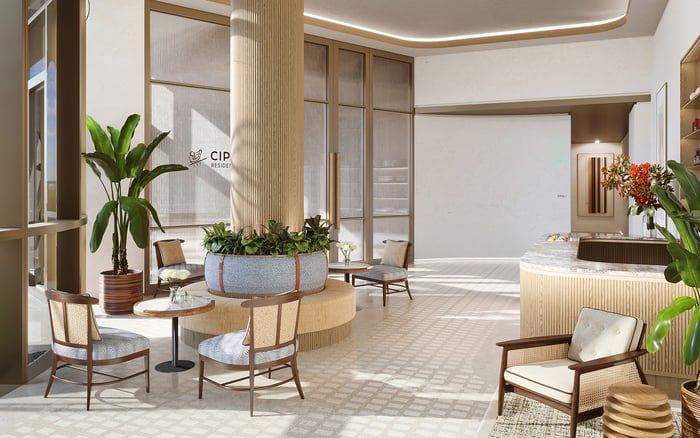
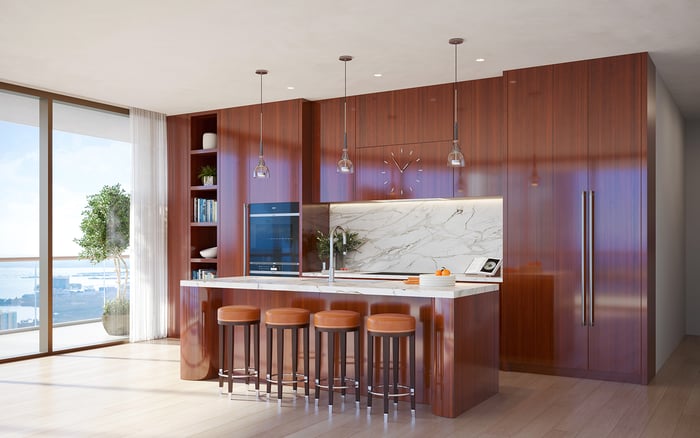
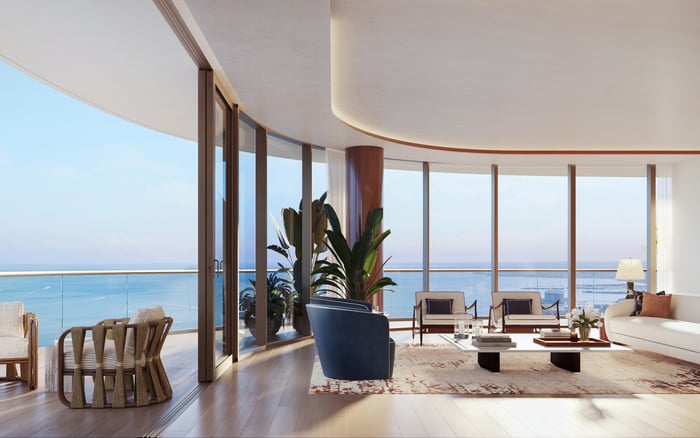
A discreet buyer’s guide to evaluating amenity-floor adjacency at Cipriani Residences Brickell before contract, with attention to privacy, noise, operations, pricing, and future resale appeal.

Cipriani Residences Brickell sits in a different category from a conventional residential tower. Its value proposition is hospitality-driven, with amenities woven into daily life rather than positioned as occasional conveniences. That distinction is exactly why amenity-floor adjacency deserves careful review before contract execution.
In Brickell, buyers often focus first on view corridors, elevation, residence size, and finish packages. Those factors remain important, but in a service-rich condominium, the position of a residence relative to restaurants, lounges, pool decks, spa areas, club rooms, service corridors, and event-capable venues can be just as consequential. Adjacency is not inherently negative. For some buyers, proximity to the building’s social and wellness core may feel effortless and desirable. For others, the same location may raise concerns about foot traffic, music, conversations, furniture movement, service activity, and peak arrival or departure patterns.
The objective is not to presume a defect. It is to price and select with discipline. Amenity adjacency is an investment variable because it can influence livability, privacy, noise exposure, and resale perception long after the initial excitement of a branded address has passed.
A proper review begins with a direct question: what is actually next to, above, below, across from, or near the elevator path of the target residence? Buyers should evaluate both vertical and horizontal adjacency, because sound, vibration, views, and circulation do not follow the clean boundaries of a marketing plan.
Vertical adjacency asks whether a residence sits directly above or below an active amenity floor. A unit above a lounge, private dining venue, spa, fitness area, pool deck support zone, or restaurant component may offer convenience, but the buyer should understand what lies beneath the slab. A unit below a programmed amenity space deserves equal scrutiny, particularly where furniture movement, gym equipment, mechanical systems, or late-day gathering patterns could become relevant.
Horizontal adjacency is more subtle. A residence beside a service corridor, across from an elevator bank, near a stair, or adjacent to a shared terrace may experience more movement than a unit set deeper within a quieter residential wing. Elevator-adjacent units can be convenient, especially for owners who value speed and simplicity, but the buyer should understand whether that convenience also brings conversations, waiting patterns, deliveries, or staff movement close to the private threshold.
Before signing, buyers should request and review the available floor plans, amenity plans, reflected ceiling plans, mechanical plans, and elevator or service-core layouts. The exercise is not purely architectural. It is operational. A beautiful amenity plan may show where the pool, restaurant, lounge, or spa is located, but it may not reveal how the space is serviced, where staff circulate, how catering is staged, or where equipment is located.
The review should identify whether the target residence shares slabs, walls, ceilings, shafts, terraces, or mechanical pathways with amenity spaces. Shared structural and service conditions matter because sound and vibration may travel through indirect routes. A buyer should look beyond the obvious concern of music from a lounge. Gym equipment, pool-deck furniture, kitchen exhaust systems, back-of-house circulation, HVAC equipment, and elevator banks can all shape the acoustic character of a residence.
For pre-construction and new-construction purchases, an architect or acoustic consultant can be useful because marketing materials may not fully illustrate how sound, vibration, and service logistics will function in practice. A professional can help interpret the relationship between a residence line and the active infrastructure around it.
At Cipriani Residences Brickell, the most important adjacency questions may be operational rather than decorative. Buyers should ask how restaurants, lounges, pool service, private dining, catering, and events are expected to function. The questions should be direct: What are the expected hours? Who has access? What are the guest policies? Where do staff enter and exit? How are deliveries, service carts, catering, and event setup routed?
These answers are not merely lifestyle details. They help determine whether a unit is best understood as a quiet residential position, a convenience-adjacent position, or an operationally exposed position. A residence near an amenity entrance may feel exceptional for an owner who uses the facilities daily. It may feel less appropriate for a buyer seeking the quietest possible pied-a-terre or long-term private retreat.
Privacy also requires two-way evaluation. Buyers should consider whether amenity users can see into the residence, particularly from terraces, pool decks, lounges, or circulation zones. They should also consider whether the residence itself looks directly onto high-traffic amenity areas. Some buyers appreciate energy and architectural theater. Others prefer protected sightlines and a more secluded interior experience.
The buyer’s attorney should review the condominium documents carefully for amenity-use rights, commercial access, event permissions, operating-hour flexibility, noise rules, and developer or operator discretion. In a hospitality-led building, those provisions can matter as much as the floor plan. The documents may clarify whether operating policies can evolve, who can access certain spaces, and how conflicts are managed.
The buyer’s broker should also compare the selected stack against alternative lines in the building. If two residences trade near a similar price point, but one is more insulated from active amenities, the quieter unit may deserve preference for a privacy-focused buyer. Conversely, if a buyer strongly values immediate access to wellness, dining, or club spaces, a convenience-adjacent residence may be appropriate, provided the risk is understood and priced.
Units immediately above, below, or beside highly programmed amenities generally require one of three justifications: a price discount, contractual comfort, or a buyer preference strong enough to outweigh the exposure. Without at least one of those, the selection may be vulnerable to second thoughts during ownership or at resale.
A disciplined review should end with a risk map for the target residence. Low-risk adjacencies generally involve quieter relationships, such as distance from active programming, limited shared service pathways, and protected sightlines. Medium-risk adjacencies often involve convenience, such as proximity to elevators or amenity circulation, with manageable exposure. High-risk adjacencies involve operational conditions, including active hospitality spaces, event-capable venues, service corridors, mechanical pathways, or amenity terraces in close contact with the residence.
This framework allows buyers to compare options clearly. It also reduces the risk of overpaying for a unit whose address and finish level are impressive, but whose daily experience may be shaped by activity the buyer did not anticipate. In the luxury market, perception matters. Future buyers may pay premiums for access and views, but they may resist residences perceived as noisy, exposed, or compromised by operations.
For Cipriani Residences Brickell, adjacency should be treated as part of the underwriting, not as an afterthought. The best purchase is not always the highest floor, the largest plan, or the most dramatic view. It is the residence whose position, privacy, service exposure, and price align with the way the owner actually intends to live.
Why is amenity-floor adjacency important at Cipriani Residences Brickell? Because the building is hospitality-driven, nearby amenities can influence daily livability, privacy, noise exposure, and future resale appeal.
Is being near an amenity floor always a disadvantage? No. Some buyers value the convenience, but the position should be evaluated and priced with clear awareness of potential activity.
What is vertical adjacency? Vertical adjacency means the residence is directly above or below an amenity, service, mechanical, or programmed space.
What is horizontal adjacency? Horizontal adjacency means the residence is beside, across from, elevator-adjacent to, or otherwise near active amenity circulation.
Which amenities deserve the most scrutiny? Restaurants, lounges, pool decks, spa areas, club rooms, service corridors, and event-capable venues are especially important to review.
What documents should a buyer request before contract? Buyers should review floor plans, amenity plans, reflected ceiling plans, mechanical plans, and elevator or service-core layouts.
Can noise come from sources other than music? Yes. Gym equipment, pool furniture, kitchen exhaust, HVAC systems, service movement, and elevator banks may also matter.
Who should help review adjacency risk? A broker, attorney, architect, or acoustic consultant can help interpret plans, documents, and operational implications before signing.
Can amenity adjacency affect resale? Yes. Future luxury buyers may value convenience, but they may resist positions perceived as noisy, exposed, or operationally complex.
What should the final pre-contract conclusion include? The buyer should classify the target unit as low, medium, or high risk based on privacy, operations, noise, and convenience.
For a tailored shortlist and next-step guidance, connect with MILLION.
If branded residences are on your mind — as a home or as an allocation — we would be glad to share what we are seeing, privately.
Begin a quiet conversation