A discreet buyer’s guide to evaluating climate control, humidity strategy, filtration, backup power, light exposure, and service protocols before placing fine art in an Aventura luxury residence.
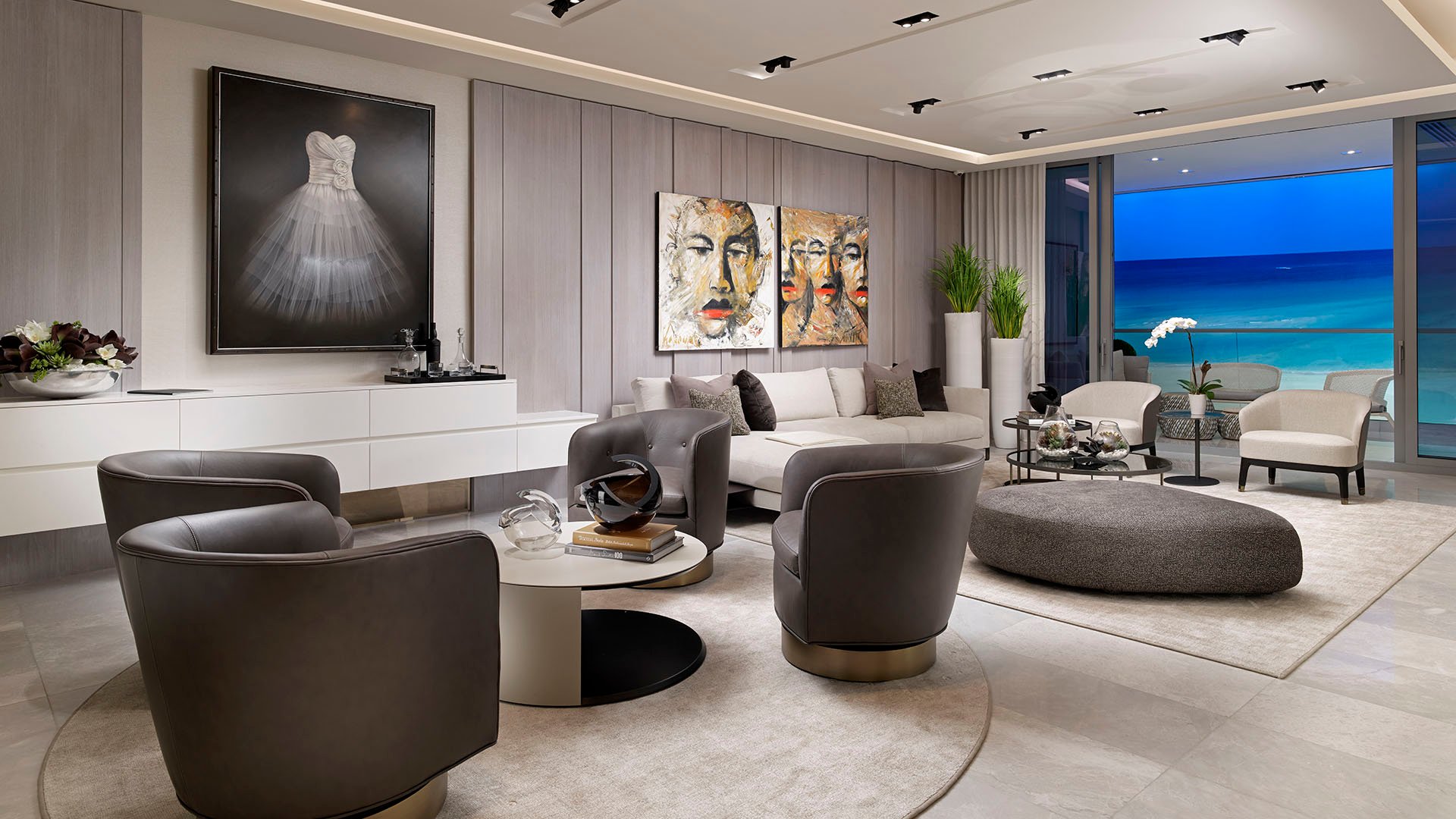
For the collector buying in Aventura, the most elegant residence is not simply the one with the most dramatic outlook or the most impressive arrival sequence. It is the home that can quietly protect what hangs on its walls, rests on its plinths, and remains in storage when the owner is elsewhere. Art-friendly climate control is not a technical footnote. It belongs beside floor plan, light, privacy, service, and security in the first round of serious questions.
This is especially true in luxury real estate, where interiors are often open, glass-forward, and designed for entertaining. A residence may be visually extraordinary yet still require close review before it can responsibly host works on paper, photography, textiles, lacquer, wood, canvas, or mixed media. The right question is not whether the home has air conditioning. The right question is whether the home can maintain a stable environment for art without becoming difficult to live in.
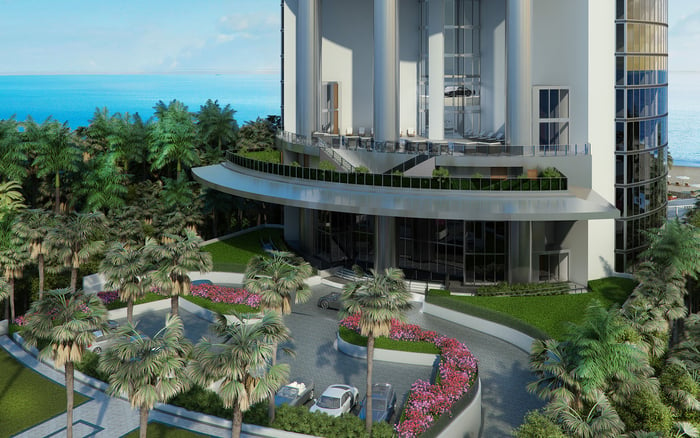
Buyers considering Avenia Aventura, nearby waterfront residences, or a second-home setting should begin the conversation before contract, not after closing. The best answers are practical, documented, and specific to the exact residence under consideration.
Humidity is the first subject collectors should raise. Ask whether the residence has dedicated humidity control, how it is monitored, and whether each major display area can be managed separately. A large living room, a primary suite corridor, a glass-wrapped dining area, and a conditioned storage room may not behave the same way.
The buyer’s question should be direct: what keeps the interior environment steady when the residence is occupied, when it is closed for travel, and when doors are opened frequently for entertaining? Ask whether the system is designed only for comfort, or whether it can also support a more consistent environment for sensitive objects.
A polished answer should include monitoring, maintenance, and accountability. If the response is limited to “the building is fully air-conditioned,” keep asking.
Collectors often imagine art placement during the first viewing. Yet the wall that frames a piece most beautifully may not be the wall that treats it best. Ask which rooms or zones have independent controls, which areas receive strong sun exposure, and how air moves across display walls.
Zoning matters because a single setting for the whole residence may not suit every room. A kitchen-adjacent salon, a gallery corridor, and a media room can have different usage patterns. If the home will hold meaningful works, ask whether the controls can be adjusted discreetly without disrupting daily life.
In Aventura, buyers often compare neighboring luxury markets. Someone weighing Aventura against Bentley Residences Sunny Isles or other Sunny Isles Beach options should ask the same zoning questions in each property, rather than assuming that newer or taller automatically means more art-ready.
Art does not respond only to temperature and humidity. Air quality, dust, and airflow patterns deserve equal attention. Ask what type of filtration is used, how often filters are replaced, and who is responsible for maintaining them. If the residence has a private mechanical system, request a clear explanation of service access and replacement schedules.
Air movement is equally important. Strong direct airflow across a canvas, framed work, or textile can create an uncomfortable microclimate even in a room that feels pleasant to people. Ask where supply and return vents are located in relation to the principal display walls. If a major work is planned for a specific area, have the mechanical layout reviewed before the installation plan is finalized.
This is where Design & Architecture priorities intersect with conservation-minded ownership. A beautiful wall should also be a sensible wall.
Natural light is one of South Florida’s great luxuries, but collectors should ask how it is managed. Before buying, identify rooms where art may be exposed to direct or prolonged light. Ask about window treatments, glass performance, lighting controls, and whether display areas can be moderated without compromising the residence’s atmosphere.
The conversation should include both daylight and artificial light. Ask whether dimming, scene control, and targeted lighting can be adjusted for different media. Sculpture, oil painting, photography, and works on paper may each require a different presentation strategy.
If comparing Aventura with coastal settings such as Armani Casa Sunny Isles Beach, keep the inquiry disciplined. Views may guide the emotional decision, but light management should guide the art plan.
A collector’s residence must be considered in two modes: occupied and unattended. Ask what happens if power is interrupted, if the owner is traveling, or if the home is closed for a season. Does the building or residence have a defined approach to backup power? Which systems are prioritized? How are residents notified if interior conditions move outside the owner’s preferred range?
Do not accept vague reassurance. Ask who receives alerts, who can enter the residence, and what authority they have to act. A property manager, estate manager, or building engineer should know the protocol before the art arrives. For meaningful collections, the written plan matters as much as the equipment.
This question is particularly important for second-home owners who may not be in Aventura year-round. A home can be impeccably designed and still require an operational plan when no one is present.
Many luxury buyers focus on the walls and forget storage. Ask whether the residence has a suitable conditioned area for works not currently displayed. Closets, service rooms, and garages are rarely appropriate by default. The question is whether a dedicated space can be created or adapted with proper conditioning, shelving, access, and security.
If the collection rotates seasonally, ask how incoming and outgoing works will be staged. Where will crates be opened? Is there room for handlers to work safely? Can elevator access, loading access, and service circulation accommodate the scale of the collection? These questions are not theatrical. They prevent damage, improvisation, and rushed decisions on installation day.
Aventura buyers considering larger residences or nearby alternatives such as Rivage Bal Harbour should treat storage as part of the acquisition brief, not a later interior design inconvenience.
The language of luxury can become imprecise. “State of the art,” “smart,” and “custom” are not enough. Ask for documentation that explains the HVAC system, controls, service history where applicable, warranties, and any building rules affecting modifications. If a residence is new or pre-completion, ask what will be delivered, what remains optional, and who coordinates post-closing commissioning.
For resale properties, ask when major components were last serviced or replaced. For new residences, ask how the system will be tested before occupancy. In both cases, consider bringing in an independent mechanical specialist familiar with high-value interiors.
This is the tone of serious Buyer's Guides: courteous, exact, and unhurried. The goal is not to make the home feel clinical. The goal is to ensure the residence can support a collection with the same discretion it offers its owners.
Even the best system depends on consistent stewardship. Ask who changes filters, who monitors settings, who has emergency access, and who reviews performance over time. If the building has staff, clarify the boundary between building responsibility and owner responsibility. If the residence will be privately managed, assign roles before the first important work is installed.
Collectors comparing Aventura with wellness-oriented or boutique markets, including The Well Bay Harbor Islands, should apply the same maintenance standard everywhere. A refined lifestyle setting still needs operational discipline behind the walls.
Before buying, ask these questions in writing: Can the residence manage humidity independently by zone? Where are the sensors? How is data reviewed? What filtration is used? Where does air discharge in relation to art walls? How is natural light controlled? What happens during an outage? Who receives alerts? What areas can serve as conditioned storage? What changes are permitted by the building?
Then ask the most revealing question: who is responsible if the answer changes after closing? In luxury real estate, art-friendly climate control is not merely a feature. It is a chain of design, equipment, documentation, staff, and owner expectations. When that chain is clear, the home can feel effortless. When it is vague, the collection carries the risk.
Should I ask about art climate control before making an offer? Yes. The earlier you ask, the easier it is to evaluate cost, feasibility, and responsibility before the residence becomes emotionally fixed in your mind.
Is standard air conditioning enough for valuable art? Not always. Ask whether the system is designed only for comfort or whether it can also support stable conditions for sensitive works.
What is the first mechanical question to ask? Start with humidity control by zone. It is one of the clearest ways to distinguish a comfort system from a more art-conscious environment.
Should I be concerned about glass and sunlight? Yes. Ask how daylight is moderated through treatments, lighting controls, and thoughtful placement before deciding where important works will hang.
Do I need a dedicated art storage room? If the collection rotates or includes works not always on view, a conditioned storage strategy should be discussed before closing.
Who should review the HVAC system for a collector? Consider an independent mechanical specialist, preferably one comfortable working with high-value interiors and discreet residential settings.
What should second-home owners ask? Ask how the residence is monitored when vacant, who receives alerts, and who has authority to respond quickly.
Can climate upgrades be handled after closing? Sometimes, but building rules, ceiling conditions, service access, and design constraints can affect what is practical.
Should art placement be decided by the interior designer alone? No. Art placement should involve design, lighting, mechanical review, and, when appropriate, collection advisors or conservators.
What is the best way to shortlist comparable options for touring? Start with location fit, delivery status, and daily lifestyle priorities, then compare stacks and elevations to validate views and privacy.
When you're ready to tour or underwrite the options, connect with MILLION.
If branded residences are on your mind — as a home or as an allocation — we would be glad to share what we are seeing, privately.
Begin a quiet conversation