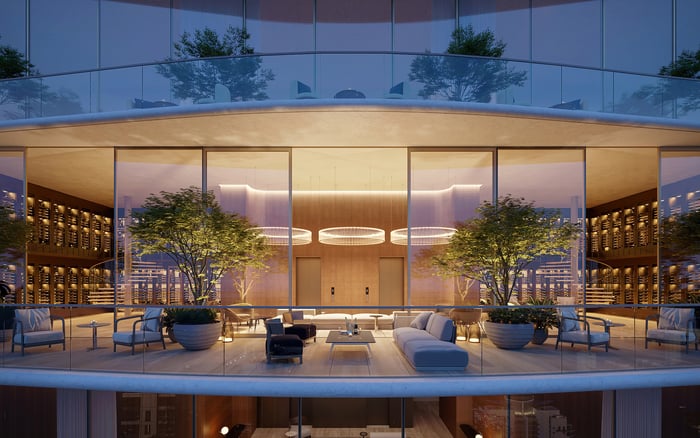
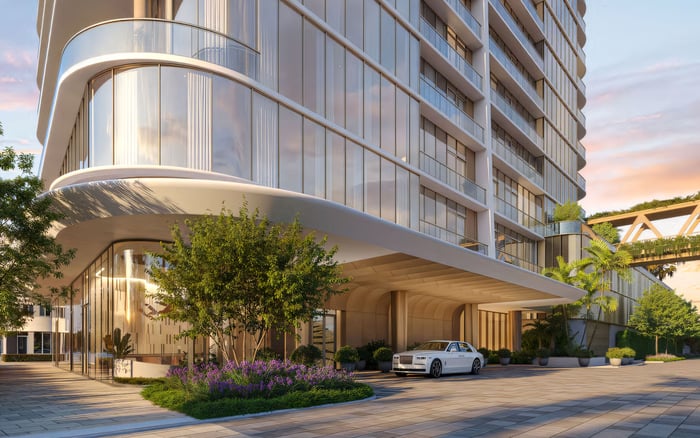
A discreet buyer’s guide to evaluating 619 Residences by Foster + Partners + Nobu Hospitality and Viceroy Brickell through service culture, privacy, amenity discipline and long-term livability in Brickell.
Brickell has become fluent in luxury, but not all luxury speaks at the same volume. For buyers considering 619 Residences by Foster + Partners + Nobu Hospitality alongside Viceroy Brickell, the real question is not whether a building can impress during a sales presentation. It is whether the property can make daily life feel smoother, quieter and more intentional after the first month of ownership.
High-service living without excess theater is a precise proposition. It favors anticipation over performance. It prizes a lobby that works as gracefully at 7:30 a.m. on a school day as it does before a Saturday dinner reservation. It values staff culture, circulation, privacy, maintenance discipline and the invisible choreography that separates a polished residence from a branded stage set.
That distinction matters in Brickell, where buyers often compare primary residences, pied-à-terre options and investment-minded purchases within the same tour schedule. The strongest projects are not simply those with the most talking points. They are the ones whose service model, floor plan logic and building personality remain compelling after the novelty fades.
The pairing of 619 Residences by Foster + Partners + Nobu Hospitality and Viceroy Brickell places two distinct ideas of high-service living into the same conversation. One leans into architecture and hospitality associations that will appeal to buyers seeking design credibility with a refined cultural imprint. The other carries the vocabulary of hotel-informed residential service in one of Miami’s most convenience-driven urban districts.
Because public detail can evolve as projects progress, buyers should resist making decisions on brand recognition alone. A celebrated name has value, but only when the residence behind it is operationally clear. The key diligence questions are practical: How will arrival work? How intuitive is guest management? What is the balance between private residential space and shared amenity space? How does the building protect quiet ownership while still offering service depth?
This is also where comparison becomes useful. A buyer looking at 2200 Brickell may be evaluating a more neighborhood-oriented interpretation of Brickell living, while someone considering Cipriani Residences Brickell may be studying a hospitality identity with its own expectations around service tone. The point is not to rank brands by glamour. It is to identify which building’s operating rhythm best matches the way the owner actually lives.
The best service buildings do not make residents feel managed. They make complexity disappear. That can mean a measured arrival sequence, efficient package handling, consistent valet protocols, responsive maintenance, clear communication and amenity access that does not require social negotiation. In a true high-service residence, the experience is elevated because it is predictable.
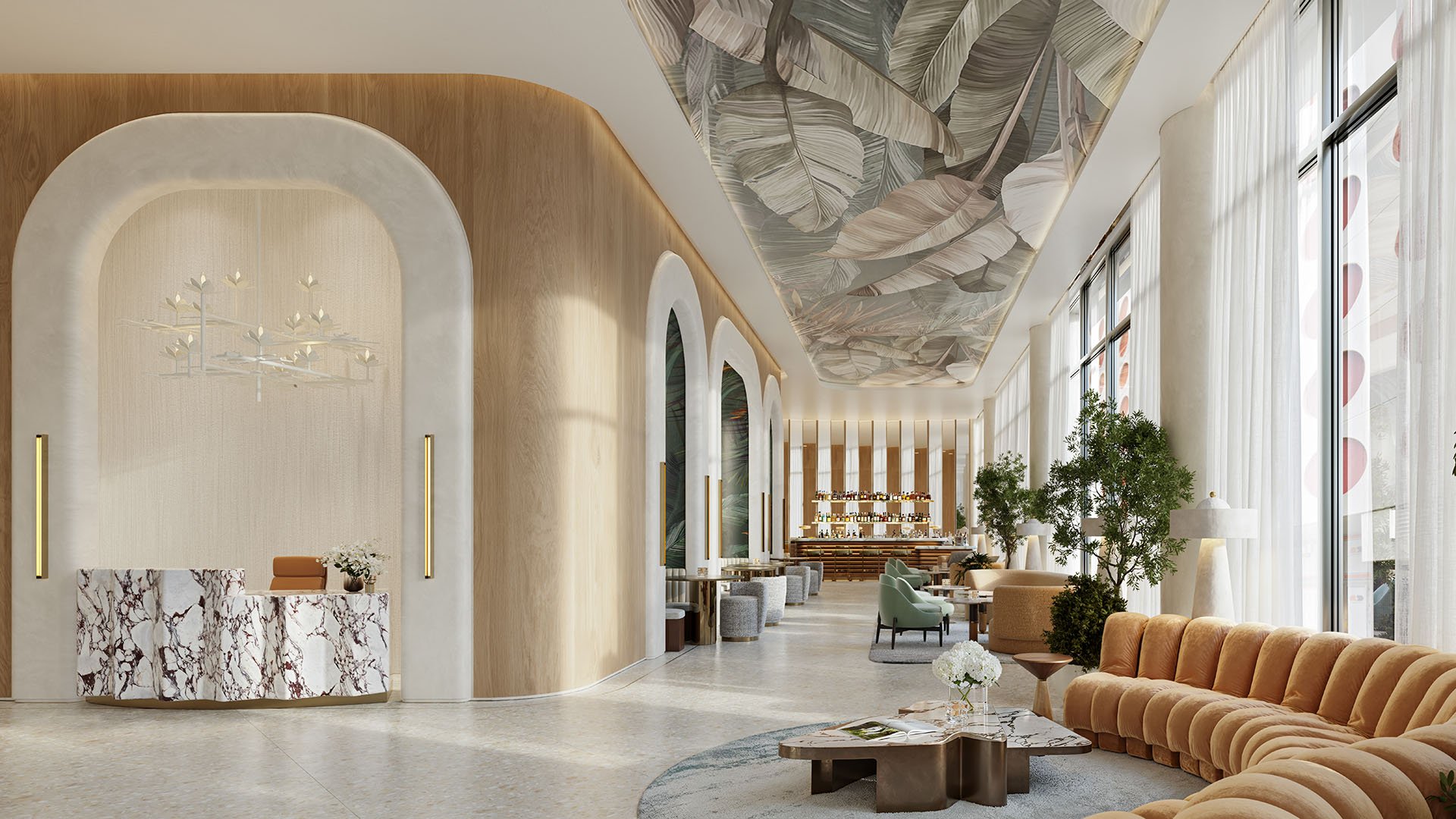
This is where excess theater becomes a liability. A dramatic lobby can photograph beautifully, but the owner will eventually judge the building by what happens on ordinary days. Is the elevator experience composed? Does the front desk know when to be warm and when to be invisible? Are common areas serene when the building is busy? Does the amenity program feel useful, or does it feel designed mainly to be described?
For pre-construction buyers, the most important exercise is translating every promise into an operating question. If a building presents itself as highly serviced, ask how staffing, access, reservations, security and maintenance will be coordinated. If a project emphasizes food, wellness or social space, ask how residents retain privacy. If design is a central pillar, ask how materials, acoustics and circulation support real daily comfort.
Luxury buyers in South Florida increasingly understand that restraint is not minimalism. It is discipline. A building can be richly detailed and still feel calm. It can offer hospitality and still protect residents from the sensation of living in a hotel. That is the sweet spot for buyers who want support without spectacle.
In Brickell, restraint is especially valuable because the neighborhood itself is energetic. Restaurants, offices, waterfront routes and social venues create constant movement. A residence should offer a counterpoint to that pace. The most successful private buildings create a sense of retreat as soon as the resident crosses the threshold.
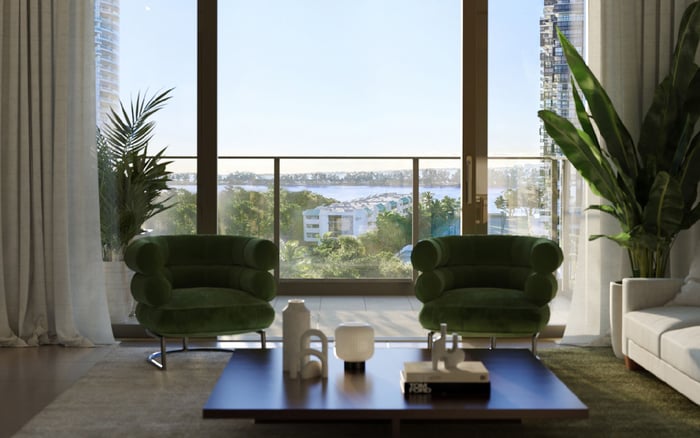
This is why a buyer should study transitions. The path from car to elevator, elevator to residence, residence to pool, and lobby to street reveals more than a rendering. So does the relationship between the balcony and the interior living area. In a vertical city, private outdoor space should feel like a continuation of the home, not merely an attachment for a view.
Amenity count is a poor substitute for amenity quality. A long list can look persuasive, but high-net-worth buyers should ask which spaces they will use monthly, which ones support resale, and which ones may become expensive to maintain without adding meaningful daily value.
The better question is not, “How much does the building have?” It is, “How well does the building edit?” A fitness area that is pleasant at peak hours may matter more than a rarely used specialty room. A discreet residents’ lounge may be more valuable than an over-programmed social venue. A wellness component should be judged by privacy, appointment flow and consistency, not by vocabulary alone.
Buyers comparing 619, Viceroy Brickell and projects such as The Residences at 1428 Brickell should look for operational coherence. Does the building understand who its residents are? Does the amenity plan support professionals, seasonal owners, families and international users without trying to become everything to everyone? The best buildings feel complete because they are selective.
New construction in Brickell often attracts buyers with the promise of modern systems, current design language and a fresh ownership experience. Those are meaningful advantages, but they are only the beginning. Over time, the value of a building is reinforced by how well it is governed, maintained and staffed.
A refined service culture can become part of a property’s identity. Residents remember whether issues are handled promptly, whether rules are applied elegantly, whether common areas age gracefully and whether the building continues to feel private as occupancy matures. Those details are difficult to capture in a brochure, but they influence satisfaction and resale confidence.
Investment buyers should be especially careful here. A recognizable brand may help initial visibility, but long-term performance depends on livability, maintenance standards, association discipline, rental rules where applicable and the depth of demand for that particular type of residence. A beautiful building that is hard to operate is not a quiet asset. A well-run building with a clear point of view can become a durable address.
Before committing, buyers should define their own service threshold. Some owners want full hospitality adjacency, with a sense that help is always close. Others want a more private residential environment with select support. Neither preference is inherently better, but confusion between the two can lead to disappointment.
Ask how often you will be in residence. Ask whether you entertain formally or live quietly. Ask whether you value a recognizable brand for personal enjoyment, future resale or both. Ask how the building handles peak hours, guests, deliveries, pets, staff access and amenity reservations. Ask whether the residence itself is strong enough to stand apart from the brand story.
The strongest purchase will usually be the one where architecture, service and lifestyle align without strain. In that sense, 619 Residences by Foster + Partners + Nobu Hospitality and Viceroy Brickell are less about choosing the louder name and more about choosing the better fit. In true luxury, the best moments are often the ones that do not need to announce themselves.
What does high-service living mean in Brickell? It means a residential experience where staffing, access, amenities and daily logistics are coordinated with consistency and discretion.
Is brand recognition enough to justify a purchase? No. Brand value should be supported by strong floor plans, privacy, governance, service clarity and long-term maintenance standards.
How should buyers compare 619 and Viceroy Brickell? Buyers should compare service philosophy, amenity discipline, residence layouts, privacy and how each building fits their daily routine.
Why does restraint matter in luxury residential design? Restraint helps a building feel calm, timeless and livable rather than dependent on theatrical first impressions.
What should pre-construction buyers ask first? They should ask how the promised services will operate in practice, including staffing, access, reservations and resident privacy.
Are more amenities always better for resale? Not necessarily. Amenities that are useful, well maintained and aligned with residents’ needs tend to support value more effectively.
Why is Brickell attractive for high-service residences? Brickell offers an urban lifestyle where convenience, dining, business access and waterfront proximity can make service-rich living especially practical.
What role does a balcony play in buyer evaluation? A balcony can extend the living experience, but it should be assessed for usability, privacy and connection to the interior plan.
How should investment buyers think about branded residences? They should consider recognition, but also operating costs, rental rules, buyer depth, maintenance quality and long-term livability.
What is the clearest sign of a well-conceived luxury residence? The clearest sign is when design, service and privacy work together so daily life feels effortless rather than performed.
If you'd like a private walkthrough and a curated shortlist, connect with MILLION.
If branded residences are on your mind — as a home or as an allocation — we would be glad to share what we are seeing, privately.
Begin a quiet conversation