A buyer-focused look at why a well-designed security vestibule is becoming part of quiet luxury in South Florida penthouses, balancing privacy, arrival choreography, staff movement, and architectural restraint.
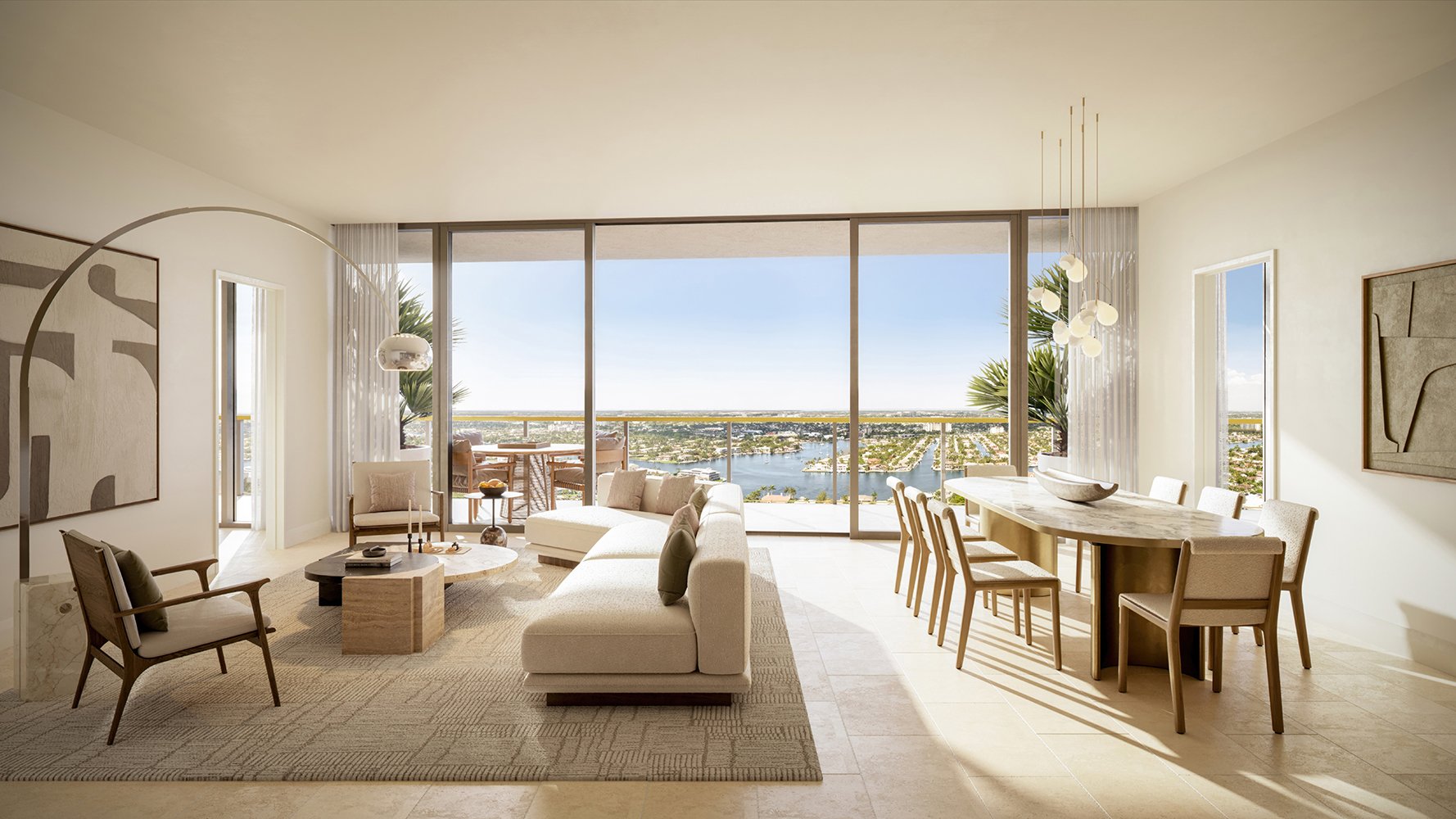
In South Florida’s highest-end residential market, luxury is increasingly defined by what does not announce itself. The best penthouse arrival does not feel like a checkpoint. It feels composed, private, and inevitable. That is why the security vestibule deserves closer attention from buyers, designers, and developers.
A vestibule is not merely the space between an elevator and a front door. In a true penthouse setting, it becomes the threshold between the building’s public architecture and the residence’s private atmosphere. It manages who enters, how they are received, what they can see, and how the owner’s household remains insulated from unnecessary exposure.
For many buyers, the word security can sound clinical. Quiet luxury reframes it. The question is not how much equipment can be displayed, but how elegantly privacy can be embedded into the architecture. In that sense, a better vestibule is not a defensive gesture. It is a design decision.
The most successful penthouse vestibules avoid spectacle. They do not rely on visible hardware, aggressive lighting, or an institutional mood. Instead, they use proportion, material depth, acoustics, and sequencing to create calm authority.
A discreet entry should give the owner time and choice. It should allow a resident to confirm a guest, receive a delivery, or redirect staff movement without making the living room the first line of privacy. The experience should feel smooth to an invited guest and difficult to misunderstand for anyone else.
This is especially relevant in South Florida, where penthouse life often includes extended family, visiting friends, household staff, service providers, stylists, chefs, drivers, and seasonal guests. A residence that lives beautifully for two people on a quiet weekday must also function gracefully when the home is active.
Penthouses in Brickell, Miami Beach, Sunny Isles, Fisher Island, and other high-floor settings all belong in the same conversation when privacy, vertical access, and arrival choreography are being evaluated.
A strong security vestibule performs several roles at once. First, it creates separation. The owner should not have to open the private residence directly onto an elevator landing that may carry building personnel, guests, or deliveries. Even in buildings with controlled access, a second layer of privacy can be invaluable.
Second, it shapes sightlines. When the elevator doors open, the first view should not be the dining table, art wall, terrace, or family area. A properly considered vestibule protects the life of the home from casual view while still offering an elegant welcome.
Third, it supports operations. Luxury homes depend on invisible logistics: flowers, wardrobes, catering, maintenance, luggage, packages, and private events. If every operational moment must pass through the main social entry, the residence can feel less private than its price suggests.
Finally, it enhances confidence. The owner does not have to think about small vulnerabilities because the architecture has already considered them. That is the heart of quiet luxury: fewer visible frictions, fewer awkward improvisations, and less need for explanation.
A penthouse vestibule should be evaluated with the same seriousness as a kitchen, primary suite, or terrace. The details are subtle, but they reveal whether the residence was designed for real private living.
Look first at scale. A vestibule that is too narrow can feel like a service corridor. One that is too large may waste valuable interior volume. The right answer depends on how the owner lives, but the space should allow two or three people to stand comfortably without feeling compressed.
Next, study doors and transitions. Are there solid doors between the vestibule and the residence? Is there a way to receive someone without exposing the home? Do hinges, handles, panels, and thresholds feel consistent with the rest of the interior architecture?
Lighting is equally important. Bright, flat lighting can make even the most expensive stone feel cold. Layered lighting, indirect glow, and discreet fixtures can turn a security function into a hospitality moment.
Acoustics are often overlooked. A vestibule should dampen elevator sounds, hallway noise, and conversations outside the home. Privacy is not only visual. In a high-value residence, sound control can be one of the most meaningful forms of comfort.
A private elevator is desirable, but it should not be mistaken for a complete privacy strategy. Elevators are mechanical systems, shared building assets, and moments of transition. A vestibule gives the residence another degree of control after the elevator arrives.
The distinction matters. A private elevator brings someone to the home. A well-designed vestibule determines what happens next. That may include a pause before entry, a visual buffer, a controlled door sequence, or a separate service path.
For buyers comparing properties, this is a useful test: imagine a delivery, a chef arrival, a late-night guest, and a maintenance appointment. If all four scenarios feel awkward, the penthouse may be relying too heavily on prestige features and not enough on residential intelligence.
In Brickell, where vertical living is often fast-paced and highly serviced, the strongest residences make privacy feel effortless. In Miami Beach and oceanfront settings, the vestibule can also protect the calmer resort character of the home from the more active rhythm of the building.
The larger and more valuable the residence, the more important its backstage becomes. A beautiful penthouse should not require every practical task to pass through the same ceremonial path as a dinner guest.
A better vestibule can help separate formal arrival from service movement. It can create a natural place for handoffs, confirmations, coats, luggage, or small deliveries. It can also keep staff interactions dignified and efficient, which benefits everyone in the household.
This is not about distance or formality for its own sake. It is about rhythm. A residence that supports a chef, assistant, nanny, housekeeper, property manager, or visiting wellness practitioner without interrupting the family’s private areas will feel calmer and more complete.
For many South Florida buyers, the penthouse is both a sanctuary and a stage for hospitality. The vestibule is where those identities are reconciled. It protects the sanctuary while preparing the stage.
The materials of a security vestibule should belong to the residence, not to a commercial lobby. Stone, wood, plaster, bronze-toned metal, leather-wrapped details, integrated millwork, and quiet lighting can create a sense of enclosure without harshness.
The goal is not to disguise security entirely. It is to make security feel native to the home. Keypads, cameras, intercoms, and access controls should be placed with intention, not scattered wherever wiring made them convenient. The best systems are legible to the owner and nearly invisible to the guest.
In Sunny Isles and Fisher Island settings, where views and privacy both carry significant emotional value, the vestibule should not compete with the drama of the residence. It should prepare the transition, lower the volume, and preserve the reveal.
Good design also anticipates the future. Technology changes faster than stone and millwork. A refined vestibule should allow systems to be serviced or upgraded without damaging finishes or forcing visible compromises.
A buyer should ask practical questions early. Who can access the elevator landing? What happens if a guest arrives unexpectedly? How are deliveries handled? Can the owner communicate with someone before opening the residence? Is there a service route that does not compromise the main living areas?
Renovation buyers should also ask what can realistically be changed. Some vestibule improvements are architectural, while others depend on building rules, life-safety requirements, elevator configuration, and common-area boundaries. The most elegant solution is usually the one designed in partnership with the building’s constraints, not against them.
For developers, the opportunity is clear. A better vestibule can become a quiet differentiator, especially for buyers who have already experienced luxury residences in multiple markets. They may not ask for it first, but they will recognize it when it is done well.
For owners, the decision is personal. If the home is used seasonally, hosts frequent guests, or includes valuable collections, the vestibule may carry more importance. If the owner values absolute discretion, it may become essential.
What is a penthouse security vestibule? It is a controlled transition space between the elevator or corridor and the private residence, designed to improve privacy, arrival, and access management.
Is a vestibule only useful in very large penthouses? No. Even a compact vestibule can improve sightlines, reduce awkward encounters, and create a more composed entry sequence.
Does a private elevator eliminate the need for a vestibule? Not necessarily. A private elevator controls vertical access, while a vestibule controls the final threshold into the home.
Can a security vestibule still feel warm and residential? Yes. With refined materials, soft lighting, and concealed technology, it can feel like part of the interior design rather than a security feature.
What should buyers look for during a showing? Notice sightlines, door placement, sound transfer, delivery handling, and whether the entry gives the owner time and choice.
Is this relevant for second-home owners? Yes. Seasonal owners often benefit from controlled access, service coordination, and a clearer boundary between building circulation and private living.
Can an existing penthouse vestibule be improved? Often, but the scope depends on building rules, life-safety requirements, elevator configuration, and what portions are private versus common area.
Should technology be visible in the vestibule? It should be easy for the owner to use, but visually discreet. The most refined systems are integrated into the architecture.
Why does this matter in South Florida specifically? The region’s luxury lifestyle often combines privacy, hospitality, staff support, and frequent guests, making arrival control especially valuable.
Does a better vestibule affect resale appeal? It can strengthen the perception of quality for buyers who value discretion, operational ease, and thoughtful residential planning.
For a discreet conversation and a curated building-by-building shortlist, connect with MILLION.
If branded residences are on your mind — as a home or as an allocation — we would be glad to share what we are seeing, privately.
Begin a quiet conversation