A discreet look at why catering access, service circulation, staging space, elevators, and terrace flow are becoming essential considerations for South Florida penthouse buyers who entertain privately.
In South Florida, the most persuasive penthouse luxuries are often the quietest. A view may make the first impression, but the way a home receives a chef, a florist, a sommelier, a security team, and a dinner party determines how gracefully it lives. For buyers who host privately, catering access is not a secondary convenience. It is architectural discretion.
The best entertaining residences allow service to happen without overtaking the evening. Guests should never step around delivery carts. A host should not have to choose between a dramatic arrival and a functional one. Staff should not be left to improvise staging in a corridor, elevator lobby, or visible kitchen threshold. Quiet luxury is the ability to make complexity disappear.
That is especially relevant in a South Florida penthouse, where entertaining often moves between interiors and outdoor space. A private dinner may begin at sunset, continue through a formal meal, and finish on a terrace with cocktails and music. If access, storage, service circulation, and cleanup are not considered together, even a beautiful residence can feel operationally strained.
A defining mark of a well-planned luxury residence is separation. The guest route should feel composed and ceremonial. The service route should feel efficient, direct, and discreet. When both paths collapse into one, the home loses some of its ease.
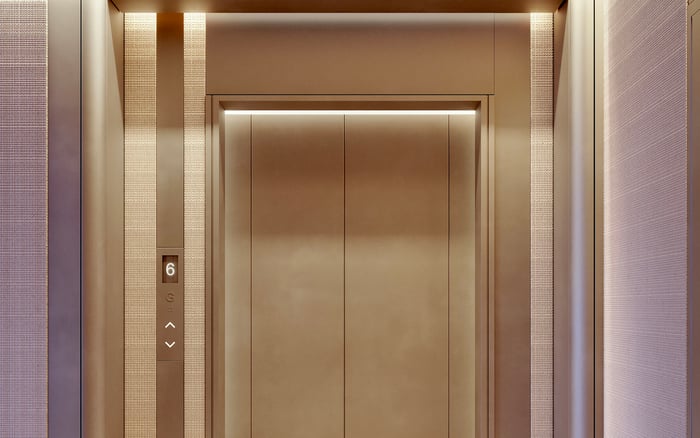
For a buyer, this means looking beyond finishes. The questions are practical. Can caterers enter without crossing the main entertaining space? Is there an elevator sequence that supports service arrivals? Can deliveries be received without interrupting household privacy? Is there a place to hold flowers, glassware, linens, cases of water, or plated courses before they appear at the table?
These details may sound technical, but they shape the emotional tone of a residence. A penthouse with stronger catering access gives the host more freedom. It allows a seated dinner, a family celebration, a philanthropic evening, or a holiday gathering to unfold without tension. The architecture supports the occasion rather than competing with it.
Views matter. So do ceiling heights, materials, natural light, and outdoor living. Yet serious buyers should test the plan as if an event were already scheduled. Walk the path from elevator to kitchen. Consider where staff would stand. Notice whether the kitchen is a showpiece only or whether it can support preparation, plating, and cleanup. Look for a secondary pantry, utility zone, service vestibule, or back-of-house area when available.
Storage belongs in the same conversation. Private dining requires more than a table and chairs. It may involve service pieces, extra refrigeration, stemware, candles, folding service stations, protective coverings, and floral installations. A residence with no place for these elements forces them into view.
Acoustics also matter. Service doors, appliance placement, and dishwashing zones can change the feel of an evening. In a quiet luxury residence, the soundtrack should be conversation, not logistics. The more refined the home, the more important it becomes to conceal the mechanics of hospitality.
Different South Florida settings create different entertaining patterns. In Brickell, private dining may need to coexist with a vertical, high-energy urban rhythm. The premium is controlled arrival, secure movement, and a plan that keeps the residence from feeling like an extension of the lobby.
In Miami Beach, indoor-outdoor entertaining often carries the evening. The relationship between kitchen, dining room, terrace, and powder room becomes essential. If the service path cuts through the social heart of the home, the experience can feel less refined, even when the design is visually impressive.
In Sunny Isles, where elevated oceanfront living often emphasizes scale and views, the best residences make large-format entertaining feel effortless. The service infrastructure should support the ambition of the space. A dramatic room needs an equally thoughtful operational backbone.
In Fisher Island, privacy is often the central luxury. Catering access should protect that privacy at every point, from arrival to departure. The point is not simply convenience. It is the preservation of a private world.
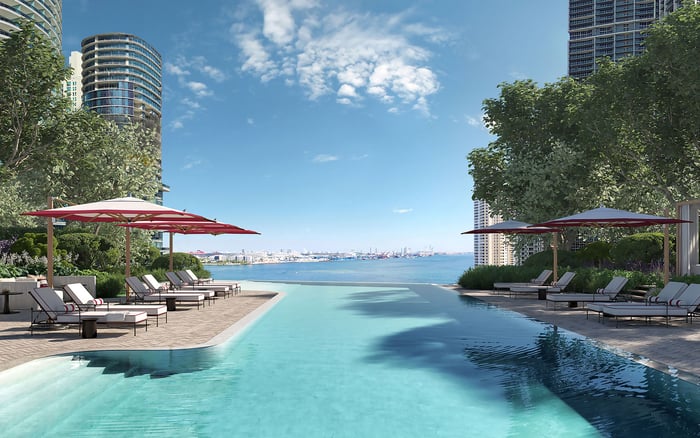
Outdoor space is one of South Florida’s great residential privileges, but it can expose weaknesses in a plan. A terrace used for dining or cocktails needs more than furniture. It needs a logical route for food, glassware, ice, lighting, and cleanup. If every tray must pass through the main seating area, the event will feel busier than it should.
Buyers should consider how the kitchen connects to exterior entertaining zones. A long distance between preparation and service may be manageable for a casual lunch, but less elegant for a formal dinner. Likewise, a terrace without nearby support may photograph beautifully but function poorly under real hosting conditions.
This is where restraint becomes a luxury signal. The goal is not to overbuild the residence into a commercial venue. The goal is to make private hospitality feel natural. The finest spaces allow a host to offer abundance while maintaining calm.
Not every buyer hosts frequently, but many understand the value of optionality. A penthouse that can support private dining, staffed weekends, family celebrations, and visiting guests has broader appeal than one that relies entirely on visual drama. The residence becomes more adaptable.
This is particularly important at the top of the market, where buyers compare homes through nuance. Two residences may both offer impressive views and premium finishes. The one with better circulation, storage, service access, and terrace flow may live more elegantly every day. That advantage is difficult to recreate after the fact.
Catering access is also a proxy for design discipline. If the plan anticipates service, it often anticipates other forms of daily comfort as well. Privacy, deliveries, maintenance, staff movement, and entertaining all benefit from the same underlying intelligence.
The simplest test is this: could a dinner for close friends be prepared, served, and cleared without guests noticing the effort? If the answer is yes, the residence has a layer of refinement that goes beyond surface beauty.
Quiet luxury is not silence for its own sake. It is confidence. It is the confidence that a home can receive people well, protect the host’s privacy, and uphold a standard without announcing how much work is taking place behind the scenes.
For South Florida penthouse buyers, better catering access is not merely a convenience. It is a meaningful expression of how the residence understands service, hospitality, and the rituals of private life.
Why does catering access matter in a penthouse? It protects privacy, improves event flow, and keeps service logistics away from guest-facing areas.
Is a show kitchen enough for serious entertaining? Not always. A show kitchen can be beautiful, but private dining often benefits from pantry space, staging areas, and practical cleanup zones.
What should buyers look for during a showing? Walk the route from elevator to kitchen, identify where deliveries would go, and note whether staff movement crosses the main social space.
Does better catering access only matter for large parties? No. It can improve small dinners, family holidays, weekend guests, and everyday household service.
How does terrace design affect private dining? The terrace should connect logically to preparation and service areas so food, drinks, and cleanup do not disrupt the gathering.
Can catering access influence resale appeal? Yes. Sophisticated buyers often value homes that combine visual impact with functional discretion.
Should service elevators be part of the evaluation? Yes, when available. Elevator access can shape privacy, delivery efficiency, and the overall rhythm of hosting.
What is the biggest mistake buyers make? They focus on the view and finishes before testing how the residence actually supports entertaining.
Is quiet luxury about having more space? Not necessarily. It is about thoughtful planning, controlled circulation, and the ability to make service feel effortless.
Who benefits most from better catering access? Buyers who host privately, travel with staff, entertain outdoors, or want a residence that lives as elegantly as it looks.
For a confidential assessment and a building-by-building shortlist, connect with MILLION.
If branded residences are on your mind — as a home or as an allocation — we would be glad to share what we are seeing, privately.
Begin a quiet conversation