A buyer-focused comparison of Rosewood Residences Hillsboro Beach and The Berkeley Palm Beach through arrival, privacy, hospitality, guest management, and long-term ownership discipline.
For a buyer comparing Rosewood Residences Hillsboro Beach with The Berkeley Palm Beach, the sharper question is not which residence is more beautiful, more branded, or more dramatic on arrival. It is which one protects daily life with fewer frictions: the approach from the street, the choreography at the door, the separation between guests and residents, the visibility of staff, and the ability for a private evening to remain private even when the building is fully active.
That is the right frame for this comparison. In the ultra-premium South Florida market, luxury is increasingly measured by operational calm. A residence can offer handsome architecture and generous amenities yet still feel exposed if every arrival is observed, every guest path intersects with owner circulation, or every service moment becomes visible. Rosewood Residences Hillsboro Beach and The Berkeley Palm Beach should therefore be read less as competing addresses than as competing privacy propositions.
For many buyers, Rosewood Residences Hillsboro Beach carries the emotional pull of a quieter coastal posture. The Berkeley Palm Beach, by contrast, speaks to a Palm Beach-area lifestyle where access, social proximity, and polished daily convenience may carry more weight. Neither proposition is inherently superior. The better purchase is the one whose building logic matches the way the household actually lives.
Arrival is the first real test of discretion. A strong arrival sequence should compress public exposure and expand the feeling of control. The vehicle approach should feel legible, the handoff composed, and the transition from car to residence free of unnecessary performance. Luxury buyers often focus on ceiling height, stone, lighting, and art placement, but the underwriting question is more basic: who can see you, who must interact with you, and how many decisions occur before you reach your private domain?
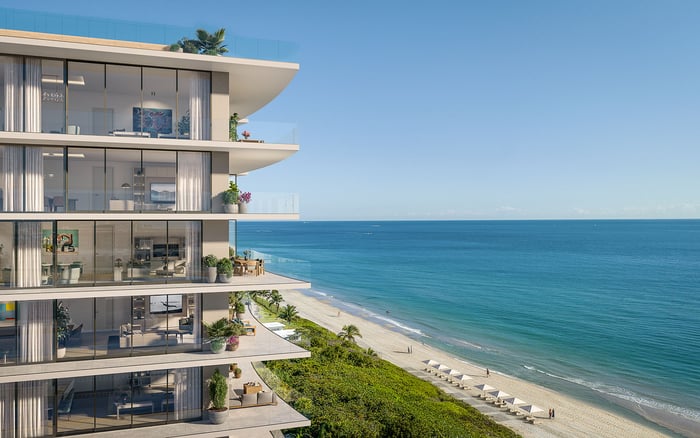
At Rosewood Residences Hillsboro Beach, the buyer should evaluate whether the coastal setting supports a calmer threshold. Oceanfront living can be exceptional, but the best version is not simply about the view. It is about whether the entry experience feels buffered from the casual gaze of passersby, visitors, and service traffic. Oceanfront should mean more than adjacency to water. It should mean an arrival that prepares the resident for retreat.
At The Berkeley Palm Beach, the arrival test is different. The value may lie in an address posture suited to a more socially connected routine. If dinners, clubs, cultural appointments, advisor meetings, and visiting guests form part of the rhythm, the building must handle movement elegantly. The question is whether it can receive people without making the owner feel constantly on display.
A disciplined buyer should visit at multiple times of day. Morning departures, afternoon deliveries, early evening guest arrivals, and late-night returns can reveal different truths. The best arrival sequence is quiet not because it is empty, but because it is well managed.
Security in luxury residential property is not only about hardware. It is about the tone of control. Too little security can feel casual. Too much visible security can feel institutional. The strongest buildings create confidence without making the owner feel processed.
For Rosewood Residences Hillsboro Beach, the underwriting emphasis should be on perimeter logic, entry discipline, staff recognition, and how clearly resident, guest, vendor, and service movements can be distinguished. A coastal building should feel serene, but serenity should not be confused with softness. The owner wants privacy that works even on busy weekends, during seasonal occupancy, and when guests unfamiliar with the property arrive.
For The Berkeley Palm Beach, the security question should include social discretion. In Palm Beach buying behavior, privacy is often less about isolation and more about controlled access within an active lifestyle. A resident may want guests welcomed warmly, vendors managed without theater, and family members moved through the property without unnecessary attention. The security posture must therefore feel polished, anticipatory, and human.
The investor lens is useful here, even for a primary or second-home purchase. Investment value at this level depends partly on how gracefully the property ages operationally. A building that feels secure but not restrictive, staffed but not crowded, and attentive but not intrusive is more likely to hold appeal across ownership cycles.
Guest discretion is often misunderstood. It is not simply the ability to bring guests without notice. It is the ability to host without surrendering control of the household’s privacy. In a well-composed building, a dinner guest, wellness appointment, family visitor, private chef, driver, or overnight guest should move through the property along a path that feels intuitive and appropriately contained.
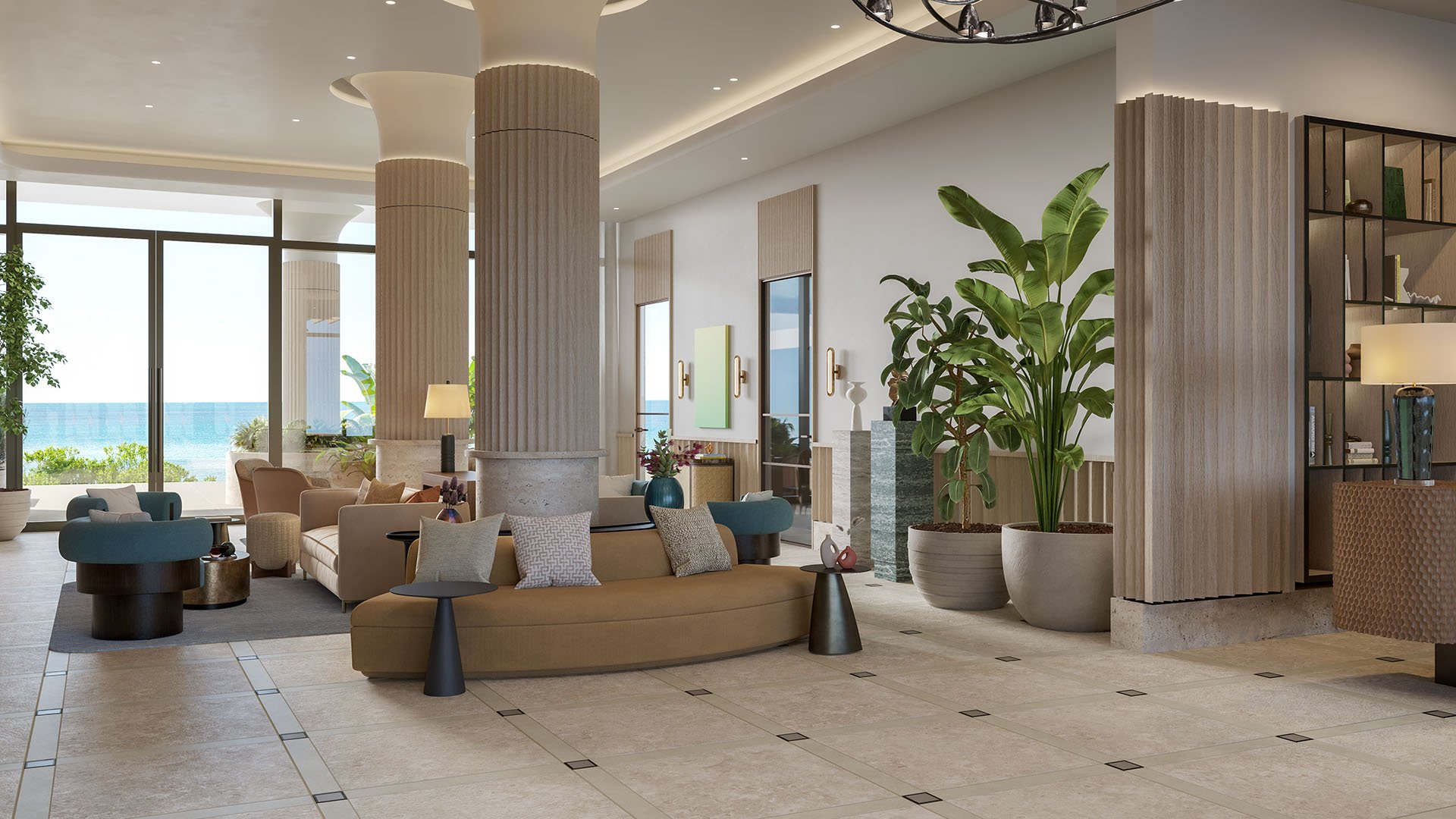
This is where elevator strategy, lobby geometry, amenity placement, service corridors, and staff training become central. If amenity access forces guests through sensitive residential zones, discretion weakens. If service movement intersects too visibly with owner circulation, the residence may feel less private than its price suggests. If guest arrivals create congestion at the desk or valet court, the building’s polish begins to fray.
A boutique building can be advantageous because fewer residences may reduce traffic and recognition fatigue. Yet boutique scale alone does not guarantee privacy. Small buildings can feel intimate in the best sense, or exposed in the wrong one. Larger buildings can feel anonymous, but only if circulation is deeply considered. The underwriting task is to observe whether the plan separates what should be separated and connects only what should be connected.
In Hillsboro Beach, buyers may prize a sense of retreat, especially if the property is used for longer stays, family time, or low-profile entertaining. At The Berkeley Palm Beach, buyers may be more focused on graceful hosting and quick transitions between residence and social calendar. Both needs are legitimate. They simply produce different definitions of guest discretion.
The most revealing diligence is experiential. Ask how a guest is announced. Ask where a driver waits. Ask how deliveries are received. Ask how a private dinner is staffed. Ask whether amenity reservations create visibility. Ask how many people a guest encounters between curb and residence. Ask whether residents can move from parking or valet to elevator without passing through a highly social lobby moment.
Also study the emotional pace of the building. Does it slow you down in a pleasurable way, or does it add steps? Does the staff presence feel intuitive, or does it require explanation? Does the entry architecture make privacy feel natural, or does it rely on residents adapting their behavior? These are not minor lifestyle questions. They are value questions.
The best luxury residence is the one that edits daily life. It reduces decision fatigue, limits exposure, and allows the owner to choose when to be seen. For one buyer, that may favor the quieter coastal cadence associated with Rosewood Residences Hillsboro Beach. For another, it may favor the more socially connected positioning implied by The Berkeley Palm Beach.
Rosewood Residences Hillsboro Beach should be underwritten as a privacy-first coastal proposition, with special attention to arrival buffering, guest separation, perimeter confidence, and whether the building can preserve resort-level calm without feeling performative. The Berkeley Palm Beach should be underwritten as an access-and-discretion proposition, with emphasis on how elegantly it manages social life, guest flow, staff interaction, and daily convenience.
The right answer depends on the household. If the owner wants retreat, fewer casual intersections, and a residence that feels removed from social noise, the Hillsboro Beach side of the comparison may be more naturally aligned. If the owner wants polished access, ease of hosting, and a residence that supports a more connected Palm Beach rhythm, The Berkeley may deserve the closer look.
In either case, do not let finishes outrank operations. Marble can be changed. Lighting can be tuned. Furnishings can be curated. The bones of arrival, security, and discretion are far harder to correct after closing.
What is the main difference to underwrite between these two properties? Focus on lifestyle fit: Rosewood Residences Hillsboro Beach reads more as retreat, while The Berkeley Palm Beach reads more as connected convenience.
Why does arrival sequence matter so much in luxury real estate? Arrival determines how exposed or protected an owner feels before reaching the residence. It is the first operational expression of privacy.
Should buyers prioritize security visibility or discretion? The ideal balance is quiet confidence. Security should be effective without making daily life feel procedural or institutional.
How should guest discretion be evaluated? Study how visitors, vendors, drivers, and service staff move through the property. The best plans reduce unnecessary overlap with owner circulation.
Is oceanfront living automatically more private? No. Oceanfront can feel serene, but true privacy depends on access control, sightlines, staffing, and circulation design.
Can a boutique building offer better privacy? Sometimes. Boutique scale can reduce traffic, but only if the building plan and service model are properly composed.
What should second-home buyers consider? They should test how the property functions when they are away, when guests arrive, and when seasonal occupancy changes the building’s rhythm.
Does investment value depend on privacy features? At the ultra-prime level, yes. Buyers often pay a premium for buildings that preserve calm, control access, and manage service invisibly.
Which property is better for frequent entertaining? The better fit is the one with smoother guest routing, stronger staff choreography, and less exposure during arrivals and departures.
What is the final decision rule? Choose the building that makes your daily movements feel protected, natural, and unforced, not merely the one with the most dramatic presentation.
When you're ready to tour or underwrite the options, connect with MILLION.
If branded residences are on your mind — as a home or as an allocation — we would be glad to share what we are seeing, privately.
Begin a quiet conversation