A discreet buyer’s guide to evaluating guest-suite separation in South Florida penthouses, from circulation and acoustics to terrace privacy, service protocols and association rules.
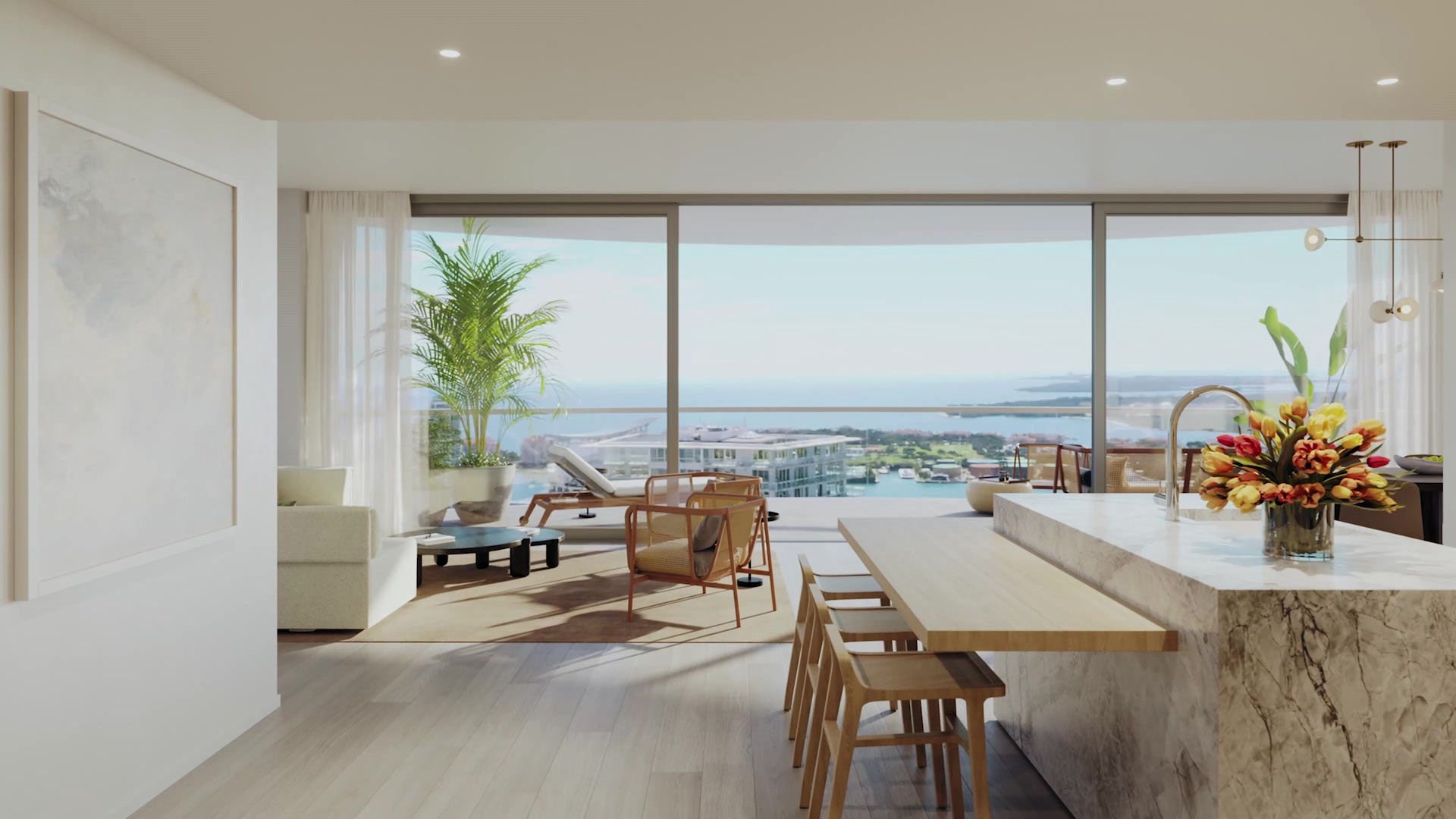
In South Florida, the most compelling penthouses are not simply larger apartments on higher floors. They are private compounds in the sky, expected to receive family, friends, wellness practitioners, staff, and visiting executives without disrupting the owner’s daily rhythm. Guest-suite separation is often the detail that reveals whether a residence was conceived for occasional entertaining or for truly graceful living.
For the buyer comparing a penthouse in Miami Beach, Brickell, Sunny Isles, or Fisher Island, the question is not only how many bedrooms appear on a floor plan. The more important question is how those bedrooms function. Can guests arrive without passing the primary suite? Can a late dinner on the terrace end without sound carrying into the owner’s wing? Can a visiting couple keep a morning schedule without entering the family kitchen at the wrong hour?
Guest separation is therefore both architectural and social. It is about privacy, acoustics, sightlines, elevator logic, mechanical comfort, and household protocol. The best layouts make hospitality feel generous while preserving the quiet authority of the owner’s domain.
The first test is circulation. A penthouse may have an impressive foyer, but if every visitor must cross the owner’s principal living path to reach a guest room, the plan is not truly separated. Study the arrival sequence from elevator to suite. A strong plan gives guests a clear route to their quarters while allowing the owner to move privately among the bedroom, study, dressing areas, fitness space, and outdoor rooms.
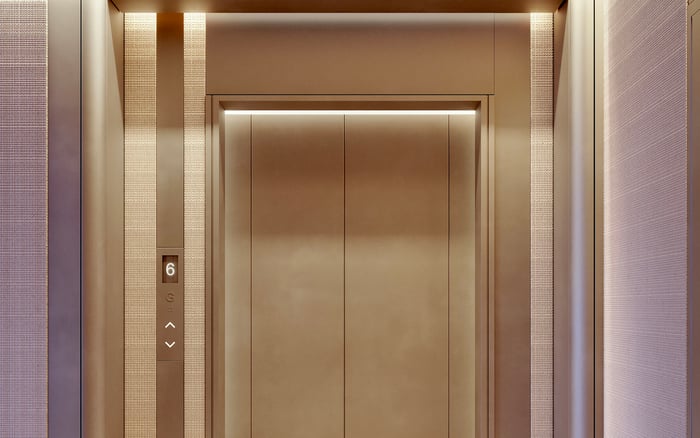
Private elevator access can be valuable, but it is not a complete answer. The elevator door opens into a plan, and that plan either protects privacy or compromises it. Look for a vestibule or gallery that organizes movement. A corridor with art walls, concealed doors, and controlled lighting can create elegance while quietly directing guests away from the primary wing.
For long-stay guests, the best arrangement often feels almost like a secondary apartment within the residence. It may include a small sitting zone, generous storage, independent access to a bath, and proximity to refreshments without making the guest dependent on the owner’s kitchen.
A door alone does not create separation. True separation usually comes from distance, orientation, and intervening functions. Powder rooms, storage, media rooms, galleries, service corridors, or outdoor thresholds can all act as buffers. When a guest suite shares a wall with the primary bedroom, the buyer should slow down and ask more questions.
In a flow-through penthouse, opposite wings can be particularly effective. The owner may occupy the quietest exposure while guests enjoy a different view corridor. This arrangement allows different sleeping schedules, different television habits, and different morning routines to coexist without friction.
Also study how children, adult guests, and staff would use the same plan differently. A layout that works for a holiday weekend may not work for three generations in residence, a caregiver accompanying a parent, or a security professional posted overnight. A great penthouse anticipates these scenarios without making them visible.
Buyers often evaluate stone, millwork, appliances, and view lines before they evaluate sound. Yet acoustic performance can determine whether a guest suite feels genuinely independent. Ask how bedroom walls, slabs, doors, mechanical chases, and floor assemblies are treated. Listen for elevator noise, terrace-door vibration, service-area sound, and music bleed from entertainment spaces.
The most refined residences layer acoustic control. Solid-core doors, proper seals, thoughtful duct routing, insulated walls, and separated entertainment zones can matter as much as the size of the suite itself. If the guest bedroom sits near a media room, bar, outdoor kitchen, or pool terrace, pay special attention to nighttime conditions.
A daytime showing can flatter a plan. A more revealing visit considers evening use: dinner service, sliding doors opening and closing, music at conversational volume, and guests returning late. In South Florida’s social season, these moments are not rare exceptions. They are part of the lifestyle the penthouse is expected to support.
Guest privacy depends on climate comfort as much as circulation. South Florida residences must manage heat, humidity, and strong sun exposures, and a guest suite with poor climate control can quickly become the weakest room in an otherwise exceptional home. Ask whether the guest wing has zoned temperature control, well-placed returns, and ventilation that does not transmit sound or kitchen aromas.
Mechanical separation also supports household diplomacy. Some guests prefer a cooler bedroom, others open and close terrace doors frequently, and owners may want their own suite kept at a different setting. If every major room relies on a single system logic, the household may end up negotiating comfort rather than enjoying privacy.
Service access matters here as well. Maintenance teams should ideally reach mechanical areas without passing through intimate sleeping spaces. The more discreetly a residence can be serviced, the more it behaves like a private estate rather than a large condominium.
A South Florida penthouse is often judged outdoors first. But the terrace must be evaluated as a shared living system, not only as a view platform. If a guest suite opens to the same outdoor zone as the primary bedroom, the plan may create unplanned encounters at sunrise, after swims, or during late-night calls.
The most successful terraces create outdoor rooms with implied boundaries. A dining area can serve guests without exposing the owner’s bedroom doors. A spa or plunge area can be positioned so that use feels private rather than performative. Landscaping, screens, level changes, planters, and furniture placement can help, but they cannot fully repair a flawed relationship between openings.
Wind, sun, and noise should also be part of the checklist. A guest terrace that is beautiful at noon may be uncomfortable in the evening, and a bedroom that appears private in daylight may be exposed when interior lights are on. Ask to understand the residence at multiple times of day whenever possible.
Guest-suite separation is also a governance question. Before assuming that guests, staff, trainers, chefs, drivers, or security personnel can move exactly as planned, review the building’s access procedures and association rules. The residence may be physically capable of private operation while the building requires specific registration, elevator use, parking protocols, or service-entry procedures.
This is especially important for buyers who host frequently or maintain multiple homes. A penthouse may need to operate smoothly when the owner is absent, when family members arrive at different times, or when household staff prepare for guests in advance. The best arrangement aligns the floor plan with the building’s procedures, so the experience feels discreet from porte cochere to pillow.
Ask how packages, catering, housekeeping, luggage, and maintenance are handled. A guest wing is more convincing when operational support can occur without crossing the primary suite or interrupting the main entertaining space.
During a private tour, do not evaluate the guest suite as a decorative bedroom. Walk the residence as if hosting a full house. Start at the elevator, move to the guest room, continue to the bath, then test the route to coffee, outdoor space, and departure. Notice where guests would pause, where they would store luggage, and whether they would feel either abandoned or overly exposed.
Then reverse the experience from the owner’s perspective. Move from the primary suite to the kitchen, study, dressing room, terrace, and elevator. If the owner repeatedly crosses guest territory, the plan may be better suited to short visits than extended stays.
Finally, examine the invisible details: wall adjacency, door swing, lighting control, window treatment logic, sound transfer, climate zoning, and service paths. In this tier of the market, guest-suite separation is not a nice extra. It is a measure of whether the penthouse can host generously while still living privately.
What is guest-suite separation in a penthouse? It is the physical and operational distance between guest rooms and the owner’s private areas, including circulation, sound, access, and service flow.
Is a separate guest wing always better? Often, yes, but the quality of the wing matters. A poorly placed separate room can still compromise privacy if it shares noisy walls or awkward routes.
Should guests have their own terrace access? It can be valuable when the terrace access does not expose the primary suite or disrupt the owner’s preferred outdoor routine.
How important is elevator access? Very important, but it must be paired with a smart interior sequence. The route from elevator to suite should feel intuitive and discreet.
Can interior design fix weak separation? Design can improve privacy through screens, furniture, lighting, and acoustic treatments, but it cannot fully correct a fundamentally exposed plan.
What should buyers ask about acoustics? Ask about wall construction, door quality, mechanical noise, entertainment areas, and whether bedrooms share walls with active spaces.
Why does mechanical zoning matter? Separate climate control allows guests and owners to live comfortably with different preferences, schedules, and sun exposures.
Do building rules affect guest-suite use? Yes. Access, parking, service elevators, staff entry, and guest registration can all influence how privately the residence operates.
Is guest separation more important for second homes? It can be, because family, friends, and staff may use the residence when the owner is traveling or arriving later.
What is the biggest mistake buyers make? Counting bedrooms instead of testing how the home actually lives during arrivals, overnight stays, service, and departures.
When you're ready to tour or underwrite the options, connect with MILLION.
If branded residences are on your mind — as a home or as an allocation — we would be glad to share what we are seeing, privately.
Begin a quiet conversation