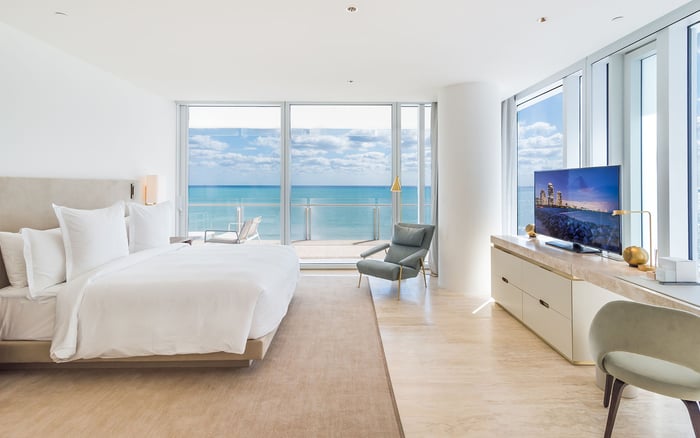
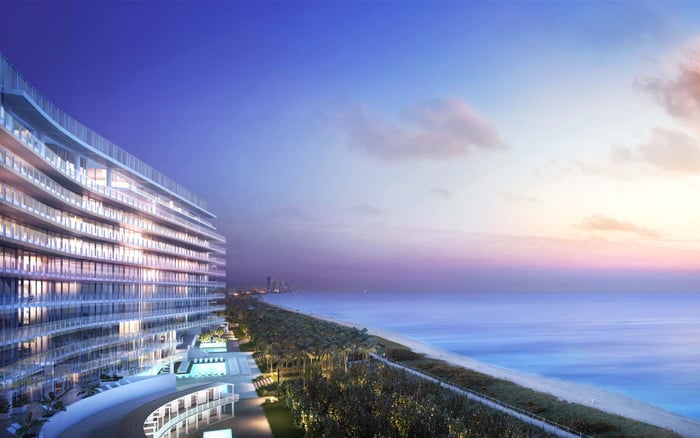
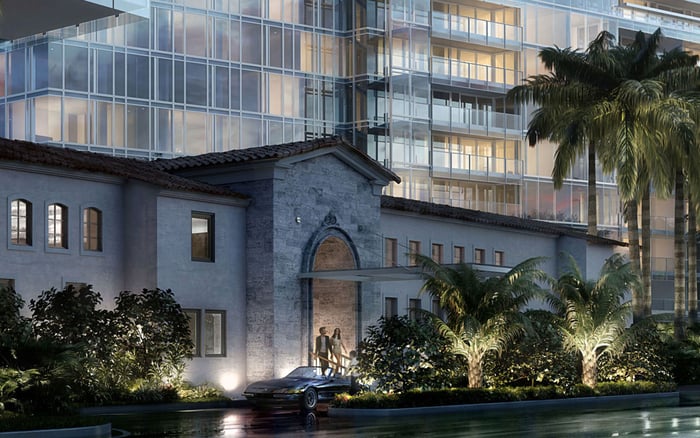
A discreet buyer-focused look at how private-gallery layouts at The Surf Club Four Seasons Surfside can shape privacy, art placement, hosting, resale logic, and second-home ownership.
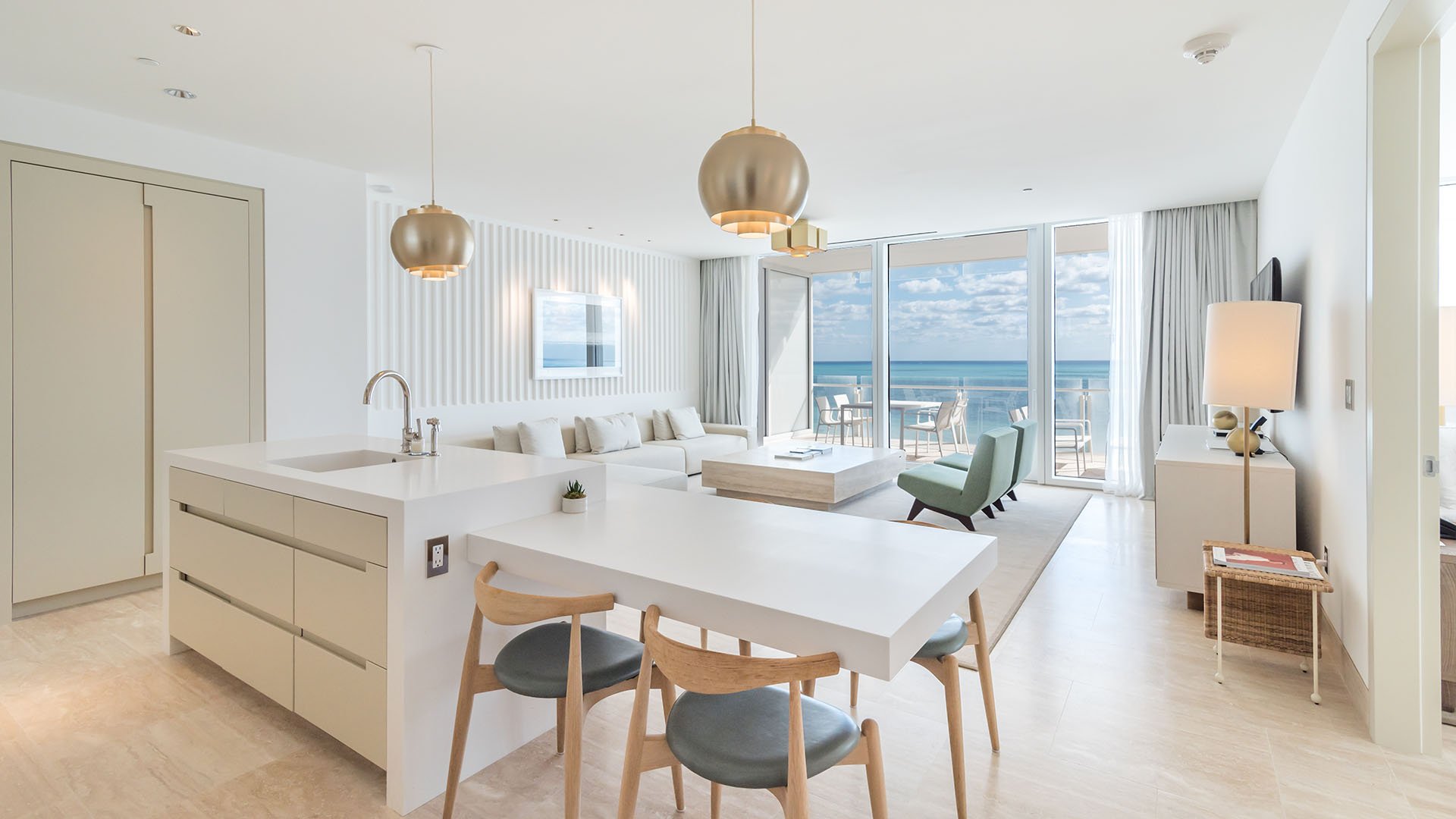
At the highest end of South Florida real estate, the most persuasive floor plan is not always the one that announces itself first. Often, the quietest plan is the most revealing. For buyers considering The Surf Club Four Seasons Surfside, the private-gallery layout raises a question more nuanced than square footage alone: does the residence support the way ownership actually feels, not merely the way it photographs?
A private-gallery sequence changes the emotional tempo of a home. Instead of stepping directly into a living room, the owner moves through a composed threshold, often conceived for art, pause, arrival, and separation. That design choice is not decorative. It can shape privacy, entertaining, storage discipline, sightlines, and the degree to which the residence feels like a private domain rather than a conventional apartment.
For Surfside buyers, this matters because the neighborhood already speaks a quieter luxury language. It is not simply oceanfront living. It is a more discreet form of coastal ownership, where understatement can carry as much value as drama. When executed with restraint, the private-gallery plan belongs to that world.
A private-gallery layout is best understood as both buffer and curator. It buffers the household from the elevator, corridor, staff movement, deliveries, and guest arrival. It curates the experience of entering the residence by turning arrival into a sequence rather than a single reveal.
That sequence can be powerful for collectors. Long walls, controlled lighting, and a measured approach to the main living areas give art room to breathe. The right gallery zone can also keep the living room from becoming a catchall for everything that belongs elsewhere. In a residence used as a second home, this discipline can be especially useful. The home should reopen gracefully after a period away, with an entrance that feels composed rather than provisional.
But the gallery must earn its space. If it becomes a dark corridor, a wasted passage, or an overdesigned prelude to a cramped living area, the concept loses authority. The best version feels inevitable. It gives the owner privacy without creating distance from the view, the terrace, or the social life of the home.
The private-gallery question is ultimately a buyer test. Some owners want the first impression to be cinematic. Others want a residence that lets them disappear. The former may prize immediate water exposure and an uninterrupted sightline from entry to horizon. The latter may prefer a slower reveal, with the home unfolding in layers.
Neither approach is universally superior. The stronger choice depends on the household. A buyer who entertains frequently may value the ability to receive guests with ceremony, move them toward the salon, and keep private rooms out of view. A collector may treat the gallery as a legitimate room in its own right. A family may care more about whether the gallery improves acoustic separation and daily traffic.
In resale discussions, this distinction matters. A plan that serves only the first impression can date quickly. A plan that improves how people live, host, and retreat tends to remain legible to future buyers. The private-gallery layout should not be evaluated as a novelty. It should be evaluated as architecture that either solves ownership problems or creates them.
Surfside has long appealed to buyers who want proximity to Miami’s energy without making that energy the organizing principle of daily life. In that context, The Surf Club Four Seasons Surfside occupies a specific place in the buyer imagination: residential privacy, hotel-level association, coastal calm, and a sense of arrival meant to feel protected rather than exposed.
That is why the private-gallery layout can be so compelling here. It aligns with a market where discretion is not a lack of ambition. It is often the ambition itself. The gallery creates a private pause between the outside world and the interior life of the residence.
This is also where beach access becomes more than an amenity phrase. When the beach is part of the ownership rhythm, the plan must balance resort ease with residential order. A gallery sequence can help separate public arrival from the more casual realities of coastal living, provided the residence also has practical areas for storage, service access, and everyday movement.
Private-gallery layouts are often discussed in terms of art, but the better conversation is about proportion. Art requires wall integrity, lighting discipline, and enough negative space to keep the home from feeling crowded. A gallery that is too narrow can reduce art to decoration. A gallery that is too large can pull energy from the main rooms.
Buyers should study how light behaves throughout the day. A beautiful wall may be difficult for sensitive works if direct light is not controlled. Conversely, an overly shadowed passage can feel theatrical in a way that tires quickly. The most successful gallery spaces are calm, flexible, and visually connected to the rest of the residence without revealing everything at once.
This is where high-end ownership becomes less about checking boxes and more about reading the plan. Does the gallery have a natural endpoint? Does it create anticipation? Does it make the living area feel larger by contrast? Does it preserve privacy for bedrooms and service zones? These questions matter more than whether the space sounds impressive in a listing description.
For entertaining, the private gallery can be an elegant instrument. It gives guests a moment to arrive, orient, and decompress before entering the principal room. It can create a natural place for art, floral arrangements, or a discreet welcome without forcing the living space to carry every ceremonial function.
It can also improve hosting logistics. If the plan allows staff, catering, or household support to move without crossing the main guest path, the residence feels more effortless. If it does not, the gallery risks becoming a bottleneck. The distinction is subtle on paper and obvious in person.
Owners who host selectively may appreciate a plan that offers formality without stiffness. The private-gallery sequence can support intimate dinners, quiet evenings, and larger gatherings, but only if the transitions are generous. Luxury is not only the number of rooms. It is the absence of friction between them.
A private-gallery layout can strengthen resale appeal when it reads as timeless rather than idiosyncratic. Future buyers must be able to imagine their own art, furniture, and rituals within the plan. Overly specific finishes or excessive built-ins can narrow that imagination. Clean walls, good lighting, and flexible proportions widen it.
The best private-gallery residences do not depend on a single owner’s taste. They provide a framework. That framework can support a serious collection, a minimal interior, or a richly layered coastal home. In a premium market, flexibility is not a compromise. It is often what makes a residence durable across ownership cycles.
For buyers at The Surf Club Four Seasons Surfside, the question is not whether a private gallery sounds prestigious. The question is whether it creates a better ownership experience from the first arrival to the quietest weekday morning.
What is a private-gallery layout? It is an entry or circulation sequence designed to function as a composed transition, often with art walls, privacy, and a slower reveal into the main residence.
Why does it matter for The Surf Club Four Seasons Surfside? The layout can reinforce the discreet ownership character many buyers associate with Surfside and oceanfront living.
Is a private-gallery plan mainly for art collectors? No. Collectors may benefit from it, but the layout can also improve privacy, arrival, entertaining, and separation from service movement.
Can a gallery layout reduce usable living space? It can if poorly planned. The strongest versions make circulation feel purposeful rather than like space taken away from the main rooms.
How should buyers evaluate the entry sequence? They should study width, lighting, wall quality, privacy, and whether the gallery leads naturally into the principal living areas.
Does this type of layout help resale? It can, especially when the gallery is flexible, understated, and useful to different ownership styles rather than highly personalized.
Is the layout suitable for a second-home owner? Yes, if it supports a composed lock-and-leave lifestyle and keeps arrival, storage, and daily routines orderly.
What role does oceanfront context play? Oceanfront living heightens the importance of balancing drama with restraint, since the view should feel revealed, not overexposed.
Why is beach access relevant to the floor plan? Beach access affects daily rhythm, so the residence should manage the shift between resort ease and private residential order.
What is the main ownership question? The central question is whether the private-gallery layout enhances privacy, art, hosting, and daily life enough to justify its spatial priority.
For a confidential assessment and a building-by-building shortlist, connect with MILLION.
If branded residences are on your mind — as a home or as an allocation — we would be glad to share what we are seeing, privately.
Begin a quiet conversation