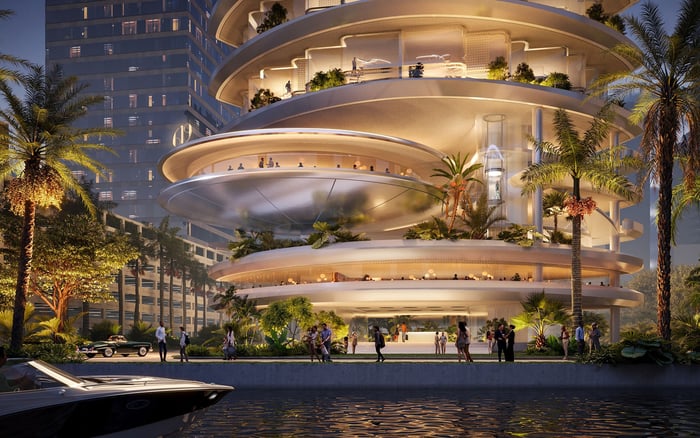
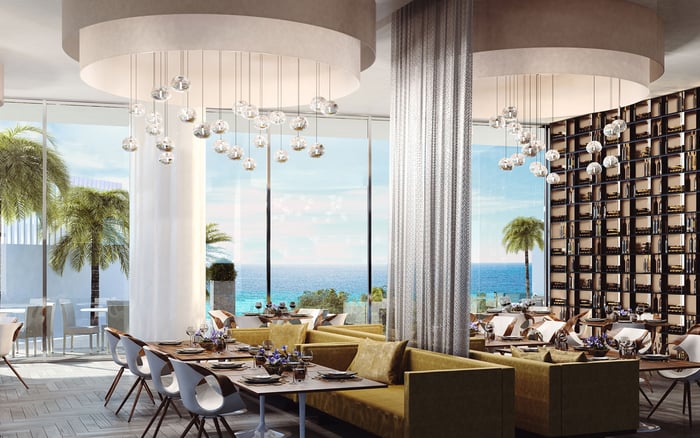
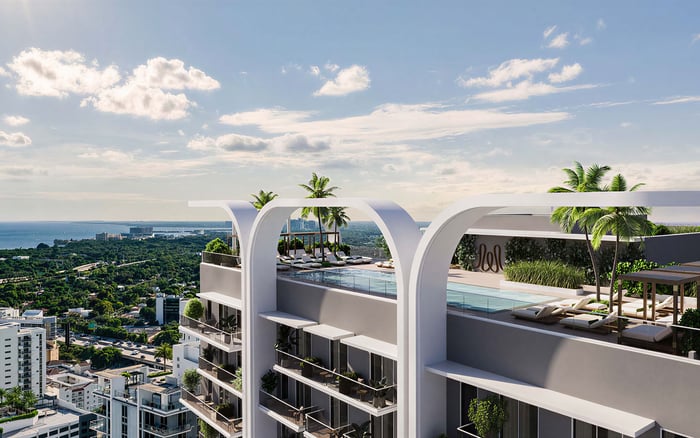
A discreet buyer framework for evaluating Intracoastal wake exposure as an indirect lifestyle and value consideration at Rivage Bal Harbour, with emphasis on stack selection, terrace use, noise, vibration, and 2026 waterfront risk discipline.
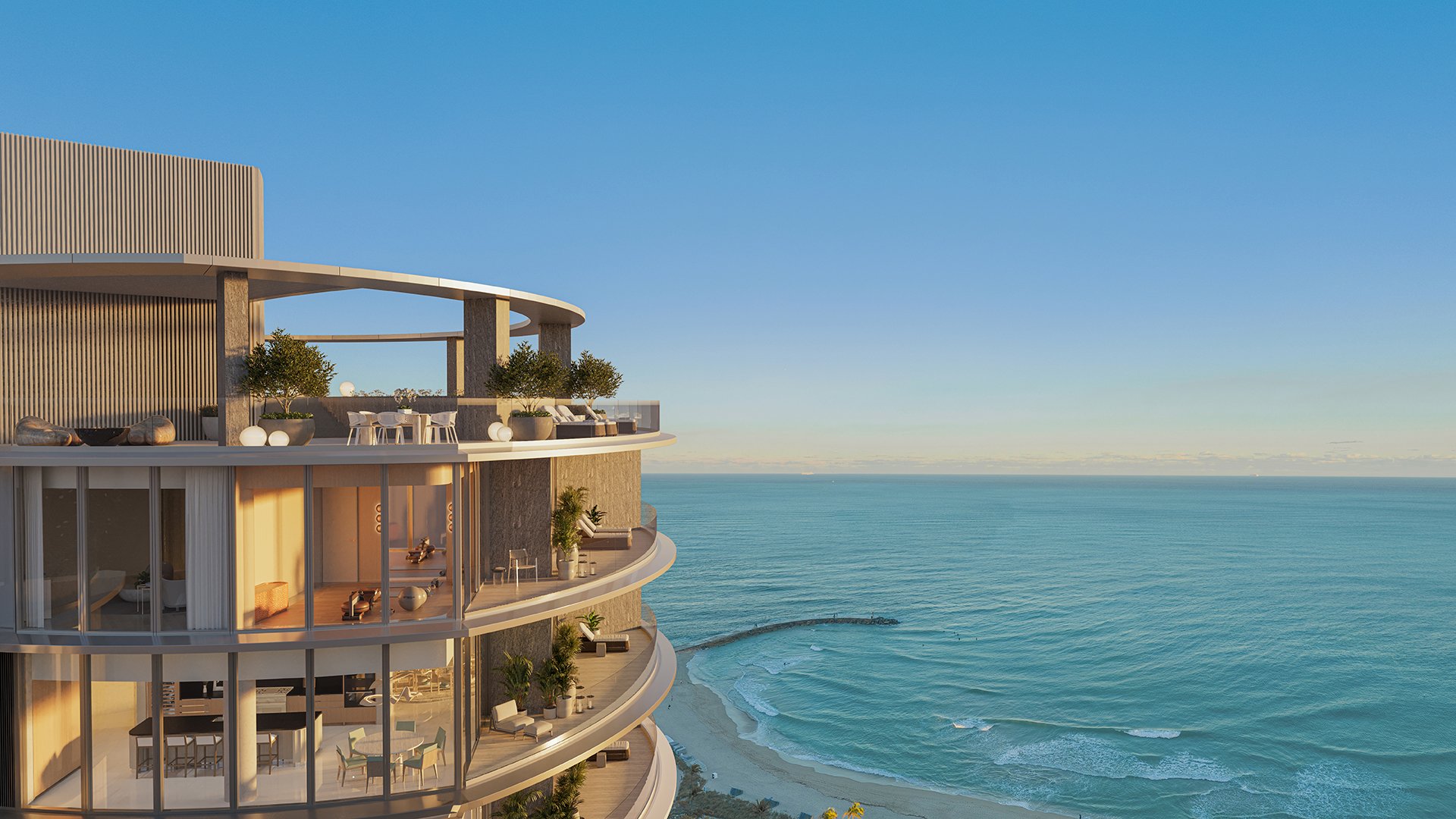
Rivage Bal Harbour is framed for a buyer who already understands finishes, service, architecture, and brand positioning. The sharper 2026 question is more technical: how should an ultra-prime purchaser evaluate Intracoastal wake exposure when the building is positioned on the Atlantic side of Bal Harbour, rather than directly on the Intracoastal Waterway?
That distinction is central to the diligence. Rivage Bal Harbour is an oceanfront condominium development, so wake exposure should not be treated as a primary seawall-front condition, as it might be for a directly bayfront or Intracoastal-front residence. The issue is subtler: a lifestyle-quality lens tied to perceived quiet, privacy, vibration sensitivity, terrace comfort, and the long-term confidence a buyer wants before committing to a trophy waterfront home.
For Rivage Bal Harbour, oceanfront positioning, water-view quality, terrace use, investment discipline, and new-construction review should be evaluated together. Sophisticated buyers are not trying to prove a defect. They are trying to understand how the surrounding marine environment may affect daily life, future resale perception, and the hierarchy of preferred lines within the building.
The first diligence step is geographic discipline. An oceanfront residence carries a different risk profile from a home whose seawall, marina, or outdoor living areas sit directly along an active inland waterway. At Rivage, the relevant question is not whether passing vessels are producing wake against the building edge. The more useful question is whether the broader waterfront context changes the way a buyer experiences quiet, views, breezes, outdoor dining, and evening use of the residence.
This matters because luxury buyers often use the term waterfront too broadly. A directly Intracoastal-facing condominium may involve more immediate exposure to boat movement, wake rhythm, dock activity, and sound reflection across narrower water. An Atlantic-facing residence can deliver a different sensory profile, with ocean exposure taking priority and inland wake considerations becoming indirect, comparative, and contextual.
The best buyers separate these categories before making emotional judgments. They ask what is physically proximate, what belongs to the broader neighborhood environment, and what can be evaluated only through repeated observation.
A 2026-oriented review should not rely on a single polished sales visit. Waterfront living is dynamic. Boating patterns shift by day, season, weather, and social calendar. Coastal conditions and regulatory expectations also continue to evolve, so a disciplined buyer should gather impressions across more than one setting.
The checklist begins with marine-traffic observation. Buyers and advisors should note whether nearby vessel activity is constant, periodic, or concentrated at particular times. The goal is not to calculate an unsupported engineering metric. It is to understand rhythm: when the waterfront feels serene, when it feels active, and whether that pattern aligns with how the residence will actually be used.
Sound comes next. The issue is not only volume; it is character. A distant engine note, a short burst of acceleration, or intermittent social noise can register differently depending on wind, elevation, glazing, and terrace orientation. For a buyer expecting morning calm, afternoon outdoor work, or late-night dining, the relevant test is experiential.
Vibration deserves a separate line item. In most luxury reviews, it is addressed too late, if at all. The buyer should be attentive to sensation in outdoor areas and interior rooms, especially during periods of visible vessel activity in the broader waterfront environment. Any concern should become a targeted technical question before contract comfort is reached.
Privacy also belongs in the checklist. Marine activity can influence how exposed a terrace feels, even when the building is not directly along the Intracoastal. Privacy is not only about distance from another tower. It is also about motion, sightlines, and the buyer’s tolerance for a living environment that changes throughout the day.
Stack selection is where the diligence becomes actionable. At the top of the market, buyers often compare residences by view drama, ceiling height, plan efficiency, and amenity access. For a waterfront home, line selection should also absorb wake and noise questions.
Elevation may change perception. Higher floors can broaden views and reduce some localized impressions, while also exposing a residence to different wind and sound behavior. Lower floors may feel more connected to the water and landscape, which can be appealing, but that intimacy may also make nearby activity feel more present. No single answer applies across every buyer profile.
Orientation matters as well. A line that frames a prized view corridor may produce a different sensory experience from one that prioritizes a quieter angle. The buyer should test the intended lifestyle, not an abstract idea of prestige. If the residence will be used for long terrace breakfasts, weekend family gatherings, or quiet seasonal stays, those use cases should shape the preferred stack.
Terrace design deserves the same scrutiny. Outdoor living is a defining South Florida luxury, but the terrace is where environmental assumptions become personal. A buyer should stand, sit, speak, listen, and imagine real use. If the terrace is central to the acquisition thesis, it should be underwritten with the same seriousness as the kitchen, primary suite, and view.
The most useful comparison is not between Rivage and an abstract ideal. It is between Rivage and directly Intracoastal or Biscayne Bay-facing condominiums. That comparison helps a buyer calibrate what kind of wake-risk expectation is reasonable.
A directly inland-waterfront residence may offer captivating boat life and protected-water views, but it can also bring the immediate presence of marine circulation into the daily experience. Rivage, by contrast, should be assessed first through its Atlantic-facing identity. Any Intracoastal wake issue is part of the wider Bal Harbour context rather than the primary physical condition at the building edge.
This distinction can sharpen value judgments. A buyer who prizes the theater of boats may accept more movement and sound in exchange for that energy. A buyer who wants oceanfront calm may prefer a profile where inland wake exposure is more indirect. Neither position is universally superior. The correct answer depends on lifestyle, holding period, sensitivity, and resale strategy.
Good diligence should not end in a memo that nobody uses. It should translate into acquisition behavior. If a buyer observes a pattern that affects perceived quiet or terrace enjoyment, the response may be a shift in preferred line, a stronger preference for elevation, a revised pricing view, or additional technical review.
For family offices and advisors, the discipline is to convert subjective impressions into decision language. Does the observation affect enjoyment, liquidity, or negotiation leverage? Does it matter for the principal’s actual use pattern, or only in theory? Is the concern broad to the location, specific to a line, or resolved through orientation and height?
The strongest buyer position is neither alarmist nor passive. It recognizes that Rivage Bal Harbour is an oceanfront luxury proposition, while still requiring waterfront diligence beyond finishes and amenity renderings. In 2026, that is the mark of serious acquisition work: understanding environmental subtleties before they become post-closing surprises.
Is Rivage Bal Harbour directly on the Intracoastal Waterway? No. Rivage Bal Harbour is positioned on the Atlantic oceanfront side of Bal Harbour, so Intracoastal wake exposure should be evaluated as an indirect contextual factor.
Why should an oceanfront buyer care about Intracoastal wake exposure? Because wake-related activity can still shape perceptions of quiet, privacy, vibration, and outdoor comfort in the broader waterfront environment.
Is wake exposure a documented defect at Rivage Bal Harbour? This checklist does not frame it as a documented defect. It treats wake exposure as a prudent due-diligence lens for sophisticated waterfront buyers.
What should buyers observe during site visits? Buyers should consider vessel activity patterns, sound character, possible vibration, privacy, and how terraces feel during realistic use periods.
Is one visit enough to judge waterfront comfort? Usually not. A 2026 review should consider different times and conditions rather than relying only on a single, curated visit.
How does stack selection affect wake and noise diligence? Elevation, orientation, and view corridor can change how a residence experiences sound, movement, and perceived exposure.
Should buyers compare Rivage with bayfront condominiums? Yes. Comparing Rivage with directly Intracoastal or Biscayne Bay-facing buildings helps calibrate reasonable expectations for wake risk.
Can wake diligence influence negotiation strategy? Yes. Observations may inform pricing, preferred lines, technical questions, or the buyer’s willingness to proceed.
Who should use this checklist? It is designed for luxury buyers, family offices, and advisors evaluating waterfront lifestyle risk in South Florida.
What is the main takeaway for 2026 buyers? Treat Rivage as an oceanfront opportunity, but underwrite the surrounding marine environment with the same discipline applied to design and amenities.
For a confidential assessment and a building-by-building shortlist, connect with MILLION.
If branded residences are on your mind — as a home or as an allocation — we would be glad to share what we are seeing, privately.
Begin a quiet conversation