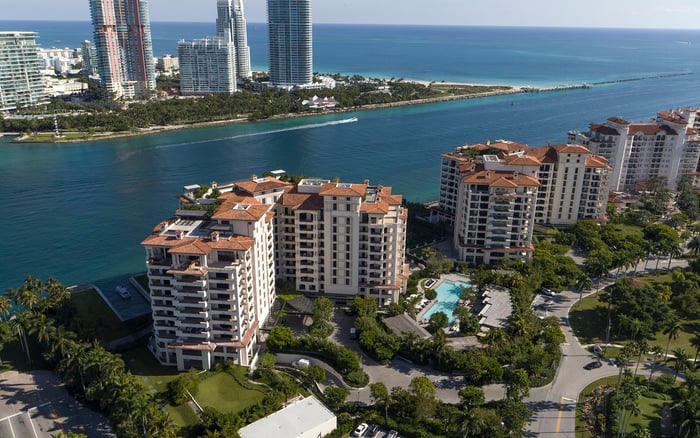
In South Florida, the difference between stepping onto sand from your lobby and reaching the ocean via a raised seawall promenade is more than aesthetic. It shapes privacy, daily ritual, perceived exclusivity, and even the way a residence performs as a long-term lifestyle asset. This guide frames the trade-offs through the lens of buyer experience: how you arrive at the water, what you see and hear from the terrace, and how shoreline design influences security, convenience, and the emotional value of oceanfront living.
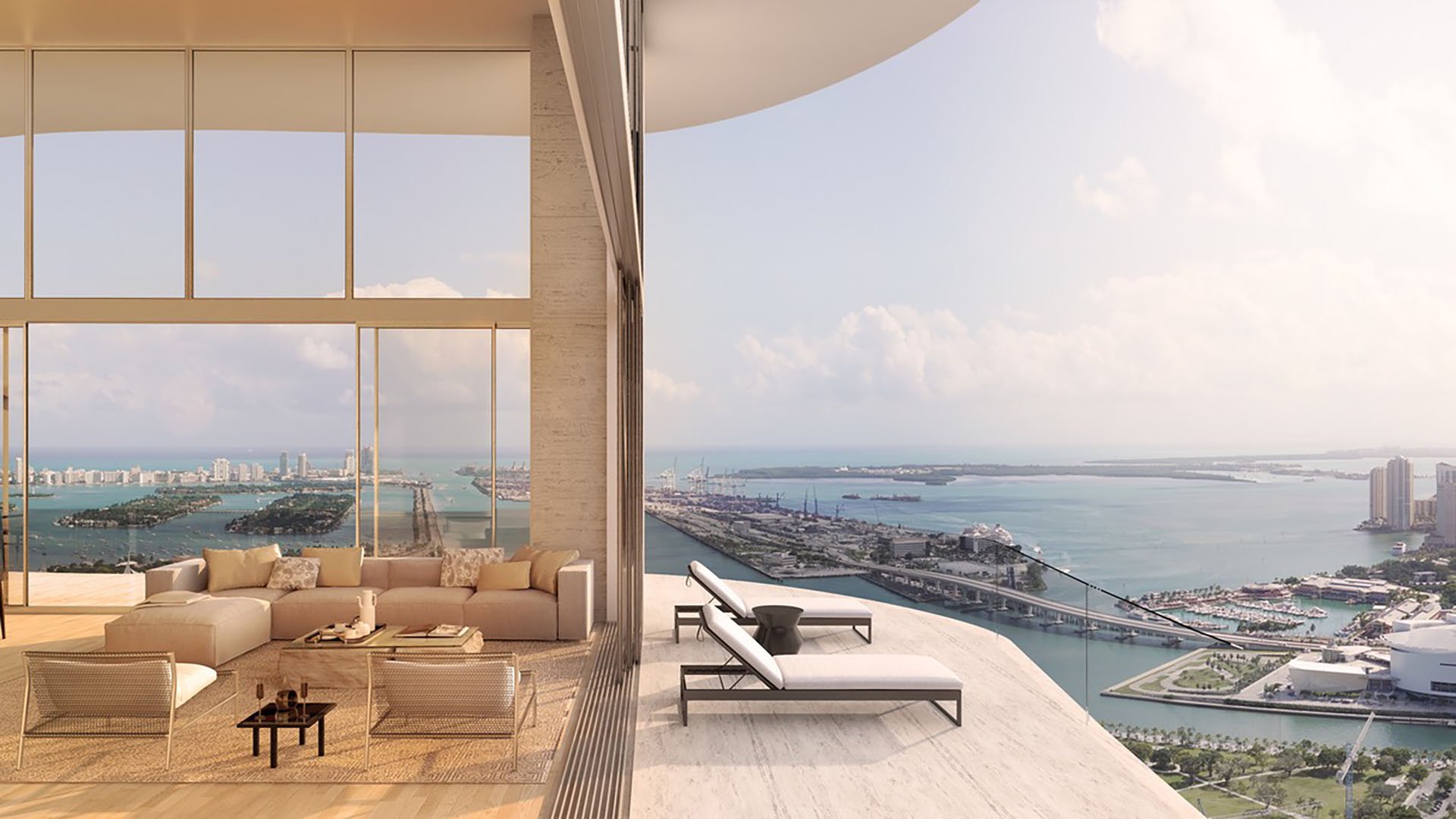
For oceanfront buyers, “beach access” is often treated like a checkbox. In reality, the way a property meets the Atlantic can define the entire lifestyle. Direct sand access means the experience resolves at grade: you exit, pass through a controlled threshold, and step onto sand. An elevated seawall promenade adds an intermediary layer-a raised, hardened edge designed to manage water and create a walkable route.
These two conditions live very differently day to day. One prioritizes immediacy and intimacy; the other delivers separation and, at times, a more urbanized shoreline. Neither is universally “better,” but one will align more precisely with your priorities around privacy, ease, and the cadence of a coastal routine.
At its best, direct sand access is a private choreography. The sequence is clean and efficient: elevator, lobby, pool deck, gate, sand. That reduction in friction matters more than many buyers expect. It changes how often you actually use the beach-and how spontaneous it feels.
In buildings designed around this condition, the beach functions as a true extension of the amenity program. A morning walk doesn’t require planning. A sunset becomes something you can catch between calls. Family time feels less scheduled and more instinctive. The luxury is not only proximity, but effortlessness.
The strongest direct-access environments also tend to produce a calmer near-field view. Instead of a band of hardscape and foot traffic at the water’s edge, you’re looking at sand, dune vegetation, and open horizon. For many, that visual simplicity reads as more exclusive, even when the beach itself is public.
A Miami Beach buyer who values that classic, immediate oceanfront rhythm might gravitate toward settings where the building-to-sand relationship is central to the experience, such as 57 Ocean Miami Beach, where the brand promise is inseparable from the shoreline.
A raised seawall promenade offers a different kind of appeal: elevation, structure, and a more defined boundary between home and water. For some buyers, the promenade reads as polished and orderly-a “finished” coastal edge that can feel safer and more predictable.
Elevation can also shift the visual experience. A higher coastal walk may open sightlines and create clearer separation between beach activity and the building’s interior amenity deck. In the right configuration, that can translate into a more panoramic feel from select vantage points.
The trade-off is adjacency. Promenades are built to be used. That can mean more passersby, more incidental noise, and a greater need for smart landscape buffering and access control where the public realm meets a private residential environment.
A promenade can be outstanding when it’s treated as an intentional “front door” to the ocean-layered landscaping, controlled entry points, and amenity placement that protects privacy. Without those design moves, it can feel less like oceanfront living and more like living beside a scenic corridor.
Luxury oceanfront is as much about control as it is about view. The real question isn’t simply whether a building is “on the beach,” but where the first meaningful privacy threshold begins.
With direct sand access, that threshold is often a controlled gate or staffed passage from the amenity deck to the sand. Executed well, it keeps the beachfront experience clear: residents and guests in one ecosystem, the public beach beyond.
With an elevated promenade, the threshold can blur. If the promenade functions as a public thoroughfare, the building must work harder to preserve discretion. The best outcomes come down to design and operations: lounge placement, the height and density of planting, camera coverage, and the day-to-day decisions that make a space feel private without feeling defensive.
If you prioritize discretion and a “quiet luxury” beach day, visit during peak hours. Stand where the loungers would be-not where the sales view is. Listen for foot traffic. Track sightlines into the amenity deck. These experiential details rarely show up in marketing language, yet they often define daily satisfaction.
In South Florida, heat, humidity, and the simple reality of carrying towels, sunscreen, and water turns “access” into logistics. Direct sand access reduces decision fatigue. It makes the beach a default, not an event.
Promenade-based access can still feel convenient, but it often adds steps: elevation changes, longer walking distances, or routes that read more public. The difference may feel minor on a tour-and major over years.
This is especially relevant for multigenerational households and second-home owners. The more effortless the beach becomes, the more often it becomes part of the home’s identity. And that identity can be an emotional anchor-often what keeps a residence “sticky” over time.
Oceanfront buyers often fixate on the horizon. A more useful question is what occupies the lower third of your view.
Direct sand access frequently means your near-field view is beach and dune. It reads softer and more natural, with fewer hard edges and less linear movement.
A seawall promenade introduces a band of structure and motion. People walk, stop, and gather. Night lighting can feel brighter. For some, that energy is part of the appeal; for others, it interrupts the sense of retreat.
This is where building height and unit orientation become decisive. A high-floor residence can float above promenade activity; lower floors may feel more exposed. If you’re targeting lower floors for proximity to the amenity deck, be especially exacting here.
Coastal design in South Florida is inseparable from storm thinking. Buyers don’t need alarm-they need clarity.
Direct sand access implies more direct interaction with the beach environment. Operational competence matters: how furniture is secured, how gates are managed, and how the amenity deck is protected during severe weather.
A seawall promenade can signal a more engineered edge, but engineering isn’t the whole story. The lived experience comes down to protocols, maintenance culture, and how quickly a property returns to normal routines after an event.
When touring, ask operational questions with the same seriousness you give finishes. The most luxurious buildings feel calm not because risks are ignored, but because they are handled quietly and competently.
Think in sequences. Luxury is the absence of friction.
First, trace your path from residence to water. Count the transitions. Note where you feel observed.
Second, study amenity deck placement. Is it set back and buffered, or pressed against a public edge? A thoughtful setback can make promenade adjacency nearly irrelevant.
Third, test the experience at different times. Morning reads as serenity; mid-afternoon shows how the shoreline truly functions.
Finally, match the access type to your personal rituals. If your ideal day is barefoot and unplanned, direct sand access is difficult to replace. If your ideal day includes structured walks, social energy, and a more defined boundary, a promenade can feel exactly right.
For buyers comparing shoreline experiences across Miami Beach, Surfside, and Sunny Isles, it can help to tour multiple typologies in a single weekend. Pair a direct oceanfront sensibility like The Perigon Miami Beach with a more resort-forward context like Turnberry Ocean Club Sunny Isles, and pay attention to how your body reacts to the shoreline edge-not just the lobby.
Miami Beach often rewards buyers who want culture, walkability, and a layered social scene. In that environment, shoreline design can either protect a sense of retreat or pull the city’s energy right up to the amenity deck.
Surfside and Bal Harbour often attract buyers seeking a quieter, more residential pace. There, direct sand access can feel especially aligned with understated luxury-where the shoreline reads as calm rather than performative. A building such as Ocean House Surfside fits naturally in that conversation.
Sunny Isles tends to offer scale, height, and a more vertical oceanfront lifestyle. For some buyers, elevation reduces the concern of a public edge; for others, it intensifies the desire for a seamless, private beach threshold.
If your life is split between oceanfront and in-city dining and commerce, you may also be weighing the “sand question” against an entirely different waterfront typology. Brickell’s luxury addresses are often defined by bayfront promenades and riverwalk-style edges rather than sand. In that context, a project like 2200 Brickell can be a smart counterpoint in your search: you’re choosing between two different kinds of water adjacency, each with its own privacy and ritual.
Oceanfront value isn’t only view corridors and interior finishes; it’s the repeatable pleasure of the shoreline. Direct sand access photographs well, but more importantly, it lives well. It creates stories: children running from pool to water, a quiet morning coffee with bare feet in the sand, the ease of “just going down.”
Promenade living can hold value too-especially when the promenade is beautifully executed and the amenity program creates a private world above it. But it must be intentional. Without strong buffering and disciplined operations, the promenade can read like a public border rather than a private privilege.
The best approach is to decide what you want to protect: spontaneity, discretion, or social vitality. Then choose a shoreline design that naturally supports it.
Is direct sand access always private? Not necessarily. The beach itself can still be public, but the best properties create a controlled, discreet threshold.
Does a seawall promenade mean better storm protection? It can suggest a more engineered edge, but day-to-day resilience still depends on building operations and maintenance.
Which is better for families with young children? Direct sand access is often easier because it reduces transitions, but safety depends on gates, staffing, and layout.
Will promenade foot traffic affect noise inside the unit? It can, especially on lower floors. High floors and good glazing can reduce the impact.
Is direct sand access more convenient than a promenade? Usually, yes. Convenience comes from fewer steps, fewer elevation changes, and a clearer path to the beach.
Can a promenade still feel exclusive? Yes-when there is strong landscape buffering, controlled access points, and amenity areas set back from the public edge.
What should I look for during a site visit? Walk the route to the water, stand at the amenity edge, and visit at peak hours to understand privacy and activity.
Do lower floors benefit more from direct sand access? Often they do, because proximity becomes a lifestyle advantage, but verify sightlines and privacy at the amenity level.
How do I compare Miami Beach vs Sunny Isles shoreline experiences? Compare your daily ritual: social energy and walkability versus vertical living and panoramic views.
Is “beach access” the same thing as direct sand access? No. Beach access can be indirect or shared, while direct sand access implies a more immediate, at-grade connection.
If you'd like a private walkthrough and a curated shortlist, connect with MILLION Luxury.
If branded residences are on your mind — as a home or as an allocation — we would be glad to share what we are seeing, privately.
Begin a quiet conversation