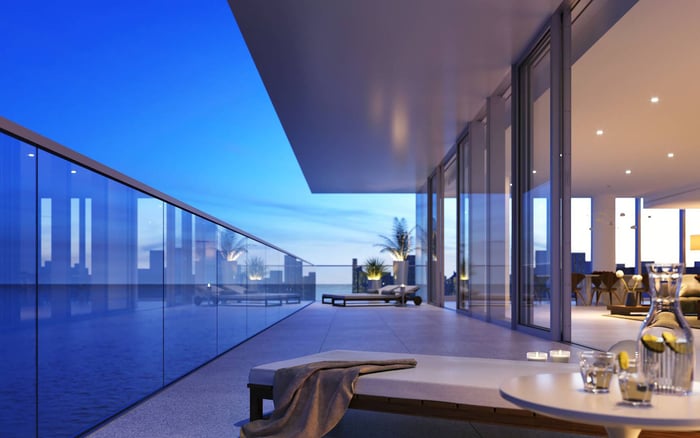
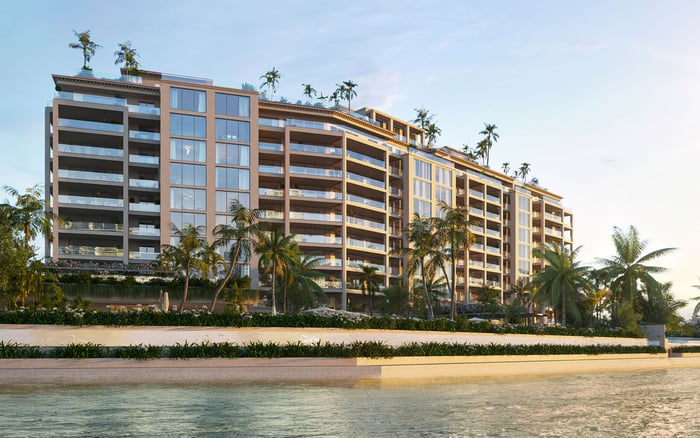
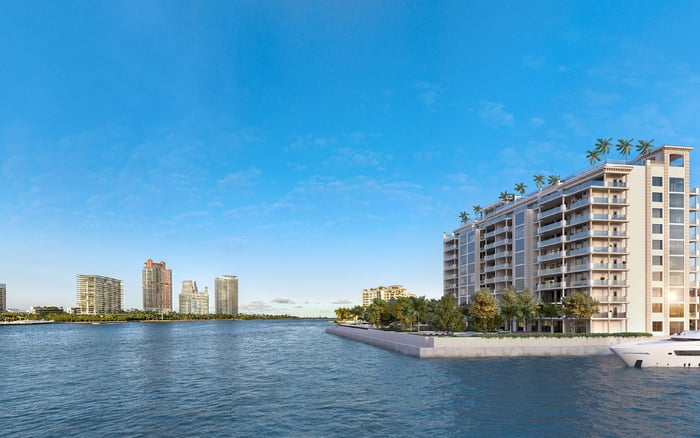
Oceanfront living is defined by light, reflection, and horizon lines. In South Florida, that same sun that animates an Atlantic view also drives heat gain, glare, and long-term fading. Motorized shades and UV-protective glazing are not decorative add-ons in a luxury residence; they are performance systems that protect interiors, preserve comfort, and allow owners to enjoy floor-to-ceiling glass without living behind closed curtains. For buyers evaluating new construction and resale in Miami Beach, Sunny Isles, Bal Harbour, and beyond, the conversation is practical: how to maintain the view while managing solar intensity, salt-air wear, and daily privacy needs. The best solutions blend architecture, automation, and materials so the home feels effortless at noon, golden hour, and late-night entertaining.
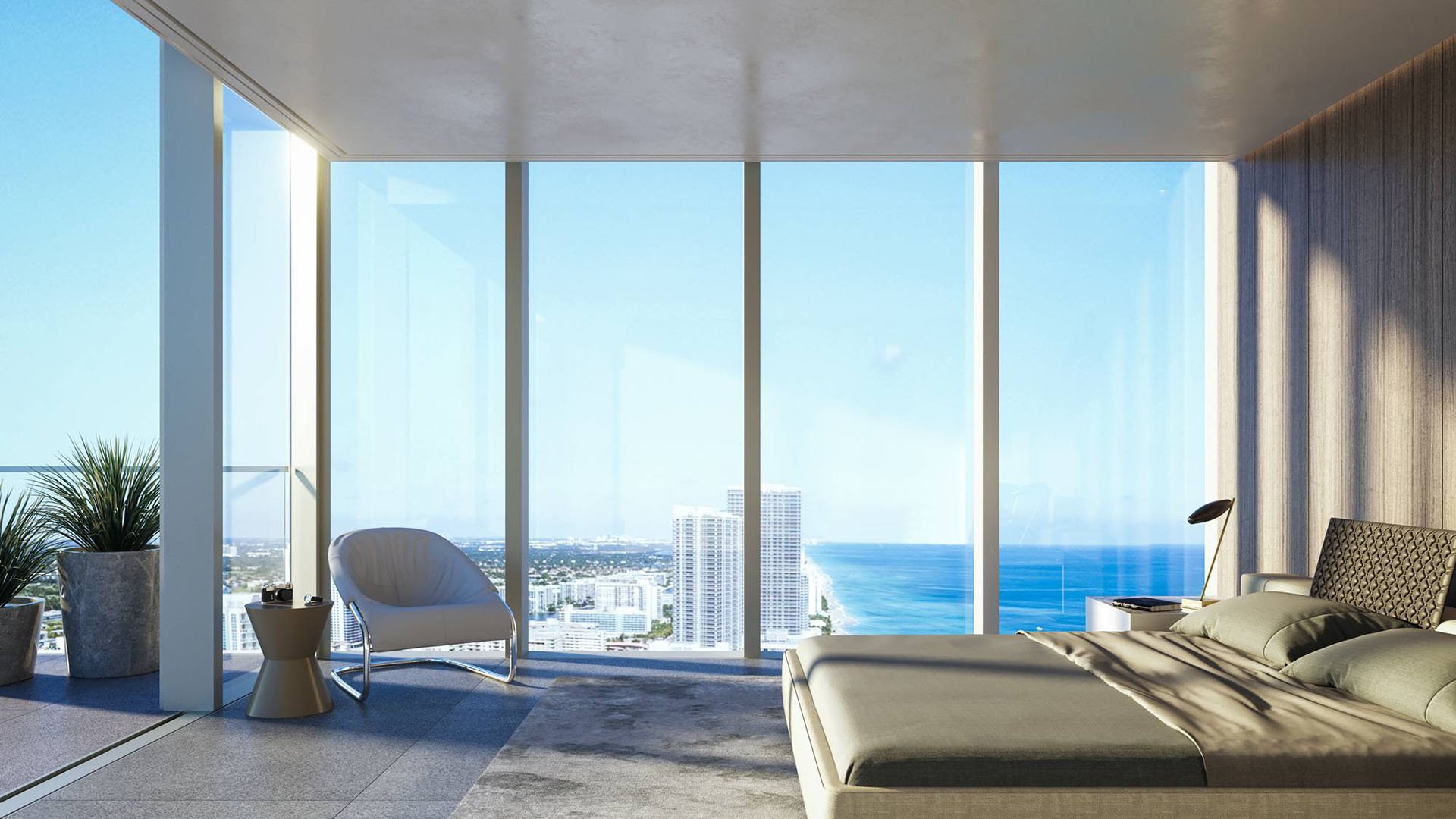
Oceanfront architecture in South Florida is built around glass: expansive sliders, corner windows, and uninterrupted sightlines designed to pull the horizon into the interior. The challenge is not the view-it’s the physics that comes with it.
Direct sun on a high-rise facade can turn a living room into a bright, high-contrast environment where eyes strain and screens become difficult to use. That same exposure loads heat into interior surfaces, forcing cooling systems to work harder and creating noticeable temperature swings from the window line to the core. Over time, intense daylight can accelerate fading and drying in textiles, paper, and wood finishes-especially in rooms that face east for sunrise or south for long, high-angle exposure.
A luxury residence should feel composed at any hour. Motorized shading and UV-protective glazing are the two primary tools that preserve “open glass” architecture while allowing the home to perform like a controlled interior environment.
The appeal of motorized shades isn’t the motor-it’s the ability to treat light as a variable, tuned minute by minute without interrupting the room.
In a large, ocean-facing great room, manual shades often go unused because they demand constant attention. Automation changes that. When shades respond to time of day, sun angle, or a single wall control, owners actually use them-reducing glare when it matters and restoring the view when it doesn’t.
Motorization also supports a cleaner design language. Headrails can disappear into recessed pockets, and multiple shade types can stack within the same opening. A common pairing is a sheer “day” shade that keeps the ocean line present, plus a more opaque “night” shade for privacy and media viewing. Done well, the room still reads as glass and horizon-not fabric.
For buyers evaluating branded, design-forward towers where floor-to-ceiling glass is central to the experience, motorized shading becomes part of the lifestyle promise. In Brickell, for example, residences at 2200 Brickell are often discussed in terms of indoor-outdoor rhythm and the ease of daily living. Automated shading is one of the quiet systems that helps those glass-walled interiors feel livable year-round.
The most refined UV strategy is the one you barely notice. UV-protective glass and high-performance interlayers are engineered to reduce ultraviolet transmission while keeping the home bright and visually crisp.
For a luxury buyer, the stakes are personal. Sunlit rooms hold art, photography, books, collectible furniture, custom millwork, and high-end textiles. Even when a space feels “cool,” daylight can still work on pigments and fibers. UV-focused glazing helps reduce that long-term risk while preserving the clarity that made the view compelling in the first place.
Glazing also shapes how the ocean reads from inside. Better-performing glass can reduce harsh contrast, soften the edge between sky and water, and improve comfort near the window line. That matters in Miami Beach, where the expectation is that the best seat in the house is the one closest to the glass. Residences that market panoramic exposure, such as 57 Ocean Miami Beach, benefit when the envelope supports the daily reality of that exposure.
The best solution is rarely either-or. It’s a layered system-glazing provides baseline protection, and shades fine-tune the experience.
Consider the roles:
Glass is always “on.” It establishes a constant level of UV reduction and solar performance.
Shades are adjustable. They respond to glare, privacy needs, and changing conditions.
For oceanfront living, that division of labor is ideal: continuous protection for sensitive interiors, plus the freedom to open the room fully when light is softer.
Layering also keeps design decisions flexible. If you prefer a bright, airy palette, you can lean on glazing and use lighter shade fabrics. If you favor a richer, gallery-like interior, you can use shading to create controlled light without giving up the view.
In Hallandale Beach, where modern glass towers prioritize expansive exposure, this layering conversation becomes especially relevant. Homes at 2000 Ocean Hallandale Beach are the kind of residences where the view is a daily asset. A layered approach helps keep that asset comfortable, not overpowering.
True luxury is the absence of friction. Motorized shades and UV-protective glazing uphold that standard across three daily moments that matter to oceanfront owners.
First is morning. East-facing rooms can be spectacular at sunrise, but the brightness can be abrupt. Scheduled shade positions can soften the transition while still keeping the waterline visible.
Second is midday-when glare and heat gain are often most apparent. A partial-down “solar mode” can protect seating areas and art walls without turning the home into a dim enclosure.
Third is evening. Once interior lights are on, glass becomes a mirror and privacy becomes more sensitive, especially with neighboring towers nearby. A single command that sets shades, balances lighting scenes, and maintains views where appropriate delivers high-value convenience.
In Sunny Isles, where neighboring towers can sit within close visual range, that nighttime privacy layer is particularly important. Residences known for floor-to-ceiling glass and elevated expectations, such as Bentley Residences Sunny Isles, tend to attract buyers who value discretion as much as design. Motorized shading is a straightforward way to achieve it without compromising architecture.
In ultra-premium residences, details aren’t cosmetic-they determine how the home performs and how long it holds its finish quality.
Prioritize these specification questions during due diligence or design development:
Ask what the glass is designed to do: UV reduction, solar control, and visible light transmission can vary. The goal is comfort and protection without making the interior feel tinted or heavy.
Sheer fabrics aren’t interchangeable. Some are designed for view-through with glare control; others read as privacy sheers that sacrifice clarity. Choose based on how you actually use the room-and when.
Luxury automation should feel intuitive. Look for options that support wall controls, app control, and integration with lighting scenes. The best system is the one guests can use without instruction.
In a primary suite, motor noise and uneven bottom bars become noticeable fast. Precision matters, especially across wide spans.
Salt air and humidity are constants. Hardware and finishes should suit a marine environment, and fabrics should be selected with longevity in mind.
These choices also influence resale value. A residence that feels comfortable at noon in July and serene at night in season presents as “finished” in a way buyers recognize immediately.
The misconception is that protection equals darkness. In the best oceanfront interiors, the opposite is true: protection enables brightness because the space is no longer fighting the sun.
With UV-protective glazing establishing a baseline, designers can place lighter rugs, nuanced textiles, and art-forward walls closer to glazing lines with more confidence. Motorized shades then provide the fine control needed for media viewing, entertaining, and privacy. The result is a home that looks effortless because it’s engineered to be.
This is especially relevant in South Florida’s most image-conscious markets, including Miami Beach and Sunny Isles, where interiors are often curated with the same care as the view. When the building envelope and shading strategy work together, owners can live with furnishings on display rather than covered, rotated, or constantly moved away from the glass.
Before committing to an oceanfront residence, run a simple mental walkthrough. Sit where you would actually sit: at the dining table, on the living room sofa, in the primary bedroom. Picture the sun at different hours-then confirm the home can adapt.
If the residence already has motorized shades, test them. Do they move smoothly? Are the presets genuinely useful? Does the fabric preserve the view, or does it turn the ocean into a gray blur? If you’re planning an upgrade, confirm that shade pockets, electrical pathways, and window conditions support a clean installation.
With glazing, a buyer’s insight is often indirect. You may not change the glass, but you can understand what it’s doing and decide whether a shading layer is enough. In many cases, the strongest approach is to treat glazing as a fixed baseline and invest in a shade system that delivers daily flexibility.
Do motorized shades really matter if I have great glass already? Yes. Glass establishes baseline performance, but shades provide moment-to-moment control for glare and privacy.
Will UV-protective glass make my ocean view look darker or tinted? High-quality UV strategies can preserve brightness; the goal is protection without obvious coloration.
What is the difference between a sheer shade and a blackout shade? Sheers prioritize view and softened light; blackout shades prioritize darkness and privacy.
Can motorized shades help with air-conditioning comfort? They can reduce perceived heat and glare at the window line, improving comfort in sun-facing rooms.
Are motorized shades noisy? Premium systems are designed for quiet operation; it’s worth testing in person during a showing.
Should I shade all day to protect furniture and art? Not necessarily. A layered approach lets you keep daylight while reducing UV exposure and peak glare.
Do I need different shade settings for morning versus afternoon sun? Often, yes. Oceanfront exposure shifts through the day, and presets make those changes effortless.
Is privacy a bigger issue in high-rise oceanfront buildings? It can be, especially at night when interiors are lit; motorized shades make privacy immediate.
Can shades be integrated with lighting scenes and smart home systems? Yes. Integration is common in luxury residences and helps create one-touch modes for daily living.
What should I look for during a walk-through? Check for glare at seating areas, smooth shade travel, and whether fabrics preserve the clarity of the view.
To compare the best-fit options with clarity, connect with MILLION Luxury.
If branded residences are on your mind — as a home or as an allocation — we would be glad to share what we are seeing, privately.
Begin a quiet conversation