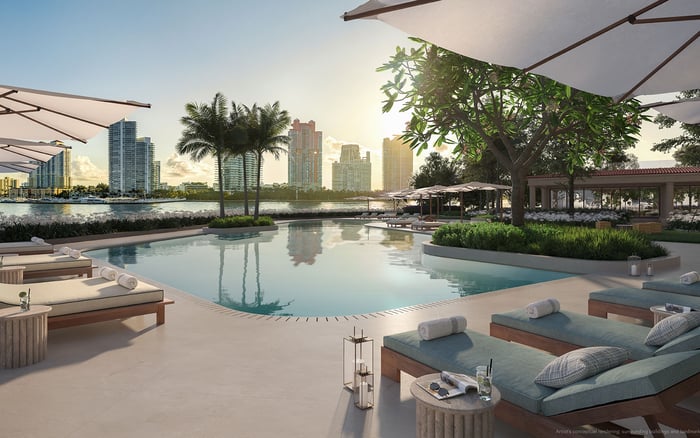
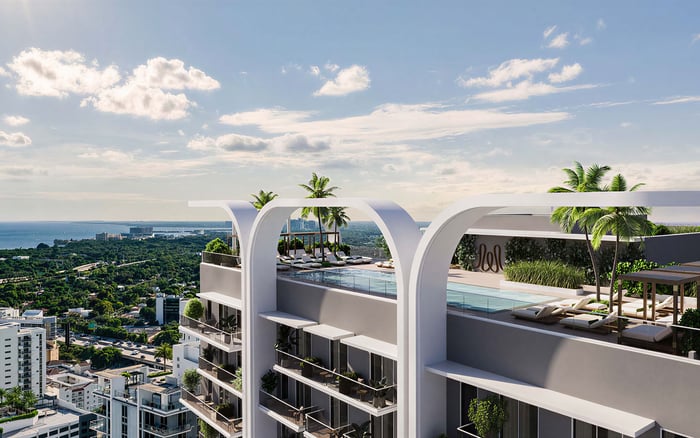
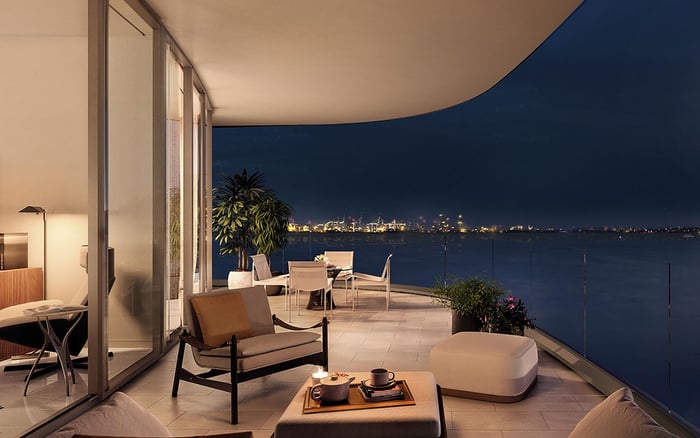
A buyer-focused framework for judging whether a private rooftop pool truly adds value in South Florida, balancing resale leverage, carrying costs, risk, and lifestyle upside.
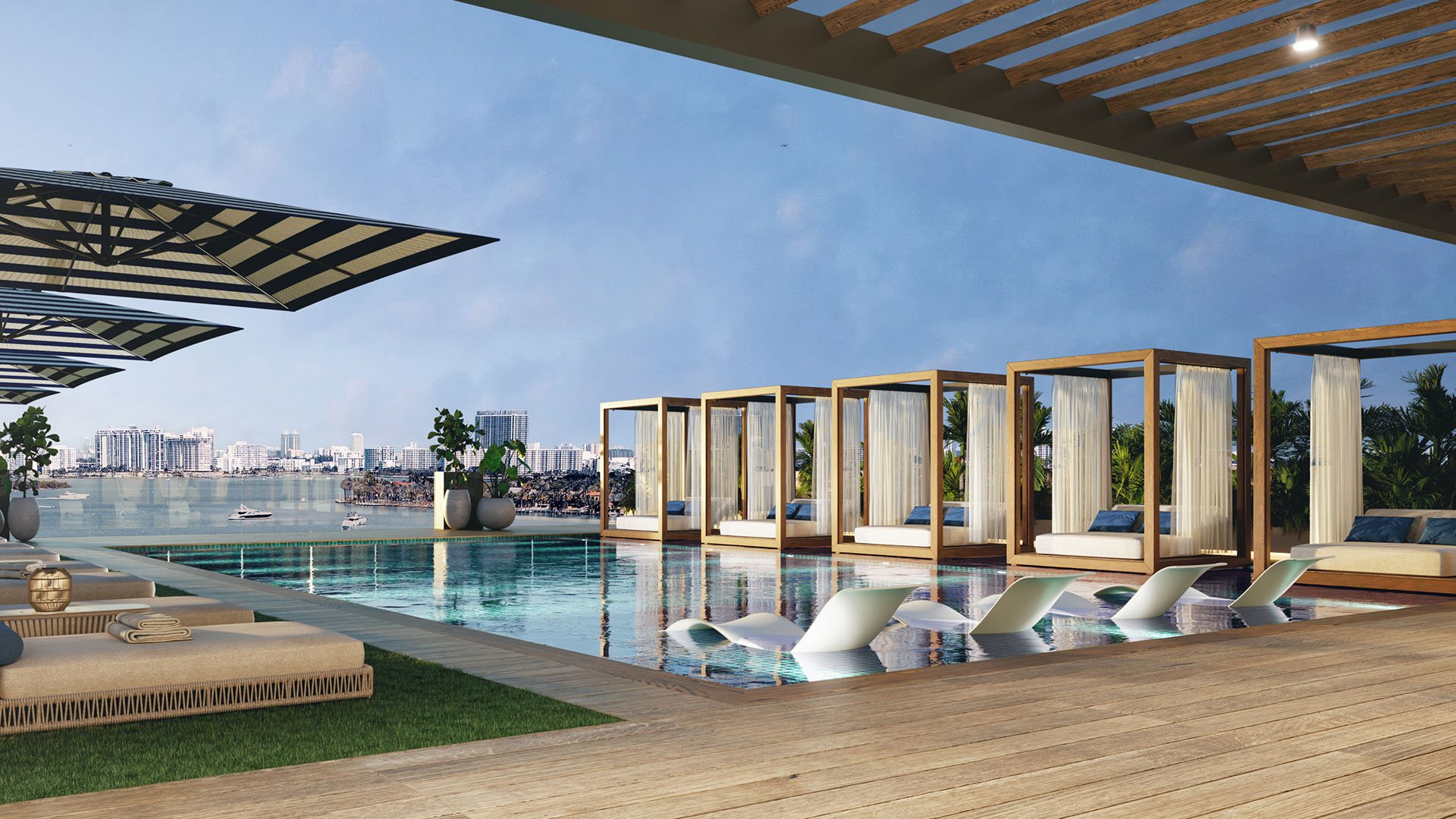
A private rooftop pool reads as the ultimate South Florida flex: horizon views, morning laps above the noise, and entertaining that feels closer to a resort than a residence. But return on investment is not guaranteed. In luxury real estate, the market rewards certain forms of scarcity, punishes deferred maintenance, and can be surprisingly unforgiving about features that photograph beautifully but live like a construction site.
The cleanest way to evaluate ROI is to separate two different returns:
Financial return, meaning resale pricing power, days-on-market advantage, and tenant demand if the home is part of a long-term rental strategy.
Lifestyle return, meaning how often you will actually use the pool, whether it improves your routines, and whether it elevates the home’s experience in a way that is hard to replace with a building amenity.
When those two align, a rooftop pool can amplify value. When they do not, it becomes a high-cost symbol with a narrower buyer pool.
Unlike a kitchen renovation, where comparables often set expectations, rooftop pools trade in a thinner slice of the market. Appraisals and comps can struggle to capture the premium with precision because the feature is rare, and the homes that have it are often distinctive in other ways as well.
A practical ROI lens for South Florida rooftops includes four buckets:
Does the pool create a memorable “must-see” moment that moves a buyer from interested to committed?
Is it one of a few rooftop pools in the building, or one of a few private pools in the entire neighborhood?
Does it feel native to the architecture, with high-end finishes and thoughtful engineering, or does it read as an add-on?
Will the next owner inherit a straightforward, serviceable system, or a collection of specialized components and recurring repairs?
In areas where design-forward buyers already pay for elevated outdoor living, the premium can hold more consistently. Consider the way terraces and private outdoor space are woven into the lifestyle narrative in Brickell and the urban core. A residence in 2200 Brickell, for example, sits in a context where outdoor rooms are part of the expectation, not an afterthought. When a rooftop pool is executed with the same level of intent, it can read as a signature differentiator rather than a novelty.
The line item that surprises even seasoned owners is rarely the initial build; it is the long tail of ownership. A rooftop pool brings the usual pool expenses, plus vertical-specific complexity.
Key cost drivers to pressure-test before you assign any resale premium:
Rooftops are not forgiving. If the system is not engineered and executed at a high level, leaks can become disruptive, expensive, and reputation-damaging during resale.
A pool is heavy. Even when permitted, buyers often ask for engineering documentation. If answers are vague, confidence drops.
Pumps, heaters, filtration, and automation need space and access. If technicians must navigate tight hatches or inconvenient paths, service costs tend to rise.
Height increases wind exposure, which can increase evaporation and chemical balancing demands. This is not theoretical; it shows up as time, effort, and recurring spend.
Even in trophy properties, buyers are increasingly attuned to risk. A pool on a roof can trigger added scrutiny around safety barriers, drainage, and slip resistance.
None of these should disqualify a rooftop pool. They simply belong in the ROI math. If the feature elevates the home’s position in the market but adds ongoing friction, you want the premium to be durable enough to justify it.
The premium for a rooftop pool tends to hold best when scarcity is obvious at first glance.
That usually means one of the following:
Not a semi-private deck visible from surrounding towers, but a space that feels genuinely shielded.
Pool, sun shelf, lounge, dining, and shade integrated as a single “roof garden” concept.
Bay-to-ocean panoramas, skyline plus water, or protected sightlines.
In Miami Beach, privacy and experience can sell the home as much as square footage. A buyer comparing iconic buildings is not only judging finishes; they are judging the feeling of arrival and the elegance of daily life. In that environment, a private rooftop pool can read as a pinnacle feature when paired with an overall high-design lifestyle context such as 57 Ocean Miami Beach.
On the other hand, if a building already offers a highly curated pool deck and service culture, your private rooftop pool must be unmistakably superior in privacy or experience to earn incremental value. Otherwise, a buyer may prefer the simplicity of amenity living.
Many luxury towers offer dramatic pool decks. The buyer who chooses a private rooftop pool is typically not rejecting amenities; they are buying control.
Private control includes:
Quiet swims when the amenity deck is crowded or closed.
Entertaining that feels residential, not public-facing.
Finishes and landscape design that match the interior, rather than the building’s shared palette.
This psychology can broaden your buyer pool in certain submarkets, especially where high-net-worth buyers use the property as a second home and value predictable privacy.
In Hallandale, for instance, the market can include buyers seeking beachfront presence with a residential feel. Pairing that desire with a truly private outdoor escape can create strong emotional resonance. A project like 2000 Ocean Hallandale Beach illustrates the kind of setting where a buyer may already be primed to pay for an elevated ocean-adjacent lifestyle-making a private rooftop pool easier to position as a natural extension of the home rather than an extravagance.
If you want ROI-not just a beautiful photo-the rooftop pool has to feel architectural, not merely installed.
Look for or insist on these characteristics:
Clean lines, refined coping, and deliberate transitions between water and deck.
The roof should read as a well-managed landscape, not a flat surface waiting for ponding.
Pergolas, retractable awnings, or covered zones that make the roof usable at noon.
Surfaces that handle salt air and sun without constant refinishing.
Subtle, warm lighting that supports evening entertaining.
The goal is to make the rooftop feel like the home’s best room-not its most demanding liability.
In condominium settings, ROI also depends on whether the pool is:
(Often more straightforward for resale), or
(Which can invite heightened scrutiny).
Buyers with counsel will ask direct questions about approvals, maintenance responsibility, and whether any portion of the system touches common elements. Even when everything is compliant, the process can add time and complexity to resale.
For new-construction buyers evaluating rooftop pool options, clarity becomes part of the value proposition. In high-design environments like 888 Brickell by Dolce & Gabbana, the expectation is not only beauty, but also a coherent service ecosystem. A rooftop pool backed by strong building operations, predictable maintenance pathways, and thoughtful engineering is far more likely to preserve value.
If the property is part of an Investment strategy, a rooftop pool can cut both ways.
Potential upsides:
Higher perceived exclusivity, which can support premium positioning.
Stronger tenant interest for executive-style, longer-term stays.
Potential downsides:
More stringent insurance expectations and liability considerations.
Greater wear-and-tear sensitivity, especially if the roof becomes the primary entertainment zone.
In the luxury segment, rooftop pools tend to fit best when the rental strategy is selective and the property is managed with hotel-level attentiveness. If you expect a hands-off approach, a simpler outdoor program may produce a cleaner net return.
Because rooftop pools are inherently bespoke, the most reliable approach is to treat the pool as a negotiation lever rather than a fixed dollar premium.
Three questions to anchor your evaluation:
If your future buyer is a privacy-first end user, the pool can be decisive. If your future buyer is a low-friction traveler, it may be neutral.
A rooftop pool can sometimes offset the lack of beach access, a small yard, or limited ground-level outdoor space. In that case, it carries clear utility value.
The strongest listings have a single, coherent narrative: oceanfront elegance, skyline sanctuary, or resort-caliber wellness. The pool should reinforce that narrative-not compete with it.
A rooftop pool is most likely to deliver a satisfying return when:
The home is already positioned as a top-tier product within its micro-market.
The rooftop has meaningful square footage for a full outdoor lifestyle, not just a narrow strip.
Privacy is real, and the wind conditions do not make the deck feel exposed.
Engineering, waterproofing, and service access are as refined as the finishes.
In those cases, the feature can compress days on market and create competitive tension-even if buyers cannot easily quantify the premium.
It is wise to reconsider if:
The rooftop is visually dramatic but practically unusable in midday conditions.
The pool reads as an afterthought that compromises the terrace’s flexibility.
Ownership will require constant vendor coordination, especially for second-home usage.
The building’s shared amenities already provide a near-private experience with better serviceability.
Luxury buyers value beauty, but they also value effortlessness. If the pool introduces more operational friction than delight, the lifestyle return may not justify the financial one.
Is a private rooftop pool always a value-add in South Florida? Not always. The premium depends on rarity, privacy, and how integrated the design feels.
Do rooftop pools typically sell homes faster? They can, especially when the feature is genuinely scarce and photographs as a signature space.
What is the biggest risk factor for ROI? Waterproofing and long-term maintenance complexity are common deal-friction points.
Does height make a rooftop pool harder to maintain? Yes. Wind exposure, access, and service logistics can increase ongoing effort and cost.
Are buyers concerned about structural load and engineering? Sophisticated buyers often ask, and clear documentation tends to protect resale confidence.
Is a rooftop plunge pool different from a full pool in ROI terms? Often yes. A plunge pool can deliver lifestyle impact with less footprint and complexity.
How do building rules affect resale? If approvals and responsibility are clear, it helps. Ambiguity can slow transactions.
Can a rooftop pool hurt insurability or liability posture? It can invite added scrutiny, so safety features and a clean risk profile matter.
Is a private rooftop pool redundant if the building has a great amenity deck? Sometimes. The private pool must win on privacy, convenience, or overall experience.
What is the smartest way to think about ROI for this feature? Treat it as a strategic differentiator and lifestyle asset, then validate the ownership friction.
If you'd like a private walkthrough and a curated shortlist, connect with MILLION Luxury.
If branded residences are on your mind — as a home or as an allocation — we would be glad to share what we are seeing, privately.
Begin a quiet conversation