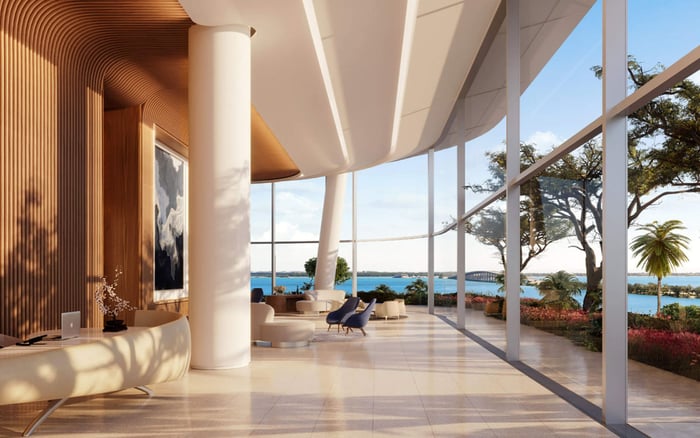
In South Florida, sea level rise has shifted from abstract climate discourse to a practical design constraint that touches everything from garage entries to mechanical rooms, landscaping, insurance, and long-term resale. For buyers evaluating new waterfront construction, the most valuable questions are rarely about whether a building is “resilient,” but how resilience is executed, maintained, and governed over decades. This MILLION Luxury editorial outlines what mitigation can realistically accomplish in new waterfront product, what it cannot, and how to read a development’s design decisions with an owner’s eye. The goal is not alarmism. It is clarity: understanding where engineering ends and stewardship begins, and why the most future-ready waterfront homes pair elevated, hardened infrastructure with disciplined operations and conservative expectations.
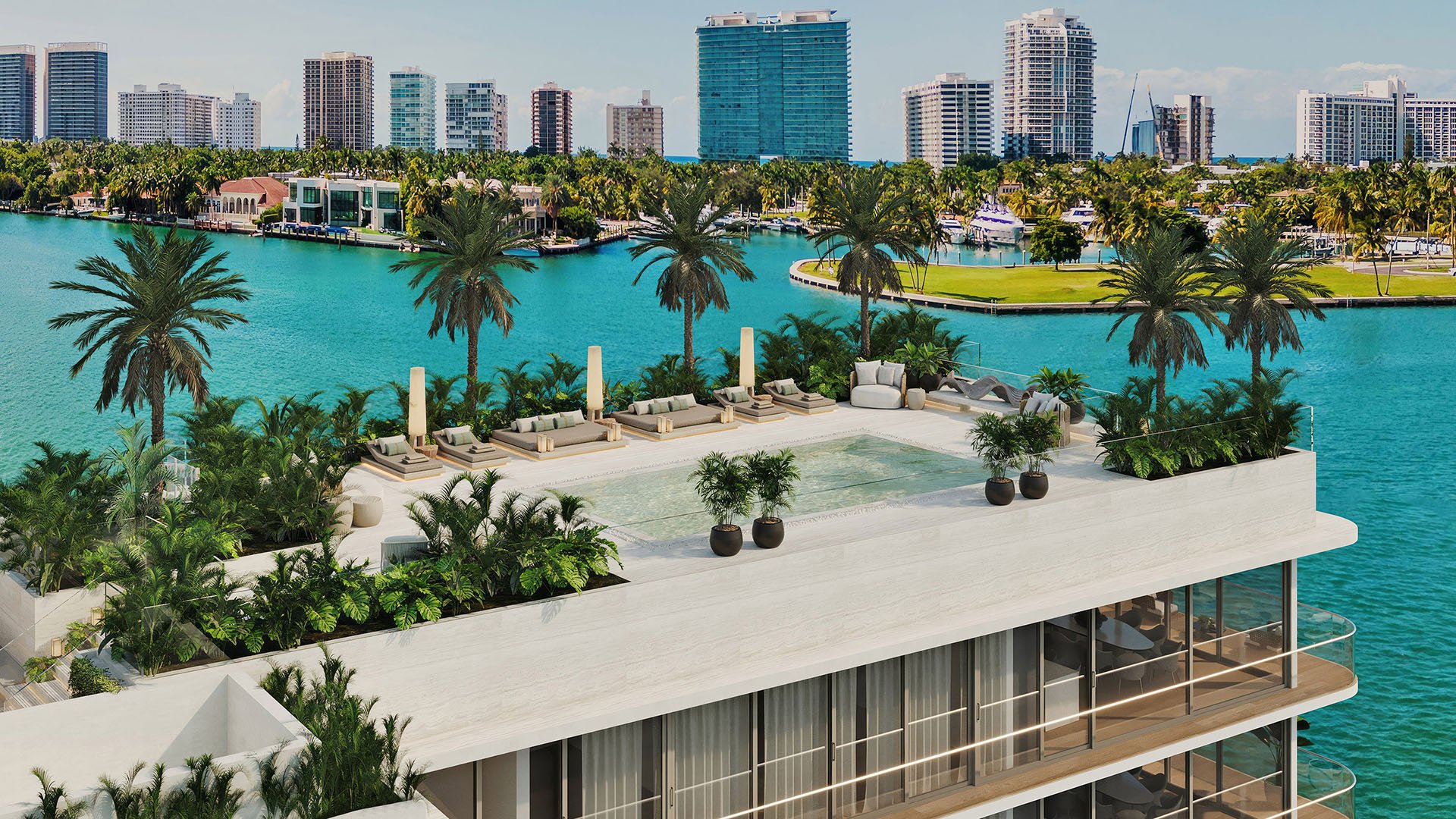
Waterfront construction in South Florida has always been an exercise in seduction and discipline: views and breezes balanced against salt, wind, and water. What has changed is the baseline assumption. New projects increasingly treat higher water conditions as a day-to-day operating reality, not a rare emergency. That shift shows up in the quiet details most buyers never see on a glossy tour: where generators sit, how stormwater is routed, how a lobby is detailed at its threshold, and whether the building can stay functional when the street outside is not.
Mitigation, however, is not a magic phrase. It is a coordinated stack of decisions and trade-offs that determines how a property performs over time. The reality for buyers is straightforward: a new waterfront building can be engineered to reduce risk and support continuity, but it cannot remove water from a low-lying coastal region. The strongest value proposition is not perfection-it is measured performance: fewer points of failure, faster recovery, and maintenance obligations that are understood in advance.
In practical terms, sea level rise mitigation in new construction aims to do three things.
First, it keeps critical systems above expected water exposure. That includes electrical gear, fire pumps, telecom, elevator controls, and emergency power. When these systems are elevated and protected, a building is more likely to remain safe and serviceable even if lower levels take on water.
Second, it manages water when it arrives-because it will. That means deliberate site grading, redundant drainage pathways, backflow protection, sump and pump strategies, and landscape choices that do not trap water against the structure. In the best projects, water is treated like a guest you do not want but have planned for: directed, contained, and dismissed.
Third, it protects access and habitability. Waterfront buyers are not only buying an apartment; they are buying a lifestyle built around arrivals and departures, valet operations, package rooms, and reliable elevator service. Mitigation measures that preserve first-floor function, keep lobbies dry, and maintain vertical transportation can matter as much as exterior flood barriers.
What mitigation cannot do is guarantee uninterrupted normality. Roads can flood, utilities can fail, and regional pumping systems can become the bottleneck. A building may be engineered with rigor and still be surrounded by compromised infrastructure. This is why “resilience” must be judged as both property-level execution and neighborhood-level reality.
Luxury buyers are trained to assess finishes. Resilience requires you to assess systems.
Start with the building’s vertical organization. In many newer towers, the most consequential questions live at the lowest levels: parking, loading, storage, and mechanical. A garage designed to tolerate occasional water without sacrificing equipment is fundamentally different from one that is simply below grade and visually polished.
Then look at thresholds. The entry sequence-from curb to lobby to elevator core-shows whether the project expects water at the perimeter. Raised door sills, discreet trench drains, sacrificial materials in targeted zones, and protected vestibules often signal a design that anticipates wet conditions.
Next, ask about redundancy. Single points of failure are the enemy of continuity. Redundant pumps, multiple drainage routes, and compartmentalized critical rooms can prevent cascading outages. Apply the same scrutiny to emergency power: not just whether a generator exists, but what it supports-and for how long.
Finally, evaluate governance. Even the most engineered building rises or falls on operational competence and reserve planning. Mitigation is not a one-time capital expense; it is an ongoing program of inspection, replacement, and disciplined budgeting.
On tour, buyers can ask direct, non-technical questions that still produce meaningful answers.
Where are the critical systems located relative to the lowest occupied and parking levels? If the response is vague, that is information.
What is the plan for water that enters the garage or loading area? Is it anticipated, and if so, how is it managed without compromising electrical systems or elevators?
How are backflow and saltwater intrusion addressed? The concern is not cosmetic; it is corrosion, odors, and long-term reliability.
What is the building’s strategy for maintaining access during extreme rain and unusually high tides? Even if the tower remains dry, a nonfunctional drop-off can turn a luxury arrival into a daily compromise.
And most importantly: what is the maintenance plan? Pumps, seals, membranes, and protective coatings have service lives. A serious property operates with preventive maintenance as a norm, not reactive repair as a default.
Mitigation decisions reshape cost in three primary ways.
Parking is the first. In many waterfront buildings, the garage is not just a convenience; it is an operational engine. If a garage is designed as a wet-tolerant space, the building may absorb occasional water without catastrophic loss. If it is designed as a pristine environment that cannot tolerate intrusion, a single event can trigger months of repairs and disrupted services.
Insurance is the second. Premiums, deductibles, and coverage terms can be influenced by elevation strategies, building systems, and documented risk controls. Buyers should not assume new construction automatically translates to favorable terms. Underwriting increasingly focuses on exposure and continuity.
The third is the “invisible” cost of continuity. Staffing, equipment testing, pump maintenance, periodic waterproofing renewal, and reserve contributions are the financial expression of resilience. The most credible sales narrative is the one that acknowledges these costs as part of responsible ownership.
Buyers are often drawn to the romance of barrier islands and direct oceanfront. That romance remains-but the operational reality is more technical than ever.
In Miami Beach, newer oceanfront and near-ocean projects often signal resilience through planning and detailing, even when the architecture is intentionally effortless. A buyer comparing lifestyle options may look at buildings such as 57 Ocean Miami Beach or The Perigon Miami Beach and treat “waterfront” as a systems question as much as a view question. Sophisticated buyers ask how the ground plane is composed, where services and deliveries occur, and what happens when conditions outside the building are inconvenient.
In Brickell, the conversation can be different. Many towers are not directly oceanfront, yet they sit in a coastal, high-water context where rainfall intensity and tidal influence can still shape street-level operations. In this environment, vertical living places a premium on protected entries, robust mechanical planning, and the ability to function smoothly when the city feels saturated. When evaluating newer luxury product such as 2200 Brickell, the buyer’s lens should include not only finishes and amenities, but also the building’s back-of-house intelligence.
Sunny Isles has become a global shorthand for oceanfront high-rise living. The skyline reads as modern and elevated, but elevation alone is not a complete mitigation strategy.
For buyers considering the top tier of the shoreline, towers such as Bentley Residences Sunny Isles sharpen the modern question: how does the property manage the interface between ocean-adjacent conditions and everyday luxury? The right answer includes more than height. It includes durable materials at vulnerable levels, protected mechanical spaces, and operations designed to keep residents moving comfortably from car to lobby to elevator-even when the environment is less cooperative.
This is also where the difference between “engineered” and “maintained” becomes decisive. Oceanfront towers live with constant salt exposure. Corrosion control, façade upkeep, and waterproofing renewal are not optional; they are part of the ownership thesis.
North of Miami, the strongest waterfront projects often sell a calmer aesthetic while still contending with the same physics. The buyer appeal here is frequently a blend of beach access, boating culture, and a slightly different pace.
In Hallandale, for example, 2000 Ocean Hallandale Beach represents the type of product where buyers should examine the ground-level experience with particular care: arrival, garage, and service areas are where resilience either quietly works-or loudly fails.
In Fort Lauderdale, the yachting identity introduces its own practical considerations: access to marinas, the relationship between waterfront edges and public infrastructure, and the building’s ability to operate when heavy rain stresses the city’s drainage network. Newer luxury towers can be exceptional, but buyer diligence should be as rigorous as the design is elegant.
New construction often feels like certainty. Clean lines, fresh concrete, new systems, and updated codes create an intuitive sense of safety. Yet “new” is not synonymous with “future-proof.”
A truly durable waterfront building is designed for change: adaptable operations, accessible equipment for maintenance, a reserve philosophy that assumes periodic reinvestment, and a board culture that treats water management as a standing agenda item.
Buyers should also separate two timelines. The first is the mortgage timeline, where monthly payment and near-term enjoyment dominate. The second is the holding timeline, where insurance dynamics, maintenance cycles, and neighborhood infrastructure shape resale liquidity. Mitigation is about performance over the second timeline-not just comfort in the first.
Luxury is ultimately about frictionless living. Resilience is the behind-the-scenes architecture that protects that ease.
Prioritize clarity over reassurance. Ask for specifics on where critical systems sit and how water is managed at the lowest levels.
Prioritize governance over slogans. A building’s management culture and reserve planning are not glamorous, but they are the difference between a protected asset and a beautiful liability.
Prioritize neighborhood reality. The best building can still be constrained by surrounding streets, utilities, and municipal systems. Evaluate the full arrival experience at different times and in different weather.
Finally, prioritize intent. The most sophisticated projects read as if they expect water, plan for it, and still insist on elegance. That is the mature version of waterfront luxury in South Florida.
Does sea level rise mitigation mean a new building will never flood? No. Mitigation reduces risk and disruption, but it cannot eliminate water exposure in coastal areas.
What parts of a condo typically fail first during water intrusion? Garages, electrical rooms, and elevator-related systems are common vulnerability points.
Is elevation the single most important resilience feature? Elevation helps, but drainage, backflow protection, and operational planning matter just as much.
Should buyers worry more about oceanfront or bayfront exposure? Both can face water challenges; the key is how the site and systems handle tides and rain.
How can I evaluate resilience during a showing? Focus on ground-floor thresholds, garage design, and where critical equipment is located.
Do resilient features increase monthly costs? Often yes, because pumps, waterproofing, and protective systems require ongoing maintenance.
Can a building be resilient if the surrounding streets flood? It can remain functional internally, but access and services may still be disrupted.
Are luxury amenities relevant to resilience? Indirectly; the practical question is whether the building can operate those amenities during disruptions.
What documents should a buyer review related to mitigation? Ask for building disclosures, budgets and reserves, and any maintenance plans for water systems.
Is new waterfront construction still a rational long-term purchase? Yes-when priced appropriately and paired with robust design, disciplined maintenance, and realistic expectations.
If you'd like a private walkthrough and a curated shortlist, connect with MILLION Luxury.
If branded residences are on your mind — as a home or as an allocation — we would be glad to share what we are seeing, privately.
Begin a quiet conversation