In South Florida’s high-rise lifestyle, wellness amenities have matured from a glossy perk into a daily ritual. Yet the very qualities that make towers desirable, height, glass, views, proximity to energy, also amplify vibration, mechanical hum, hallway footfall, and the unpredictable cadence of neighbors. For yoga and meditation rooms, where breath, cadence, and stillness are the experience, acoustic insulation becomes a form of design integrity: it protects intention. This MILLION Luxury editorial explains what “quiet” actually requires in a vertical building, how buyers can evaluate acoustic performance without a lab report, and what developers, designers, and boards can do to deliver true sanctuary in the sky.
In a high-rise, silence is not the default condition. It is designed and delivered. Premium buyers sense this immediately on tour: a residence can be impeccably finished and still feel unsettled if a room carries elevator churn, mechanical hiss, or a neighbor’s bass line. In a yoga or meditation room, those intrusions are not minor. They interrupt breathwork, disrupt pacing, and erode the core promise of a wellness amenity.
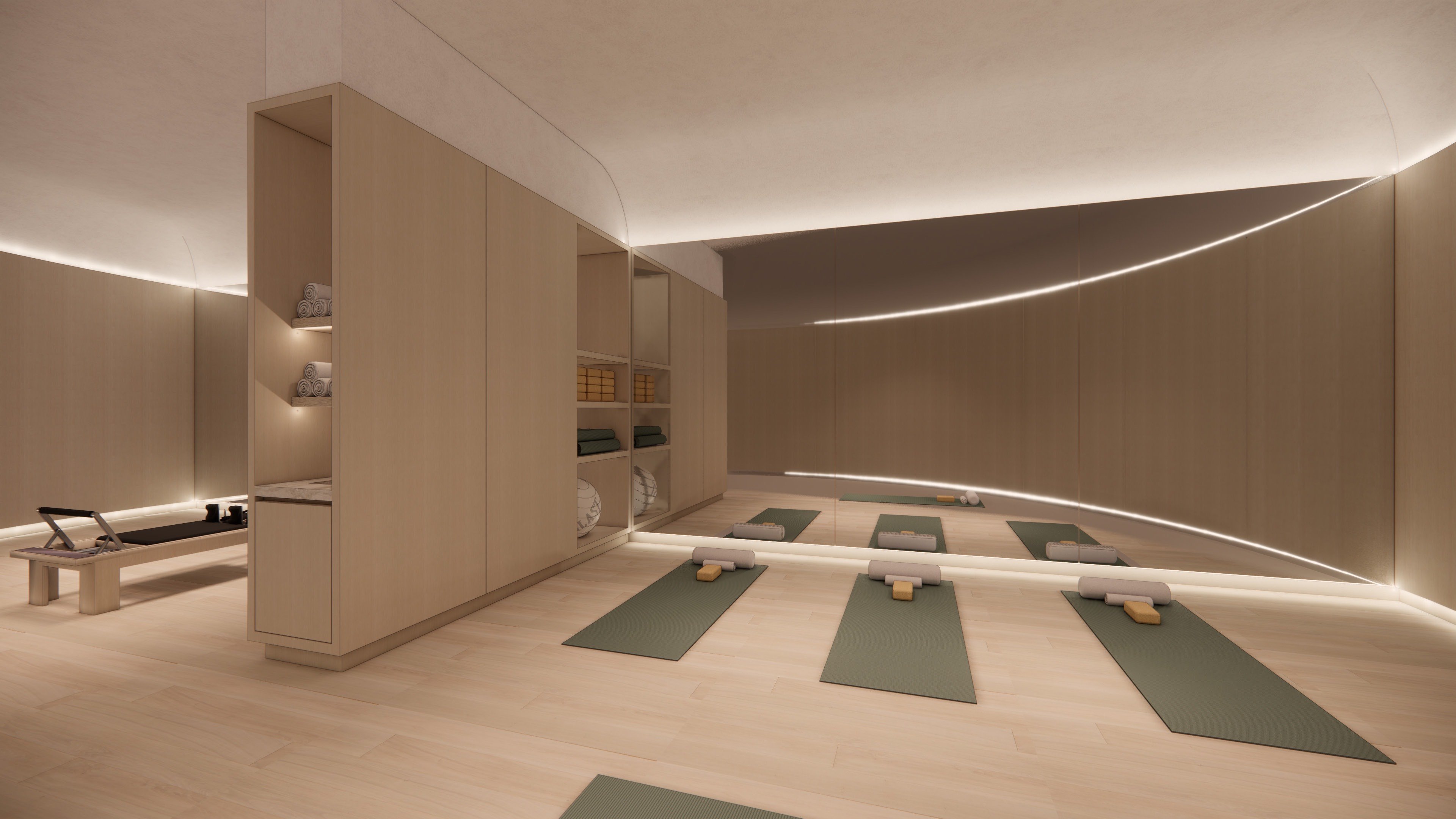
Acoustic insulation is the functional counterpart to the visual language of calm. Soft lighting, pale oak, limestone, and spa-grade aromatics can set the tone, but they remain surface decisions. Sound is experiential and immediate. If the room is audibly “connected” to the building, it reads as shared amenity space. If it is acoustically protected, it reads as sanctuary.
In markets where towers compete on lifestyle completeness, quiet becomes a differentiator that is difficult to photograph and impossible to miss in person. It also protects value: residents who actually use the space have little patience for rooms that look meditative but sound like a lobby.
High-rise acoustic strategy begins with understanding how sound travels. Most issues trace to three pathways, and the strongest projects address all three together.
First is airborne sound: voices in a corridor, music in a neighboring amenity, or street noise that leaks through glazing, doors, or unsealed joints. Airborne sound is often the most apparent during a tour because you can hear it instantly.
Second is structure-borne sound: impact and vibration carried by the building itself. Footfall above, dropped weights in a fitness studio, a service cart rolling over tile, or pumps and fans mounted to slabs can transmit as a low-frequency thrum. Structure-borne noise is why some rooms feel subtly “busy” even when no one is speaking.
Third is reverberation inside the room. Even when a space is well isolated from outside noise, hard surfaces can make small sounds feel larger: a cough, a whispered cue, the snap of a yoga strap. Reverberation is the reason a room can be quiet yet still not feel serene.
A credible high-rise yoga room treats isolation and interior acoustics as one system: block intrusion, reduce vibration, and soften the room’s own reflections.
Buyers rarely receive a technical briefing on acoustic assemblies, but the room itself often provides clear signals that it was designed with discipline.
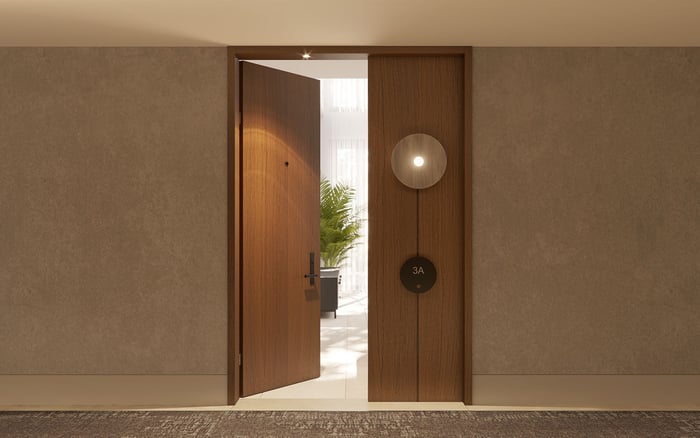
Start at the door. A meditation room that opens directly to a high-traffic corridor without a vestibule is starting at a disadvantage. Look for a heavier, well-fitted door, clean perimeter seals, and a minimal undercut at the threshold. If you can see daylight under the door, sound will follow.
Then look up and down. A hard ceiling with visible gaps at light fixtures, sprinklers, or HVAC diffusers is a common leak point. Likewise, tile or stone flooring without underlayment-and without any softening elements-will tend to ring. The most convincing wellness rooms commit to quiet finishes: acoustic wall panels integrated into millwork, textile-backed surfaces, thicker rugs or organized mats storage, and ceilings that absorb rather than bounce.
Mechanical design matters more than most people expect. Diffusers that hiss, return grilles that whistle, or fans that ramp audibly can erase the room’s baseline calm. In a truly premium amenity, HVAC presence is felt, not heard. If you have to raise your voice to cue a class over the air system, the room was not tuned for meditation.
Finally, consider adjacency. A yoga studio placed directly below a weight room is a predictable conflict. So is sharing a wall with a loud bar lounge, game room, or service corridor. The most thoughtful buildings separate uses, introduce buffer zones, and specify assemblies that anticipate real-world behavior.
South Florida’s most desirable high-rises celebrate transparency: expansive glazing, ocean horizons, and skyline drama. The aesthetic is unmistakable, but it reshapes the acoustic equation.
Large glass areas can invite exterior sound if the envelope is not engineered and installed with care. Even when the view is the headline, perimeter detailing is the story: framing, seals, and transitions must remain tight over time, particularly in a coastal environment where wind, salt air, and pressure differentials stress components.
Inside the building, vertical living concentrates activity. Elevators, trash rooms, amenity decks, and back-of-house routes create a constant choreography of noise. A meditation room that works in this context is not simply insulated; it is intentionally located, buffered, and detailed.
In districts where nightlife and traffic are part of the appeal, such as Brickell and Downtown, acoustic separation becomes central to wellness positioning. In that setting, a tower that pairs high design with a disciplined approach to quiet can feel meaningfully more refined. The same principle applies in Miami Beach, where street-level energy can be exhilarating while residents still want a true retreat above it.
You do not need to be an acoustician to assess whether a wellness room will be used-or merely admired.
Arrive at an imperfect time. Tour when the building is active: late afternoon, early evening, or during peak move-in hours. Silence at 11 a.m. on a Tuesday can be deceptive.
Stand still and listen for the room’s baseline. Is there a steady hum? Does it fluctuate? Low-frequency noise is often the most fatiguing during meditation because it is difficult to tune out.
Clap once, softly. The goal is not to create a spectacle; it is to gauge decay. A harsh, bright echo suggests a reverberant room. A quick, controlled decay suggests absorption was part of the plan.
Open and close the door. Notice the latch, the seal, and whether corridor sound rushes in. If you can clearly follow a hallway conversation, the room will struggle during guided sessions.
Ask about scheduling and adjacency. If the yoga room shares a wall with the fitness center, ask when weights or high-intensity classes run. If the room sits near elevators, ask whether residents have flagged noise.
If you are buying in a building with a robust wellness program, acoustic performance will surface quickly in everyday feedback. The point is not perfection. It is whether the design reduces distraction enough for breathwork, meditation, and sound bath formats to feel intentional.
In luxury development, the best acoustic interventions are often invisible.
Decoupling is a hallmark of serious work. Separating walls or ceilings from the main structure reduces vibration transfer. Floating floors or resilient underlayments can limit footfall noise. Executed properly, the room feels calmer without advertising why.
Mass and sealing do the heavy lifting for airborne sound. Heavier wall assemblies, tightly detailed joints, and continuous seals at penetrations prevent the most common failure mode: a premium wall undermined by a careless opening.
Mechanical isolation deserves a dedicated line item. Equipment can be mounted with vibration isolation, ductwork can be lined, and air velocities can be reduced to avoid hiss. For meditation, the goal is a low noise floor that does not compete with soft music or spoken guidance.
Interior acoustic treatment completes the picture. Instead of a minimalist “hard box,” the room can integrate absorptive ceilings, acoustical plaster, felt-backed millwork, or art panels that quietly do the work. In a yoga studio, this also supports speech clarity, allowing instructors to cue calmly rather than project.
In Brickell, towers often sit amid heavy traffic and active streets. The most refined buildings treat wellness acoustics as part of the luxury contract: calm within, energy without. In this context, a buyer evaluating 2200 Brickell may weigh the amenity experience not only through design and services, but through the subtle evidence of separation and quiet detailing.
In Miami Beach, the appeal is cultural proximity and oceanfront living, but the soundscape can shift dramatically block to block. A wellness room that performs acoustically lets residents enjoy the city on their own terms, then retreat fully. When considering an ocean-facing lifestyle at 57 Ocean Miami Beach, acoustic insulation is part of the broader promise of restorative living.
In Sunny Isles, high-floor ocean views are paired with dense vertical communities. Here, structure-borne noise and amenity adjacency can be decisive. Buyers looking at ultra-luxury towers like Bentley Residences Sunny Isles often prioritize privacy across every sense, including sound.
In Hallandale Beach, newer oceanfront inventory attracts owners who use their residences for extended stays and daily routines, not just weekends. A properly insulated yoga and meditation room supports that cadence, making wellness feel like part of home. For an oceanfront lens on that lifestyle, 2000 Ocean Hallandale Beach is a relevant reference point for buyers evaluating total living quality.
These examples reinforce one idea: acoustic design is not a niche obsession. It is the infrastructure behind a wellness amenity intended for daily use.
Luxury buyers are increasingly fluent in the language of wellness. They are also quick to sense when an amenity is performative. A meditation room that looks right but sounds wrong becomes a symbol of superficiality, and that impression tends to spread: if the wellness room was not engineered with care, what else was treated as decoration rather than performance?
For owners and boards, acoustic upgrades can be among the most cost-effective quality lifts because they change how the building feels without changing its footprint. Better seals, added absorption, mechanical tuning, and thoughtful scheduling policies can materially improve resident satisfaction.
For developers, it is a brand decision. A building that can deliver genuine quiet in a vertical environment signals mastery, not just style. That mastery translates into a cleaner story for prospective buyers: not wellness as marketing, but wellness as engineering.
What is acoustic insulation in a yoga or meditation room? It is the combination of materials and detailing that reduces noise intrusion and vibration so the room stays calm.
Why do high-rise meditation rooms feel noisier than expected? Towers transmit sound through corridors, shared walls, and the structure itself, and small design gaps can magnify it.
Is glass the main reason exterior noise gets in? Glass can contribute, but perimeter seals, framing, and installation quality often determine real-world performance.
What is the quickest sign a room will not be quiet? A poorly sealed door and clearly audible corridor activity are immediate red flags during a tour.
Does adding soft finishes actually help meditation? Yes. Absorption reduces echo and makes small sounds less sharp, which supports focus and breathwork.
Can HVAC ruin an otherwise well-designed wellness room? Yes; audible airflow or mechanical vibration raises the noise floor and competes with guided cues.
How can I test a room informally while touring? Listen for low-frequency hum, do a gentle clap to gauge echo, and note how much sound enters at the door.
What kinds of noise are hardest to control in high-rises? Low-frequency vibration and structure-borne impact noise are often the most persistent without decoupling.
Can a condo board improve an existing meditation room’s acoustics? Often yes, through better door sealing, added absorption, and mechanical tuning without major reconstruction.
Is acoustic performance relevant to resale value? Quiet, usable amenities strengthen a building’s livability narrative and can influence buyer perception.
If you'd like a private walkthrough and a curated shortlist, connect with MILLION Luxury.
If branded residences are on your mind — as a home or as an allocation — we would be glad to share what we are seeing, privately.
Begin a quiet conversation