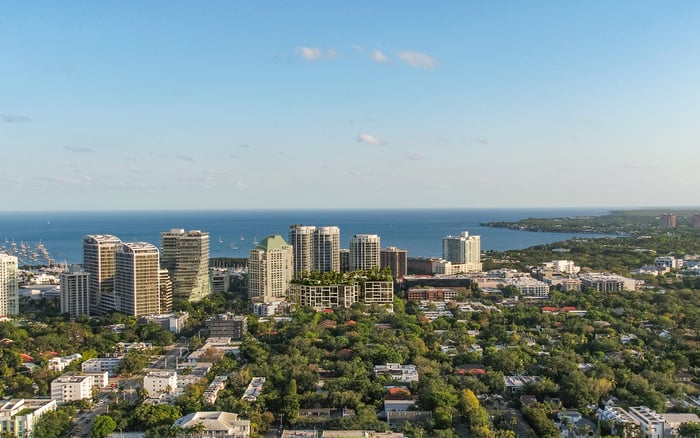
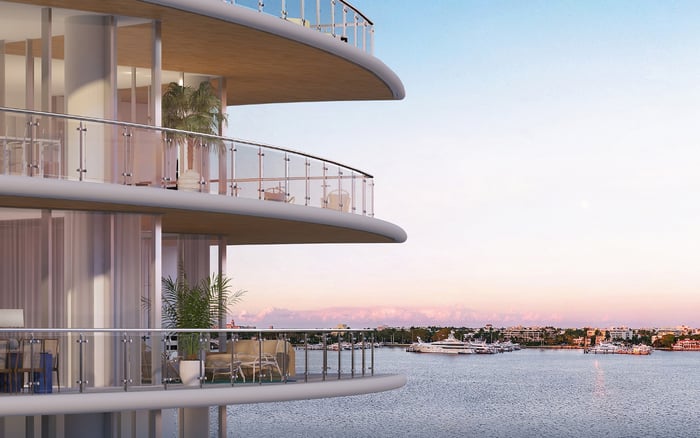
Rising insurance premiums are reshaping how affluent buyers underwrite South Florida real estate, influencing everything from offer strategy to product preference. For high-net-worth purchasers, the issue is rarely affordability; it is about friction, predictability, and the long-term optics of carrying costs across a portfolio.
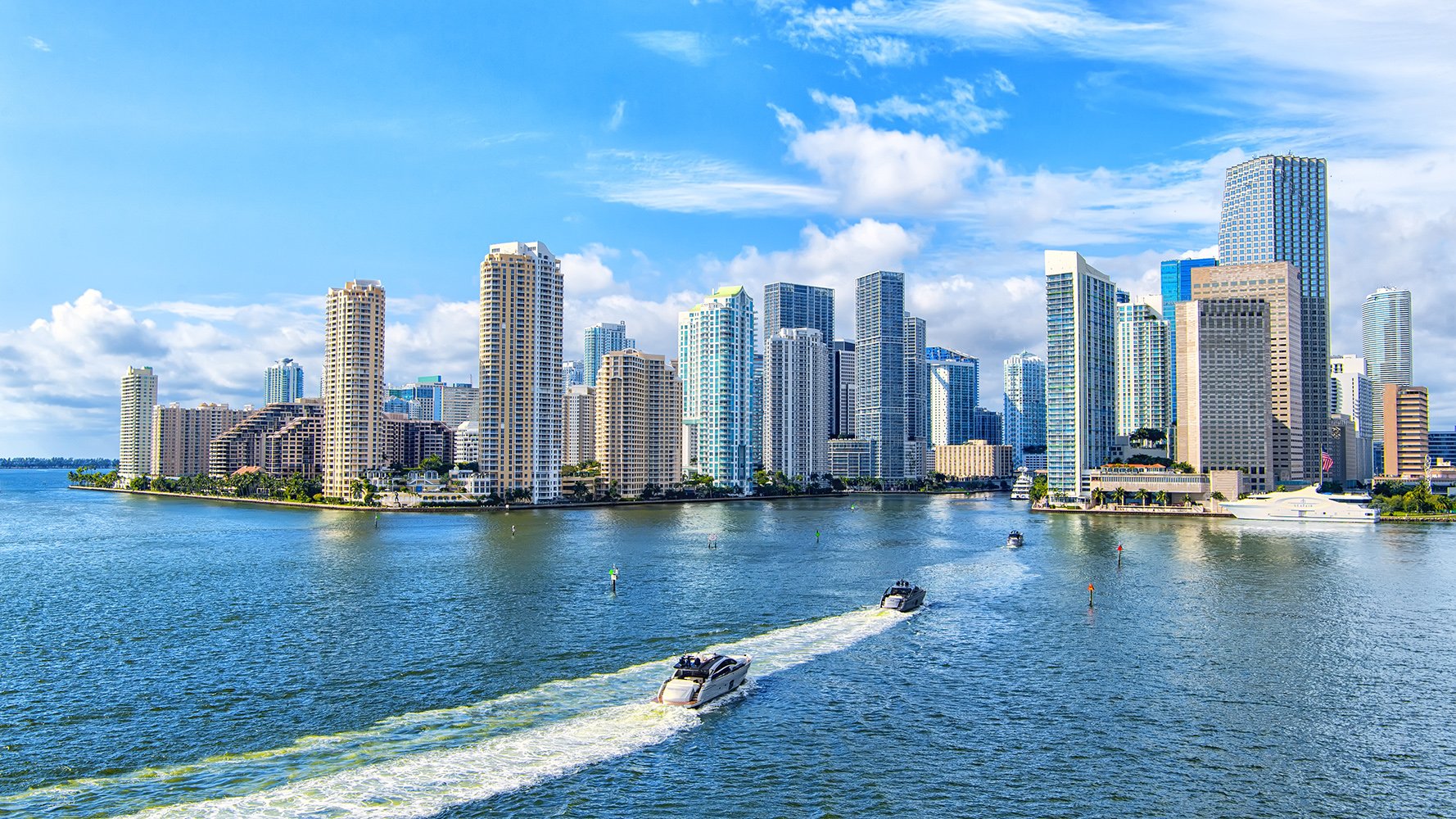
For South Florida’s ultra-premium clientele, rising insurance premiums are no longer a simple operating expense. They are a behavioral force-shaping which neighborhoods feel effortless, which properties feel administratively heavy, and which assets integrate cleanly into a multi-home portfolio.
High-net-worth buyers rarely walk away because a premium is “too high” in isolation. They hesitate when the number is difficult to project, when renewals feel exposed to non-financial variables, or when a property’s risk profile can’t be meaningfully improved without compromising design intent. In a market where time is the most valuable currency, unpredictability becomes the true cost.
Insurance is also increasingly reputational. When a buyer is assembling a discreet legacy collection, the question isn’t only, “Is this home iconic?” It’s also, “Will this be a calm asset to hold for the next decade?”
Luxury buyers have always underwritten taxes, staffing, and maintenance. Insurance now sits alongside them as a first-order decision variable-especially with oceanfront and coastal exposure.
The shift is subtle but decisive. Buyers are adapting in three ways:
First, they’re separating “premium” from “insurability.” A manageable annual cost is less reassuring if carrier appetite is thin or replacement-cost assumptions can swing dramatically. Second, they’re underwriting the building or the home as an engineered system, not a collection of finishes. Roof age, window protection, mechanical placement, drainage, and documented upgrades can matter as much as marble and millwork. Third, they’re thinking in scenarios: what happens at renewal after a storm season, after a claim elsewhere in the region, or after a policy form change.
This is where new construction and strong capital planning can read as a luxury amenity in their own right. A buyer evaluating 2200 Brickell, for example, is often buying not only an address, but also a newer building profile that may align with more stable underwriting assumptions over time.
As premiums rise, negotiations become more technical-not more combative, but more document-driven.
Expect sophisticated buyers to request:
Clear, current proof of coverage for the building and, where relevant, supplemental lines.
A sharper view of reserves and planned capital projects, since deferred maintenance often reappears later as underwriting friction.
Inspection documentation that speaks to wind mitigation and water-intrusion risk.
In the condo market, the discussion increasingly centers on the association’s financial posture and the clarity of its maintenance roadmap. Even when a buyer intends to pay cash, lender underwriting norms can still shape liquidity and resale. A cash buyer is often underwriting the future buyer pool.
In single-family homes, leverage can concentrate around an “improvement-ready” profile. Sellers who can present a credible pathway to stronger risk characteristics-such as documented roof updates, opening protection, drainage improvements, or elevated critical systems-often preserve pricing power. Sellers who cannot may face longer diligence timelines and more pointed asks.
Rising premiums tend to reward simplicity. That doesn’t mean less luxury. It means fewer unknowns.
Many high-net-worth buyers are showing renewed interest in luxury condo living, where a building’s risk strategy is centralized and professionally managed. The appeal is pragmatic: one coordinated maintenance program, one insurance program, and a governance structure built to plan major systems.
In dense, high-demand neighborhoods like Brickell, that preference can show up in newer, service-forward towers-where buyers expect modern life-safety systems and a clearer maintenance cadence. The same logic is drawing attention to trophy new development such as 888 Brickell by Dolce & Gabbana, where the value proposition often includes not only design and brand, but also the perceived benefit of newer building standards and centralized operations.
On the beachfront, the calculus becomes even more nuanced. Miami Beach ownership can be deeply emotional, but increasingly analytical. Buyers want to understand how a building performs as an asset in its microclimate-and how its management team communicates risk. A project such as 57 Ocean Miami Beach naturally enters conversations with buyers who want an ocean-adjacent lifestyle while still prioritizing a building profile that feels modern and maintainable.
High-net-worth buyers rarely evaluate a home as a standalone purchase. They evaluate it as part of a portfolio of residences, travel patterns, and lifestyle obligations.
That portfolio logic is influencing geography:
Some buyers are balancing a beachfront or bayfront primary with a second asset perceived as less exposed, creating optionality if premiums spike.
Others are prioritizing buildings and enclaves with strong infrastructure, a clear maintenance culture, and a history of proactive capital work.
In Palm Beach and West Palm Beach, the discussion often shifts to a “town-and-country” rhythm, where proximity to cultural anchors and private aviation can matter as much as the shoreline itself.
In Hallandale, for instance, buyers exploring resort-caliber living may still want a highly legible ownership profile, including how insurance is structured and communicated. This is one reason residences such as 2000 Ocean Hallandale Beach can appeal to buyers seeking oceanfront living with a luxury condominium framework.
In Bay Harbor, boutique scale can be a draw, but it can also make governance and reserves feel more personal. The ultra-premium buyer tends to ask: is the building run like an institution-or like a hobby? Newer boutique residences such as Alana Bay Harbor Islands can enter the conversation when a buyer wants a quieter setting and a more intimate building, while still expecting professional management and modern systems.
For second-home owners, the decision isn’t simply whether they can afford the premium. It’s whether the premium feels rational relative to actual use.
A residence used six weeks per year will be underwritten differently than a primary home with full-time staffing. Rising premiums can push buyers toward:
Properties that support higher utilization, so carrying costs feel justified.
Lock-and-leave formats where absence doesn’t increase anxiety.
Buildings with robust on-site staff and a culture of preventive maintenance.
This is also where “luxury” becomes operational. A doorman, engineering team, and strong property management can reduce the number of issues that become claims. Over time, the most effortless homes are often the ones that run quietly.
In today’s market, design choices increasingly intersect with risk decisions. Sophisticated buyers and their advisors are asking questions that used to feel too granular for early-stage shopping.
Examples include:
Where are critical mechanical systems located relative to potential water intrusion?
How is the envelope detailed, and what is the maintenance plan for sealants and exterior systems?
Are balcony and terrace assemblies designed for long-term durability in a coastal environment?
This doesn’t diminish the romance of an acquisition. It elevates the standard. In the ultra-premium segment, resilience is a form of luxury-and strong documentation is part of good taste.
The most successful high-net-worth buyers are treating insurance as diligence, not paperwork.
Key questions to bring into the early conversation:
What is the property’s current insurance structure, and what are the practical renewal risks?
Are there recent claims, and if so, what remediation was performed and documented?
For condos, how robust are reserves, and what major projects are planned?
For homes, what upgrades can be made that meaningfully improve risk characteristics without altering the architecture?
The goal isn’t to turn a purchase into an actuarial exercise. It’s to avoid surprises that disrupt the ownership experience.
Rising premiums are creating friction, but they’re also creating opportunity for disciplined buyers. Those with flexible timelines and strong advisory teams can negotiate more effectively, select properties with stronger resilience narratives, and structure ownership around how they actually use the home.
In practical terms, the advantage often looks like this:
Choosing buildings with clear governance and a culture of maintenance.
Favoring new construction or recently modernized assets where systems and documentation are current.
Making targeted improvements early in ownership, before renewal cycles force rushed decisions.
South Florida remains a magnet for global wealth because it offers lifestyle, tax efficiency, and a rare concentration of coastal and urban luxury. Insurance doesn’t change that thesis. It simply refines what “best-in-class” means.
Are rising insurance premiums affecting luxury buyers if they pay cash? Yes. Cash buyers still underwrite total carrying cost and future resale liquidity.
Do condos generally simplify the insurance process for owners? Often, yes. Many insurance decisions are centralized at the association level.
Will higher premiums reduce demand for oceanfront properties? Demand can remain strong, but buyers tend to be more selective and analytical.
What documents should condo buyers review early? Building coverage evidence, budget and reserves, and the capital improvement plan.
How do premiums influence negotiations on single-family homes? They can shift value toward documented upgrades and away from deferred maintenance.
Is new construction always easier to insure? Not always, but newer systems and standards can support a clearer risk profile.
Do buyers change how they use a second home because of premiums? Frequently. Some increase utilization or choose lock-and-leave buildings.
What makes a building feel “low friction” to a high-net-worth owner? Strong management, proactive maintenance, and transparent communication.
Should buyers prioritize resilience features over finishes? The best outcomes balance both; resilience protects the lifestyle the finishes express.
Can insurance volatility impact resale values? It can, especially if uncertainty narrows the future buyer pool or slows transactions.
For a discreet conversation and a curated building-by-building shortlist, connect with MILLION Luxury.
If branded residences are on your mind — as a home or as an allocation — we would be glad to share what we are seeing, privately.
Begin a quiet conversation