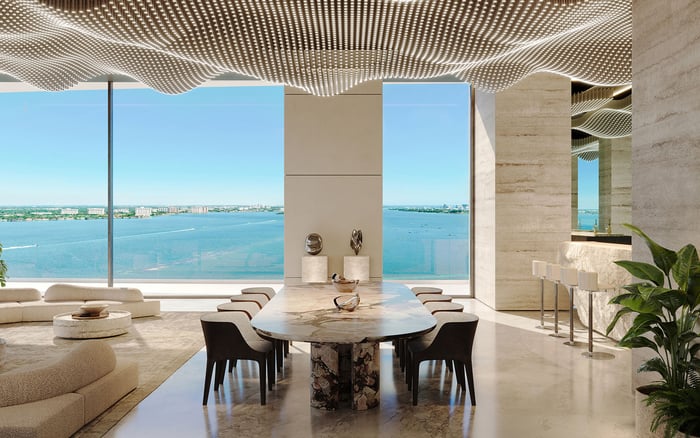
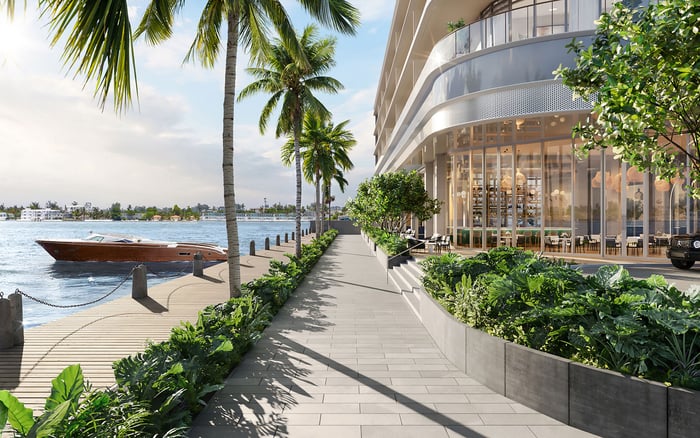
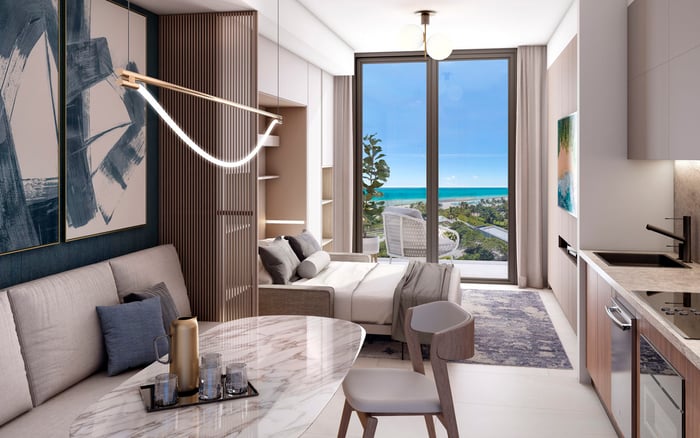
In ultra-prime South Florida, privacy is not a feature you add after the fact. It is designed into the arrival sequence: curb to lobby, lobby to elevator, elevator to residence. At Pagani Residences in North Bay Village, buyer interest often centers on how effectively a private elevator vestibule can separate a home from the shared building ecosystem, and what protocols must exist behind the scenes to make that separation meaningful. This MILLION Luxury editorial breaks down what a private elevator vestibule does well, where the real vulnerabilities tend to hide, and which questions sophisticated buyers should ask when evaluating access control, staffing, vendor management, and daily operational discipline. Because project-specific security details are intentionally not fully public, the focus here is on the architecture of discretion: layered barriers, predictable procedures, and a resident-first culture that keeps convenience high without turning the building into a fortress.
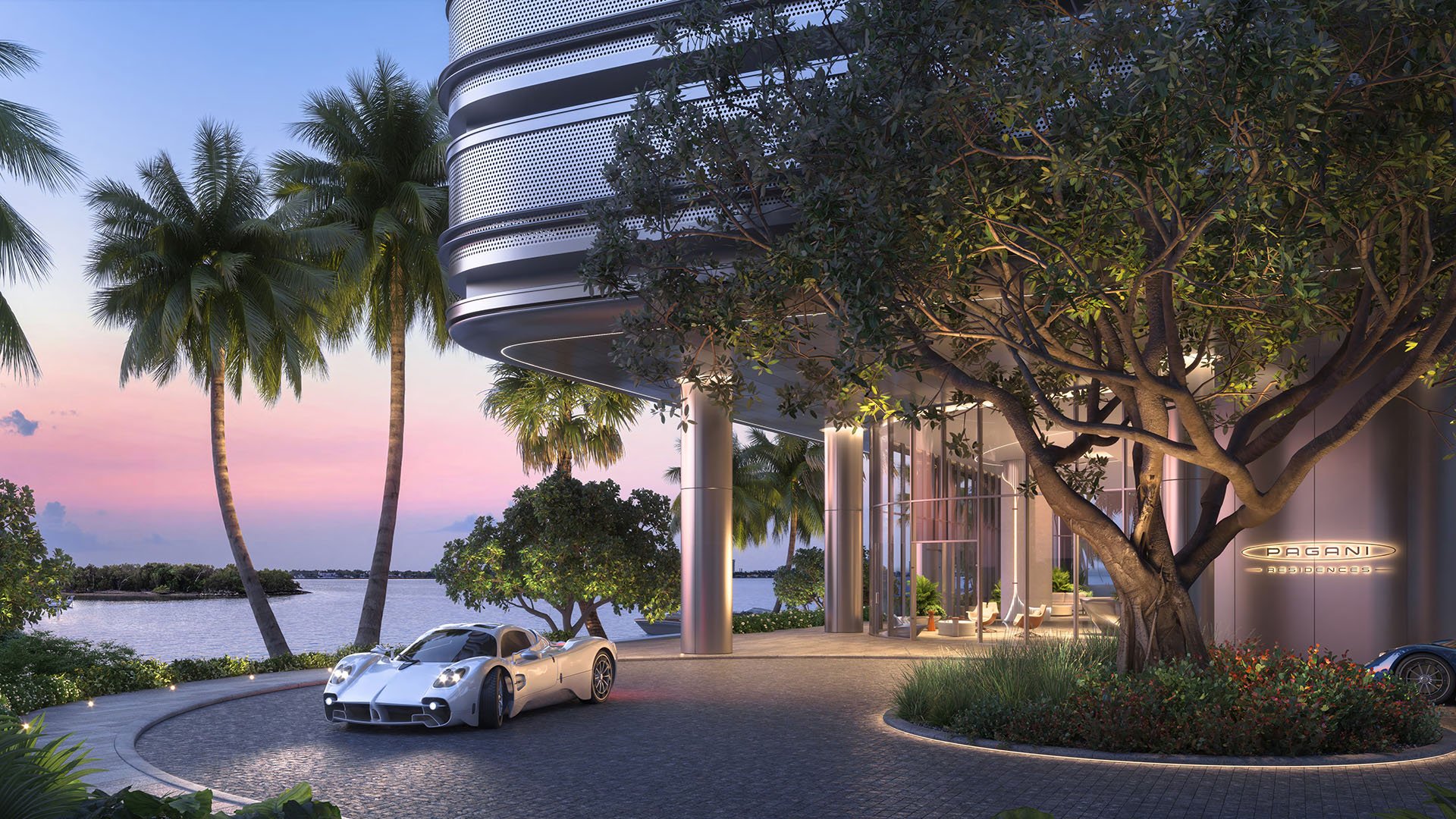
North Bay Village sits at a rare intersection: water, proximity to Miami Beach and the Design District, and a growing roster of design-forward residential offerings. For buyers considering Pagani North Bay Village, the private elevator vestibule is not merely a convenience. It’s an architectural boundary that can materially change how a home feels, day to day.
A well-conceived vestibule delivers two luxuries at once: acoustical calm and social separation. It reduces incidental encounters, buffers sound from the core, and creates a psychological transition-so the front door reads as a true threshold, not a checkpoint at the end of a public hallway. In a market where residents may host discreetly, travel frequently, and keep irregular schedules, that extra layer of distance can be as valuable as a view.
The nuance: a vestibule is not automatically “secure.” It’s an interface between private property and shared infrastructure. The strength of that interface comes down to access governance-who can summon the elevator, who can reach the floor, what gets logged, and how exceptions are handled.
In luxury conversation, “private elevator” is often used as shorthand for “total privacy.” In practice, privacy is a system.
A private elevator arrangement can mean several things:
The elevator serves a single residence directly, often opening to a vestibule or foyer.
The elevator is shared among a small number of residences, but can be keyed to limit stops.
The elevator opens into a semi-private corridor with a short walk to the door.
A private vestibule can be powerful even when the elevator itself is not wholly exclusive, because the vestibule can function as a controlled receiving space. It can also be weak if too many parties can call the elevator to the floor-or if credentials can be borrowed, duplicated, or mismanaged.
Buyers should align language with the building’s actual behavior: what must happen for someone to reach your floor, and what must happen for them to reach your vestibule.
The most useful way to evaluate security is to trace the resident and visitor journey step by step, noting where the building transitions from public to controlled to private.
Start outside. The curb and porte-cochère are often the softest points because they’re designed for elegance, not friction. From there, move inward: lobby entry, reception posture, elevator bank, destination control, floor release, vestibule, and finally the residence door.
In South Florida, buyers comparing multiple neighborhoods can use the same framework across properties. A high-design waterfront tower such as Five Park Miami Beach may deliver a very different street experience than a Brickell core building like 2200 Brickell, but the evaluation remains consistent: where are the controlled gates, who holds authority at each gate, and how are decisions recorded.
If any link in that chain depends on informal discretion rather than written protocol, the chain is only as strong as that day’s staffing and mindset.
A private vestibule is best understood as a “micro-lobby” that belongs to the residence experience. When it’s executed well, it should accomplish four things.
First, it should make tailgating difficult. Tailgating is a common high-end vulnerability because it’s socially easy to exploit: someone follows closely behind a resident through a controlled door, then shares the elevator.
Second, it should create a secure pause point. That pause point is where a resident can confirm they’re alone, where a guest can wait without standing in a public hall, and where service can be staged without immediate visibility into the home.
Third, it should control sight lines. The most discreet vestibules prevent a direct view from the elevator into the residence when the door opens.
Fourth, it should support operational realities. Luxury towers live and die by the unglamorous: packages, flowers, catering, housekeeping, and maintenance. If the vestibule offers no practical way to receive or stage items, residents will open the door more often-compromising the boundary the vestibule was meant to create.
A private vestibule only becomes meaningfully protective when elevator access is governed intelligently.
Discreet buildings typically rely on a combination of controlled entry, credentialed elevator call, and floor authorization. The crucial question isn’t “Is it key fob access?” but “What does the credential allow?” A credential that grants broad building access is convenient, but it expands risk if it’s lost, lent, or duplicated.
Look for clarity on:
Credential issuance: how many active credentials exist per residence, and who approves extras.
Deactivation speed: how quickly a lost credential can be disabled.
Elevator behavior: whether a credential can call any floor or only assigned floors.
Visitor workflows: whether visitors can reach residential floors without staff mediation.
In the most discreet protocols, staff functions as a gatekeeper for non-residents, and the elevator system is configured so a visitor cannot “browse” floors. The point isn’t to create inconvenience. It’s to make unauthorized movement feel futile.
In luxury residential environments, technology is often treated as the solution. It isn’t. Technology is an instrument; people are the system.
Buyers should pay attention to lobby posture. Does the desk hold a clear view of the entry? Is there a natural moment of acknowledgment when someone walks in? Are staff trained to challenge politely but firmly? Many failures occur not because a building lacks equipment, but because staff have been conditioned to avoid friction.
Also ask about shift change. The handoff between teams is where procedures can blur: visitor expectations carry over, packages pile up, and temporary exceptions become permanent habits.
Buildings that excel at discretion treat resident privacy as a form of service. The mindset found in top hospitality environments can exist in residential operations-but only if it’s intentional.
For high-net-worth buyers, the greatest day-to-day exposure is rarely an intruder scenario. It’s uncontrolled service traffic.
Deliveries are constant. Contractors appear intermittently but can be disruptive. Amenity spaces introduce cross-circulation, especially when they share elevators, corridors, or lobbies with residential paths.
Ask how the building separates:
Resident circulation vs. vendor circulation
Package handling vs. direct-to-door deliveries
Move-ins and renovations vs. normal building operations
A waterfront lifestyle building such as Continuum Club & Residences North Bay Village may emphasize club-like amenities, which makes circulation planning even more important. The more desirable the amenity program, the more essential it is that residential access points don’t become thoroughfares.
For vestibules specifically, buyers should consider whether the building encourages items to move through staff-managed processes rather than ad hoc, door-to-door handoffs.
Some of the most effective security measures read as design decisions.
Acoustic buffering reduces awareness of neighbor movement, which in turn reduces behavioral “leaks.”
Lighting and camera placement can be integrated without creating a surveillance aesthetic.
Vestibule size and geometry can prevent crowding and keep the front door from becoming a public stage.
Door hardware, hinges, and frames matter as much as the lockset.
Discretion isn’t only about stopping access. It’s also about preventing information from traveling: schedules, routines, and the visibility of staff entering and exiting.
Security claims in luxury marketing are often intentionally broad. That’s normal and, in many cases, prudent. The better approach is to evaluate what can be confirmed through process.
When reviewing a building like Pagani Residences, focus on three categories:
Architecture: how the core, vestibules, and corridors are arranged to reduce contact.
Systems: how credentials, elevator authorization, and camera coverage are implemented.
Operations: how the building handles exceptions, vendors, and guest flows on a busy weekend.
If a sales narrative emphasizes exclusivity, translate that into operational questions. Exclusivity should mean fewer unverified people can reach your floor, fewer reasons exist for strangers to linger near your door, and fewer moments require you to negotiate privacy in public spaces.
This is the quiet due diligence that separates a beautiful building from a livable one.
Request the visitor protocol: guest arrival, elevator release, and after-hours access.
Ask how deliveries are handled: direct-to-door vs. concierge-managed vs. lockers.
Confirm vendor procedures: COI requirements, scheduling, escort policies.
Understand credential governance: issuance, replacement, and audit cadence.
Clarify camera coverage and retention practices in shared areas.
Ask what happens in an incident: who is notified, what is recorded, and what changes.
These questions don’t require a building to disclose sensitive specifics. They do require the building to demonstrate that it operates with consistency.
Across South Florida, the private vestibule has become a proxy for a broader expectation: buyers want homes that feel like standalone residences-even when they’re in the sky.
That expectation is visible across multiple submarkets, from Miami Beach to Brickell to waterfront enclaves. Whether one is considering the urban rhythm of Brickell or the resort cadence of Miami Beach, the directional trend is the same: less shared friction, fewer uncontrolled touchpoints, and more intentional separation between residents and the building’s service economy.
In that sense, the private vestibule isn’t a luxury accessory. It’s an expression of a new baseline: discretion as architecture.
What is a private elevator vestibule? It is a buffer space between the elevator doors and a residence entry, designed to add privacy and control the transition into the home.
Does a private vestibule guarantee security? No. It improves separation, but security depends on elevator authorization, staffing, and consistent procedures.
What is the biggest vulnerability in luxury residential access? Tailgating and unmanaged service traffic are common weak points because they exploit convenience and social norms.
Should visitors be able to reach a residential floor on their own? In the most discreet buildings, visitors typically require staff mediation or resident authorization to access residential levels.
How do deliveries affect privacy? Direct-to-door delivery increases hallway activity; concierge-managed routing generally reduces exposure at the residence door.
What should I ask about elevator credentials? Ask what floors a credential can call, how quickly it can be deactivated, and how the building controls extra copies.
Are cameras enough for residential security? Cameras help with deterrence and documentation, but they do not replace controlled access and trained staff.
How can I gauge staffing quality during a tour? Observe whether entries are acknowledged, how questions are handled, and whether protocols seem consistent rather than improvised.
Why does vestibule layout matter? Geometry can prevent sight lines into the home, reduce crowding at the door, and make lingering feel conspicuous.
What makes a building feel truly private day to day? A predictable arrival sequence, limited cross-circulation, and a service model that keeps vendors and deliveries organized.
When you're ready to tour or underwrite the options, connect with MILLION Luxury.
If branded residences are on your mind — as a home or as an allocation — we would be glad to share what we are seeing, privately.
Begin a quiet conversation