A discreet buyer’s guide to evaluating private elevator residences in South Florida, from arrival sequence and privacy to security, service flow, resale value and design discipline.
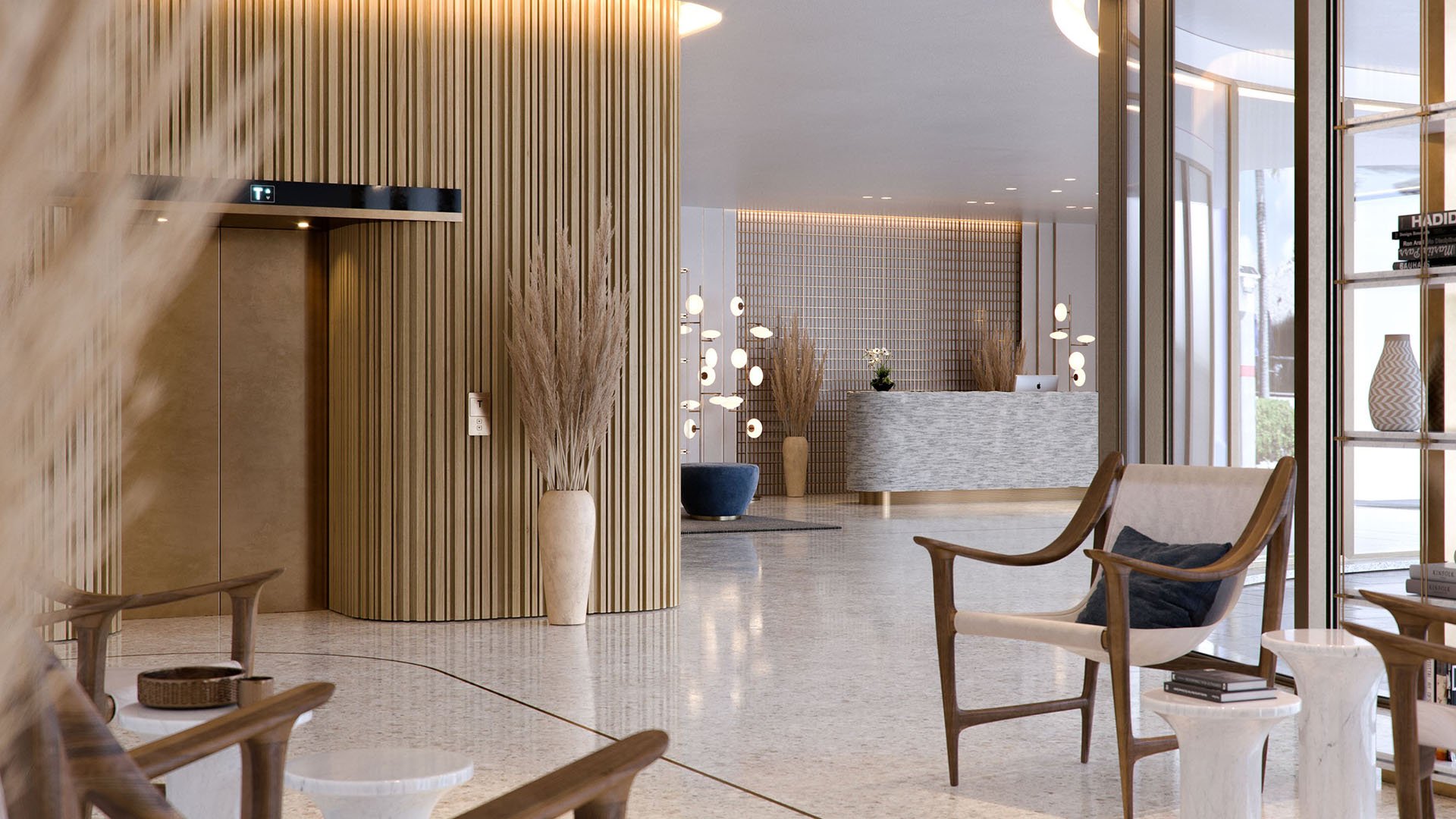
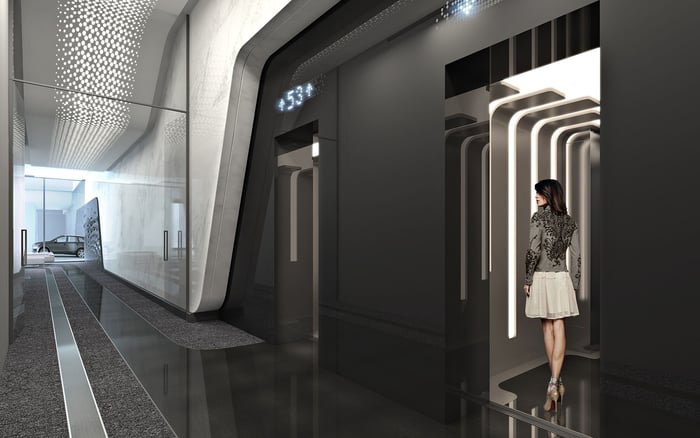
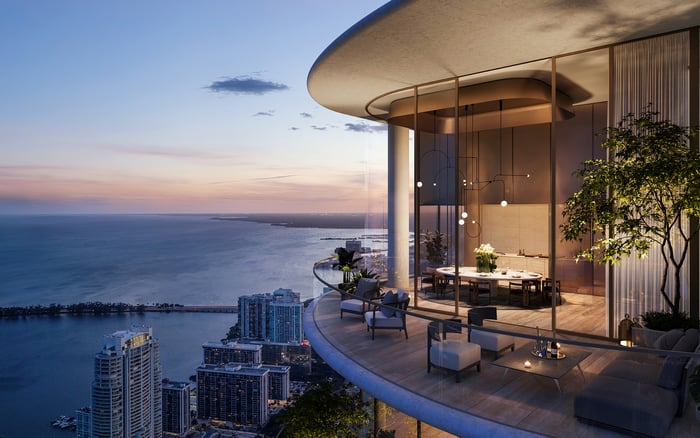
A private elevator that opens directly into the residence is one of the defining rituals of ultra-luxury vertical living. It compresses arrival into a private moment: the doors part, the city or waterline appears, and the home begins without a shared corridor. For many South Florida buyers, the value is less spectacle than control. It shapes how owners enter, how guests are received, how staff move and how privacy is preserved.
The feature is often described simply, yet the best versions are highly considered. A direct-entry residence is not merely a condominium with an elevator nearby. It is a home where circulation, security, acoustics, service access and interior architecture have been coordinated into a single arrival sequence. That distinction matters in Brickell towers, Miami Beach residences, Sunny Isles waterfront homes and quieter Surfside addresses alike.
Buyers comparing projects such as The Residences at 1428 Brickell or The Ritz-Carlton Residences® Miami Beach should look beyond the phrase “private elevator” and study how the elevator actually works in daily life.
Private elevator language can vary. In some residences, the elevator serves a limited number of homes on a floor. In others, it opens to a vestibule assigned to one residence. In the most coveted layouts, the elevator experience is integrated into the home’s own foyer, creating an immediate residential threshold.
The practical questions are straightforward. Does the elevator open to a locked private vestibule or directly into a foyer within the residence? Is there a second service elevator path for deliveries, staff and maintenance? Can guests access the residence only after owner approval? How are packages, valet arrivals and private dining deliveries handled without compromising the owner’s living areas?
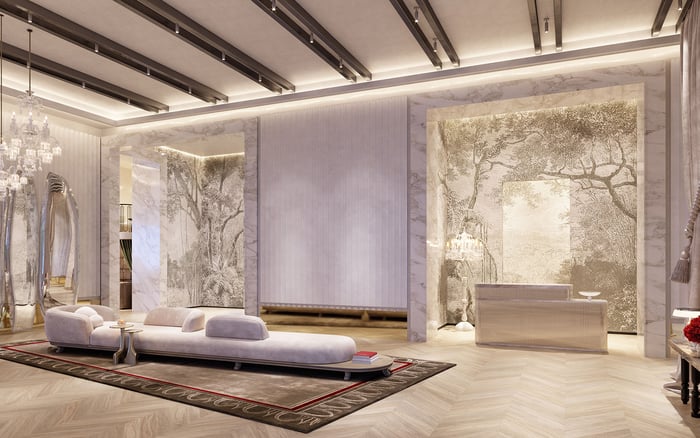
A refined direct-entry layout should not feel like a hotel corridor moved inside the home. It should create a composed transition, with space for art, lighting, seating, mirrors, millwork or concealed storage. The elevator doors should feel intentionally placed, not simply inserted into a plan.
The emotional appeal of direct elevator entry is privacy, but the real luxury is secure privacy. Buyers should understand how access is controlled from the lobby, garage, amenity levels and elevator bank. Keyed or credentialed access, destination control, staff protocols and building reception procedures all influence how secure the experience feels.
Ask how guest access is granted and revoked. Ask what happens if an owner is away. Ask how vendors are routed. Ask whether the elevator can be programmed for different household members, staff or temporary visitors. The goal is not complexity for its own sake. It is a system that feels intuitive to the owner while remaining disciplined behind the scenes.
In South Florida, where many residences function as primary homes, seasonal homes and entertaining venues, access control must accommodate changing rhythms. A direct-entry plan that works beautifully for a couple may require deeper scrutiny for a household with children, staff, visiting family or frequent events.
The elevator opening is the home’s first impression. In the strongest residences, it frames a view, a sculptural wall, a gallery moment or a quiet architectural pause. In weaker plans, it exposes too much too soon: kitchen activity, living room seating, private hallways or service areas.
Consider what you see when the elevator doors open. Consider what guests see. Consider what a delivery person could see if access is granted. The best private foyers create anticipation without surrendering privacy. They allow the residence to reveal itself in layers.
This is especially important in waterfront markets, where the temptation is to push every sightline toward the water. A thoughtful foyer may delay the view by a few steps, making the panorama more powerful. At properties such as Bentley Residences Sunny Isles, buyers naturally focus on arrival, garage-to-residence convenience and the broader choreography of privacy, movement and display.
A direct-entry elevator can be elegant for owners and awkward for operations if service planning is incomplete. Buyers should examine how housekeeping, caterers, private chefs, pet care, florists, security staff and maintenance teams move through the building and residence.
Ideally, service circulation is separated or, at minimum, carefully managed. A secondary entrance, service elevator or back-of-house route can make an enormous difference in how the home functions during daily life and entertaining. If the primary private elevator is the only practical route, owners should understand how the building handles deliveries, large items, repairs and emergency access.
This is where a beautiful plan becomes a livable one. Luxury is not only how the owner arrives. It is also how the home absorbs the invisible logistics of ownership.
Before signing, request a clear explanation of the elevator system, access sequence and operating protocols. Review the floor plan with the private elevator in mind. Do not evaluate the residence only by square footage, terrace depth or view orientation.
Ask whether the elevator opens into an interior foyer, a private vestibule or a shared landing. Ask whether there is a separate service path. Ask how the system operates during power interruptions, maintenance windows and building procedures. Ask who can override access and under what circumstances. Ask how guest arrivals are handled from valet, lobby and garage.
For buyers comparing The Delmore Surfside with larger urban residences, the private elevator question should be part of a broader privacy audit. The same applies to search priorities such as new construction, penthouse layouts, Brickell, Miami Beach, Sunny Isles and Surfside, where the vocabulary of luxury can be similar but the lived experience can vary significantly.
Private elevator entry often carries strong appeal because it is difficult to add after construction. It belongs to the building’s core planning, life-safety framework, circulation strategy and unit layout. When executed well, it supports a sense of scarcity and distinction.
That said, not every buyer wants the same version of privacy. Some prefer a grand shared lobby and attended corridor. Others want direct access with minimal exposure. The resale advantage is strongest when the elevator entry feels secure, gracious and intuitive, not theatrical or inconvenient.
A buyer should also consider future flexibility. Will the foyer accommodate changing art, furniture or lighting? Can a household with different routines use the plan comfortably? Does the elevator entry enhance the home’s identity without dominating it? In the best residences, the feature feels inevitable.
The most successful private elevator foyers use restraint. Lighting should flatter both the architecture and the people arriving. Materials should be durable enough for luggage and deliveries, yet refined enough for formal arrivals. Doors, hardware, thresholds and wall treatments should align with the rest of the residence.
Acoustics deserve attention. Elevator equipment, door operation, lobby conversation and mechanical vibration should not intrude into the home. Storage also matters. A foyer without a place for bags, shoes, umbrellas, packages or pet accessories can become cluttered quickly.
Buyers should walk the arrival path at different times if possible. Enter from the garage. Enter from the lobby. Imagine returning from dinner, hosting guests, receiving luggage, managing children, greeting staff and stepping out for a morning walk. The private elevator should make each routine more graceful.
Is a private elevator the same as a direct-entry elevator? Not always. A private elevator may serve a limited area, while direct entry usually implies a more immediate connection to the residence or its private foyer.
Should I prioritize a private elevator over views? It depends on lifestyle. For privacy-focused buyers, the arrival sequence can be as important as the view, especially in a full-time residence.
What is the most important question to ask first? Ask exactly where the elevator opens and who can access that point. The answer clarifies privacy, security and day-to-day function.
Does direct elevator entry work for families? It can, provided access controls, guest permissions and service routes are clear. Families should test how the plan handles routines and visitors.
Is a private vestibule better than opening directly into living space? Often, yes. A vestibule can create a graceful buffer between the elevator and the home’s more private interiors.
How should buyers evaluate security? Review lobby procedures, elevator credentials, guest access, staff access and emergency protocols. The system should feel both discreet and rigorous.
Can private elevator entry affect resale appeal? It can strengthen appeal when it is well designed and easy to understand. Poorly planned access can feel inconvenient rather than luxurious.
What design detail is most often overlooked? Storage near the arrival point is frequently underestimated. Luggage, packages and daily items need a place to disappear.
Should service access be separate? Separate service access is often preferable for privacy and entertaining. If it is not separate, procedures should be especially well defined.
Is this feature more important in South Florida? It can be especially meaningful where owners entertain often, travel seasonally and value privacy between lobby, garage and residence.
For a confidential assessment and a building-by-building shortlist, connect with MILLION.
If branded residences are on your mind — as a home or as an allocation — we would be glad to share what we are seeing, privately.
Begin a quiet conversation