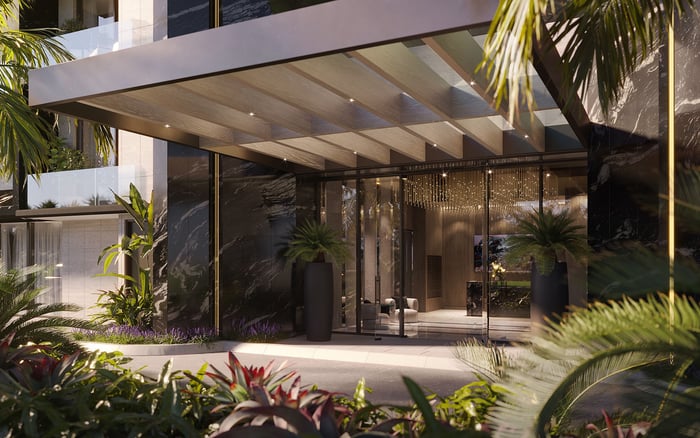
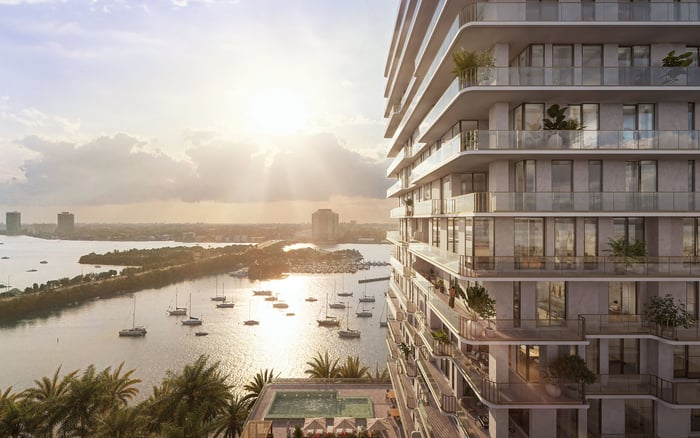
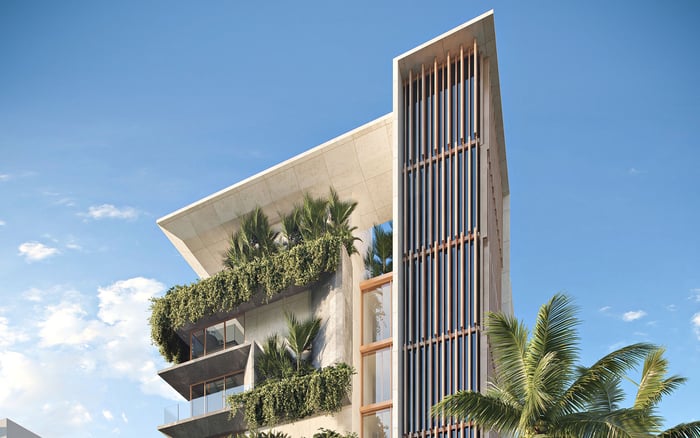
An editorial look at why Alma Bay Harbor Islands appeals to luxury buyers seeking privacy, calmer waterfront living, and a more residential alternative to large oceanfront towers.
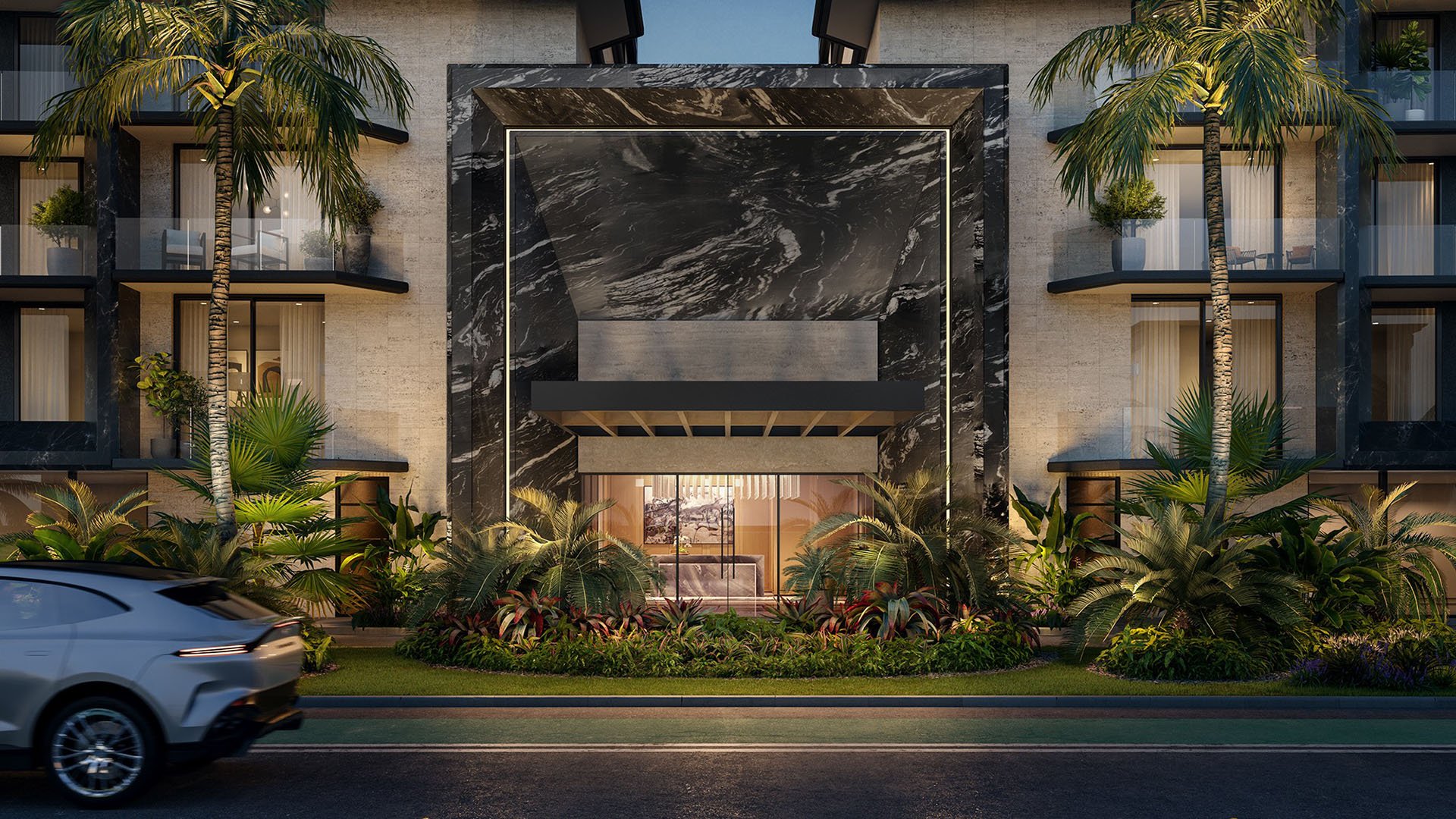
For a certain South Florida buyer, the most persuasive luxury is no longer spectacle. It is the ability to arrive home without navigating a crowded porte cochere, step into an elevator without delay, enjoy amenities without planning around peak hours, and live on the water without the constant motion of a large oceanfront tower.
That is the context in which Alma Bay Harbor Islands becomes especially relevant. Its appeal is not simply that it belongs to a smaller, more intimate category of waterfront living. It is that boutique scale answers a specific buyer question: what happens after the initial excitement of the tower lifestyle gives way to the practical realities of daily use?
In large buildings, the premium experience can sometimes become communal by default. Lobbies, elevators, valet stands, amenity decks, fitness areas, and guest arrivals all carry the energy of volume. For some owners, that energy is part of the appeal. For others, especially those leaving large oceanfront properties, it can begin to feel less private than intended.
Bay Harbor Islands occupies a different emotional lane from the more vertical oceanfront corridors of Miami Beach and Sunny Isles. The setting is island-residential, quieter in character, and closely connected to Bal Harbour, Surfside, Miami Beach, and the broader Miami luxury market. Buyers do not have to abandon proximity in order to gain calm.
That distinction matters. A waterfront home in Bay Harbor Islands can feel connected without feeling exposed to the constant public rhythm of a beachfront address. The neighborhood offers a softer sense of arrival, shaped less by hotel-style traffic and more by residential continuity.
This is why the language around the area often centers on discretion. Boutique privacy, oceanfront alternatives, water-view calm, Miami Beach access, Surfside convenience, and Bay Harbor neighborhood character all speak to a buyer who wants refinement without unnecessary performance.
The move from a large oceanfront tower to a boutique property is sometimes misunderstood as a retreat. In practice, it can be a more precise expression of priorities. The buyer is not necessarily seeking less luxury. The buyer is seeking less friction.
Fewer residents generally means less traffic through the spaces that shape everyday life. Elevators feel less transactional. Parking and valet interactions can become simpler. Amenity areas are more likely to feel usable rather than ceremonial. Service teams can recognize patterns, preferences, and households with greater ease because there are fewer people to serve.
That kind of intimacy is difficult to overstate. In luxury residential real estate, service quality is not only a function of staffing or finish. It is also a function of scale. A concierge experience can feel different when the building is designed around a limited residential audience rather than a much larger population of owners, guests, vendors, and visitors.
The last decade of luxury condominium development has made amenities central to the sales conversation. Large towers often compete through breadth, from expansive wellness spaces to multiple social environments and resort-scale programming. Those features can be powerful for buyers who want a building to function like a private club.
Boutique buyers often evaluate amenities differently. The question becomes less about how many features exist and more about how often they will be enjoyed. A thoughtfully selected collection of spaces can be more meaningful than a long inventory of facilities that feel busy, underused, or impersonal.
This is where Alma Bay’s boutique positioning aligns with a broader Bay Harbor conversation. Nearby projects such as Alana Bay Harbor Islands reflect continued interest in lower-density residential settings, while Onda Bay Harbor illustrates how the island setting has become a compelling alternative for buyers who want waterfront presence without the atmosphere of a major tower corridor.
One of the quiet advantages of smaller buildings is the possibility of recognition. Residents may see familiar faces in common areas, know who belongs in the building, and develop a subtler sense of shared ownership over the property. That does not mean the experience becomes overly social. For many luxury buyers, the best community is one that exists without obligation.
Boutique scale can support that balance. It provides enough interaction to make the building feel inhabited and cared for, but not so much activity that privacy is diluted. In a large tower, anonymity can be useful. In a boutique setting, discretion can be warmer and more residential.
This is one reason Bay Harbor Islands continues to attract buyers comparing multiple forms of waterfront living. A project such as La Maré Bay Harbor Islands sits within the same larger preference for calmer island living, while The Well Bay Harbor Islands underscores how the neighborhood can appeal to buyers prioritizing wellness, ease, and a more composed daily rhythm.
Luxury often reveals itself in small intervals. Waiting for an elevator after dinner. Coordinating guest arrivals. Moving through the garage. Finding a quiet place to sit by the water. The more often these moments feel effortless, the more valuable the residence becomes.
Large oceanfront towers can deliver drama, views, and scale, but they also concentrate many households into the same circulation points. Boutique buildings distribute daily use across a smaller population. For owners who travel frequently, host selectively, or use their home as a sanctuary from demanding professional lives, this can make the entire property feel more personal.
The difference is not only architectural. It is behavioral. A smaller building can create a more consistent residential atmosphere because the same spaces are used by fewer people. That consistency is one of the main reasons buyers who once wanted the largest tower address may later seek something quieter and more controlled.
Alma Bay Harbor Islands fits a buyer psychology that is increasingly visible across the upper end of South Florida real estate. The ideal residence is not always the tallest, busiest, or most public. It is the one that protects time, privacy, and ease while preserving access to the places that define the coastal lifestyle.
For buyers leaving large oceanfront towers, that can be a powerful proposition. Bay Harbor Islands offers proximity to the beach, Bal Harbour, Surfside, and Miami Beach while maintaining a more neighborhood-driven identity. Alma Bay’s boutique framing speaks to those who still want waterfront living, but want it with a lower-volume daily experience.
The decision is ultimately lifestyle-driven. Boutique scale is not merely smaller. At its best, it is calmer, more personal, more legible, and more closely aligned with how owners actually live.
Why are some buyers leaving large oceanfront towers? Many are seeking more privacy, less building traffic, and a calmer residential atmosphere without giving up access to the coast.
What makes Alma Bay Harbor Islands relevant to this buyer? Alma Bay is positioned within Bay Harbor Islands, where boutique waterfront living can feel quieter and more residential than a high-density tower corridor.
Is boutique scale mainly about having fewer residences? It is more about the lifestyle that scale can create, including privacy, service intimacy, less congestion, and a stronger sense of place.
Does a smaller building mean fewer conveniences? Not necessarily. Many buyers prefer curated, usable amenities over extensive shared facilities that may feel crowded or impersonal.
Why does Bay Harbor Islands appeal to luxury buyers? The area offers an island-residential setting with proximity to Bal Harbour, Surfside, Miami Beach, and the wider Miami market.
How can boutique scale improve service? With fewer households to serve, management and concierge teams may be able to provide a more personal and familiar residential experience.
Is Alma Bay an alternative to beachfront living? It can be considered by buyers who want waterfront calm and coastal access without the intensity of a large oceanfront building.
Who is the ideal buyer for this type of property? The ideal buyer values privacy, ease of arrival, quieter common spaces, and a home environment that feels more residential than hotel-like.
Can boutique buildings still feel social? Yes. Smaller buildings can encourage neighbor recognition and community while preserving discretion and personal space.
What should buyers compare when evaluating Alma Bay? Buyers should consider daily-life factors such as elevator use, parking flow, amenity traffic, guest arrivals, and the overall residential mood.
If you'd like a private walkthrough and a curated shortlist, connect with MILLION.
If branded residences are on your mind — as a home or as an allocation — we would be glad to share what we are seeing, privately.
Begin a quiet conversation