A buyer-focused look at how private elevators shape privacy, household logistics, staff movement, and entertaining in South Florida luxury towers.
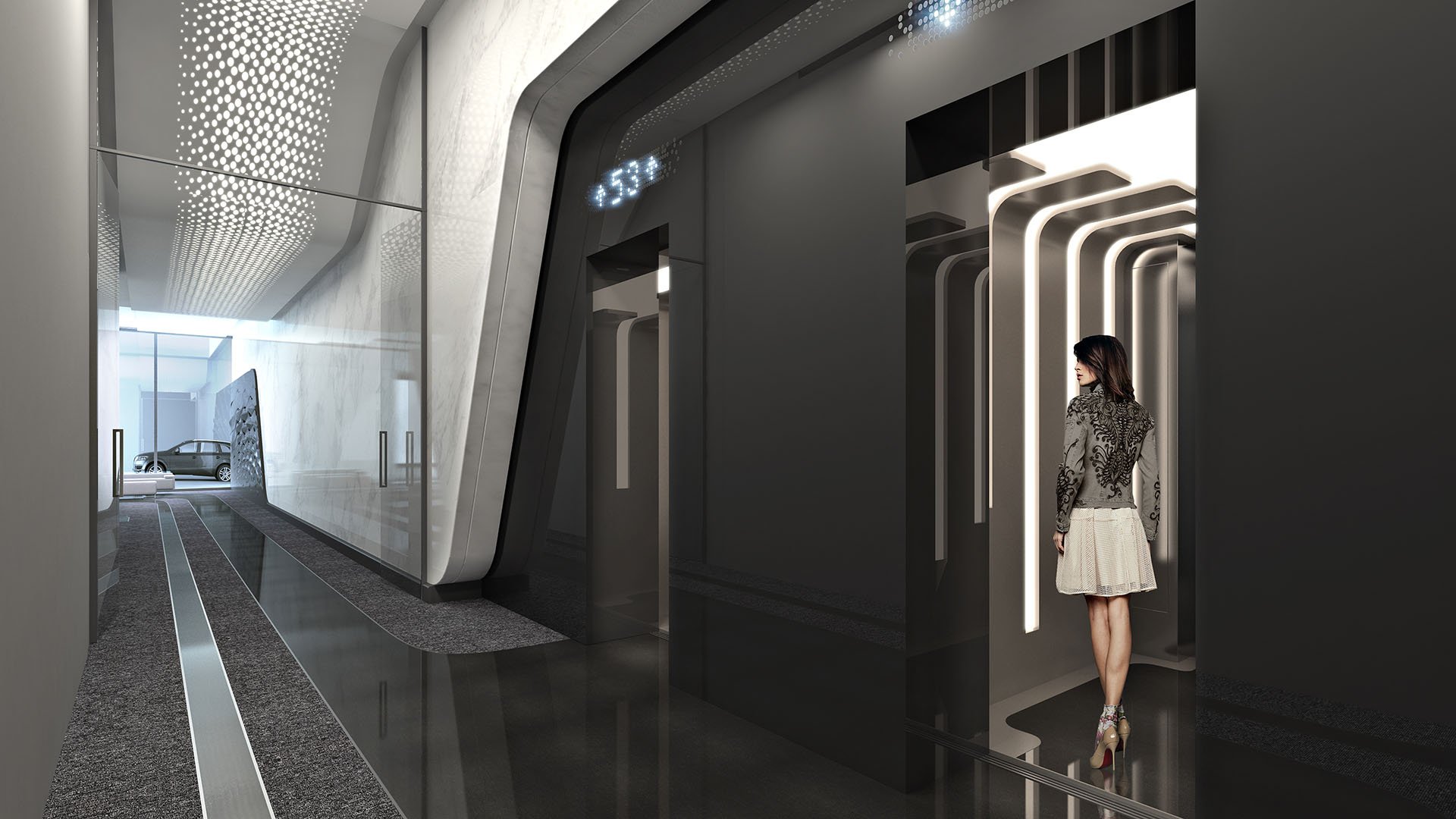
In South Florida’s most rarefied condominium market, the private elevator is often framed as a flourish: the cinematic door opening directly into a residence, the first glimpse of water, stone, art, and skyline. For serious buyers, however, the better question is not whether the elevator feels impressive. It is whether the elevator solves the daily choreography of security, household staff, deliveries, guests, and entertaining.
A private elevator can be a beautiful threshold, but it is also a control point. It determines who reaches the residence, how they are identified, where they wait, and how gracefully the home absorbs movement. In a tower, where privacy is vertical rather than gated, that threshold becomes one of the most important pieces of residential architecture.
For buyers comparing high-service buildings in Brickell, Miami Beach, Sunny Isles, and Surfside, the private-elevator question is less about spectacle than separation. It should be evaluated with the same discipline as ceiling heights, exposure, parking, storage, and terrace depth. In buyer shorthand, it is both a new-construction and penthouse conversation, but it also matters in full-floor and flow-through units where the residence must function like a house in the sky.
The strongest private-elevator sequence begins well before the resident reaches the apartment. The lobby, valet area, access control, elevator call system, camera coverage, and staff protocol all shape the experience. A private elevator that opens directly into a home is only as secure as the layers that precede it.
During a showing, buyers should ask how guests are announced, how vendors are cleared, and whether elevator access is residence-specific. The answer should feel clear, not improvised. A polished building does not rely on charm at the front desk alone. It relies on procedures that are discreet, repeatable, and understood by everyone from the resident to the house manager.
This is especially important in dense urban settings. In Brickell, where towers, restaurants, offices, and hospitality energy converge, buyers looking at residences such as St. Regis® Residences Brickell or The Residences at 1428 Brickell are not simply evaluating a floor plan. They are evaluating a private operating system within a very public city.
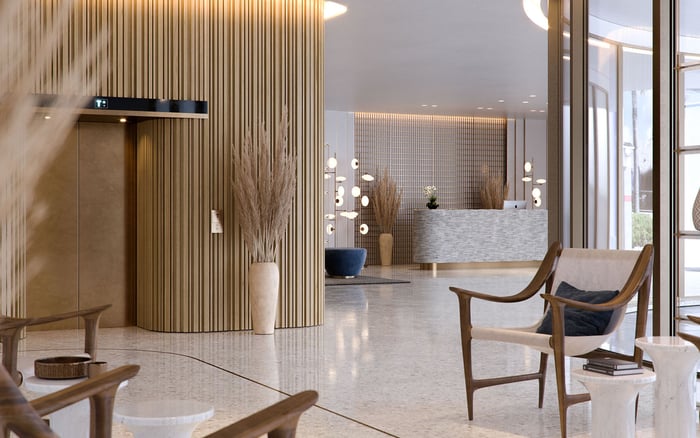
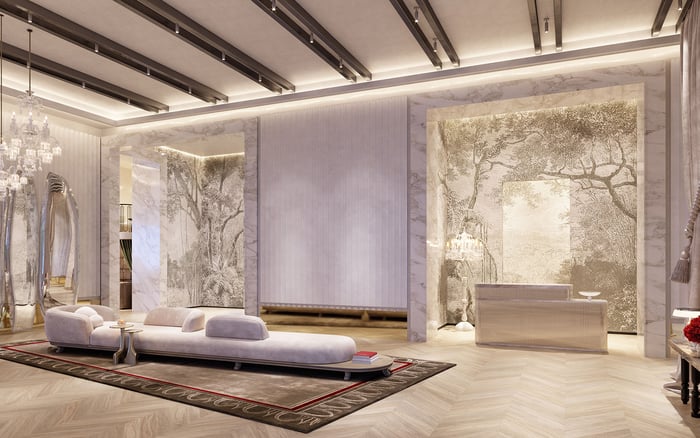
The elevator vestibule is often treated as leftover space, but in a well-designed residence it performs several roles at once. It is a privacy buffer, an arrival gallery, a package landing zone, and a moment of decompression between building and home. It should feel intentional, with enough proportion to greet guests without sending them directly into the living room.
A tight vestibule can undermine the luxury of a private elevator. If the door opens into a narrow passage, a resident may gain exclusivity but lose grace. A stronger sequence gives the owner a moment to receive, redirect, or pause. It can protect the intimacy of the main salon, conceal the back-of-house rhythm, and allow art or lighting to set the tone before the residence reveals itself.
Buyers should stand in the vestibule with the elevator doors open and imagine a real evening: coats, flowers, a caterer arriving early, friends arriving together, and a dog moving through the space. The room’s success is measured in the small frictions it prevents.
In luxury towers, service is a form of privacy. A residence that welcomes staff without routing every movement through the formal entry feels calmer and more residential. The ideal plan distinguishes among owner arrival, guest arrival, service arrival, and daily deliveries. Not every building will offer every separation, but the best plans make the available sequence legible.
The key is to ask how the home works on an ordinary weekday, not only during a sunset showing. Where does a housekeeper enter? How do groceries reach the kitchen? Can a chef or florist move efficiently without crossing the primary entertaining area? Is there a secondary corridor, service elevator, or staff-friendly route that preserves the owner’s sense of calm?
Waterfront and resort-style markets bring their own rhythm. Buyers touring Miami Beach residences such as The Perigon Miami Beach or Surfside offerings such as The Delmore Surfside should consider how beach days, family visits, housekeeping, and private dining all intersect at the threshold. A residence may be visually serene, but the plan must also handle movement with discretion.
For owners who entertain, the private elevator becomes part of the evening’s architecture. It is the first impression, the guest filter, and sometimes the pressure point. A dinner for ten, a cocktail gathering, or a family holiday can quickly reveal whether the sequence is elegant or awkward.
The best entertaining layouts allow guests to arrive without seeing the home’s working parts too soon. Ideally, the elevator opens to a vestibule or gallery that leads naturally toward the principal living area. The path should be intuitive. Guests should not have to guess where to go, and staff should not have to interrupt the welcome to keep the evening moving.
Sound also matters. A private elevator should not announce every arrival into the most intimate part of the residence. If the doors open too close to the dining table, primary suite corridor, or media room, privacy can feel compromised even in an expensive home. The goal is a sense of occasion without constant intrusion.
A private elevator cannot be judged from a rendering alone. Buyers should walk the sequence slowly, beginning at the building entry. Move from arrival to lobby, from lobby to elevator, from elevator to vestibule, and from vestibule into the residence. Notice where you hesitate. Notice who must guide you. Notice whether the transition feels calm or performative.
Ask practical questions in plain language. How are elevator permissions managed? What happens when multiple guests arrive? Where do deliveries wait? How does staff reach the kitchen? Can the elevator be held during a move-in, installation, or event? How does the building handle privacy when vendors and guests arrive at the same time?
In Sunny Isles, buyers considering statement towers such as Bentley Residences Sunny Isles will often focus first on views and design identity. Those qualities matter. Yet the private-elevator sequence is what determines whether the residence feels effortless after the contract is signed.
The private elevator is most successful when it disappears into the life of the home. It should not feel like a gimmick. It should feel like a well-mannered boundary between public and private life: one that supports security without making the owner feel managed, and supports service without making staff movement visible.
For South Florida buyers, the lesson is simple: do not ask only whether a residence has private elevator access. Ask how that access behaves. A true luxury tower does not merely deliver you to your door. It protects the social, domestic, and operational life behind it.
Is a private elevator always better in a luxury tower? Not always. It is valuable when access control, vestibule design, and staff flow are well planned.
What is the most important private-elevator detail to review? The full sequence from lobby to residence. Security and privacy depend on every step before the door opens.
Should the elevator open directly into the living room? Some buyers like the drama, but a vestibule or gallery usually offers better privacy and more graceful entertaining.
How does staff flow affect value? A residence that separates service movement from owner and guest areas often feels calmer, more private, and easier to operate.
What should buyers ask about guest access? Ask how guests are cleared, announced, and sent to the correct residence without relying on informal instructions.
Can private elevators complicate entertaining? Yes, if arrivals occur too close to dining, lounging, or private corridors. The best plans create a natural welcome sequence.
Are service elevators still important? Yes. Even with private owner access, service elevators can support deliveries, staff, moves, and event preparation.
What makes a vestibule feel luxurious? Proportion, lighting, privacy, and a clear path into the home. It should feel like a room, not a leftover corridor.
Should buyers test the elevator during a showing? Absolutely. Walk the route as a resident, a guest, and a staff member to understand how the home truly functions.
Does this matter more in urban or waterfront towers? It matters in both. Urban towers emphasize access control, while waterfront residences often emphasize family, guests, and service rhythm.
When you're ready to tour or underwrite the options, connect with MILLION.
If branded residences are on your mind — as a home or as an allocation — we would be glad to share what we are seeing, privately.
Begin a quiet conversation